

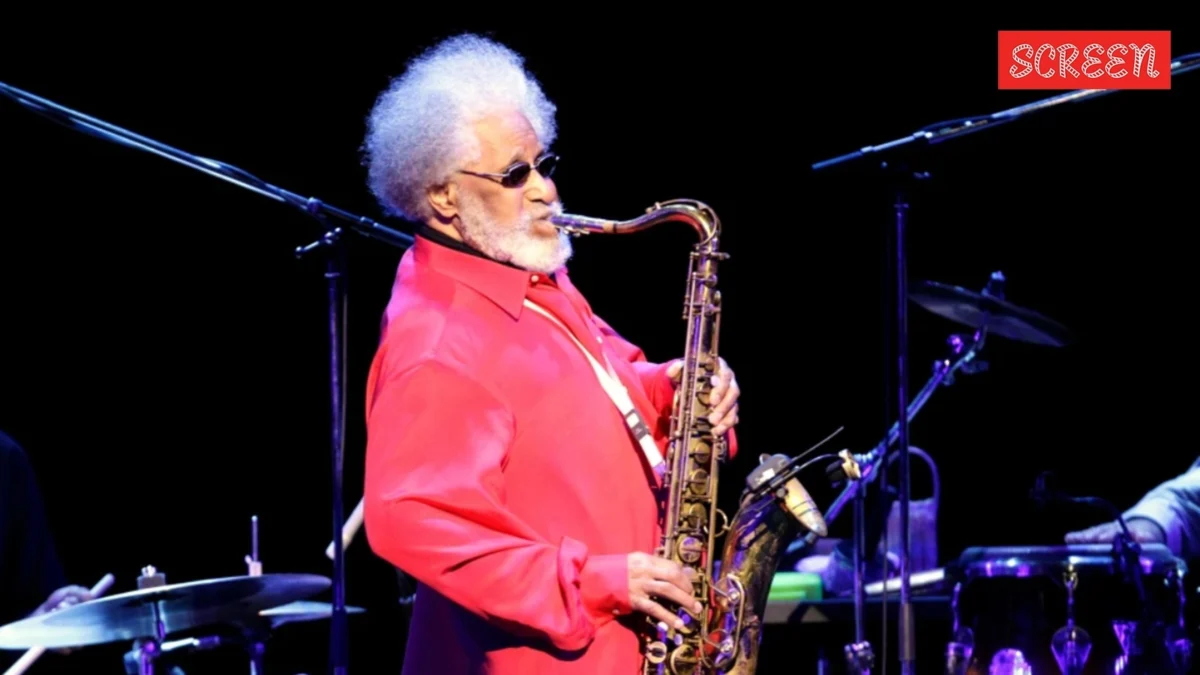
New York, NY – The jazz world mourns the passing of Sonny Rollins, a colossus of the tenor saxophone whose career spanned over seven decades, marked by an unwavering commitment to innovation, a signature sound of unparalleled power and lyricism, and a relentless pursuit of artistic evolution. Rollins died Monday at his home in Woodstock, New York, at the age of 95.
His spokesperson, Terri Hinte, confirmed his death to The Associated Press, noting that while no specific cause was cited, Rollins had been largely homebound in recent years due to various physical ailments. Rollins’ passing marks the end of an era, leaving an indelible imprint on the landscape of modern music. He is remembered not just as one of the last giants of the bebop era, but as a visionary artist who consistently pushed the boundaries of jazz, forever remaining on its cutting edge.
A Restless Genius: A Life Dedicated to Musical Exploration
Sonny Rollins was a force of nature on the saxophone. His tone was instantly recognizable – a rich, robust sound capable of both fierce intensity and tender introspection. From his earliest days as a prodigious talent emerging from Harlem, Rollins was driven by an insatiable curiosity and a profound desire to explore new musical territories. He was never content to rest on his laurels, famously referring to himself as "a work in progress" and shunning any notion of artistic stagnation.
This dedication to growth led him through a remarkable stylistic journey. While his early bebop explorations, alongside titans like Thelonious Monk and Miles Davis, garnered him widespread acclaim and solidified his place in jazz history, Rollins consistently sought new avenues of expression. He embraced the burgeoning complexities of free jazz, experimented with diverse instrumentation, and even ventured into collaborations that surprised and delighted audiences. His influence is undeniable, standing shoulder-to-shoulder with fellow saxophonists John Coltrane and Charlie Parker as one of the most pivotal figures in the instrument’s evolution.
A Sound That Resonated Beyond Jazz
Rollins’ musical genius wasn’t confined to the jazz clubs. His distinctive voice found its way into popular culture, most notably with his unforgettable, wistful saxophone solo on the Rolling Stones’ 1981 hit "Waiting on a Friend." This collaboration, born from Rollins observing Mick Jagger’s dancing, showcased his ability to imbue a rock ballad with a soulful jazz sensibility, further cementing his broad appeal.
Despite decades of adulation and critical success, Rollins remained his own toughest critic. He often spoke of finding his earlier recordings "excruciating" to listen to, a testament to his unwavering drive for self-improvement. "I don’t consider myself a musician that has learned as much as I want to learn," he told the AP in 2007, a sentiment that underscored his lifelong commitment to mastery and discovery.
Enduring Achievements: A Career of Innovation and Resilience
Sonny Rollins’ career was a testament to his enduring spirit and creative vitality. Even into his later years, he maintained a rigorous practice regimen and continued to tour extensively. The 1990s and 2000s saw him release a string of critically acclaimed albums, solidifying his status as a living legend. His dedication to his craft, however, was eventually challenged by pulmonary fibrosis, a condition that ultimately forced him into retirement. His final concert was in 2012, and he ceased playing altogether in 2014.
While he expressed missing the roar of the crowd, it was the act of playing itself that he yearned for most. In a 2020 interview with The New York Times, he reflected on the profound spiritual connection he felt while performing outdoors, stating, "I felt a communication; I felt that I was part of something. Not the crowd. Something bigger."
His significant achievements were recognized with numerous accolades. In 2001, his album This Is What I Do earned him a Grammy Award for Best Jazz Instrumental Album. He secured another Grammy in 2006 for Best Jazz Instrumental Solo for his rendition of "Why Was I Born?" This poignant performance was featured on the album Without a Song: The 9/11 Concert, a live recording from a concert held in Boston just four days after the September 11th attacks. Rollins, having been evacuated from his apartment near Ground Zero, performed at the urging of his wife and manager, Lucille, who passed away in 2004.
Meeting the Greats: The Formative Years of a Jazz Icon
Theodore Walter Rollins, known to the world as Sonny, was born in Harlem on September 7, 1930, into a musically inclined family. His father played the clarinet, his sister the piano, and his older brother the violin. Though initially resistant to piano lessons, his passion for music ignited at age 11 when he became captivated by the saxophone. His parents supported his burgeoning interest, and he acquired an alto saxophone.
Largely self-taught due to the cost of lessons, Rollins quickly excelled, eventually switching to the tenor saxophone and honing his skills in local clubs. His prodigious talent did not go unnoticed. His first major breakthrough came in his late teens when he was invited to join Thelonious Monk’s band. This led to subsequent collaborations with jazz luminaries like Miles Davis and Bud Powell, who facilitated his entry into the recording world even before he had completed high school.
The Shadow of Addiction and the Dawn of Redemption
Like many musicians of his generation, Rollins’ rising star was temporarily dimmed by a struggle with heroin addiction, which began at age 19. The grip of his addiction led to two prison stints – ten months in 1950 and three months in 1953 – and a period of homelessness in Chicago. In 1954, Rollins made a pivotal decision to seek treatment at a hospital in Lexington, Kentucky.
His time in recovery marked a profound spiritual awakening. "I began to have a deeper philosophy of what life was about," he shared with the AP in 2007. "From that point on is when my consciousness awoke." This renewed perspective fueled his artistic resurgence.
Landmark Albums and Audacious Artistic Choices
Upon his discharge, Rollins returned to Chicago and joined the celebrated Max Roach-Clifford Brown quintet. In 1956, he released his solo album, Saxophone Colossus. Its stripped-down, hard bop sound was a declaration of his arrival as a premier saxophonist and remains one of his most influential works.
The following two years saw Rollins make bold artistic choices. He experimented with pianoless trios on three more landmark albums: Way Out West, A Night at the Village Vanguard, and Freedom Suite. These recordings showcased his innovative approach to rhythm and harmony, further establishing his unique voice.
Perhaps one of the most talked-about moments in his career came at the height of his popularity when Rollins retreated from the public eye for two years. He dedicated this period to solitary practice on a walkway of the Williamsburg Bridge, overlooking the East River. This self-imposed exile was driven by his relentless pursuit of artistic growth. "The thing that I am most proud of in my career is that fact that I was able to see beyond being popular and all that stuff, and do what my inner self told me to do," he explained to the AP in 2007.
During his absence, the jazz landscape shifted towards the more experimental and often chaotic sounds of free jazz. Upon his return in 1961, Rollins embraced this new direction, a move that initially divided his audience. He navigated this evolving scene by touring extensively in Europe during the mid-1960s, fluidly moving between traditional and avant-garde approaches. His musical contributions to the soundtrack of the 1966 British film Alfie, which propelled Michael Caine to stardom, further demonstrated his versatility.
A Living Legend: Mainstream Acclaim and a Profound Legacy
A trip to Japan introduced Rollins to Zen Buddhism, inspiring another extended sabbatical that lasted into the early 1970s. When he returned to recording in 1972, he was already regarded as a legend. This period marked his transition to mainstream acceptance. He was awarded a Guggenheim fellowship and inducted into the Downbeat Hall of Fame. Appearances on "The Tonight Show" and performances in concert halls signaled his elevated status.
Rollins leaves behind a vast catalog of unreleased recordings, and he expressed no desire to dictate their future. In his 2020 conversation with The New York Times, he mused, "After I get out of this planet I’m not going to have any say about what’s going on, so I’m not worried about that. And, boy, I agonize over my music; I won’t have to agonize about it anymore. Thank God."
His survivors include his nephew, Clifton Anderson, and nieces Vallyn Anderson and Gabrielle DeGroat.
Sonny Rollins’ legacy is that of an artist who never stopped searching, never stopped pushing, and never stopped speaking through his instrument with a voice that will continue to inspire generations of musicians and listeners alike. His life was a testament to the power of artistic integrity and the enduring spirit of jazz innovation.
