

Introduction: The Unseen Foundation of Artistry
Classical Indian dance forms, renowned for their intricate footwork, expressive storytelling, and profound spiritual undertones, demand an extraordinary level of physical and mental discipline from their practitioners. While audiences marvel at the seamless grace and captivating performances, the rigorous training and sustained dedication behind each movement often remain unseen. This article delves into the essential, yet often overlooked, practices that underpin the success of contemporary classical Indian dancers: pranayama (breath control), yoga, and specialized strength training. Through the insights of three prominent artists – Avijit Das (Kuchipudi), Meera Sreenarayanan (Bharatanatyam), and Preetisha Mohapatra (Odissi) – we explore how these disciplines not only enhance physical prowess but also cultivate the emotional depth, mental fortitude, and longevity crucial for a thriving artistic career.
The Pillars of Performance: Breath, Body, and Resilience
Classical Indian dance is a holistic art form, requiring dancers to synchronize intricate physical movements with profound emotional expression and rhythmic precision. This demanding synthesis necessitates a strong foundation that extends beyond mere technical proficiency. For many contemporary artists, this foundation is built upon ancient practices like pranayama and yoga, augmented by modern conditioning techniques.
Avijit Das: The Centering Power of Pranayama in Kuchipudi
For Avijit Das, a contemporary Kuchipudi dancer, the journey into the art form revealed the profound impact of pranayama, yoga, and breathing techniques on his development as an artiste. "When I look back at my training in Kuchipudi," Das reflects, "I realise how pranayama, yoga and breathing techniques have shaped me as an artiste." Kuchipudi, with its vibrant blend of rhythm, expression, and narrative, places immense demands on a dancer’s ability to seamlessly integrate physical execution with emotional portrayal. Das emphasizes that these practices have been a constant source of strength and focus.
Pranayama, the science of breath control, has been instrumental in Das’s ability to center himself before rehearsals and performances. In classical dance, where the delicate balance between abhinaya (expression) and nritta (pure dance) is paramount, controlled breathing is the key to maintaining focus and emotional equilibrium. Techniques like anulom vilom (alternate nostril breathing) and kapalabhati (skull-shining breath) are not merely physical exercises for Das; they are tools that sharpen his energy and steady his mind. This mental steadiness is crucial for sustaining long hours of rehearsal and navigating the inherent intensity of performance. More importantly, it allows him to channel devotion and emotion more deeply into his dance, an indispensable element of Kuchipudi’s rich storytelling tradition.
The breath, for Das, acts as the vital thread connecting rhythm and emotion, the two fundamental pillars of dance. He has learned to meticulously coordinate his inhalations and exhalations with the tala (rhythmic cycle), facilitating smoother transitions between movements and expressions. Beyond rhythm, breath becomes the vehicle for rasa, the aesthetic flavor or emotional essence of a performance. A forceful exhalation can amplify the drama in a battle sequence, while a gentle inhalation can soften the mood in a devotional piece. In this way, breathing transforms Das’s dance from mere physical exertion into a living, breathing expression of art.
Complementing his breathwork, yoga has been integral to Das’s physical conditioning. Kuchipudi demands agility, strength, and grace, whether in executing rapid footwork, maintaining the challenging ardhamandalam (half-sitting posture), or holding static, sculptural poses during dramatic sequences. Through yoga, Das has significantly strengthened his core, improved his posture, and gained the flexibility that lends fluidity to his movements. Crucially, yoga has also played a preventative role, helping to avert injuries by keeping his joints supple and his body aligned. The benefits, however, extend beyond the physical. Yoga has instilled in him a profound sense of patience and discipline. The act of holding a pose and breathing through discomfort mirrors the endurance required to master complex Kuchipudi choreography.

In essence, the synergistic combination of pranayama, yoga, and breathing techniques has equipped Das with the strength to endure rigorous training, the resilience to face performance challenges, and the maturity to express himself authentically on stage. He feels a profound sense of physical and spiritual alignment, a union that allows him to convey the true essence of his art form.
The Nuance of Experience: Breath and Embodiment in Bharatanatyam
For Meera Sreenarayanan, a Bharatanatyam dancer, yoga has been a lifelong companion, initially perceived as a natural extension of her dance training. "As a young Bharatanatyam dancer, it felt like an extension of training," she recalls. "Flexibility, balance, mobility and strength were the yardsticks of progress. The body needed to be trained, honed and understood." This early understanding of the body as a meticulously trained instrument shaped her early artistic development.
However, life’s transitions, particularly marriage and motherhood, introduced a new dimension to her relationship with yoga and her understanding of the body. "Every pregnancy is different and deeply personal. This is simply my story," Sreenarayanan states. Years of dance training had cultivated a sense of agency over her body, but pregnancy offered a humbling reminder that not everything could be controlled or rehearsed. "Life takes shape breath by breath," she profoundly observes.
This phase of life unveiled a profound aspect of yoga that had previously eluded her. Breath, amidst the profound changes, discomfort, anticipation, and uncertainty of pregnancy, suddenly demanded her full attention. Once she became attuned to its presence, its pervasive influence became impossible to ignore.
Sreenarayanan’s experience as a Bharatanatyam dancer began to illuminate the intricate ways breath influences movement. She realized that the quality of a movement is often dictated by the quality of the breath that precedes it. This insight extended to abhinaya. Before an emotion manifests in the eyes, face, or body, it often announces itself through the breath. Paying mindful attention to this subtle precursor brought a new level of honesty and authenticity to her expressions.
This profound realization transcended the confines of her dance practice, permeating her life beyond the stage. Whenever she encountered situations that felt out of sync, she found that the solution rarely lay in pushing harder. More often, it was in the simple act of paying closer attention.
In a world often fixated on achieving more, yoga continues to be a gentle reminder of the value of "noticing more." Sreenarayanan reflects, "For years, I thought yoga was helping me become a better dancer. It took pregnancy to show me that it was helping me become a more attentive human." This shift in perspective underscores yoga’s transformative power, moving beyond physical enhancement to cultivate a deeper, more present human experience.
The Sculptural Imperative: Strength and Longevity in Odissi
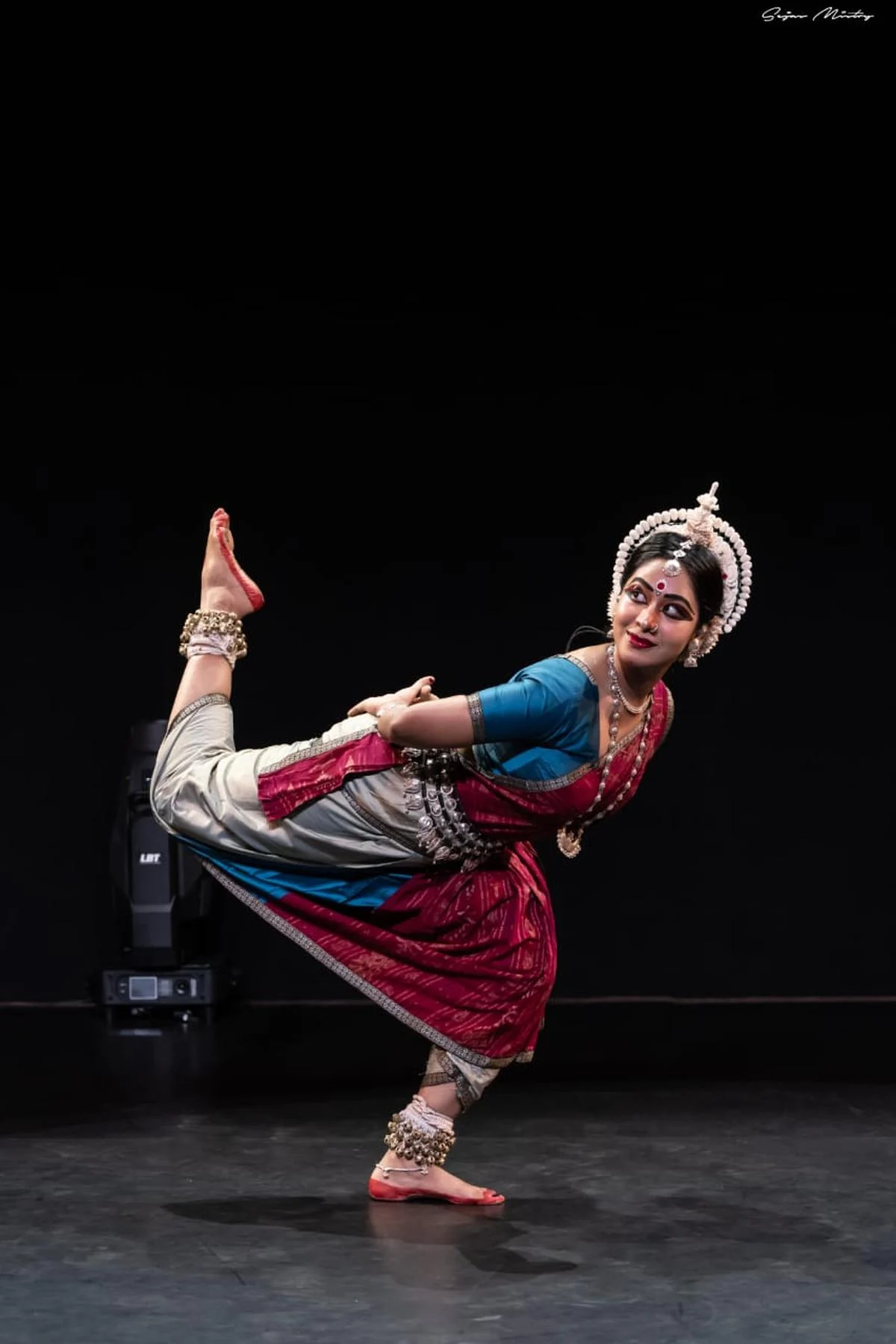
Preetisha Mohapatra, a 27-year-old Odissi dancer, underscores the critical role of physical fitness in sustaining the demanding aesthetics of her art form. While traditional Odissi inherently incorporates yogic movements inspired by ancient temple sculptures, the contemporary performance landscape necessitates a more rigorous, multi-dimensional approach to conditioning.

Building on the formidable legacy of her grandfather, Guru Kelucharan Mohapatra, who meticulously researched injury prevention to refine iconic Odissi postures like the tribhangi (three-bend posture), and her father, Odissi exponent Ratikant Mohapatra, who ingeniously reworked toe-and-knee alignment following his own severe ligament injury, Preetisha has integrated specialized weight training into her daily regimen. "While dance provides excellent cardio, strength, and endurance, a solo performance requires sustained stamina to command the stage for an hour," she explains.
The challenges of modern life, including shifts in lifestyle, environment, and dietary quality, necessitate targeted resistance training and strict nutritional discipline. Weight training, Mohapatra emphasizes, is crucial for building and preserving muscle mass, which in turn shields the skeletal structure from the physical shocks associated with aging. This proactive approach ensures that the dancer’s body remains intact, highly resilient, and capable of enduring the rigorous physical demands of classical dance well into the future.
Classical dance, as Mohapatra articulates, is a "slow, layered journey." While an artist in their twenties is still evolving, it is in their forties and fifties that their art acquires profound depth and richness. To sustain this progression, the body must be nurtured from within from an early stage.
The sculptural postures of Odissi – the tribhangi, chauka (square stance), and related stances – inherently possess a yogic sensibility, promoting both alignment and internal balance. Mohapatra’s mother, senior dancer and choreographer Sujatha Mohapatra, embodies this principle, adhering to a dedicated yoga regimen, including Surya Namaskar, which she attributes to her exceptional physical stamina and mental focus.
"Armed with the awareness passed down by my predecessors," Mohapatra concludes, "my generation has the rare advantage of learning from past injuries. By combining this inherited wisdom with contemporary sports science, we can build the physical resilience required to sustain a long, injury-free artistic journey." This synthesis of traditional knowledge and modern scientific understanding represents the future of classical Indian dance conditioning.
Supporting Data and Expert Opinions: The Scientific Basis of Breath and Movement
The insights shared by these dancers are not merely anecdotal; they are increasingly supported by scientific research highlighting the profound interconnectedness of breath, physical well-being, and mental acuity.
The Physiological Impact of Pranayama: Scientific studies have demonstrated that regular practice of pranayama can lead to significant physiological changes. These include improved lung capacity, enhanced oxygenation of the blood, and a more efficient cardiovascular system. The activation of the parasympathetic nervous system through controlled breathing techniques can reduce stress hormones like cortisol, leading to a state of calm and improved focus. This directly translates to a dancer’s ability to perform with greater stamina, clarity, and emotional control. For instance, research published in the Journal of Yoga & Physical Therapy has indicated that specific pranayama techniques can enhance respiratory muscle strength and endurance, crucial for sustained physical exertion in dance.
Yoga’s Multifaceted Benefits: The physical benefits of yoga, as experienced by the dancers, are well-documented. Yoga enhances flexibility, strength, balance, and proprioception (the body’s awareness of its position in space). These attributes are fundamental for executing complex choreography, maintaining challenging postures, and preventing injuries. Studies in journals like the International Journal of Yoga have shown that yoga can improve core strength, posture, and joint mobility, all of which are directly applicable to the demands of classical dance. Furthermore, the mindfulness component of yoga cultivates mental discipline, patience, and resilience, essential for navigating the pressures of a performing career.

Strength Training for Longevity and Injury Prevention: The integration of specialized strength training, as advocated by Preetisha Mohapatra, aligns with contemporary sports science principles for athletic longevity. Building and maintaining muscle mass is vital for supporting joints, absorbing impact, and preventing overuse injuries, which are common in physically demanding disciplines like classical dance. Research in The Journal of Strength and Conditioning Research consistently highlights the importance of targeted resistance training for enhancing performance, reducing injury risk, and promoting long-term physical health in athletes across various disciplines. For dancers, this translates to a more robust and resilient body, capable of withstanding the rigmarole of training and performance for decades.
Chronology of Integration: From Tradition to Modern Conditioning
The evolution of training methodologies in classical Indian dance reflects a journey from ancient traditional practices to a more scientifically informed, integrated approach.
- Ancient Roots: For centuries, the foundational elements of dance training in India have included rigorous physical practice, rhythmic precision, and an emphasis on storytelling and emotional expression. While not explicitly termed "yoga" or "pranayama" in its modern scientific context, the principles of breath awareness, bodily discipline, and meditative focus were implicitly embedded in the guru-shishya parampara (teacher-disciple lineage).
- Early 20th Century Revival: During the revival of classical Indian dance forms in the early to mid-20th century, practitioners like Rukmini Devi Arundale and Uday Shankar, while focusing on refining aesthetics and narrative, also emphasized a holistic approach to training. Yoga, as a system of physical and mental discipline, began to be more consciously integrated.
- Mid to Late 20th Century: As scientific understanding of physiology and biomechanics grew, dancers and their gurus started to explore how these principles could be applied to dance training. This period saw a greater awareness of injury prevention and the importance of a well-conditioned body. Pioneers like Guru Kelucharan Mohapatra meticulously researched injury prevention, laying the groundwork for future generations.
- Late 20th to Early 21st Century: With the advent of advanced sports science and a greater understanding of the mind-body connection, contemporary dancers and their mentors began to integrate specialized strength training, advanced physiotherapy, and evidence-based yoga and pranayama practices. This period is characterized by a conscious effort to combine traditional wisdom with modern scientific methodologies. The insights of Avijit Das, Meera Sreenarayanan, and Preetisha Mohapatra represent this contemporary, integrated approach.
Official Responses and Recognition: A Growing Appreciation
While there may not be formal "official responses" from governing bodies in the same way as in other sectors, the artistic community and institutions dedicated to classical Indian arts are increasingly recognizing and advocating for these integrated training methods.
- Dance Academies and Universities: Leading dance academies and university departments offering classical Indian dance programs are incorporating modules on yoga, anatomy, physiology, and sports conditioning into their curricula. This reflects a growing institutional understanding of the need for comprehensive dancer training.
- Guru-Shishya Parampara Evolution: The traditional guru-shishya parampara continues to evolve. While the core teachings remain paramount, contemporary gurus often encourage their disciples to supplement their training with modern conditioning techniques, guided by qualified professionals. This ensures that the dancer’s body is optimally prepared for the rigors of the art form.
- Conferences and Workshops: Numerous national and international conferences, workshops, and seminars are dedicated to the health and well-being of performing artists. These platforms often feature experts in yoga, physiotherapy, and sports science who collaborate with dancers and choreographers to develop best practices.
- Media Coverage and Documentaries: The media, including publications like The Hindu where this article originates, plays a crucial role in highlighting these aspects of artistic training. Documentaries and interviews with dancers often bring to light the dedication and diverse training regimens that contribute to their performances.
Implications for the Future of Classical Indian Dance
The conscious and scientific integration of pranayama, yoga, and strength training carries significant implications for the future of classical Indian dance:
- Enhanced Artistic Longevity: By prioritizing physical health and resilience, dancers can extend their performing careers, allowing them to mature artistically and share their deepened understanding of the art form with audiences for longer periods. This ensures the transmission of classical traditions with greater depth and richness.
- Reduced Injury Rates: A proactive approach to conditioning and injury prevention will lead to fewer career-ending injuries, allowing more artists to sustain their passion and contribute to the vibrant ecosystem of classical Indian arts.
- Elevated Performance Quality: A physically and mentally robust dancer is better equipped to execute complex choreography with precision, imbue performances with profound emotional depth, and maintain unwavering focus. This ultimately leads to a more captivating and impactful artistic experience for the audience.
- Broader Appeal and Accessibility: By demonstrating the rigorous scientific and disciplined approach behind classical dance, these training methods can attract a wider audience and inspire younger generations to pursue these art forms, understanding that they are not only aesthetically beautiful but also grounded in robust physical and mental discipline.
- Cross-Disciplinary Innovation: The ongoing dialogue between classical dance traditions and modern sports science opens avenues for innovative training methodologies and a deeper understanding of the human body’s potential. This can lead to new pedagogical approaches and a richer appreciation for the art form.
In conclusion, the breath of the dancer, the suppleness of their form, and the strength of their resolve are not merely byproducts of rigorous training; they are integral components cultivated through conscious practice. As Avijit Das, Meera Sreenarayanan, and Preetisha Mohapatra exemplify, the harmonious integration of ancient wisdom like pranayama and yoga with contemporary conditioning techniques is shaping a new era for classical Indian dance, one characterized by enhanced artistry, enduring health, and a profound connection between the body, mind, and spirit.
