

The Indian automotive landscape has undergone a seismic shift over the last decade. What was once a market obsessed solely with fuel economy and "value-for-money" has evolved into one that demands safety, technological sophistication, and premium aesthetics—even at the entry level. Leading this charge is Tata Motors, and their latest iteration of the Tiago range serves as a definitive case study in how to mature a product without losing its core identity.
The new Tata Tiago, encompassing Petrol, iCNG, and EV variants, arrives not merely as a facelift, but as a strategic repositioning of the compact hatchback. With a price range spanning from INR 4.69 lakh to 8.55 lakh, Tata is attempting to bridge the gap between "affordable" and "aspirational."
Main Facts: A Tri-Powertrain Offensive
The hallmark of the updated Tiago range is its versatility. In an era where most manufacturers are choosing between internal combustion engines (ICE) and electrification, Tata has doubled down on a "multi-fuel" strategy.
The range is anchored by three distinct personalities:
- The Refined Petrol: Utilizing the 1.2-litre Revotron engine, optimized for urban efficiency.
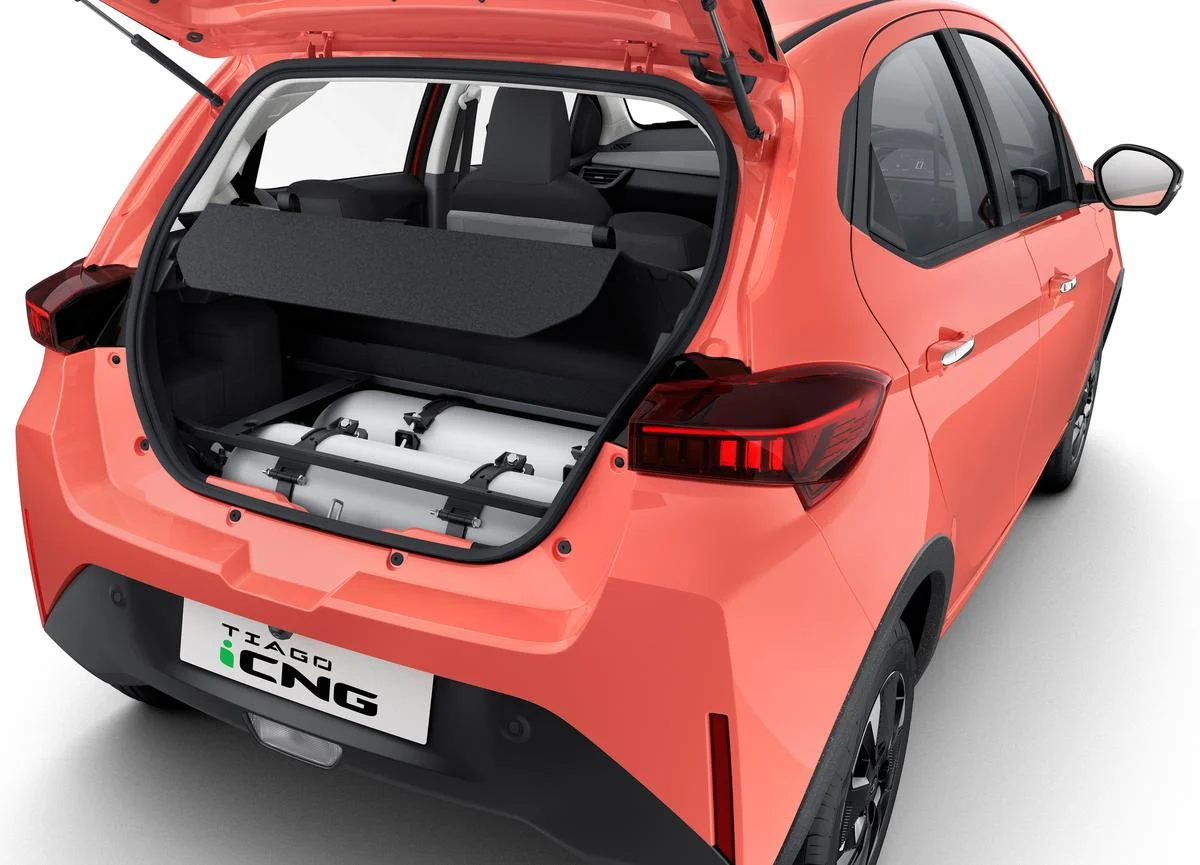
- The Innovative iCNG: Featuring Tata’s patented twin-cylinder technology that resolves the perennial "no-boot-space" issue in CNG cars.
- The Energetic EV: A pioneer in the affordable electric segment, offering two battery pack options and rapid-charging capabilities.
Beyond the engines, the update introduces a "Lux Beam" LED headlamp system, a 26.03 cm (10.25-inch) high-definition touchscreen, and a segment-first 360-degree surround-view camera. Perhaps most importantly, Tata has standardized six airbags across the entire lineup, reinforcing their position as the industry leader in vehicular safety.

Chronology: The Journey of the Tiago Brand
To understand the significance of this latest update, one must look at the Tiago’s trajectory since its inception.
- 2016: The Genesis. Launched as the successor to the Indica and Bolt, the Tiago (initially teased as the Zica) was Tata’s "turnaround" car. It introduced the ‘Impact Design’ language, which moved away from the taxi-market image toward a more youthful, European aesthetic.
- 2018-2020: Safety and Refinement. The Tiago earned a 4-star Global NCAP safety rating, a milestone that changed the conversation around Indian hatchbacks. During this period, the JTP performance edition and the NRG cross-hatchback were introduced, testing the waters for niche variants.
- 2022: The iCNG Revolution. Tata disrupted the CNG market by launching the iCNG range, focusing on performance and features rather than just economy. This was followed by the "Twin-Cylinder" innovation, which moved the tanks under the floor.
- 2023: Electrification. The Tiago.ev was launched, quickly becoming India’s best-selling electric hatchback and democratizing EV ownership for thousands of households.
- 2024-2025: The Premium Leap. The current update represents the "maturity" phase. The focus has shifted to high-end tech (360-degree cameras, HD screens) and premium materials (Fabricia Luxe interiors), proving that a small car no longer needs to feel "cheap."
Supporting Data: Technical Specifications and Performance
The new Tiago range is built on the robust XO platform, known for its high-speed stability and crashworthiness. Below is a detailed breakdown of the performance metrics across the three variants.
1. The Petrol Powertrain
The 1.2-litre, 3-cylinder Revotron engine remains the workhorse of the range.
- Output: 86 PS @ 6000 rpm and 113 Nm of torque @ 3300 rpm.
- Transmission: Available in a 5-speed manual and a 5-speed AMT (Automated Manual Transmission).
- Driving Dynamics: The engine is tuned for a linear power delivery. In city traffic, the throttle response is crisp, allowing for easy overtaking. On the highway, the car maintains a planted feel even at triple-digit speeds, a rarity for hatchbacks in this weight class.
2. The iCNG Innovation
Tata’s iCNG technology is widely regarded as the most sophisticated in the Indian market.
- Performance: 73.5 PS and 95 Nm in CNG mode.
- Twin-Cylinder Tech: Instead of one large 60-litre tank that consumes the entire trunk, Tata uses two 30-litre tanks placed under the luggage floor. This provides a usable boot space, allowing for actual luggage—a significant pain point for traditional CNG buyers.
- Direct Start: Unlike competitors, the Tiago iCNG can start directly in CNG mode, saving fuel and providing immediate convenience.
3. The Tiago.ev (Electric)
The EV variant is the performance flagship of the range in terms of "off-the-line" urgency.

- Battery Options: 19.2 kWh (Medium Range) and 24 kWh (Long Range).
- Performance (24 kWh): 55 kW (75 PS) and 114 Nm of instant torque. It achieves 0-60 km/h in a brisk 5.7 seconds.
- Real-World Range: The 24 kWh pack delivers approximately 205-215 km of real-world driving, while the 19.2 kWh pack offers 160-170 km.
- Charging: Under optimal DC fast-charging conditions, the Tiago.ev can add 100 km of range in just 18 minutes.
Official Responses and Market Positioning
While Tata Motors executives have consistently emphasized their "Safety-First" philosophy, this latest update reflects a "Feature-First" secondary mission. According to internal marketing strategies, the goal is to provide "premiumization at the base of the pyramid."
By standardizing six airbags, Tata is responding to the Indian government’s increasing pressure on safety standards while also preempting consumer demand. The inclusion of the 360-degree camera and the Blind View Monitor is a direct response to the "SUV-ification" of the market. Buyers who cannot afford a full-sized SUV still desire the high-tech driver aids found in those larger vehicles.
The "Fabricia Luxe" dashboard and the "Digital Island Cluster" (the new instrument panel) are designed to evoke a sense of "segment-above" quality. This is a calculated move to retain customers who might otherwise migrate to premium hatchbacks like the Altroz or Baleno.
Implications for the Indian Automotive Industry
The release of the updated Tiago range has several far-reaching implications for the broader market:
1. The Death of the "Budget" Compromise
For decades, buying a small car meant sacrificing safety and features. The Tiago’s new feature list—wireless charging, Type-C fast ports, and connected car tech (iRA)—sets a new benchmark. Competitors like Maruti Suzuki and Hyundai will likely be forced to upgrade their entry-level offerings (the Celerio, WagonR, and Grand i10 Nios) to include similar safety and tech suites.

2. The Normalization of EVs
By keeping the Tiago.ev’s design subtle and integrated into the main Tiago family, Tata is helping "normalize" electric vehicles. It is no longer a futuristic experiment but a practical choice for a two-car household or a city commuter. This helps reduce "range anxiety" and "tech-hesitancy" among traditional buyers.
3. Urban Infrastructure and Size
As Indian cities become more congested, the Tiago’s compact dimensions (retained in this update) combined with premium features make it the "smart" choice. The inclusion of a 360-degree camera in a car this small is a masterstroke for navigating tight urban parking and narrow lanes, addressing a specific pain point of the Indian driver.
4. Resale Value and Brand Loyalty
Tata’s focus on build quality and long-term reliability (backed by the IP67 rating for the EV components) is aimed at improving the secondary market value of their cars. High resale value is a critical factor for Indian buyers, and the Tiago’s "mature" character helps it hold value better than "tinny" alternatives.
Verdict: A New Standard for the Modern Indian Home
The updated Tata Tiago range is a testament to how far the Indian automotive industry has come. It is a car that refuses to be defined by its size or its price tag. Whether it is the petrol variant for the traditionalist, the iCNG for the economy-conscious family, or the EV for the tech-forward urbanite, the Tiago offers a consistent level of sophistication.
By prioritizing safety, integrating high-end technology, and maintaining exceptional ride quality, Tata has ensured that the Tiago remains more than just a "starter car." It is a mature, confident vehicle that proves small cars no longer need to feel small. As the price range of INR 4.69 lakh to 8.55 lakh suggests, there is a Tiago for almost every budget, but regardless of the price point, the quality remains uncompromising.

In the final analysis, the new Tiago range isn’t just about getting from point A to point B; it’s about how much comfort, safety, and pride one can experience during that journey. For the Indian consumer, the message is clear: you don’t have to "move up" a segment to feel like you’ve arrived.
