

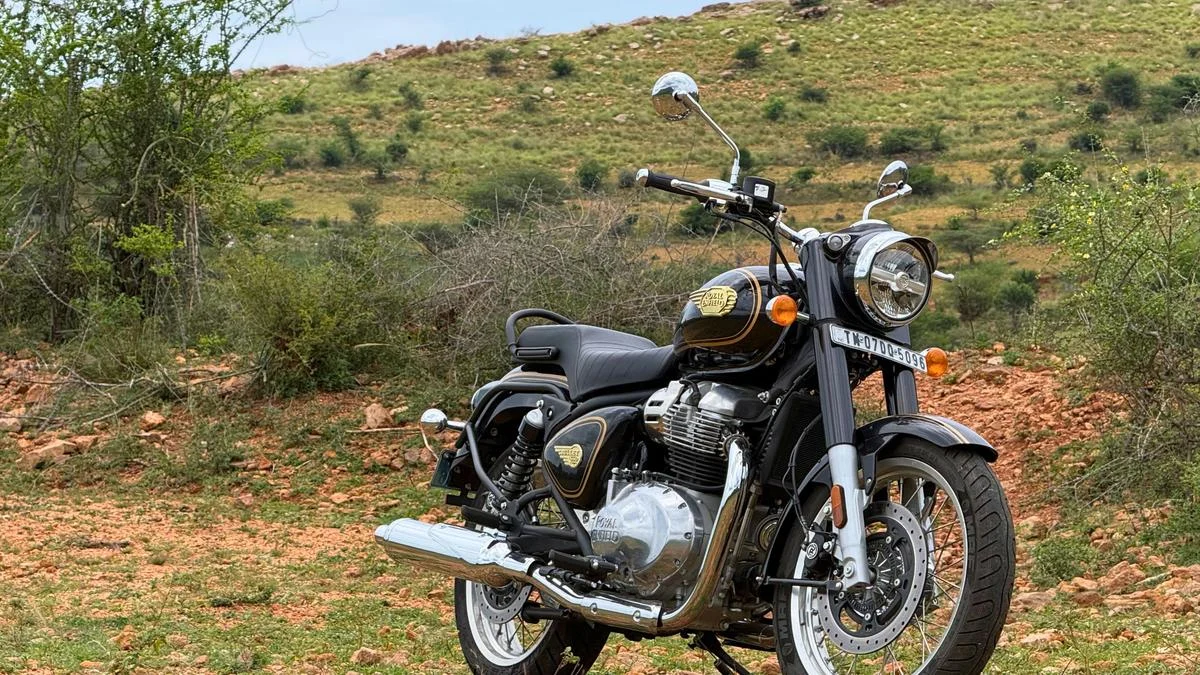
The automotive world often speaks of "heritage" as a marketing buzzword, but few nameplates carry the historical weight of the Royal Enfield Bullet. With a lineage stretching back to 1932, the Bullet is the world’s oldest motorcycle design in continuous production. However, the latest chapter in this storied history represents perhaps its most radical evolution yet. The arrival of the Royal Enfield Bullet 650, priced at ₹3.64 lakh (ex-showroom), marks the culmination of the company’s ambitious expansion of its 648cc parallel-twin platform.
This transition from the traditional single-cylinder "thump" to the sophisticated "roar" of a twin-cylinder engine is more than a mechanical upgrade; it is a strategic repositioning of a legend.
1. Main Facts: The New Standard of Middleweight Cruising
The Royal Enfield Bullet 650 enters the market not just as a larger-capacity motorcycle, but as a bridge between the raw, mechanical past of the brand and its refined, global future.
Core Specifications at a Glance:
- Engine: 648cc parallel-twin, air-oil cooled.
- Performance: 47PS of power at 7,250rpm; 52.3Nm of torque at 5,650rpm.
- Transmission: 6-speed gearbox with a slipper and assist clutch.
- Chassis: Steel tubular spine frame.
- Braking: 320mm front disc, 300mm rear disc with dual-channel ABS.
- Weight: 243kg (kerb weight).
- Price: ₹3.64 lakh (Ex-showroom).
The Bullet 650 joins an elite stable of motorcycles—including the Interceptor 650, Continental GT 650, Super Meteor 650, and the recently launched Classic 650—that utilize the same award-winning 270-degree crank engine. While its siblings lean into cafe racer or modern cruiser aesthetics, the Bullet 650 remains steadfast in its devotion to the post-war British motorcycling silhouette.

2. Chronology: The Evolution of the Bullet Brand
To understand the significance of the 650cc variant, one must look at the timeline of the Bullet’s development, which has mirrored the shifts in the global motorcycling landscape.
- 1932–1950s: The birth of the Bullet as a high-performance (for the time) OHV machine. It gained fame for its durability in trials and military use.
- 1955: Royal Enfield India is established, and the Bullet becomes a staple of the Indian police and military, cementing its status as a cultural icon.
- 2008–2010: The introduction of the Unit Construction Engine (UCE) marked the first major shift toward modern reliability, replacing the old cast-iron engines and separate gearboxes.
- 2021: The "J-Platform" 350cc engine brought a new level of refinement to the Bullet 350, eliminating the harsh vibrations that purists once called "character."
- 2024–2025: The "Twin Revolution." After successfully proving the 648cc engine in the Interceptor and Continental GT, Royal Enfield finally integrates its most powerful modern motor into its most traditional frame, creating the Bullet 650.
This chronology demonstrates a brand that is no longer content with being a niche retro player. Royal Enfield is systematically upgrading its icons to meet international standards of performance and emissions.
3. Supporting Data: Design, Engineering, and Real-World Performance
A. Design: Preservation of the Icon
The design of the Bullet 650 is a masterclass in restraint. Royal Enfield’s designers have resisted the urge to add digital screens or aggressive angles.
- The Silhouette: The iconic teardrop fuel tank remains the centerpiece, adorned with the signature hand-painted gold pinstripes—a craft still performed by a small group of artisans at the Chennai plant.
- Heritage Cues: The "tiger eye" pilot lamps, the squared-off rear mudguard, and the classic casquette headlamp housing are all present.
- Premium Finishes: Extensive use of chrome on the engine casings and the "peashooter" dual exhausts elevates the bike’s presence. Unlike many modern motorcycles that rely on plastic cladding, the Bullet 650 feels substantial and "metal-heavy," which contributes to its 243kg mass.
B. The 648cc Powerplant: Refinement Over Raw Power
The engine is the heart of the transformation. The 47PS output is modest by global 650cc standards, but it is the delivery of that power that defines the Bullet.

- Torque Curve: With 52.3Nm available, the bike offers a "wall of torque" that makes gear shifts optional in city traffic.
- The Soundscape: The traditional "thump" of the single-cylinder is replaced by a deeper, rhythmic rumble. While some purists may miss the old cadence, the twin-cylinder’s 270-degree firing order provides a "burble" that sounds mature and authoritative.
- Vibration Management: One of the most significant data points is the reduction in NVH (Noise, Vibration, and Harshness). The engine remains buttery smooth even at 100 km/h, a speed that would have left riders of older Bullets with numb hands.
C. Ride Dynamics and Ergonomics
The Bullet 650 is built for "The Long Ride."
- Seating: The single-piece "bench" seat is inspired by the original design but features modern foam density for better touring comfort. The 800mm seat height makes it accessible, though the sheer width of the bike means riders under 5’8” may struggle with foot placement.
- Suspension: The 43mm telescopic front forks (120mm travel) and twin rear shocks (90mm travel) are tuned for plushness. Data from road tests suggests the bike excels at absorbing minor road imperfections, though the rear can feel slightly stiff over sharp, high-speed bumps.
- Fuel Economy: In real-world "spirited" testing (high-speed cruising and hill climbs), the bike returned approximately 18 kmpl. However, Royal Enfield claims figures above 25 kmpl under standard touring conditions, which is consistent with other models in the 650 range.
4. Official Stance and Market Positioning
While Royal Enfield rarely comments on specific sales targets, their corporate strategy is clear: The Premiumization of Heritage.
The company’s leadership has frequently stated that their goal is to lead the "middleweight" motorcycle segment (250cc–750cc) globally. The Bullet 650 is the flagship of this philosophy. By pricing the bike at ₹3.64 lakh, Royal Enfield is positioning it as a premium upgrade for the millions of Bullet 350 owners who are looking for more power without wanting a "sporty" or "modern" look.
Bullet 650 vs. Classic 650: The Internal Rivalry
Royal Enfield officials note that while the Bullet and Classic share the same chassis and engine, they cater to different emotional needs.

- The Classic 650 is more ornate, with a focus on 1950s "post-war" aesthetics and a different seat/fender configuration.
- The Bullet 650 is seen as the "purest" form—utilitarian yet regal, focusing on the "standard" motorcycle look that defined the brand for a century.
5. Implications: The Future of the Middleweight Market
The release of the Bullet 650 has several long-term implications for the motorcycle industry and the Royal Enfield brand.
A. The End of the "Vibration Era"
For decades, Royal Enfield was synonymous with mechanical "soul" that came at the cost of reliability and comfort. The Bullet 650 proves that soul can exist alongside Japanese-level refinement. This shift forces competitors (such as BSA, Triumph’s 400 series, and Jawa-Yezdi) to step up their build quality and engine smoothness.
B. Global Expansion
The Bullet 650 is a global product. In markets like Europe and North America, the "Bullet" name carries a cult-like status. By providing a 650cc version that can comfortably maintain highway speeds (120 km/h+) without stress, Royal Enfield has created a viable alternative to larger, more expensive cruisers from brands like Harley-Davidson or Triumph.
C. The Challenge of Weight
At 243kg, the Bullet 650 is undeniably heavy. This weight provides stability on the highway, making it feel "planted" even in crosswinds. However, it presents a barrier to entry for younger, lighter riders or those living in congested urban environments. The implication is that Royal Enfield is doubling down on its "Heavy Metal" identity, even as other brands move toward lightweight composites.

D. Safety as a Standard
The inclusion of dual-channel ABS and a robust 320mm braking system signals a move away from the "budget" image of older Enfields. The bike’s ability to stop with precision, even given its massive weight, sets a new safety benchmark for the "retro-classic" segment.
Final Verdict: The Evolution of an Icon
The Royal Enfield Bullet 650 is a triumph of engineering over nostalgia. It manages to satisfy the visual demands of the traditionalist while providing the performance required by the modern traveler. It is a motorcycle that encourages the rider to take the long way home, not because it is fast, but because it is effortless.
For ₹3.64 lakh, the rider is not just buying a 650cc twin; they are buying a piece of history that has finally caught up with the present. The "thump" may have evolved into a "roar," but the spirit of the Bullet remains as steadfast as ever. In an era of plastic-clad speed machines, the Bullet 650 stands as a heavy, chrome-plated reminder that some things are better left timeless.
