

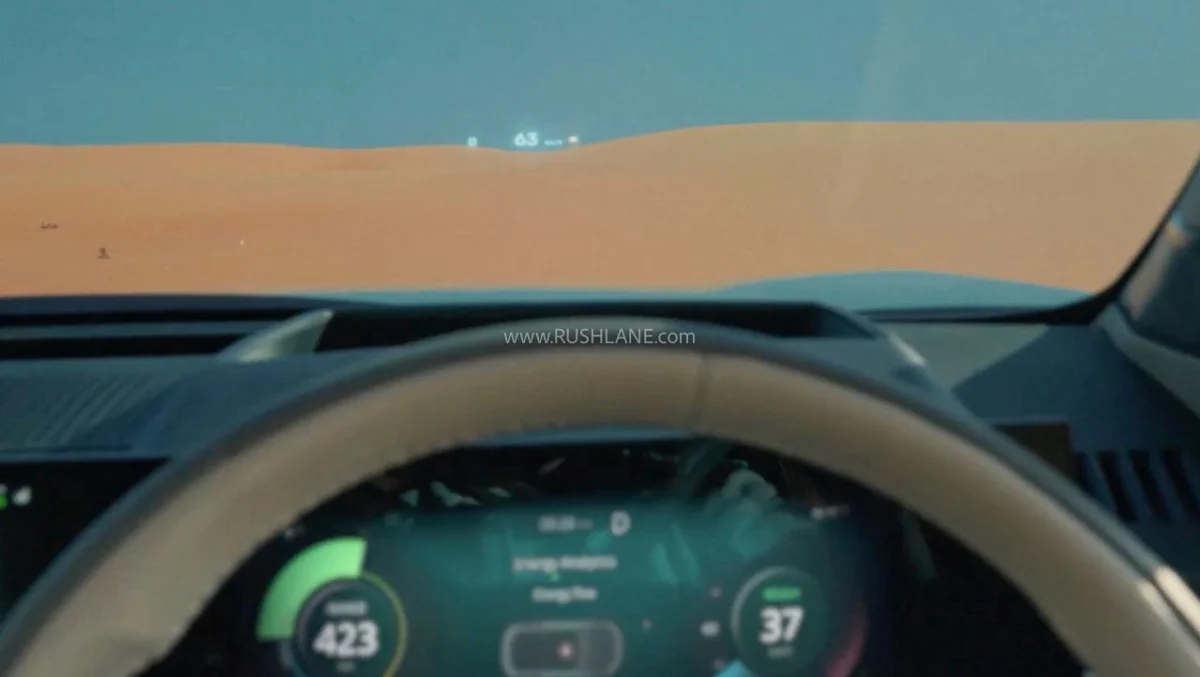
The Indian automotive landscape is bracing for the return of one of its most storied monikers. Tata Motors has intensified the anticipation for the upcoming Sierra EV by releasing a high-octane promotional film featuring the SUV conquering the Tal Moreeb sand dune in Abu Dhabi, UAE. This demonstration is not merely a marketing exercise; it serves as a technical showcase for the production-ready vehicle’s capabilities, revealing critical specifications and features that have remained under wraps until now.
As the June 30th launch date approaches, the Sierra EV is positioning itself as the flagship of Tata’s rapidly expanding electric vehicle (EV) portfolio. By pitting the SUV against one of the world’s most challenging natural obstacles, Tata Motors is signaling a shift from urban-centric mobility to genuine, all-terrain lifestyle electric vehicles.
Main Facts: A Glimpse into the Production-Spec Powerhouse
The footage from Abu Dhabi provides the most comprehensive look yet at the hardware that will define the Sierra EV. While previous concepts focused on the "Lounge on Wheels" aesthetic, the latest reveal emphasizes the "Quad Wheel Drive" (AWD) system and the sophisticated software managing it.

Terrain Management and the "Boost" Factor
One of the most significant revelations is the inclusion of dedicated Terrain Modes. In the video, the digital instrument cluster clearly displays "Sand Mode" as the vehicle navigates the shifting dunes. This system, likely derived from the upcoming Harrier EV, allows the vehicle to calibrate torque distribution, slip control, and throttle response to suit specific surfaces like mud, sand, or snow.
Furthermore, the video highlights a "Boost Mode." Before the final ascent of the Tal Moreeb—a dune known for its 50-degree incline—the dashboard flashes a "Boost Mode Activated" notification. This feature suggests that the Sierra EV can draw peak current from the battery pack for short bursts, providing maximum torque to both axles to overcome high-resistance obstacles or execute rapid overtaking maneuvers.
Range Expectations and Battery Efficiency
Perhaps the most scrutinized frame of the video involves the energy analytics screen. The instrument cluster shows a remaining range of 424 km with the battery at 80% charge. Through simple extrapolation, this suggests a total driving range of approximately 530 km on a full charge.

While these figures are often based on internal testing or specific driving cycles (such as ARAI), they point toward a substantial battery pack, likely in the 60 kWh to 80 kWh range. This would place the Sierra EV at the top of its class in terms of endurance, making it a viable option for long-distance touring—a core tenet of the original Sierra’s "wanderlust" philosophy.
Chronology: The Evolution of a Legend
The journey of the Tata Sierra is a thirty-year odyssey that mirrors the evolution of the Indian automotive industry itself.
- 1991: The Birth of an Icon: The original Tata Sierra was launched as India’s first indigenous SUV. With its unique three-door design and massive rear glass wrap-around windows, it was decades ahead of its time. Although it saw modest commercial success, it achieved cult status among enthusiasts.
- 2020: The Resurrection Concept: At the 2020 Auto Expo, Tata surprised the industry by showcasing the Sierra EV Concept. It retained the iconic "Alpine Windows" but reimagined the vehicle for the electric age.
- 2023: Refining the Vision: By the 2023 Auto Expo, the concept had evolved into a more production-feasible four-door design. Tata confirmed that the Sierra would be built on the Acti.ev platform, capable of both Internal Combustion Engine (ICE) and EV powertrains.
- 2024 (Early): Testing Phases: Spied testing across various terrains in India, the vehicle began to take its final shape, shedding the conceptual "lounge" seating for a more practical five-seater and premium four-seater "Lounge" configuration.
- June 2026 (The Current Reveal): The Abu Dhabi desert test marks the final phase of pre-launch validation, proving that the vehicle’s thermal management and AWD systems can withstand extreme heat and high-load scenarios.
Supporting Data: Technical Architecture and Design
The Sierra EV is built upon Tata’s advanced Acti.ev (Advanced Connected Tech-Intelligent Electric Vehicle) architecture. This dedicated EV platform allows for a flat floor, maximizing interior space and allowing for a modular battery setup.

Design Specifics
The production-spec model seen in the UAE features several departures from the earlier concept:
- Body Cladding: The vehicle sports gloss black body cladding rather than the rugged grey seen on earlier prototypes, suggesting a more premium, "urban-chic" positioning.
- Lighting: The signature full-width LED DRLs remain, but the video reveals a more traditional Tata logo on the steering wheel, contrasting with the illuminated "Tata.ev" branding found on the Punch.ev or Nexon.ev.
- Wheels and Stance: The alloy wheel design remains consistent with the ICE version of the Sierra, emphasizing parts commonality to keep maintenance costs manageable.
- Cabin Technology: The inclusion of a Head-Up Display (HUD) and a large 12.3-inch touchscreen infotainment system confirms that Tata is aiming for a luxury-segment feel.
Performance Metrics (Estimated)
Based on the Acti.ev platform’s capabilities and the Harrier EV’s projected specs, the Sierra EV is expected to feature:
- Dual Motor Setup: One motor per axle, providing electronic All-Wheel Drive.
- Power Output: Estimated between 200 PS and 250 PS.
- 0-100 km/h: Anticipated in under 7 seconds in Boost Mode.
- Charging: Support for 150 kW DC fast charging, enabling a 10% to 80% charge in approximately 30 minutes.
Official Responses: "A Proof, Not a Stunt"
Tata Motors’ marketing department has been deliberate in its choice of wording for this campaign. By labeling the Tal Moreeb climb as "A Proof, Not a Stunt," the company is directly addressing skepticism regarding the off-road viability of electric SUVs.

In a brief statement accompanying the video, Tata Motors highlighted that the Sierra EV’s "Quad Wheel Drive" system is designed to provide instantaneous torque to the wheel with the most grip, a feat that traditional mechanical lockers in ICE vehicles often struggle to achieve with the same level of precision.
"The Sierra.ev is not just about nostalgia; it is about redefining what an electric SUV can do," a source close to the development team noted. "Testing in Abu Dhabi allows us to validate the battery’s cooling systems under extreme stress. If it can climb Tal Moreeb in the heat of the desert, it can handle any weekend excursion in the Himalayas or the Western Ghats."
Implications for the Indian EV Market
The launch of the Sierra EV on June 30th is set to have far-reaching implications for both Tata Motors and the wider industry.

1. Moving Upmarket
Historically, Tata has dominated the entry-level and mid-range EV segments with the Tiago, Tigor, and Nexon. The Sierra EV, expected to be priced between ₹25 lakh and ₹32 lakh, moves the brand into the premium territory currently occupied by the Hyundai IONIQ 5 and the BYD Atto 3. It represents Tata’s attempt to capture the "lifestyle" buyer—someone who values heritage and capability as much as zero-emission driving.
2. The AWD Revolution
For a long time, the Indian EV market lacked credible AWD options. By introducing the Sierra EV and the Harrier EV with dual-motor setups, Tata is filling a void for enthusiasts who want to transition to electric but are unwilling to sacrifice off-road capability. This could force competitors like Mahindra (with their upcoming XUV.e and BE series) to accelerate their own AWD programs.
3. Nostalgia as a Sales Driver
The Sierra nameplate carries immense brand equity. By reviving it, Tata is tapping into the emotions of Gen X and Millennial buyers who grew up admiring the original. This "retro-modern" strategy has worked successfully for global brands (e.g., the Ford Bronco or the Hummer EV) and is now being localized for the Indian context.

4. Technological Benchmarking
The 500+ km range and the sophisticated terrain management software seen in the Abu Dhabi video set a new benchmark for domestic manufacturers. It proves that Indian OEMs are now capable of developing world-class EV hardware that can compete on a global stage, potentially opening doors for exports to markets in the Middle East and Southeast Asia.
Conclusion
The Tata Sierra EV is more than just a new car launch; it is a statement of intent. The conquest of Tal Moreeb serves as a powerful metaphor for the brand’s journey—climbing toward a future where electric mobility is synonymous with power, adventure, and reliability. When the curtains finally go up on June 30th, the industry will not just be looking at a revived icon, but at a vehicle that could very well define the next decade of the Indian electric revolution. With its blend of heritage design, sophisticated AWD technology, and long-range capability, the Sierra EV is poised to reclaim its throne as the aspirational king of the Indian road—and off-road.
