


New Delhi | May 16, 2026
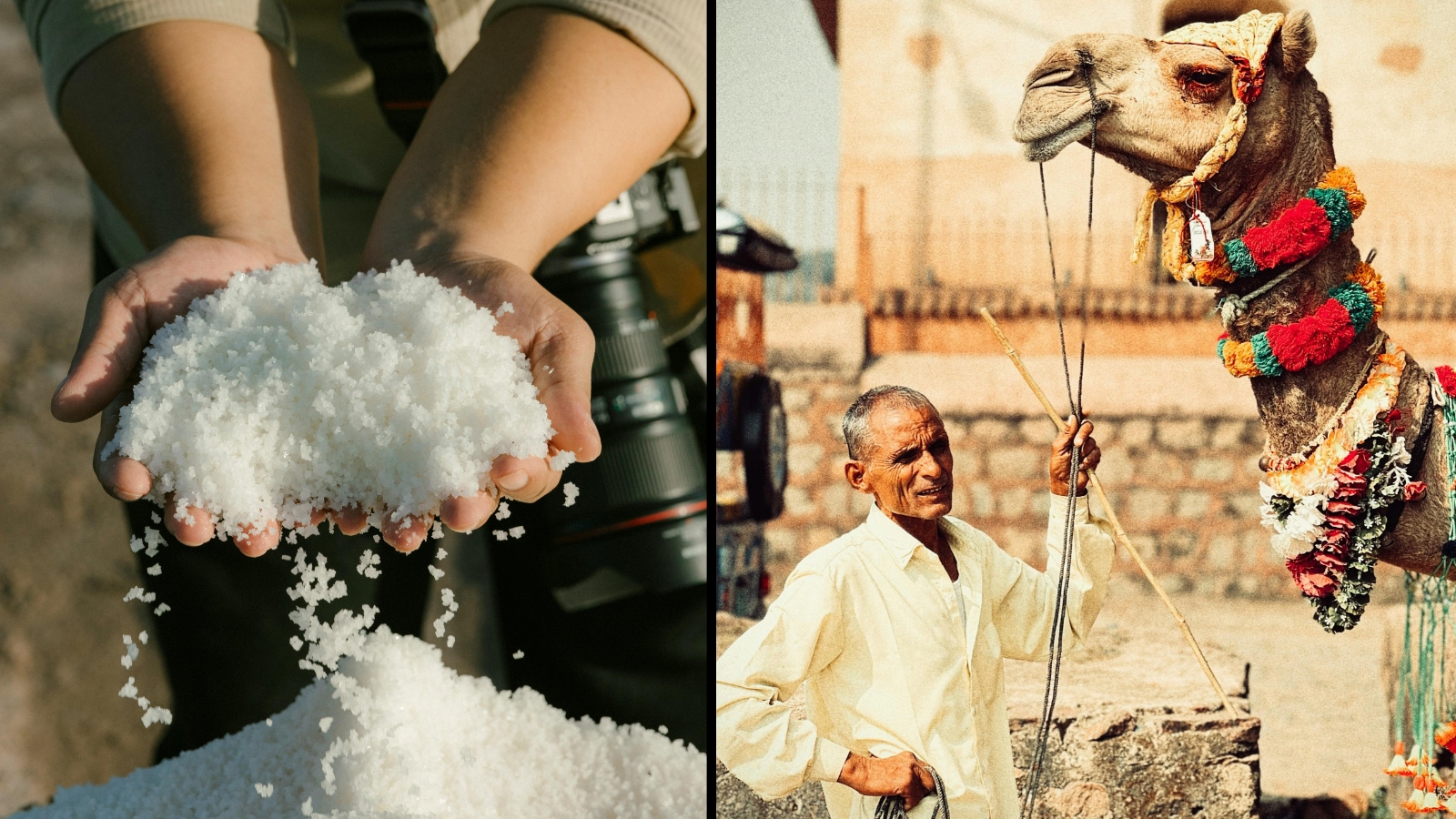
The image of a lone camel trudging across an endless expanse of sand, a silhouette against a fiery sunset, is an enduring symbol of the desert. These magnificent creatures are synonymous with resilience, capable of enduring conditions that would spell doom for most other life forms. Their ability to traverse scorching landscapes, subsist on minimal water, and carry substantial burdens across vast arid regions is a testament to millions of years of evolutionary adaptation. However, a seemingly counterintuitive practice, deeply rooted in the traditions of desert-dwelling communities, plays a crucial role in equipping these animals for their arduous journeys: the intentional feeding of large quantities of salt before long desert expeditions.
While for humans, excessive salt intake is often linked to dehydration, this biological paradox holds a surprisingly intelligent purpose for camels. This practice, observed across various desert regions worldwide, is not merely a quirky tradition but a finely tuned strategy that leverages the unique physiology of the camel, enabling them to not only survive but thrive in the planet’s most unforgiving environments. This article delves into the scientific rationale behind this practice, exploring its significance in camel physiology, the historical context of its adoption by desert communities, and its broader implications for understanding animal adaptation and human-animal partnerships in extreme climates.
The Biological Imperative: Why Salt is a Camel’s Ally
The human body generally reacts to increased salt intake by drawing water from cells to maintain blood plasma concentration, a process that can exacerbate dehydration. However, the camel’s biological machinery operates on a different principle, one that has been honed by the harsh realities of desert life. The pre-expedition salt feeding is a deliberate act to prepare the camel’s system for the inevitable fluid loss and electrolyte imbalance that accompanies prolonged travel through arid conditions.
Enhanced Water Retention and Absorption:
The primary function of pre-journey salt consumption for camels is to stimulate a significant intake and subsequent retention of water. When camels consume a concentrated dose of salt, their bodies initiate a powerful thirst response, prompting them to drink vast quantities of water – sometimes up to one-third of their body weight in a matter of minutes. This substantial water reservoir is crucial for sustaining them during periods of limited access to hydration. The ingested salt helps the camel’s intestinal system absorb this water more efficiently, ensuring that a larger proportion of the consumed fluid is retained within the body rather than being rapidly excreted.
Electrolyte Balance Under Stress:
Desert travel invariably leads to fluid loss through sweating and respiration, especially under the intense heat. This loss of fluid also entails the depletion of essential electrolytes, such as sodium and potassium, which are critical for maintaining nerve function, muscle contraction, and overall cellular activity. By consuming salt beforehand, camels establish a higher baseline of electrolytes in their system. This allows them to better tolerate the fluctuations and losses they will experience during their journey. The salt acts as a buffer, helping to maintain the delicate electrolyte balance that is vital for the proper functioning of their physiological systems even when dehydrated.
A Unique Physiological Advantage:
Unlike most mammals, camels possess an extraordinary capacity to tolerate significant variations in their hydration levels without their bodily functions shutting down. Their kidneys are remarkably efficient at reabsorbing water, minimizing urinary output and concentrating waste products. Furthermore, their red blood cells are oval-shaped, a unique characteristic that prevents them from rupturing or clumping together when the blood thickens due to dehydration, ensuring continued circulation. This inherent adaptability, combined with the strategic advantage of pre-journey salt feeding, allows camels to endure dehydration levels that would be fatal to other animals.
The Evolutionary Blueprint: Camels as Masters of the Arid Realm
The camel’s remarkable survival capabilities are not solely dependent on external interventions like salt feeding. Their entire physiology is a testament to evolutionary engineering for life in the desert. Understanding these intrinsic adaptations provides a deeper appreciation for why the salt feeding practice is so effective.
Debunking the Hump Myth:
A persistent misconception is that camels store water in their humps. In reality, these iconic humps are primarily composed of fat reserves. This fat serves a dual purpose: it is a crucial energy source when food is scarce, and its metabolic breakdown produces a significant amount of water. This metabolic water contributes to the camel’s overall hydration, especially during prolonged periods without drinking.
Respiratory and Ocular Adaptations:
Camels have evolved sophisticated mechanisms to combat the harsh desert environment. Their nostrils are designed with specialized muscles that can be tightly closed, preventing the inhalation of sand during dust storms. Their long, thick eyelashes act as natural filters, further protecting their eyes from abrasive sand particles. Additionally, their respiratory system is adapted to minimize moisture loss during exhalation.
Thermoregulation for Water Conservation:
One of the most remarkable adaptations is the camel’s ability to tolerate a wider range of body temperatures than most mammals. While humans need to maintain a stable internal temperature and sweat profusely to cool down, camels can allow their body temperature to rise significantly during the day, reducing the need for evaporative cooling (sweating). As the ambient temperature drops at night, they can then dissipate this heat. This fluctuation in body temperature conserves precious water that would otherwise be lost through sweat.
A Chronicle of Survival: The Historical Roots of Salt Feeding
The practice of feeding camels salt before desert journeys is not a recent discovery but an ancient tradition, honed over millennia by nomadic and desert-dwelling communities. These communities, living in intimate connection with their environment and the animals that sustained them, developed a profound understanding of camel behavior and physiology through generations of observation and trial-and-error.
Traditional Knowledge and Practical Application:
For centuries, communities across the vast arid belts of Africa, the Middle East, and parts of Asia have relied on camels for their livelihoods. These animals were, and in many places still are, indispensable for transportation of goods and people, facilitating trade routes that connected distant regions. They provided milk, meat, and wool, and their dung served as fuel. The survival of these communities was intrinsically linked to the health and endurance of their camels.
The practice of salt feeding emerged as a critical component of this traditional knowledge system. Desert dwellers understood that preparing camels for long treks, often across hundreds of miles with unpredictable water sources, required more than just providing fodder. They recognized the camel’s unique ability to utilize salt to its advantage and incorporated this practice into their pre-expedition rituals. This was not a matter of guesswork but a practical application of accumulated wisdom, passed down through oral traditions and direct mentorship.
The Camel as a Cornerstone of Desert Civilization:
The domestication and utilization of camels, often referred to as the "ships of the desert," played a pivotal role in the development of civilizations in arid regions. Their ability to traverse difficult terrain, carry heavy loads, and withstand extreme conditions allowed for the establishment of trade networks, the expansion of settlements, and the cultural exchange between diverse populations. The salt feeding practice, therefore, is not just about animal husbandry; it is a testament to a sophisticated understanding of ecological interdependence and a crucial element in the history of human adaptation to desert environments.
The Far-Reaching Implications: Beyond the Desert Sands
The study of camel physiology and the practice of pre-journey salt feeding offer valuable insights that extend beyond the realm of animal science. They highlight the ingenuity of natural adaptation and the importance of understanding traditional ecological knowledge.
Lessons for Human Hydration and Endurance:
While direct application to human physiology is limited due to fundamental biological differences, the principles behind the camel’s strategy offer intriguing avenues for research. Understanding how the camel efficiently manages fluid and electrolyte balance under extreme stress could inform strategies for human endurance athletes, military personnel operating in hot climates, or even individuals recovering from severe dehydration. The concept of "pre-loading" or strategic electrolyte management, inspired by the camel’s system, could have potential applications in specialized nutritional science.
Preservation of Traditional Knowledge:
In an era of rapid technological advancement, the traditional practices of indigenous communities are sometimes overlooked or dismissed. The salt feeding of camels serves as a powerful reminder of the wealth of knowledge embedded within these traditions. Documenting and understanding these practices not only honors the cultural heritage of desert communities but also provides valuable, often time-tested, solutions to environmental challenges. This underscores the importance of interdisciplinary collaboration between scientists and traditional knowledge holders.
Sustainable Animal Husbandry in Arid Regions:
As climate change continues to impact water availability and exacerbate desertification in many parts of the world, understanding and promoting sustainable animal husbandry practices becomes increasingly critical. The camel’s resilience and the effectiveness of traditional management techniques like salt feeding offer a model for livestock management in arid and semi-arid regions, potentially contributing to food security and the livelihoods of communities dependent on these animals.
In conclusion, the practice of feeding salt to camels before their desert voyages is a profound example of biological synergy and ancestral wisdom. It is a strategy that, while seemingly paradoxical to human intuition, is deeply rooted in the camel’s remarkable evolutionary adaptations. This ancient tradition, passed down through generations, not only ensures the survival and endurance of these magnificent creatures but also offers a glimpse into the intricate relationship between humans and the natural world, a relationship built on deep understanding, respect, and a shared journey across the unforgiving yet beautiful canvas of the desert.
