

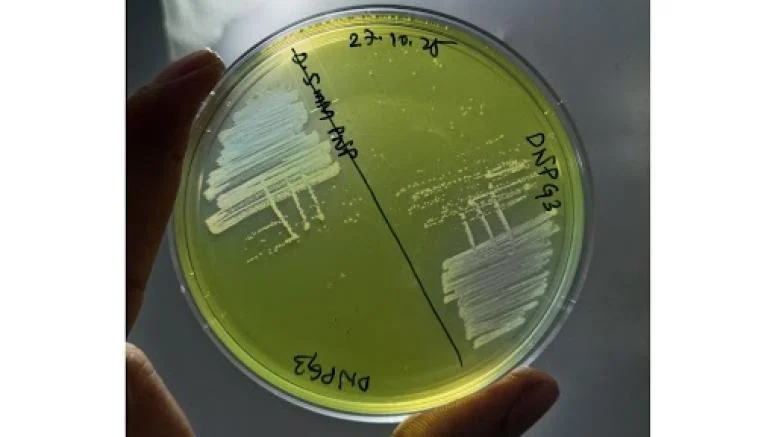
KOLKATA – In a breakthrough that bridges the gap between historical legacy and cutting-edge environmental science, a multi-institutional team of researchers has announced the discovery of a remarkably resilient species of bacteria in the Hooghly River. Named Brachybacterium netajii, this newly identified microbe possesses the rare ability to thrive in highly toxic environments, metabolizing industrial pollutants that are lethal to most life forms.
The discovery, published in recent scientific literature, comes at a critical time for India’s waterways. As the nation grapples with the dual challenges of industrial expansion and environmental preservation, B. netajii offers a potential "nature-based solution" to the persistent problem of chemical and heavy metal contamination in the Ganges River system.
Main Facts: A Microscopic Powerhouse
The identification of Brachybacterium netajii is the result of an international collaboration involving Netaji Mahavidyalaya, the University of Burdwan, the Indian Institute of Technology (BHU), and Hiroshima University in Japan. The bacterium was isolated from the sediment and water of the Hooghly River, a major distributary of the Ganges that flows through the industrial heartland of West Bengal.
The defining characteristic of this new species is its metabolic versatility. Unlike most organisms, which perish when exposed to high concentrations of synthetic chemicals, B. netajii has evolved to treat p-nitrophenol (PNP)—a highly toxic and persistent organic pollutant—as a primary food source. Furthermore, the microbe demonstrates an extraordinary tolerance to a "cocktail" of heavy metals, including arsenic, cadmium, lead, and mercury, all of which are prevalent in the Hooghly due to industrial discharge.
Beyond its detoxifying capabilities, the bacterium is "halotolerant," meaning it can survive in saline conditions with salt concentrations as high as 9%. This makes it a prime candidate for treating industrial wastewater, which is often both toxic and brine-heavy.

Chronology: From River Silt to Genomic Mapping
The journey to the discovery of B. netajii began with a systematic sampling of the Hooghly’s waters. Researchers sought to find "extremophiles"—organisms that have adapted to the harsh, polluted conditions of one of the world’s most stressed river systems.
1. The Enrichment Culture Phase
The research team employed a laboratory technique known as "enrichment culture." They took water samples and placed them in a controlled environment where the only available carbon and energy source was p-nitrophenol (PNP). In this "sink or swim" scenario, the vast majority of bacterial species died off. However, a specific strain, eventually labeled DNPG3, began to multiply, proving it could break down the benzene ring of the PNP molecule to fuel its growth.
2. Polyphasic Taxonomic Characterisation
Once the strain was isolated, the team began a rigorous multi-step identification process. This "polyphasic" approach involved analyzing the bacteria’s physical shape (morphology), its chemical composition (chemotaxonomy), and its entire genetic blueprint (genomics). By comparing these results against known databases of the Brachybacterium genus, the researchers confirmed that DNPG3 did not match any previously recorded species.
3. Genomic Sequencing and Validation
The final stage involved mapping the bacterium’s entire genetic code. This allowed the scientists to identify specific "genomic islands"—clusters of genes acquired through horizontal gene transfer—that provide the bacteria with its unique survival mechanisms. On June 26, 2026, the findings were finalized, cementing B. netajii’s place in the tree of life.
Supporting Data: The Science of Survival
The resilience of Brachybacterium netajii is not merely anecdotal; it is backed by specific biochemical markers that distinguish it from its closest relatives, such as Brachybacterium huguangense and Brachybacterium rhamnosum.

Chemical Composition
One of the most significant findings in the polyphasic study was the presence of unique fatty acids within the bacterium’s cell membrane. Specifically, the researchers identified the fatty acids C11:0 and C10:0 2-OH. These compounds act as structural stabilizers, allowing the cell to maintain its integrity even when surrounded by corrosive heavy metals or high salinity. These specific markers are absent in other members of the Brachybacterium genus, serving as a biological "fingerprint" for the new species.
Resistance Profile
The research team tested B. netajii against a battery of environmental stressors. The results were startling:
- Heavy Metals: The strain survived concentrations of arsenic and mercury that would typically sterilize a water sample.
- Salinity: While most freshwater bacteria struggle above 1-2% salinity, B. netajii thrived at 9%, suggesting it could be used in coastal or estuarine environments.
- Pollutant Degradation: The bacteria successfully converted PNP—a chemical used in the production of pesticides, synthetic dyes, and pharmaceuticals—into harmless byproducts.
The Ectoine Shield
Genomic analysis revealed that B. netajii produces a compound called ectoine. Ectoine is a natural amino acid derivative that acts as an "osmoprotectant." It surrounds the bacteria’s proteins and DNA in a protective water shell, preventing damage from extreme heat, UV radiation, or chemical desiccation.
Official Responses and the "Netaji" Legacy
The naming of the species—Brachybacterium netajii—was a deliberate choice by the research team to honor Subhas Chandra Bose, the iconic Indian nationalist leader affectionately known as "Netaji."
In statements regarding the discovery, the researchers emphasized that Bose was a visionary who advocated for the marriage of traditional Indian values with modern scientific rigor. By naming a "homegrown" microbe after him—one that cleanses the sacred but polluted Ganges—the team sought to symbolize the concept of "Atmanirbhar Bharat" (Self-Reliant India).

"Netaji believed that India’s freedom would only be complete when the nation achieved scientific and technological self-sufficiency," noted a spokesperson for the research team from Netaji Mahavidyalaya. "Finding a microscopic ‘leader’ in our own backyard that can lead the fight against pollution felt like the most fitting tribute to his legacy."
Academic circles in West Bengal and beyond have hailed the discovery as a testament to the strength of regional universities. The collaboration between local colleges like Netaji Mahavidyalaya and international institutions like Hiroshima University demonstrates a growing trend of "hyper-local" science having a global impact.
Implications: A Greener Industrial Future
The discovery of Brachybacterium netajii has far-reaching implications for several sectors, ranging from environmental policy to the pharmaceutical industry.
1. Environmental Bioremediation
The most immediate application for B. netajii is in the "in-situ" cleaning of polluted sites. Current methods for removing heavy metals and toxic organics often involve expensive dredging or the use of harsh chemicals that can cause secondary pollution. B. netajii offers a "green" alternative: "seeding" polluted industrial runoff with these bacteria could allow for the natural breakdown of toxins before they reach major river systems.
2. Industrial Enzyme Production
The "genomic islands" found in B. netajii contain instructions for creating various enzymes. These enzymes are of high interest to the biotechnology industry for use in "white biotechnology"—the use of living cells to synthesize products. The enzymes that allow the bacteria to break down complex chemicals could be harnessed to create more efficient, less wasteful manufacturing processes for drugs and plastics.

3. Commercial Ectoine Harvesting
The bacterium’s ability to produce ectoine is also a potential commercial goldmine. Ectoine is a highly sought-after ingredient in the skincare and pharmaceutical industries due to its moisturizing and cell-protective properties. Currently, ectoine is expensive to produce; B. netajii could serve as a new, robust biological factory for this valuable compound.
4. Monitoring River Health
The presence or absence of B. netajii could eventually serve as a bio-indicator for river health. By monitoring the population levels of this and similar microbes, environmental scientists can gain a clearer picture of the "chemical stress" levels in the Hooghly and Ganges rivers.
Conclusion
The discovery of Brachybacterium netajii is more than a taxonomic milestone; it is a beacon of hope for the restoration of India’s vital water resources. As this "respected leader" of the microbial world is further studied, it may hold the key to turning the tide against industrial pollution, proving that sometimes the smallest organisms are the ones most capable of solving our largest problems. For a river as storied as the Ganges, the arrival of B. netajii represents a new chapter—one where science and heritage work hand-in-hand to ensure a cleaner, more sustainable future.
