

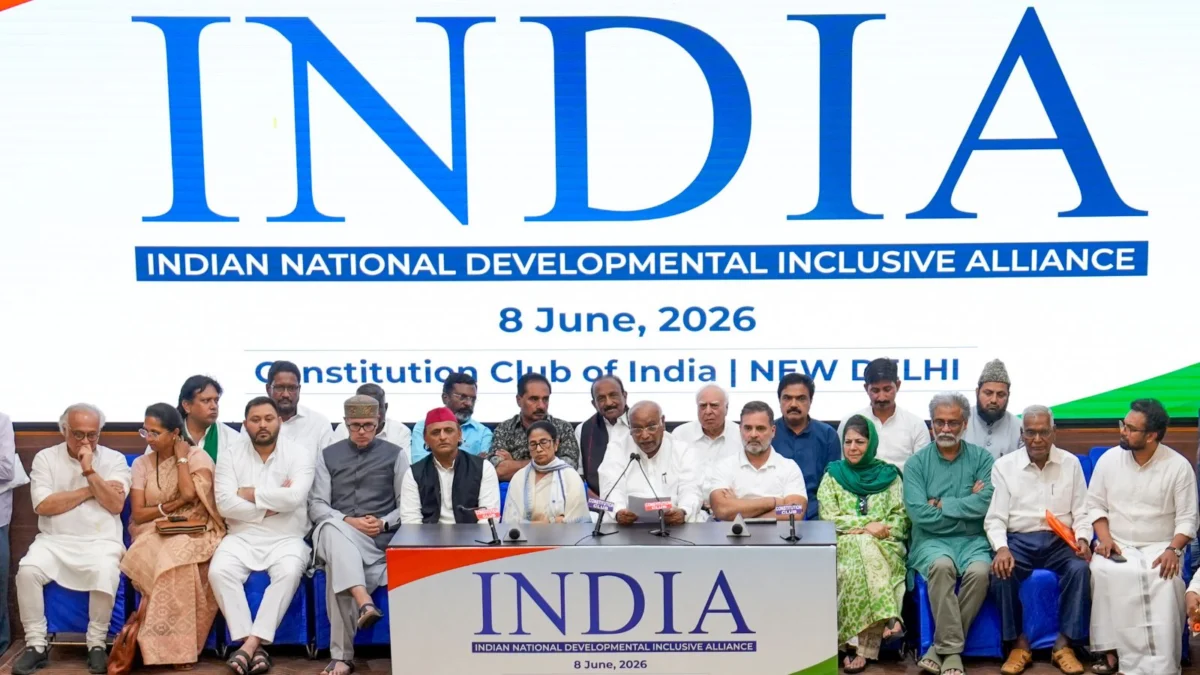
New Delhi, June 14, 2026 – The political landscape of India has undergone a profound transformation since the landmark 2024 Lok Sabha elections, which saw the Bharatiya Janata Party (BJP)-led National Democratic Alliance (NDA) secure a third consecutive term at the Centre. Far from resting on its laurels, the ruling alliance has systematically expanded its electoral dominance, not just consolidating its position in Parliament but also significantly extending its lead in state Assemblies across the nation. This relentless expansion has come at the direct expense of Opposition parties, particularly the fledgling INDIA bloc, which now faces an existential crisis marked by dwindling numbers, internal strife, and high-profile defections.
The period spanning from the 2024 general elections to mid-2026 paints a stark picture of a nation increasingly leaning towards a singular political narrative, raising pertinent questions about the future of multi-party democracy and federalism in India. As the BJP and its allies continue to cement their footprint, the once formidable Opposition, initially buoyed by the prospect of a united front, finds itself in an unprecedented state of vulnerability and fragmentation.
Main Facts: A Widening Chasm in India’s Political Fabric
The data unequivocally highlights a dramatic shift in the balance of power within India’s legislative bodies. An in-depth analysis of the Assembly strength of various political parties reveals a significant surge for the BJP and NDA, coinciding with a precipitous decline for the Opposition, particularly the INDIA bloc.
Following the 2024 Lok Sabha elections, the BJP held approximately 37.16% of India’s total 4,123 Members of Legislative Assembly (MLAs). By June 2026, this share had surged to an impressive 43.97%. When considering the entire NDA alliance, the growth is even more pronounced: from 50.84% of all MLAs in 2024 to a commanding 61.36% currently. This substantial increase translates into a greater legislative majority at the state level, granting the ruling alliance enhanced leverage in policy implementation and governance across a vast swathe of the country.
In absolute terms, the BJP’s MLA count has risen from 1,532 post-2024 general elections to 1,813, marking a gain of 281 legislators. The NDA’s overall strength has similarly ballooned from 2,096 to 2,530 MLAs over the same period, a remarkable addition of 434 elected representatives. This growth is a testament to both direct electoral victories and, in some instances, strategic political manoeuvres including defections from rival camps.
Conversely, the Opposition has faced a severe erosion of its legislative strength. The INDIA bloc, which comprised 1,603 MLAs (or 38.88% of the total) after the 2024 general elections, has seen its numbers plummet to a mere 1,011 MLAs, representing only 24.52% of the total. This staggering decline of 592 MLAs within two years underscores the profound challenges confronting the Opposition coalition. Adding another layer of complexity, the number of unaligned MLAs, those not affiliated with either the NDA or the INDIA bloc, has also seen a significant increase, growing from 321 (7.79%) to 563 (13.66%), indicating a growing segment of regional politics operating outside the two major formations.
This statistical narrative paints a clear picture of a political landscape increasingly dominated by the BJP and its allies, with the Opposition struggling to maintain relevance and coherence. The implications of such an imbalance for India’s democratic health and federal structure are profound and warrant careful scrutiny.
Chronology: The Unfolding of Dominance and Decline
The story of the NDA’s expansion and the INDIA bloc’s contraction is one told through a series of electoral battles and political realignments that have transpired since the 2024 Lok Sabha elections.
Post-2024 Lok Sabha Elections: A Renewed Mandate and Initial Opposition Hopes
After securing a decisive third term, the BJP-led NDA government began its new tenure with a clear mandate. Despite the national setback, the INDIA bloc, formed with much fanfare before the general elections, initially harboured hopes of performing better in state-level contests, leveraging regional strengths and anti-incumbency sentiments against state governments. Their strategy was to consolidate regional parties and present a united front, but this proved to be a significant uphill battle.
The First Wave of State Elections (Late 2024 – Early 2025):
The initial round of Assembly elections following the general polls saw the NDA maintain its momentum. While specific states are not detailed in the provided data beyond West Bengal and Assam, it can be inferred that these early contests provided the first indications of the BJP’s continuing electoral prowess. States like Maharashtra and Haryana, which historically present competitive multi-party contests, likely saw the BJP and its allies either retaining power or making significant inroads, capitalizing on the national narrative and the perceived strength of the central government.
Crucial Victories in Key States (Mid-2025 – Early 2026): West Bengal and Assam
The NDA’s most resounding successes came in critical states like West Bengal and Assam. In West Bengal, a state long considered a stronghold of the Trinamool Congress (TMC) and electorally elusive for the BJP, the ruling party managed to make substantial gains. This was further aided by an "ongoing rebel crisis" within the Mamata Banerjee-led TMC, which saw disgruntled MLAs either defecting or losing influence, thereby weakening the primary Opposition in the state and creating opportunities for the BJP to solidify its standing. The original article suggests the BJP is "poised to further solidify its standing" in West Bengal, indicating ongoing political fluidity that benefits the BJP.
In Assam, the NDA secured another "resounding win," reinforcing its dominance in the Northeastern region. These victories were not merely symbolic; they directly contributed to the significant increase in the NDA’s MLA count, demonstrating the alliance’s ability to convert national popularity into state-level legislative power.
The Unravelling of the INDIA Bloc (Late 2025 – Early 2026):
Concurrently with the NDA’s electoral successes, the INDIA bloc began to face severe internal challenges. The initial unity, often tenuous, started to fracture under the pressure of electoral defeats and diverging regional interests. Seat-sharing arrangements, a persistent point of contention, became increasingly difficult to iron out.
The Aam Aadmi Party (AAP), a significant regional player with strongholds in Delhi and Punjab, was among the first prominent members to exit the INDIA bloc. Their departure was reportedly driven by irreconcilable differences over seat distribution in key states and a desire to preserve their independent political identity. The subsequent loss of 37 MLAs for AAP further highlighted the bloc’s vulnerability.
More recently, the M.K. Stalin-led Dravida Munnetra Kazhagam (DMK), a powerful regional force in Tamil Nadu, also quit the Opposition alliance. The DMK’s departure, accompanied by a loss of 75 MLAs, was a particularly heavy blow, as it removed a crucial southern anchor from the INDIA bloc and underscored the difficulty of maintaining a cohesive national front when regional priorities clash. These defections were not just numerical losses; they represented a significant blow to the morale and credibility of the Opposition alliance.
By-Elections and Further Realignment (Ongoing):
Throughout this period, numerous by-elections, necessitated by resignations, disqualifications, or deaths of incumbent legislators, have provided additional opportunities for political parties to test their strength. The BJP and its allies have consistently performed well in these contests, further adding to their MLA tally and reinforcing the perception of their growing momentum. The ‘unaligned’ bloc’s growth also suggests that some regional parties or independent MLAs might be choosing to distance themselves from both major alliances, either to maintain bargaining power or due to disillusionment with existing political formations.
This chronological account reveals a calculated and consistent strategy by the NDA to expand its influence, coupled with the inherent fragilities and strategic missteps within the Opposition that have led to its current predicament.
Supporting Data: A Deep Dive into Legislative Shifts
The raw numbers provide the most compelling evidence of the tectonic shifts occurring in Indian politics. Across all 31 states and Union Territories with Legislative Assemblies, the BJP and NDA’s ascendance is undeniable, while the INDIA bloc’s regression is equally stark.
BJP’s Individual Growth:
- MLAs Post-2024: 1,532
- MLAs Now (June 2026): 1,813
- Net Gain: +281 MLAs
NDA’s Collective Strength:
- MLAs Post-2024: 2,096
- MLAs Now (June 2026): 2,530
- Net Gain: +434 MLAs
- Percentage Share of Total MLAs (4,123): From 50.84% to 61.36%
This means the NDA now commands a clear majority of MLAs nationwide, a significant achievement that strengthens its position in the Rajya Sabha (Council of States) over time, as members of the Upper House are elected by state legislative assemblies.
Key NDA Ally Contributions:
While the BJP accounts for the bulk of the NDA’s gains, its allies have also seen their legislative strength grow, indicating a successful coalition strategy:
- Janata Dal (United) [JD(U)]: +36 MLAs
- Lok Janshakti Party (Ram Vilas) [LJP (Ram Vilas)]: +20 MLAs
- Shiv Sena (Eknath Shinde faction): +19 MLAs
These gains demonstrate the BJP’s ability to nurture alliances and ensure its partners also benefit from the broader alliance’s electoral successes.
The INDIA Bloc’s Steep Decline:
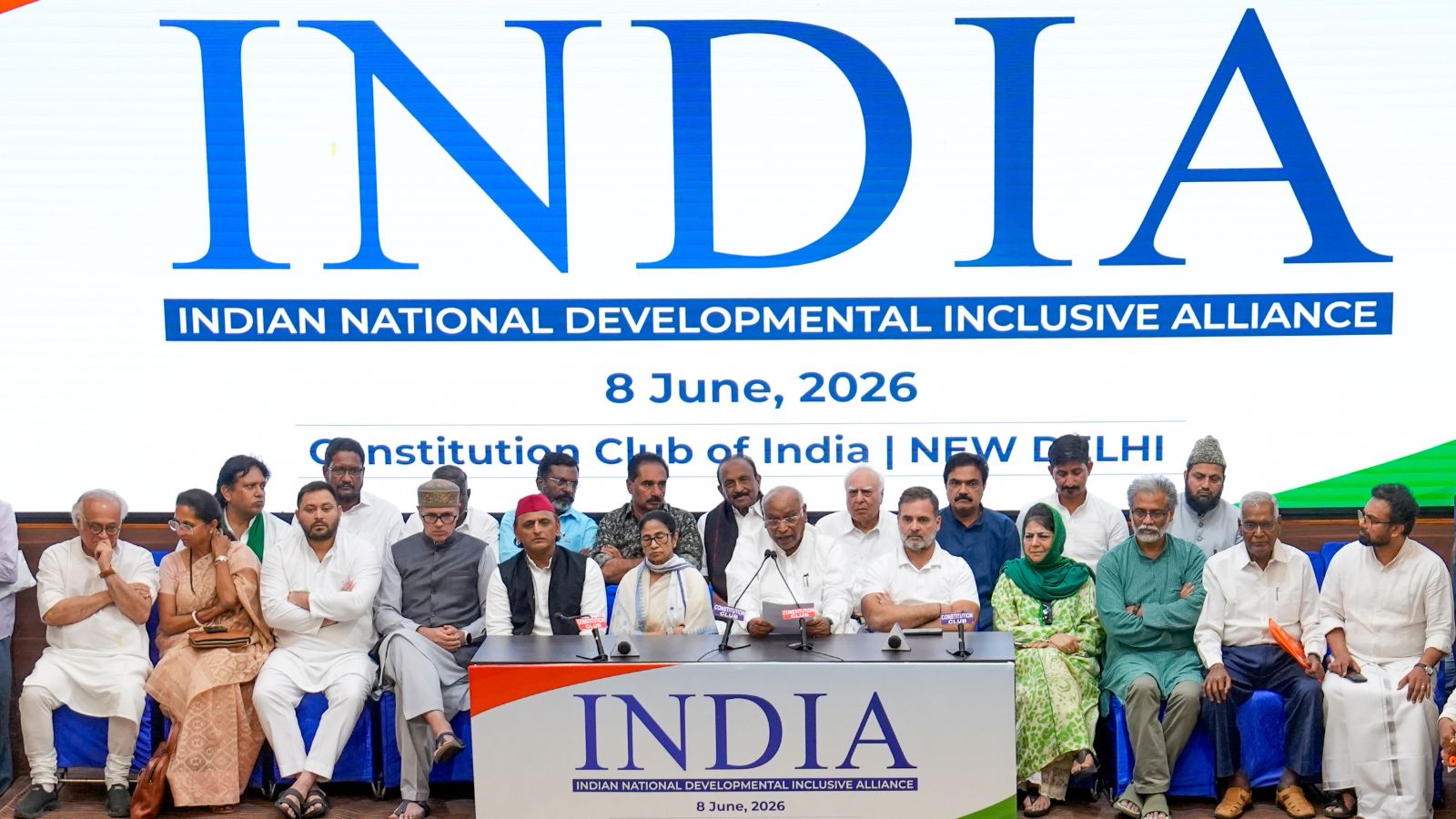
- MLAs Post-2024: 1,603
- MLAs Now (June 2026): 1,011
- Net Loss: -592 MLAs
- Percentage Share of Total MLAs (4,123): From 38.88% to 24.52%
This represents a catastrophic loss of nearly one-third of its legislative strength in just two years.
Individual Opposition Party Losses:
The decline is not uniform but hits some major players particularly hard:
- Congress: -18 MLAs (Despite being the largest party in the bloc, its overall decline contributes to the bloc’s woes).
- Dravida Munnetra Kazhagam (DMK): -75 MLAs (Lost significant strength before quitting the bloc).
- Rashtriya Janata Dal (RJD): -51 MLAs (Major regional player in Bihar facing setbacks).
- Aam Aadmi Party (AAP): -37 MLAs (Lost ground before its exit from the bloc).
The sheer scale of these losses for individual parties within the Opposition bloc suggests a combination of electoral defeats in state polls, internal dissent, and possibly defections to the ruling alliance. The DMK and AAP’s departures from the INDIA bloc are particularly noteworthy, as they represent the loss of strong regional voices and significant legislative numbers.
Rise of Unaligned Parties:
- MLAs Post-2024: 321
- MLAs Now (June 2026): 563
- Net Gain: +242 MLAs
- Percentage Share of Total MLAs (4,123): From 7.79% to 13.66%
The growth of the ‘unaligned’ bloc is a fascinating development. It suggests that a significant number of MLAs now operate outside the two major national political formations. This could include smaller regional parties, independents, or parties that choose to maintain equidistance from both the NDA and the remnants of the INDIA bloc. Their growing numbers could make them kingmakers in future hung Assemblies or provide a critical swing vote in legislative matters.
This detailed breakdown of legislative strength underscores the extent of the BJP and NDA’s political hegemony and the severe challenges facing the fragmented Opposition.
Official Responses: Echoes of Triumph and Resolve
The dramatic shift in India’s political power dynamics has naturally elicited strong reactions from both the ruling establishment and the beleaguered Opposition, along with observations from political commentators.
From the Ruling Alliance:
Senior BJP leaders have predictably hailed the party’s consistent growth as a validation of Prime Minister Narendra Modi’s leadership, the government’s development agenda, and its unwavering commitment to national security and public welfare. "The people of India have consistently reposed their faith in the vision of Prime Minister Modi," stated a high-ranking BJP spokesperson, requesting anonymity due to ongoing internal strategy discussions. "These victories in state after state are a clear mandate for ‘Sabka Saath, Sabka Vikas, Sabka Vishwas’ (Together with all, Development for all, Trust of all). The Opposition, unfortunately, has failed to offer a credible alternative, focusing instead on negativity and disunity."
NDA allies have echoed similar sentiments, emphasizing the strength of the coalition. A JD(U) leader remarked, "Our alliance has proven its mettle. We work together for the progress of our states and the nation, and the public recognizes this collective effort." The narrative from the ruling side is one of inevitable progress and popular endorsement, painting the Opposition’s decline as a natural consequence of its own shortcomings rather than an outcome of aggressive political strategy.
From the Opposition Camp:
Leaders from the dwindling INDIA bloc, while acknowledging the electoral setbacks, have largely attributed the BJP’s gains to a combination of factors, including alleged misuse of central agencies, financial muscle, and a biased media landscape. "The playing field is far from level," asserted a prominent Congress leader, speaking off the record. "We are fighting against immense state power and resources. Our resolve, however, remains unshaken. We will continue to be the voice of the people, fighting for democratic values and constitutional rights."
Other Opposition figures have pointed to the inherent challenges of coalition politics in a diverse country like India. A former AAP strategist, now unaligned, conceded, "The INDIA bloc’s vision was noble, but the ground realities of regional aspirations and the struggle for political survival often overshadowed the larger goal. Seat-sharing disputes, for instance, became insurmountable in several states."
The departures of AAP and DMK from the bloc were met with regret by the remaining constituents. "It is disheartening to see partners leave," commented an RJD spokesperson. "But we understand that regional parties have their own compulsions. The core idea of an Opposition front against authoritarianism remains, and we must find new ways to unite."
Political Analysts’ Perspectives:
Independent political analysts offer a more nuanced perspective. Dr. Aruna Sharma, a political science professor at Delhi University, observed, "The BJP’s expansion is not just about winning elections; it’s about systematically weakening the Opposition through various means, including engineered defections and the narrative of a ‘strong’ versus ‘weak’ government. This trend, if unchecked, could lead to a significant democratic deficit, where scrutiny and accountability are severely diminished."
Another analyst, Mr. Rajat Sinha, a former election commissioner, highlighted the structural challenges. "The Opposition needs to introspect deeply. Beyond blaming external factors, they must address their internal leadership crises, lack of a coherent national narrative, and inability to connect with voters on bread-and-butter issues. The INDIA bloc’s initial promise was its unity, but that has clearly fractured."
These responses collectively underscore the high stakes involved in India’s current political trajectory, with the ruling party confident in its mandate and the Opposition grappling with its very survival.
Implications: A Shifting Democratic Paradigm
The current political landscape, characterized by the NDA’s overwhelming dominance and the Opposition’s significant shrinkage, carries profound implications for India’s democratic health, federal structure, and future policy trajectory.
1. Weakening of Democratic Checks and Balances:
A robust democracy thrives on a strong and vigilant Opposition that can hold the government accountable, scrutinize legislation, and offer alternative perspectives. With the INDIA bloc’s numbers significantly diminished in both Parliament (following 2024 Lok Sabha) and state Assemblies, the effectiveness of legislative oversight is likely to wane. This could lead to less rigorous debate, easier passage of controversial bills, and reduced accountability for executive actions. The ‘unaligned’ bloc, while growing, lacks the unified voice and national presence to effectively counter the ruling alliance.
2. Centralization of Power and Erosion of Federalism:
The NDA’s expanding footprint in state Assemblies strengthens the Centre’s hand in numerous ways. States with BJP or NDA governments are more likely to align with central policies, potentially reducing regional resistance to national initiatives. This could lead to a more centralized decision-making process, with less autonomy for states, especially in areas like fiscal policy, law and order, and education. The principle of cooperative federalism, while often espoused, may find itself under increasing strain as the balance of power decisively shifts towards the Centre.
3. Impact on Policy-Making and Governance:
With a weaker Opposition, the government might face less pressure to compromise or adjust its policy agenda. This could accelerate the implementation of its ideological and economic reforms, but it also carries the risk of policies being enacted without sufficient public discourse or consideration of diverse regional needs. While efficiency might improve, the quality of democratic deliberation could suffer. Critical scrutiny of government schemes, budgets, and administrative decisions might also be diluted.
4. Challenges for Regional Identities and Voices:
The decline of powerful regional parties, as evidenced by the losses suffered by the DMK, RJD, and TMC (through internal crisis), suggests a potential marginalization of regional voices in the national discourse. As national parties expand their reach, the unique cultural, linguistic, and economic specificities of various regions might receive less attention in policy formulation. The growing number of ‘unaligned’ MLAs could, however, represent a pushback by smaller regional entities seeking to preserve their distinct identities outside the national binary.
5. Future of the INDIA Bloc and Opposition Unity:
The fractures within the INDIA bloc, particularly the departures of AAP and DMK, raise serious questions about its long-term viability. For the remaining parties, the challenge is immense: how to regroup, rebuild trust, and forge a cohesive strategy when their individual strengths are diminishing. They need to find a compelling narrative that resonates with voters across diverse demographics and overcome internal rivalries that have plagued their efforts. The path to a credible Opposition front before the 2029 general elections appears arduous and fraught with obstacles.
6. Emergence of a De Facto One-Party Dominance:
While India remains a multi-party democracy in principle, the electoral and legislative data points towards an increasing trend of de facto one-party dominance by the BJP. This concentration of power, while providing stability, can also lead to a lack of innovation in governance, reduced space for dissent, and potential complacency within the ruling establishment. The long-term health of any democracy relies on the dynamic interplay between a strong government and an effective Opposition, a balance that is currently under significant stress in India.
In conclusion, the period since the 2024 Lok Sabha elections has fundamentally reshaped India’s political architecture. The BJP and NDA’s impressive expansion across state Assemblies signifies a new era of political dominance, while the shrinking and fragmenting Opposition faces an existential crisis. The implications of this shift for India’s federal structure, democratic institutions, and the very nature of its political discourse will undoubtedly be a central theme for analysts and citizens alike in the years to come. The onus is now on the Opposition to find a path to rejuvenation, while the ruling alliance bears the responsibility of upholding democratic values in an increasingly less contested political arena.
