Bengaluru, Karnataka – In a significant development underscoring the ongoing tension between executive discretion and judicial oversight, the Karnataka High Court on Thursday, July 2, 2026, issued a stay on the Congress government’s May 27 order to withdraw 52 criminal cases. This directive, which sought to halt the prosecution of individuals and groups often perceived as aligned with the ruling party’s support base, has once again brought into sharp focus the contentious practice of successive state governments attempting to use executive power to quash criminal proceedings.
The High Court’s decision, delivered by a bench comprising Chief Justice Vibhu Bakhru and Justice K S Hemalekha, cited its own earlier ruling from May 29, 2025, which had unequivocally stated that the power to discontinue prosecution in specific cases rests primarily with individual state public prosecutors under Section 321 of the Criminal Procedure Code (CrPC), rather than with the state executive through broad government orders. This latest judicial intervention marks another chapter in a long-standing pattern where both Congress and BJP administrations in Karnataka have faced stern scrutiny from the judiciary for attempting to withdraw cases, often involving charges of rioting, unlawful assembly, and violations of prohibitory orders.
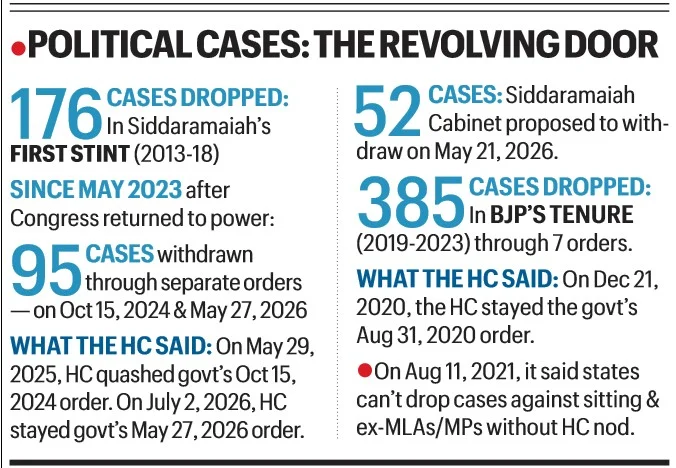
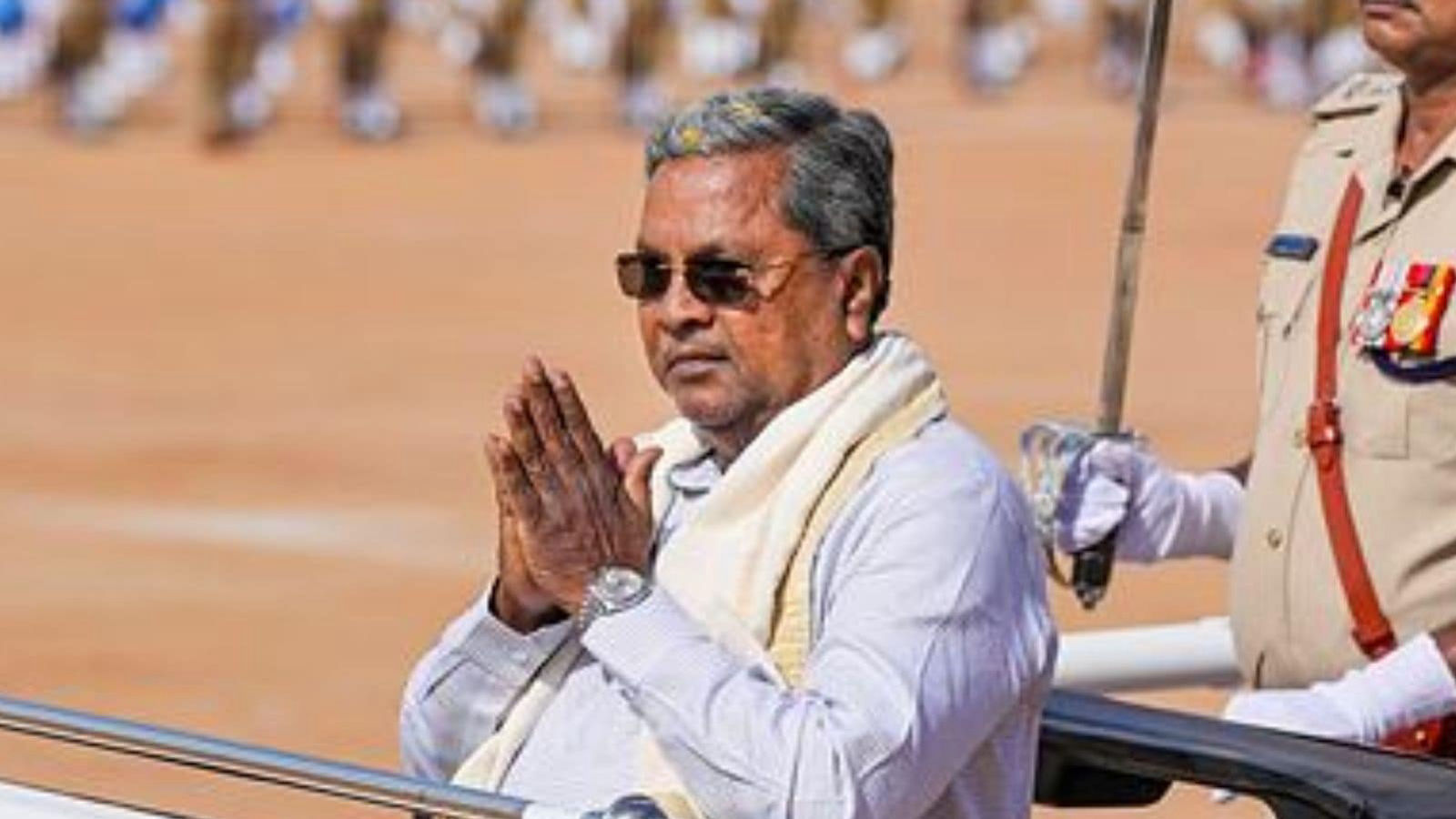
The 52 cases earmarked for withdrawal by the Siddaramaiah-led Congress government just days before the High Court’s stay included a diverse range of incidents: communal clashes, protests by pro-Kannada groups, farmer agitations, Dalit rights movements, and even violations of COVID-19 protocols. This move, much like previous attempts by both political factions, has been widely perceived as "politically motivated," a label explicitly used by the judiciary in prior rulings, raising serious questions about the integrity of the criminal justice system and the principle of equality before the law.
Chronology of Controversial Withdrawals
The practice of state governments attempting to withdraw criminal cases through executive fiat is not new to Karnataka’s political landscape. However, the judiciary has, in recent years, demonstrated an increasing resolve to curb what it perceives as an encroachment on judicial independence and the proper functioning of the criminal justice system.
The Latest Judicial Intervention: Stay on May 27, 2026 Order
The immediate catalyst for the High Court’s July 2, 2026 ruling was a public interest litigation (PIL) filed by right-wing activist Girish Bharadwaj. The PIL challenged the Siddaramaiah government’s May 27, 2026 order, which aimed to withdraw 52 criminal cases. This order followed a cabinet decision on May 21, where the government approved a proposal to withdraw 42 cases outright and seek the High Court’s permission for another 10.
The High Court’s bench, in its succinct order, referenced its prior decision from May 29, 2025, which had already established a clear precedent regarding the limited scope of executive power in withdrawing cases. The court stated, “In view of the order dated 29.05.2025, the impugned order is stayed till the next date of hearing,” signaling a consistent judicial stand against executive interference in prosecutorial discretion.
Siddaramaiah Government’s Recent Attempts (May 2023 – Present)
Since its return to power in May 2023, the Siddaramaiah government has made two significant attempts to withdraw criminal cases, totalling 95 cases in all:
-
May 27, 2026 Order (52 cases): This is the order currently stayed by the High Court. An in-depth analysis of these 52 cases reveals a broad spectrum of political and social incidents. Notably, eight cases were linked to a communal incident in February-March 2022 in Kalburgi’s Aland, which occurred under the previous BJP government. These cases involved over 300 Muslims, including minors, booked after tensions flared when right-wing groups sought to conduct rituals at a Hindu shrine within the Ladle Mashak Dargah complex. The request for withdrawal in these specific cases came from the Aland Dargah’s managing committee.
Beyond communal incidents, the list included 10 cases stemming from the 2016 Bengaluru violence involving pro-Kannada groups. These incidents erupted in the wake of a Supreme Court order on the Cauvery water dispute and protests against non-Kannada banners in the city. Five cases targeted Dalit groups for protests against alleged insults to Dr. B.R. Ambedkar, while 12 cases involved farmer protests. Some cases were also related to violations of COVID-19 protocols during the 2020-2021 period. The government also sought to drop 10 cases against prominent Kannada rights activist Vatal Nagaraj, registered in Bengaluru since 2006. So far, only one of these 52 cases, concerning Kannada language activists tearing English banners in Bengaluru in 2023, has been permitted closure by the courts. -
October 15, 2024 Order (43 cases): Prior to the May 2026 order, the Siddaramaiah government had issued another directive in October 2024 to withdraw 43 cases. This order, too, faced immediate judicial scrutiny and was stayed by the High Court on May 29, 2025, in response to a PIL by Girish Bharadwaj. Many of these cases were linked to the Hubbali violence in 2022, which saw stone-pelting on a local police station after allegedly derogatory social media posts against Islam inflamed communal passions. A Hubbali-based Muslim organization, Anjuman e Islam, had advocated for the withdrawal of cases against the accused, a request the government had accepted. The October 2024 order also included cases against farmer groups and other Dalit and Kannada activists. The High Court, in its May 2025 ruling, explicitly stated that such government orders "impinge upon the discretion to be exercised by the public prosecutors" and "would smack of political nature of exercise of powers."
BJP Government’s Tenure (2019-2023): A Precedent of Similar Actions
The current Congress government’s actions are mirrored by those of its predecessor, the BJP administration. During its 2019-2023 regime, the BJP government issued a total of seven separate orders, leading to the withdrawal of prosecution in a staggering 385 cases. Many of these cases involved party activists and individuals associated with right-wing Hindutva outfits.
- August 31, 2020 Order (62 cases): One notable instance was the BJP government’s decision on August 31, 2020, to withdraw 62 cases. This order was subsequently stayed by the High Court on December 21, 2020, following a PIL filed by the People’s Union for Civil Liberties (PUCL).
- Supreme Court Precedent: Further bolstering the judiciary’s stance, the High Court, on August 11, 2021, cited the Supreme Court’s ruling in the Ashwani Kumar Upadhyay vs Union of India case. This landmark judgment mandated that state governments could not drop cases against sitting or former MLAs/MPs without explicit clearance from the High Court, thereby introducing another layer of judicial oversight.
- Beneficiaries and Nature of Cases: Among the beneficiaries of the BJP government’s attempts were two prominent party lawmakers: then Mysuru MP Prathap Simha and then Honnali MLA M P Renukacharya, against whom a total of four cases were slated for withdrawal. An RTI response obtained by The Indian Express in 2023 revealed that out of the 385 cases, 182 were related to communal incidents, including hate speeches, cow vigilantism, and communal violence. A significant portion, 45 cases, pertained to communal violence in Uttara Kannada district in December 2017 following the death of Hindu youth Paresh Mesta, which the CBI later concluded was an "accidental death." Other cases included four incidents of cow vigilantism in Chikamagalur, violence during Tipu Jayanti celebrations in Kodagu and Mysuru, incidents around Hindu festivals like Rama Navami, Hanuman Jayanti, and Ganesh festival, and protests concerning inter-religious marriages and conversions. Noteworthy beneficiaries included Hindu Jagaran Vedike leader Jagadish Karanth, who was accused in four cases of delivering hate speeches across various districts.
Siddaramaiah’s Previous Tenure (2013-2018)
The cycle of politically-motivated case withdrawals isn’t limited to the most recent administrations. During its previous 2013-2018 tenure, the Siddaramaiah-led Congress government also dropped a total of 176 cases. These cases predominantly involved activists of the now outlawed Muslim outfit Popular Front of India (PFI), as well as farmer, Dalit, and pro-Kannada bodies. Ironically, during this period, the BJP, then in opposition, had vehemently criticized the Congress for allegedly dropping scores of cases against over 1,600 activists from PFI and SDPI groups for incidents involving unlawful assembly and protests.
Supporting Data and Legal Framework
The recurrent nature of these executive orders to withdraw cases, irrespective of the ruling party, highlights a systemic issue within Karnataka’s governance. The judiciary’s firm stance, however, has consistently provided a critical check against what is often seen as an abuse of power.
Analysis of Case Withdrawals
A quantitative overview of cases withdrawn or attempted to be withdrawn by successive governments paints a clear picture:
- Siddaramaiah (2013-2018): 176 cases, primarily linked to PFI, farmer, Dalit, and pro-Kannada bodies.
- BJP (2019-2023): 385 cases, many involving right-wing Hindutva activists, party legislators, farmer groups, and other activists.
- Siddaramaiah (May 2023 – present): A total of 95 cases (43 + 52), mainly against Muslims accused in communal incidents, and activists from pro-Kannada, farmer, and Dalit groups.
This data underscores a common thread: governments, irrespective of their ideological leanings, have consistently targeted cases involving groups perceived as their political allies or core support bases. The charges typically include public order offenses such as rioting, unlawful assembly, and defying prohibitory orders, which are often consequences of political protests or communal flare-ups.
The Crucial Role of Section 321 CrPC
At the heart of this legal battle is Section 321 of the Criminal Procedure Code (CrPC), which grants the Public Prosecutor or Assistant Public Prosecutor the power to withdraw from the prosecution of any person, at any stage before the judgment is pronounced, with the consent of the court.
The High Court’s interpretation of this section has been pivotal. It has consistently ruled that the power to drop cases is vested with the public prosecutors, who must apply their independent mind to the facts and merits of each case, taking into account public interest. This discretion, the court argues, cannot be usurped or dictated by executive government orders. In its May 29, 2025 order, the High Court unequivocally stated that a government order of this nature "impinges upon the discretion to be exercised by the public prosecutors when it comes to the withdrawal of a case or cases under Section 321 CrPC. It takes away the room for the public prosecutor to apply his mind." The court further observed that such decisions "smack of political nature of exercise of powers," especially when ministers and officials are part of the meetings leading to such orders.
The government, conversely, has argued that its orders for withdrawal are "policy decisions" that do not violate Section 321 CrPC. It contends that the "power is reserved for the executive government to withdraw criminal cases on broader grounds of public policy, maintenance of law and order, public peace and harmony, and ‘social and political consideration’." This argument frames the executive’s actions as a legitimate exercise of governance, aimed at de-escalating tensions or fostering social cohesion, rather than an act of political favouritism.
Judicial Scrutiny and Precedents
The High Court’s consistent judicial scrutiny since 2020 has established a strong precedent. The interventions, often initiated through PILs by civil society groups like PUCL or individual activists like Girish Bharadwaj, highlight the critical role of the judiciary as a guardian against executive overreach. The Supreme Court’s ruling in the Ashwani Kumar Upadhyay case, specifically prohibiting the withdrawal of cases against sitting and former MLAs/MPs without High Court clearance, has further solidified this judicial bulwark, emphasizing the need for transparency and accountability, particularly when powerful individuals are involved. These rulings collectively reinforce the principle that criminal justice processes should remain insulated from political interference to uphold the rule of law.
Official Responses and Political Discourse
The repeated judicial intervention in case withdrawals has inevitably fueled a charged political discourse, with both the government and opposition navigating the complex interplay of legal principles, public perception, and political expediency.
Government’s Stance and Legal Strategy
Following the latest High Court stay, State Home Minister Priyank Kharge stated that the government would "examine the high court’s order for a legal response on the issue." This indicates that the government is likely to consider its legal options, which could include appealing the decision or seeking to modify its approach to case withdrawals in line with judicial directives. The government’s consistent argument that these are "policy decisions" driven by "broader grounds of public policy, maintenance of law and order, public peace and harmony, and social and political consideration" reflects its belief in the executive’s legitimate role in such matters. They argue that these decisions are not arbitrary but are made with an eye toward holistic governance, which includes de-escalating social tensions and promoting reconciliation. However, the judiciary’s firm rejection of this interpretation underscores a fundamental disagreement on the boundaries of executive power in criminal matters.
Opposition’s Criticism and Activist Engagement
The political landscape surrounding these withdrawals is characterized by a tit-for-tat dynamic. While the Congress government faces scrutiny now, it was the BJP that vehemently criticized the Siddaramaiah government during its 2013-2018 tenure for dropping cases against PFI and SDPI activists. Similarly, the BJP’s own attempts to withdraw cases during its 2019-2023 rule drew criticism, though perhaps less vocal from the then-opposition Congress, which itself had engaged in similar practices.
The role of activists like Girish Bharadwaj and organizations such as PUCL is crucial. By filing PILs, they act as watchdogs, ensuring that executive actions are subjected to judicial review. Their interventions highlight the concern among civil society about the potential for political abuse of the criminal justice system and reinforce the demand for transparency and accountability. The fact that the High Court has consistently sided with these petitioners against government orders underscores the validity of their concerns.
Broader Political Context
The judicial labeling of these moves as "politically motivated" strikes at the heart of the issue. Such withdrawals are often viewed as attempts by ruling parties to appease specific vote banks, reward political supporters, or settle old scores, rather than being based purely on legal merit or genuine public interest. The cyclical nature of these actions by successive governments, irrespective of party affiliation, suggests a deeply ingrained political culture where the criminal justice system is seen as a tool for political maneuvering rather than an impartial arbiter of justice. This perception can erode public trust in both the government and the justice system itself.
Implications and Future Outlook
The Karnataka High Court’s consistent stance against executive-led withdrawal of criminal cases has profound implications for the rule of law, judicial independence, and public trust in governance.
Impact on Rule of Law
The judiciary’s interventions serve as a vital safeguard against the potential erosion of the rule of law. By insisting that prosecutorial discretion rests with independent public prosecutors and not with the executive, the High Court is upholding the principle of separation of powers and protecting the criminal justice system from political interference. If governments were allowed unfettered power to withdraw cases based on "policy decisions" or "social and political considerations," it could lead to selective justice, where certain groups or individuals are exempt from prosecution due to their political affiliations, thereby undermining the very foundation of equality before the law. This could also set a dangerous precedent, where criminal acts are seen as politically negotiable rather than legally punishable.
Precedent for Future Governments
The repeated judicial pushback sends a clear message to all political parties: attempts to use executive orders to withdraw criminal cases, particularly those involving public order offenses and politically sensitive incidents, will likely face stringent judicial scrutiny. This consistent stance could potentially deter future governments from embarking on similar paths without robust legal justification and adherence to due process. It emphasizes the need for a more transparent and legally sound procedure for case withdrawals, possibly requiring greater involvement of the public prosecutor’s independent assessment and explicit judicial consent from the outset.
Public Trust and Accountability
The public’s faith in the criminal justice system hinges on its perceived impartiality. When cases are withdrawn through executive orders, especially those involving serious charges like rioting and communal violence, it can lead to public cynicism and a perception that justice is being compromised for political gain. The High Court’s actions, by asserting judicial independence, help restore some measure of public trust by demonstrating that there are checks and balances against executive overreach. It also highlights the importance of accountability for criminal acts, regardless of the political affiliations of the accused. The political class needs to recognize that such actions, even if framed as policy decisions, often carry a heavy cost in terms of public confidence and trust in the institutions of governance.
The Path Forward
The legal battle is far from over. State Home Minister Priyank Kharge’s statement indicates that the government will explore its legal options. This could involve challenging the High Court’s interpretation of Section 321 CrPC in a higher court or devising a new mechanism for case withdrawals that aligns with judicial directives. The ongoing tension between executive power and judicial oversight is a defining feature of democratic governance, and this particular issue in Karnataka serves as a crucial case study. The eventual resolution will not only impact the individuals involved in these 52 cases but will also set a significant precedent for how criminal justice is administered and protected from political influence in the state and potentially across the nation. The outcome will be closely watched by legal experts, political observers, and the public alike, as it will shape the future trajectory of justice and accountability in Karnataka.