

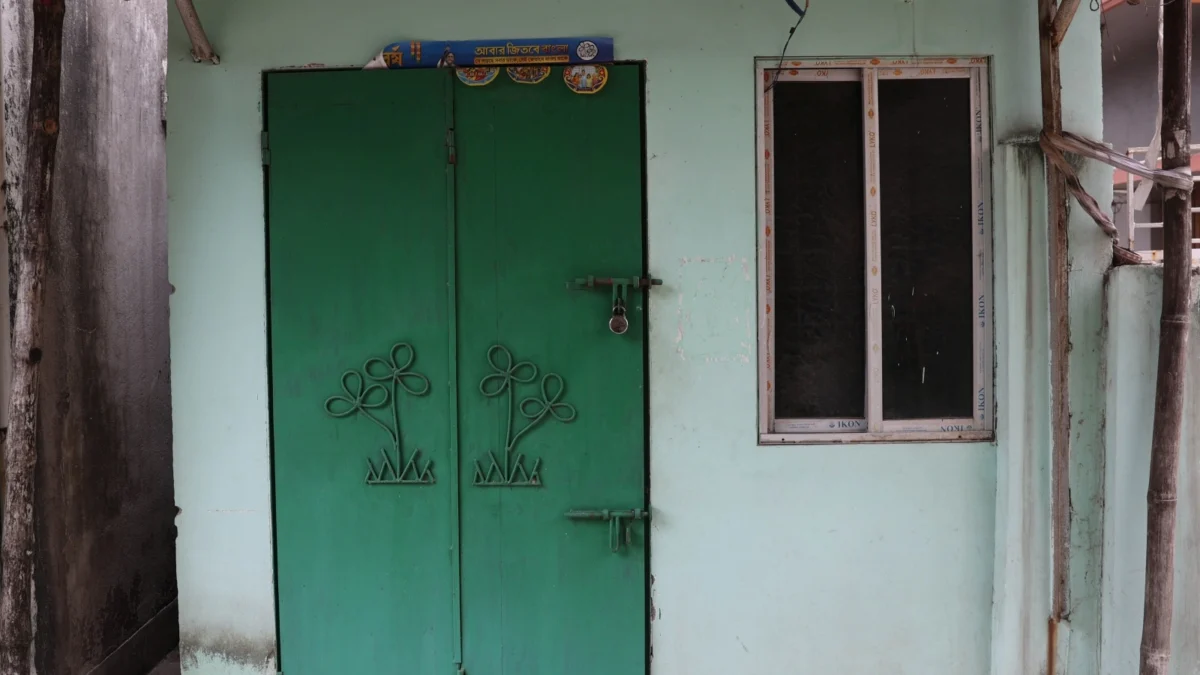
Kolkata, West Bengal – A palpable shift in the political landscape is sweeping across West Bengal, marked by the apparent dismantling of the Trinamool Congress’s (TMC) alleged "syndicate system" and a wave of arrests and public denunciations. From the bustling railway stations of South 24 Parganas to the densely packed urban lanes of Kolkata and the riverbanks of Purba Bardhaman, the symbols of entrenched power are visibly changing hands, and a new sense of defiance is emerging among citizens long accustomed to a "rule of fear."
The most striking visual testament to this transformation can be found along the Sonarpur Railway Station in South 24 Parganas. An unassuming office, once adorned in the distinctive blue and white colours of the Trinamool Congress and constructed from asbestos and tin, now sports a vibrant saffron banner. It proudly declares: "Bharatiya Mazdoor Sangha, Sarbabrihat trade union, Sonarpur block." This seemingly minor alteration signifies a profound change in allegiance, as the local autorickshaw union, previously under the umbrella of the Indian National Trinamool Trade Union Congress (INTTUC), has openly switched loyalties to the Bharatiya Janata Party’s (BJP) Mazdoor Sangh.
This symbolic defection is far from an isolated incident; it represents the tip of an iceberg in a state grappling with the aftermath of recent electoral changes and a public yearning to break free from the alleged chokehold of the TMC’s pervasive "syndicate" system. The power shift, wherein a BJP government has reportedly taken the reins, is not merely a change at the top but is triggering a deep-seated transformation at the grassroots, challenging decades-old patterns of control and extraction.
Main Facts: A State in Flux
The core narrative unfolding across West Bengal is one of a systemic unraveling of what many allege was a deeply entrenched network of local strongmen, party cadres, and illicit operations, collectively known as the "syndicate system." This system, though with historical roots in earlier political regimes, is widely believed to have expanded significantly under the Trinamool Congress’s tenure, permeating various aspects of daily life and local economies.
Key facts driving this narrative include:
- Political Realignments: Local trade unions, once loyal to the TMC, are openly switching allegiance to BJP-affiliated organizations, signaling a loss of grassroots control for the former ruling party.
- Dismantling of Extortion Networks: Auto drivers in Sonarpur, for instance, claim they are no longer compelled to pay alleged monthly fees to local TMC leaders, highlighting a direct impact on ordinary citizens and small businesses.
- Crackdown on Illegal Construction: In areas like Beleghata, a flurry of demolition drives and notices from the Kolkata Municipal Corporation (KMC) target illegal high-rises and structures, many allegedly linked to TMC strongmen.
- Action Against Sand Mafia: In rural regions like Jamalpur, key figures involved in illegal sand mining, including local INTTUC presidents and panchayat pradhans, have been arrested, with government properties allegedly used to facilitate these operations.
- Public Outcry and Courage: The period following the election results (declared May 4th, implying a significant political shift) has seen a surge in public complaints against alleged extortion, land grabbing, and intimidation, with citizens feeling emboldened to come forward.
- Leadership Under Scrutiny: Senior TMC leaders, including Abhishek Banerjee, have faced public anger, while others accused in scams or extortion have been arrested, gone into hiding, or reportedly returned "cut money" in a desperate bid for clemency.
This period marks a critical juncture for West Bengal, as the new political dispensation attempts to assert control and address long-standing grievances related to governance and alleged corruption.
Chronology of a Power Shift
The roots of West Bengal’s syndicate system are deeply embedded in the state’s political history, predating the Trinamool Congress’s rise to power.
- Origin under Left Front (34 years): The "syndicate system" initially emerged during the Left Front’s 34-year rule. It reportedly involved local party cadres controlling the supply of building materials and labour, particularly in the burgeoning construction sector. This embryonic form laid the groundwork for a parallel economy of influence and extraction.
- Expansion and Entrenchment under TMC: Following the Trinamool Congress’s ascension to power, the syndicate system allegedly expanded exponentially and became deeply entrenched. Unlike its earlier manifestation, TMC leaders are accused of openly lending their weight to these systems, transforming them into sophisticated networks of control. The scope broadened significantly, encompassing not just construction materials and labour, but also permission for construction, illegal buildings, sand mining, land grab, and the control of various trade unions, including autorickshaw operators. This period saw the system allegedly become a primary source of illicit revenue and political patronage.
- Mounting Public Anger: Over the years, public frustration simmered and occasionally boiled over, fueled by allegations of forced payments, land grabbing, intimidation, and the apparent impunity of local party functionaries. This discontent was a significant undercurrent in the state’s political narrative leading up to recent elections.
- May 4th – Election Results Declared: The declaration of election results on May 4th (implied to be a pivotal election where the BJP gained significant ground or formed the government in Bengal, as the article mentions "BJP government took over") acted as a watershed moment. This electoral outcome seemingly emboldened citizens and triggered a visible decline in the influence of the TMC’s local strongmen.
- Post-Election Backlash and Crackdown:
- May 30th – Attack on Abhishek Banerjee: Just 2 km from Sonarpur Railway Station, TMC No. 2 Abhishek Banerjee faced a hostile mob, pelted with eggs, shoes, and stones. This incident was widely interpreted as a reflection of widespread public anger against the TMC, and particularly against Abhishek.
- Disappearance of TMC Cadres: Immediately following the results, numerous TMC leaders and workers who were once highly visible in their strongholds reportedly disappeared, their offices locked and calls unanswered.
- Rising Complaints: Citizens, previously silent out of fear, began coming forward to lodge complaints with the police and other authorities regarding past grievances.
- Arrests and Demolitions: Authorities, now seemingly unburdened by political pressure, initiated arrests of prominent TMC strongmen, councillors, and union leaders implicated in various alleged scams and illegal activities. Demolition drives against illegal structures, particularly in areas like Beleghata, commenced.
- Union Defections: Autorickshaw unions and other local bodies began openly switching loyalties, signaling a rapid erosion of TMC’s grassroots organizational strength.
- "Cut Money" Returns: Reports surfaced of leaders returning "cut money" (commissions allegedly taken from public welfare schemes) in an apparent attempt to avoid arrest or prosecution.
This chronological sequence paints a picture of a state undergoing a rapid and dramatic transformation, driven by both electoral outcomes and a public reawakening.
Supporting Data: Voices from the Ground
The systemic breakdown of the syndicate raj is most vividly illustrated through the personal accounts and observable changes in the three focal points: Sonarpur, Beleghata, and Jamalpur. These anecdotal "data points" underscore the depth of the alleged corruption and the relief accompanying its dismantling.
Sonarpur: The Crumbling "Rule of Fear"
In Sonarpur, the shift from INTTUC to Bharatiya Mazdoor Sangha by the autorickshaw union is more than symbolic. Auto drivers now openly discuss being freed from an alleged monthly payment of "Rs 120 per vehicle" demanded by local TMC leaders. This seemingly small sum, multiplied across hundreds or thousands of vehicles, represented a significant informal revenue stream for the syndicate.
Further into Kamrabad, the stark sight of a half-constructed house at Bhowmik Park tells another story. Bapi Haldar, a local workshop owner, explains, "Eight months back, construction started on the house. We don’t know how the government land was occupied, but no one protested out of fear. Since May 4, construction has stopped." The disappearance of once-ubiquitous TMC leaders and workers from this former party bastion is a testament to the changing power dynamics. Haldar adds, "Everything has changed… We don’t see many BJP leaders too, but that is because there are none in this area," indicating a void left by the former power structure rather than an immediate replacement.
The attack on Abhishek Banerjee in this very vicinity underscores the intense public resentment. The arrest of a local TMC strongman and a booth worker in connection with the incident highlights the direct involvement of party functionaries in alleged illicit activities and the public’s backlash.
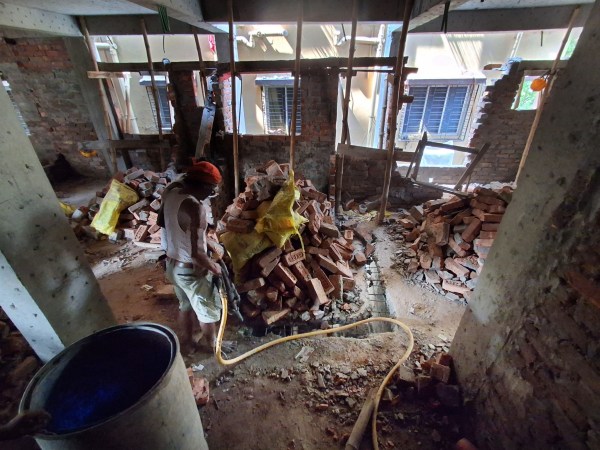
The office of local councillor Anita Bose (Ward No. 9) remains locked, her absence noted by locals since May 4. Bacchu Das, chief of the local BJP unit in Kamrabad, articulates the newfound courage: "We could not even appoint booth agents in the area (during the elections)… Now people are slowly opening up. We are asking them to lodge complaints."
Rupali Mondol, 28, from Ghashiyara, has returned home after a year, a direct consequence of the alleged syndicate’s collapse. In August 2025, TMC workers, allegedly loyal to local councillor Krishnapada Mondol (Ward No. 13), ransacked her roadside vegetable shop and part of her house to erect a ‘Shahid Bedi’ (martyrs’ memorial). Rupali alleges the councillor demanded Rs 20,000 to allow her to continue her business. "I asked him if I could pay in instalments… He refused. So they ransacked my shop… I lodged a complaint with the police and National Commission for Women, but nothing happened," she recounts. With the councillor reportedly on the run, Rupali feels safe enough to return and hopes to reclaim her livelihood with the help of local BJP leaders. Her neighbour, Narayan Dasi Mondol, 76, corroborates the climate of fear, describing how Krisnapada "forcefully made a concrete road going through our property," and how police complaints were impossible due to threats.
Further evidence of the crackdown includes the arrest of Councillor Tapash Haldar of Ward No. 22, Rajpur-Sonarpur Municipality, and his associates. Rita Mondol, 41, whose husband is a BJP-supporting autorickshaw driver, notes a significant change: after their house was attacked by alleged TMC workers post-results, police swiftly arrested the perpetrators, leading to a newfound sense of peace in the community.
Shuvankar Bhattacharya, a BJP supporter and gig worker from Malancha-Mahinagar, who was brutally beaten after the 2021 Assembly elections and forced into a BJP relief camp for months, now sees a glimmer of hope. "They threatened that if I went to police, they would set my house on fire and kill my mother and wife," he recalls. The Jadavpur organisational district secretary of BJP, Swarup Roy, confidently states, "Syndicate raj and goondagiri of the TMC is now almost over… In pockets where illegal activities are still on, the administration has been told to take steps."
Beleghata, Kolkata: Demolishing Illicit Empires
Beleghata, a traditional TMC stronghold in Kolkata, is witnessing tremors that shake its very foundations. Despite TMC candidate Kunal Ghosh winning by a significant margin in the recent Assembly elections, the area is now a focal point for demolition drives targeting illegal constructions. All TMC offices along Beleghata Main Road are conspicuously shut.
Dibas Dey, a CPI(M) area committee member, explains the nexus: "Beleghata is famous for ‘thika tenancy’ (a tenant renting land and building on it), and after the TMC came to power, they grabbed more and more land and made high-rises. Almost all such buildings are illegal. Now the kingpins are on the run." This system, which allowed for the exploitation of land regulations, allegedly flourished under the previous regime.
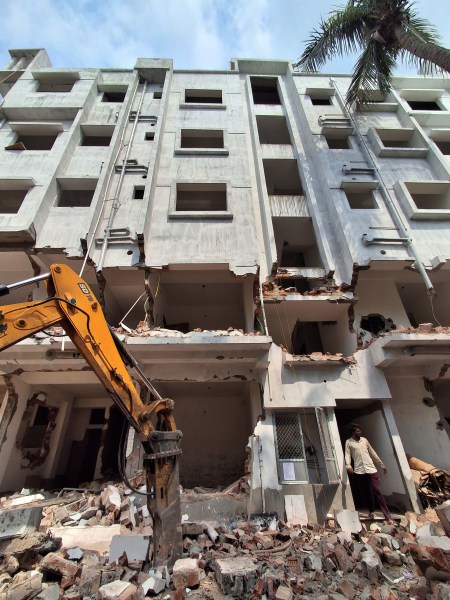
Among the most prominent figures facing the crackdown is Raju Naskar, a former taxi driver who rose to become a TMC strongman and contractor, now under arrest. One of his multi-storey buildings has already been razed. Chief Minister Suvendu Adhikari, during a post-victory rally, explicitly named Naskar, along with others including Abhishek Banerjee, as individuals whose alleged corrupt activities would be investigated. Adhikari even attributed "more than a dozen properties" to each of the named individuals, signaling a direct challenge to the previous power structure.
Naskar’s ascent, from humble beginnings to a powerful contractor with alleged close ties to police, political leaders, and KMC officials, exemplifies the syndicate’s reach. A former associate, a local youth TMC leader, describes how Naskar controlled the area through "a huge team of goons… a women’s team and a men’s team," intimidating landowners into signing agreements. The fear he commanded is still evident, with the former associate cautiously remarking, "Naskar is arrested now, but what if he returns?"
Somnath Dolui, a Beleghata resident, shares his own experience of Naskar allegedly grabbing his family land and reneging on a 50:50 flat-sharing agreement after the 2021 results. His complaint was reportedly ignored by the police at the time.
A KMC official, speaking anonymously, confirms the scale of the impending action: "More than a hundred buildings in Beleghata face action. We are studying the cases and our team is doing surveys." The KMC itself, facing accusations of giving clearances without necessary papers, is currently run by an administrator after Mayor Firhad Hakim’s resignation, further highlighting the systemic overhaul. BJP’s Partha Chowdhury, who lost the Beleghata Assembly seat, notes that complaints are now pouring in about "not just the syndicate, but other illegal practices of the TMC too."
Jamalpur, Purba Bardhaman: Unearthing the Sand Mafia
Approximately a hundred kilometers from Kolkata, in Shah Hussainpur village of Jamalpur block, the impact of the crackdown is evident in the quiet closure of a community centre and a flood shelter along the Damodar river. These government structures were allegedly repurposed as an office and restrooms by an illegal sand mining syndicate, led by the arrested block INTTUC president, Tabarak Ali Mondol, and his wife Arifa, a panchayat pradhan.
Police claim to have recovered bags of fertilizers, rice, pesticides, MNREGS job cards, and other documents from these sites, suggesting a broader network of corruption. Villager Sheikh Mortej explains, "Fertilisers, pesticides and other items meant for distribution among villagers were sold in the black market. Job cards were also forcibly taken, and syndicate members decided what work would be done and who got it." This indicates a systemic misuse of public resources and welfare schemes for personal gain and control.
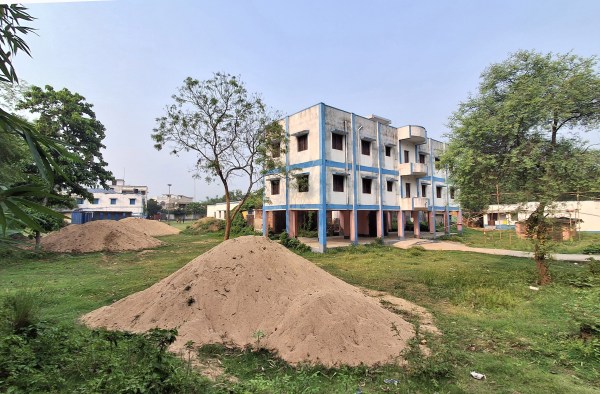
At the community hall in Fatehpur, two earthmovers reportedly owned by Tabarak are tellingly parked. Gopal Adak, 60, points to huge pits on the river bank, evidence of "massive mining." He states, "Every day, 150 to 200 trucks carried out sand… No one protested out of fear."
Now, however, that fear is dissipating. Nimai Majhi, 40, asserts, "Now, that fear is gone. Apart from illegal sand mines, cut money was taken from people who got Banglar Bari (housing scheme)… We are planning to lodge complaints." The Jamalpur Block Development Officer, Parthasarathi Dey, acknowledged, "We were not aware that such activities were on. However, police are investigating everything now." Local BJP leader Mrityunjay Chandra sums up the sentiment: "For a long time, TMC leaders here indulged in such activities. People repeatedly complained but no action was taken. The BJP government is changing that."
Official Responses and the Unspoken
The current political climate in West Bengal has significantly altered the nature of "official responses" to these widespread allegations.
- Trinamool Congress (TMC): Public statements from TMC leaders directly addressing these specific allegations have largely been absent or dismissive. While the article notes that many local TMC leaders and cadres have "disappeared" or are "on the run," the party’s official stance often frames such actions as political vendetta by the new government. Attempts to elicit direct comments from TMC representatives regarding the syndicate system, specific arrests, or allegations of extortion have reportedly met with silence or general denials of wrongdoing. The party leadership, including Mamata Banerjee, has been focused on consolidating its position amidst the internal and external pressures.
- Police: In several instances, the original article notes that "Police refused to comment" on specific allegations or past inaction. This may reflect ongoing investigations or a cautious approach in a politically charged environment. However, the fact that arrests are now being made in cases previously unaddressed suggests a shift in operational independence or directive under the new administration. The BDO of Jamalpur’s statement, "police are investigating everything now," indicates a new impetus for law enforcement.
- Kolkata Municipal Corporation (KMC): The KMC, now under an administrator following the resignation of its TMC Mayor, is actively pursuing action against illegal constructions. An official confirmed that "more than a hundred buildings" in Beleghata face action, and teams are conducting surveys. This represents a significant departure from previous alleged laxity or complicity in such activities. The dissolution of the KMC board itself is a major administrative consequence.
- Bharatiya Janata Party (BJP): BJP leaders, both at the state and local levels, have been vocal in their condemnation of the syndicate system and have presented themselves as the agents of change. Chief Minister Suvendu Adhikari’s public naming of individuals like Raju Naskar and Abhishek Banerjee, coupled with his commitment to "put these corrupt people behind bars," sets a clear tone. Local BJP leaders like Swarup Roy and Mrityunjay Chandra echo this sentiment, emphasizing the "almost over" status of the syndicate raj and the new administration’s commitment to taking "steps" against illegal activities. Their narrative is centered on restoring the rule of law and ending corruption.
The silence from some quarters, particularly the TMC, is as telling as the pronouncements from others, indicating a period of profound restructuring and accountability.
Implications: Reshaping West Bengal’s Future
The unfolding events in West Bengal carry significant implications for the state’s political landscape, governance, economy, and public trust.
- Reconfiguration of Political Power: The most immediate implication is a dramatic reconfiguration of political power at the grassroots level. The erosion of TMC’s control over local unions, construction syndicates, and informal economies signals a weakening of its traditional power base, which often relied on these networks for patronage and mobilization. Conversely, the BJP’s narrative of dismantling corruption resonates with a segment of the electorate, potentially solidifying its newfound influence in the state. This shift could lead to a more competitive political environment, breaking decades of single-party dominance (first Left, then TMC).
- Strengthening Rule of Law and Governance: The crackdown on illegal activities, from sand mining to land grabbing and extortion, suggests a renewed emphasis on the rule of law. If sustained, this could lead to more transparent governance, fairer competition in various sectors, and a reduction in the "parallel economy" operated by political syndicates. The active involvement of law enforcement and municipal bodies in dismantling these networks indicates a potential restoration of institutional integrity.
- Economic Impact: The dismantling of syndicates could have a multifaceted economic impact. While it might initially disrupt certain informal sectors, it could eventually lead to a more level playing field for businesses and contractors, reducing entry barriers and illicit costs. For instance, the liberation of auto drivers from alleged monthly payments or builders from syndicate-controlled material supply could foster healthier local economies. The return of "cut money" and the re-allocation of resources meant for public welfare schemes could also benefit the intended beneficiaries.
- Restoration of Public Trust and Participation: The most profound implication might be the restoration of public trust in the administration and the political process. The testimonies of individuals like Rupali Mondol, who previously faced insurmountable obstacles in seeking justice, indicate a newfound sense of empowerment. When citizens feel they can lodge complaints without fear of reprisal, it encourages greater civic participation and acts as a crucial check on local power. This could fundamentally alter the relationship between the state and its citizens, moving from a culture of fear to one of accountability.
- Challenges Ahead: Despite the positive momentum, significant challenges remain. Sustaining the crackdown, ensuring that new forms of corruption do not emerge to fill the void, and rebuilding institutions that may have been compromised will require consistent political will and administrative diligence. The BJP government will need to demonstrate that its actions are not merely retaliatory but are part of a broader commitment to good governance. Furthermore, addressing the root causes of informal economies and providing alternative livelihoods for those previously involved in syndicate operations will be crucial for long-term stability.
In conclusion, West Bengal stands at a critical juncture. The shift in political power has ignited a movement to dismantle deeply entrenched systems of alleged corruption and coercion. The transformation of a blue and white office into a saffron-emblazoned one at Sonarpur is not just a change of colours; it is a powerful emblem of a state striving to redefine its governance, empower its citizens, and chart a new course away from the shadows of the syndicate raj. The coming months will be crucial in determining the lasting impact of these seismic shifts on the social, economic, and political fabric of West Bengal.
