

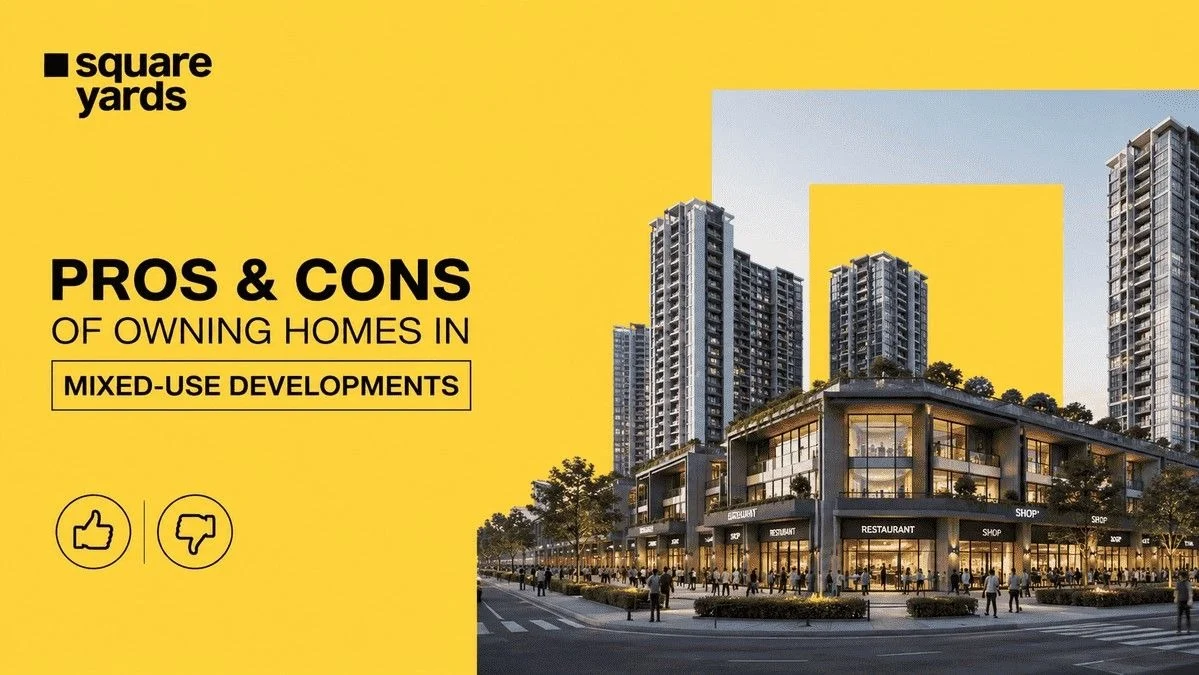
Radhika Chatterjee, a 48-year-old academic researcher from Kolkata, recalls the moment her dream of homeownership met the friction of reality. Buying her first home in a sprawling commercial-residential complex was intended to be the pinnacle of her career achievements. Instead, the journey became a labyrinth of unanswered questions. "It was supposed to be the ultimate convenience," she reflects. "But no one was giving me straight answers about what it actually feels like to live twenty feet above a bustling retail floor where the cafe opens at 7:00 AM and the delivery trucks arrive even earlier."
Chatterjee’s experience is becoming a standard narrative in India’s rapidly densifying urban centers. As cities like Mumbai, Bengaluru, Delhi-NCR, and Kolkata exhaust their horizontal limits, developers are aggressively marketing mixed-use developments—integrated "vertical villages" where residential units sit atop retail shops, offices, and restaurants—as the gold standard of modern living. However, beneath the glossy brochures lies a complex ecosystem of financial, logistical, and lifestyle trade-offs that every prospective buyer must navigate.
Main Facts: Defining the Mixed-Use Ecosystem
A mixed-use development is defined as a property that integrates residential and commercial functions within a single building or a tightly knit complex. In the Indian context, this typically involves ground and lower-floor retail (pharmacies, supermarkets, cafes), middle-tier office spaces, and upper-level residential apartments.
By 2025, these developments have moved from being "niche luxury" to a mainstream urban necessity. The primary appeal is the "Live-Work-Play" model, designed to mitigate the grueling commutes that define Indian metropolitan life. However, the reality of owning such a property is a dual-edged sword. While it offers unmatched convenience, it also introduces "commercial friction"—a term used by urban planners to describe the overlap of public business activities with private residential life.
Key facts for the 2025-26 market include:
- Micro-Market Dominance: Appreciation in mixed-use projects is currently outpacing standalone residential units by 12-15% in corridors adjacent to active Metro expansions.
- Yield Disparity: Rental yields in these projects often hover between 4% and 6%, significantly higher than the 2-3% national average for traditional residential homes.
- Operational Complexity: Maintenance costs are typically 20-30% higher due to the shared infrastructure requirements of commercial tenants.
Chronology and Context: The Evolution of the Indian Skyline
The rise of mixed-use developments in India can be traced through three distinct phases of urban evolution:
- The Traditional Shop-cum-Flat (Pre-2000s): Historically, Indian cities were built on "bazaar" logic—small family-owned shops with residences above. These were organic but lacked modern infrastructure and zoning.
- The Gated Community Era (2000-2015): As the IT boom took hold, developers shifted toward massive, isolated residential townships. These offered peace and privacy but forced residents into long commutes for basic needs.
- The Integrated Vertical Era (2016-Present): With the implementation of the Real Estate (Regulation and Development) Act (RERA) and the push for Transit-Oriented Development (TOD), cities began incentivizing high-density, mixed-use projects.
By 2025, the focus has shifted toward sustainability and "15-minute cities." In this current phase, mixed-use developments are no longer just buildings; they are strategic infrastructure assets. For buyers like Chatterjee, this means the property is no longer just a home—it is a stake in a commercial hub.
Supporting Data: The Pros and Cons of Integrated Living
To make an informed decision, buyers must weigh the structural advantages against the daily realities of the format.
The Advantages: Beyond the Convenience
- Diversified Income Potential: For investors, mixed-use properties provide a hedge. If the residential rental market dips, the commercial vibrancy of the building often maintains the property’s overall capital value.
- Sustainable Design Trends: Modern projects are increasingly incorporating green building principles. Shared HVAC systems, centralized waste management, and optimized energy grids reduce the carbon footprint per unit, an increasingly important factor for the environmentally conscious Gen Z and Millennial buyer.
- Tenant Retention: Properties with built-in amenities (clinics, grocery stores, gyms) see lower vacancy rates. Tenants are willing to pay a "convenience premium" to avoid the chaos of city traffic.
The Challenges: The "Hidden" Disclosures
- Lifestyle Friction: Noise pollution is the most cited grievance. Lower-floor residents often deal with the hum of industrial-grade air conditioners for restaurants or the footfall of weekend shoppers.
- Financing and Legal Hurdles: Home loans for mixed-use units are not always straightforward. Many Indian lenders apply "commercial-residential" ratios. If a project has more than a certain percentage of commercial space, the interest rates may be higher, or the Loan-to-Value (LTV) ratio may be lower.
- Resale Liquidity: While rental demand is high, the resale pool is narrower. Traditional buyers looking for "peace and quiet" often filter out mixed-use developments, meaning the exit timeline for a seller might be longer than that of a pure residential flat.
| Factor | Pro | Con |
|---|---|---|
| Maintenance | Shared infrastructure can lower individual costs. | Higher society charges due to commercial upkeep. |
| Taxation | Potential for higher ROI. | Complex property tax structures (Commercial vs. Residential). |
| Community | Vibrant, active environment. | Compromised privacy in high-footfall zones. |
Official Responses: Expert Perspectives and Frameworks
Industry experts suggest that the "overwhelm" felt by buyers like Radhika Chatterjee stems from a lack of a structured evaluation framework. Real estate advisory platforms, including Square Yards, have noted a shift in buyer behavior toward "evidence-based" purchasing.
Meena Pillai, a 39-year-old product manager from Pune, successfully navigated this transition by moving from a reactive to a proactive stance. Working with professional advisors, she utilized a 48-hour "research pause" before signing her deed. "I had to look at the micro-market data within a 2km radius, not the city-wide averages," Pillai explains. "I visited the site at 10 PM on a Friday and 7 AM on a Tuesday. That told me more than any brochure ever could."
The 2025 Decision-Making Framework
Experts recommend a three-step validation process:
- Establish a Baseline: Define non-negotiables regarding noise and privacy. If you work from home, a unit directly above a food court is a structural misfit, regardless of the price.
- Micro-Market Mapping: In 2025-26, the value of a mixed-use property is tied to its proximity to infrastructure "multipliers" like Metro stations or new expressway exits.
- Financial Stress-Testing: Calculate the "Total Cost of Ownership," including the differentiated property tax rates that some Indian states apply to mixed-use floors.
Implications: The Future of Urban India
The proliferation of mixed-use developments has profound implications for the future of Indian urbanism. As more residents move into these integrated spaces, we are likely to see:
- Redefined Zoning Laws: Municipal corporations are being forced to update noise and waste management bylaws to handle the unique challenges of residential-commercial overlaps.
- The Rise of Professional Management: Unlike traditional housing societies run by volunteer residents, mixed-use projects require professional facility management to balance the needs of shop owners and homeowners. This adds a layer of professionalism but also increases monthly outgoings.
- Sociological Shifts: The "vibrant community" aspect of these buildings is creating a new type of urban social fabric—one that is more public and connected, but perhaps less private than the bungalows of the previous generation.
For the individual buyer, the takeaway is clear: mixed-use developments offer a high-reward, high-complexity investment. They are the antidote to urban sprawl, but they require a sophisticated level of due diligence.
Frequently Asked Questions
1. Is a home loan more expensive for a mixed-use property?
It can be. Some lenders categorize these as "quasi-commercial," which might attract a higher interest rate or stricter eligibility criteria. Always confirm with your bank regarding the specific commercial-to-residential ratio of the project.
2. How does property tax work for these units?
In many Indian states, property tax is calculated based on the "usage" of the area. Even if you own a residential unit, if the building is classified as mixed-use, the common area maintenance and certain taxes may be pegged to higher commercial rates.
3. What is the "15-minute city" concept?
It is an urban planning model where all basic necessities—work, food, health, and education—can be reached within a 15-minute walk or bike ride from home. Mixed-use developments are the primary building blocks of this concept.
4. Will my property value depreciate if the shops downstairs close?
Commercial vacancy can negatively impact the "vibe" and security of a building. It is vital to choose projects where the developer retains ownership of the retail space and leases it to reputable brands, ensuring long-term occupancy.
5. Is mixed-use living suitable for the elderly?
It depends on the design. While having a pharmacy and clinic downstairs is a major pro, the noise and elevator wait times in high-footfall buildings can be a con. Look for projects with "segregated access"—separate lobbies and elevators for residents and commercial visitors.
