

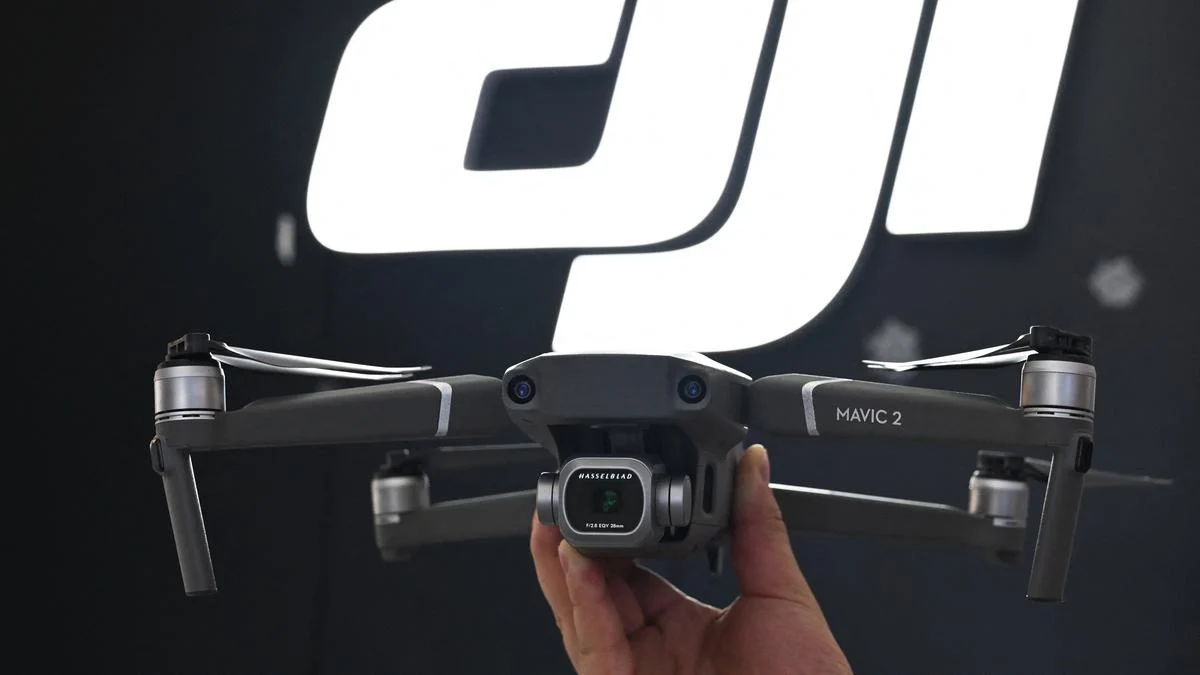
Washington D.C., September 3, 2026 – The United States today implemented a new wave of tariffs, imposing duties of up to 100% on imported unmanned drones and their components. The drastic measure, ordered by President Donald Trump last month, marks a significant escalation in Washington’s efforts to reduce its reliance on foreign supply chains, particularly those dominated by China, and to address what it terms a "national security threat."
The tariffs, which took effect Thursday, target various categories of drones. Heavy-duty unmanned aerial vehicles (UAVs) exceeding 25 kilograms in takeoff weight, along with those equipped with thermal imaging capabilities and their associated docking stations, now face a prohibitive 100% tariff. Smaller, more common consumer and commercial drones will incur a 25% duty. In a two-tiered approach, duties on certain "not particularly sensitive" drone components are slated to come into force on February 9, 2027, allowing for an interim period for supply chain adjustments.
This move follows years of escalating tensions and growing concerns within the U.S. government regarding the pervasive presence of Chinese-made drones in critical infrastructure, government operations, and consumer markets. The administration asserts that the tariffs are crucial for safeguarding national security, protecting sensitive data, and fostering a robust domestic drone manufacturing ecosystem capable of meeting both commercial and defense needs. China, the undisputed global leader in drone production, has vehemently opposed the tariffs, warning of severe disruptions to the global supply chain and accusing Washington of undermining fair competition. The implications of these tariffs are far-reaching, promising to reshape the global drone industry and further entrench the technological rivalry between the world’s two largest economies.
Main Facts: A Bold Stroke in the Tech Confrontation
The imposition of these new tariffs represents one of the most assertive economic actions taken by the Trump administration in its second term, specifically targeting a high-growth technological sector deemed critical for future economic and military advantage. The executive order, signed by President Trump in August, explicitly cited "the national security threat posed by imports of drones and their components" as the primary driver behind the aggressive duties.
The tiered tariff structure reflects a strategic differentiation, aiming to place the heaviest burden on advanced and enterprise-grade drones that are more likely to be used by government agencies, critical infrastructure operators, or in applications with higher security implications. The 100% tariff on drones over 25 kg, those with thermal imaging, and docking stations effectively doubles their cost, making imports from China virtually uncompetitive in the U.S. market. This category typically includes drones used for industrial inspection, large-scale agriculture, advanced mapping, and public safety operations, where data security and supply chain integrity are paramount.
For smaller drones, predominantly used by consumers, hobbyists, and small businesses, the 25% tariff still represents a significant price increase. While less severe, it is intended to tilt the playing field towards nascent American manufacturers and encourage consumers to consider domestically produced alternatives, even if they come at a higher initial cost. The delayed implementation for "not particularly sensitive" components suggests an acknowledgement of the deep integration of Chinese parts across the global electronics supply chain, offering a grace period for U.S. companies to identify and transition to alternative suppliers, whether domestic or from allied nations. This staggered approach seeks to mitigate immediate, catastrophic disruptions for American businesses that assemble drones using foreign components, while still signaling a clear long-term intent to disentangle from Chinese-dominated supply lines.
The White House’s stated objectives extend beyond immediate security concerns. A core aim is to galvanize the domestic supply chain for drones, fostering innovation, manufacturing capabilities, and job creation within the United States. This aligns with a broader industrial policy agenda focused on "reshoring" critical production and reducing economic vulnerabilities exposed by global crises and geopolitical competition. By making Chinese imports significantly more expensive, the administration hopes to create a protected market space for American companies to grow, scale, and eventually compete on a global stage without what it perceives as unfair competition from state-subsidized Chinese firms.
Chronology: A Decades-Long Trajectory of Tech Rivalry
The current tariffs are not an isolated event but the culmination of a decade-long trajectory of escalating technological competition and national security concerns between the United States and China. The drone industry, with its dual-use potential for both civilian and military applications, has increasingly found itself at the nexus of this geopolitical rivalry.
Early 2010s – The Rise of DJI and Chinese Dominance: While U.S. military drone technology was advanced, the commercial drone market was rapidly being captured by Chinese firms, primarily DJI. Founded in 2006, DJI leveraged aggressive pricing, rapid innovation, and efficient manufacturing to achieve global dominance. By the mid-2010s, its drones were ubiquitous, used by everyone from amateur photographers to professional cinematographers, farmers, and even U.S. state and local government agencies.
Mid-2010s – Initial U.S. Concerns Emerge: As Chinese drones became more pervasive, U.S. intelligence and defense officials began to voice low-level concerns about potential data security risks. Questions were raised about where the flight data, imagery, and operational information collected by these drones were being stored and whether they could be accessed by the Chinese government. These concerns were initially dismissed by some as protectionist rhetoric but slowly gained traction.
2017-2020 – The First Trump Administration and the Trade War: President Trump’s first term saw the initiation of a broad trade war with China, characterized by tariffs on various goods. While drones were not specifically targeted then, the broader rhetoric around unfair trade practices, intellectual property theft, and national security laid the groundwork. During this period, the U.S. Department of Defense (DoD) began to issue internal directives restricting the use of Chinese-made drones by military personnel due to cybersecurity vulnerabilities. The Department of Homeland Security (DHS) also issued an alert in 2019 warning U.S. organizations about the potential risks posed by Chinese-made drones.
2020-2022 – Intensifying Scrutiny and Blacklisting: The concerns solidified into concrete actions. In 2020, the U.S. Department of Commerce added several Chinese technology companies, including drone manufacturers, to its Entity List, restricting their access to American technology and components. By December 2022, DJI, along with other prominent Chinese tech firms, was officially placed on a U.S. Treasury Department list of "Chinese military-industrial complex companies," subjecting U.S. investors to bans and further restricting DJI’s operational scope within the American ecosystem. This move, which DJI vehemently disputed, marked a turning point, explicitly linking the company to national security threats despite its civilian market focus.
2023-2025 – Legislative Efforts and Industry Pressure: Following DJI’s blacklisting, congressional efforts intensified to reduce reliance on Chinese drones. Several bipartisan bills were introduced in Congress, proposing bans on federal procurement of Chinese drones and offering incentives for domestic production. U.S. drone manufacturers, though smaller, began lobbying intensely for government support and protection from what they described as predatory pricing by Chinese competitors. Reports from various think tanks and government agencies continued to highlight the economic and security risks of relying on a single, geopolitical rival for such critical technology. The Department of Energy and other critical infrastructure agencies began phasing out Chinese drones from their inventories.
Early 2026 – White House Signals and Policy Review: As the political landscape shifted with President Trump’s return to office, the administration made it clear that reducing reliance on China in critical technological sectors would be a top priority. A comprehensive review of key supply chains was initiated, with the drone industry identified as a primary area of concern. Discussions involved stakeholders from the DoD, Commerce Department, intelligence agencies, and industry representatives, culminating in a consensus that more aggressive action was needed beyond existing blacklists and procurement bans.
August 13, 2026 – The Executive Order: President Donald Trump formally announced and signed the executive order imposing the new tariffs. In a press conference, he emphasized the need for American technological sovereignty and economic resilience, framing the tariffs as a necessary step to protect U.S. interests from foreign adversaries who could exploit technological dependencies. The announcement was met with immediate condemnation from Beijing and cautious optimism from U.S. domestic drone manufacturers.
September 3, 2026 – Tariffs Take Effect: The tariffs on finished drones and sensitive components officially go into force. This date marks a new chapter in the U.S.-China tech rivalry, transforming the drone market landscape overnight.

February 9, 2027 – Component Tariffs: Duties on less sensitive drone components are set to take effect, completing the tariff regime and putting further pressure on the entire drone supply chain to diversify away from China.
Supporting Data: The Uncomfortable Reality of Reliance
The decision to impose tariffs on drones is underpinned by compelling data illustrating China’s overwhelming dominance in the global market and the perceived vulnerabilities this creates for the United States.
Market Share Disparity: Several independent studies and industry analyses consistently show that Chinese manufacturers, led by DJI, have captured well over two-thirds of the global commercial and consumer drone market in recent years. Some estimates place DJI’s share even higher, nearing 80% in certain segments. This dominance extends across various applications, from hobbyist flying and aerial photography to professional surveying, mapping, agricultural spraying, and infrastructure inspection. This market saturation means that many U.S. businesses, public safety agencies, and individual consumers have come to rely heavily on Chinese-made drones due to their advanced features, reliability, and significantly lower price points compared to non-Chinese alternatives.
The "National Security Threat" Justification: The U.S. government’s assertion of a "national security threat" is multifaceted.
- Data Exfiltration: A primary concern is the potential for Chinese-made drones to collect sensitive data (e.g., imagery, GPS coordinates, flight paths, operational metadata) and transmit it to servers accessible by the Chinese government. While companies like DJI have consistently denied such practices, U.S. intelligence agencies have voiced concerns about China’s national security laws, which compel Chinese companies to cooperate with intelligence operations. For drones used by law enforcement, critical infrastructure operators (e.g., energy grids, transportation hubs), or even in sensitive industrial sites, this data could provide valuable intelligence to a foreign adversary.
- Supply Chain Vulnerabilities: The deep integration of Chinese components, even in drones assembled elsewhere, creates a significant vulnerability. A substantial portion of microchips, sensors, cameras, and other critical parts used in drones, regardless of the final assembly location, originate from China. This reliance could expose U.S. systems to potential backdoors, malware, or supply disruptions in times of geopolitical tension. The ability of an adversary to remotely disable, hijack, or compromise a fleet of drones during a crisis is a scenario that U.S. defense strategists view with extreme gravity.
- Dual-Use Technology: Commercial drone technology, while designed for civilian use, often has dual-use potential that can be adapted for military applications. The same drone used for crop inspection can, with modifications, be used for reconnaissance, surveillance, or even carrying small payloads. The widespread availability and technological sophistication of Chinese commercial drones could indirectly benefit adversary military capabilities or be leveraged by non-state actors.
Economic Rationale and Domestic Industry: The U.S. domestic drone manufacturing sector, while innovative, has struggled to compete with China’s scale and cost advantages. Companies like Skydio, BRINC Drones, and other niche players have focused on high-security, government-grade drones, often participating in programs like the Defense Innovation Unit’s "Blue sUAS" initiative. This program aims to identify and validate secure, U.S.-made drone alternatives for federal agencies. However, these domestic options typically come with a higher price tag and have not yet achieved the market penetration or broad product portfolio of DJI. The tariffs are designed to create a protected market environment, allowing these U.S. companies to scale up production, invest further in R&D, and become more cost-competitive over time. The administration envisions this leading to job creation in advanced manufacturing, greater technological self-sufficiency, and a more resilient national industrial base.
Global Supply Chain Disruptions: The tariffs will inevitably ripple through the global supply chain. Many drone companies, even those not based in China, source components from Chinese factories. The delayed implementation for "not particularly sensitive" components acknowledges this complexity, offering a window for companies to re-evaluate their sourcing strategies. However, finding non-Chinese alternatives for certain specialized components can be challenging and costly, potentially leading to increased production costs for all drone manufacturers and ultimately higher prices for end-users worldwide. This could also accelerate a trend towards "decoupling" in the tech sector, where countries increasingly seek to build independent supply chains, fragmenting the global technological landscape.
Official Responses: A Clash of Ideologies and Economic Interests
The implementation of these tariffs has elicited sharp and predictable reactions from both sides, underscoring the deep ideological and economic chasm between Washington and Beijing.
China’s Vehement Opposition: Shortly after President Trump’s announcement in August, China’s Ministry of Commerce issued a strongly worded condemnation. A ministry spokesman asserted that the tariffs would "disrupt the global drone supply chain and further undermine a fair and competitive market environment." Beijing characterized the U.S. actions as blatant protectionism, a violation of World Trade Organization (WTO) principles, and an unjustified expansion of national security concerns into economic policy. Chinese state media echoed these sentiments, accusing the U.S. of attempting to stifle China’s technological rise and maintain its own industrial hegemony. They argued that such tariffs would ultimately harm American consumers and businesses by limiting choice and increasing costs, while failing to foster a truly competitive domestic industry. While China has not yet announced specific retaliatory tariffs on U.S. goods, the possibility looms large, potentially extending to other high-tech sectors or critical raw materials where China holds leverage.
The U.S. Government’s Unified Stance: The Trump administration has remained steadfast in its justification, portraying the tariffs as a necessary defense of American interests. White House officials, supported by statements from the Commerce Department and the Department of Defense, reiterated that the measures are not merely about trade but about safeguarding national security, protecting American data, and ensuring a resilient supply chain for a technology critical to both civilian life and military readiness. Secretary of Commerce Gina Raimondo emphasized that "the era of unchecked reliance on foreign adversaries for critical technologies is over. These tariffs send a clear message: America will build its own future, secure its own data, and protect its own people." Congressional leaders from both parties, particularly those concerned with China’s geopolitical ambitions, have largely supported the move, viewing it as a decisive step against what they perceive as China’s unfair trade practices and technological espionage.
Industry Reactions – A Divided Landscape:
- DJI’s Rebuttal: The Chinese drone giant DJI, which has been at the epicenter of these discussions, expressed deep disappointment. Having already been placed on various U.S. blacklists since 2022, DJI has consistently denied any security threats posed by its products, emphasizing its commitment to user privacy and data security. A company spokesperson stated, "These tariffs will severely impact U.S. consumers and businesses who rely on affordable, innovative drone technology. They stifle innovation, limit choice, and ultimately harm the very market they claim to protect. We urge the U.S. government to reconsider these protectionist measures and engage in constructive dialogue." DJI has been actively fighting its inclusion on U.S. entity lists, maintaining that its products are designed for civilian use and adhere to global cybersecurity best practices.
- U.S. Domestic Manufacturers’ Optimism: American drone manufacturers, though cautious, largely welcomed the tariffs. Companies like Skydio, Auterion, and BRINC Drones, which have focused on building secure, U.S.-made drone solutions, see this as a long-awaited opportunity. "This levels the playing field," remarked a CEO of a U.S. drone company. "For too long, we’ve been competing against companies with unfair state backing. These tariffs will allow us to invest more, innovate faster, and create American jobs, finally giving the U.S. a chance to catch up in this critical sector." However, these companies also acknowledge the significant challenge of scaling production and competing on price, even with tariff protection, given China’s established manufacturing ecosystem.
- U.S. Drone Users’ Concerns: Businesses, agricultural operators, and public safety agencies in the U.S. that extensively use drones expressed a mix of understanding and concern. While acknowledging the national security arguments, many voiced worries about the immediate impact on costs, the availability of specialized drone models, and potential disruptions to their operations. "We rely on drones for everything from inspecting solar panels to mapping construction sites," said a representative from a large infrastructure firm. "A 25% or 100% price hike will force us to re-evaluate our budgets and potentially slow down our adoption of this crucial technology." Small businesses and individual content creators who depend on affordable Chinese drones are also expected to feel the pinch.
International Reactions: The tariffs have also garnered attention internationally. Some U.S. allies, particularly those with their own concerns about Chinese technological influence, may view the move as a template for their own policies. Others, especially those deeply integrated into the Chinese supply chain or concerned about a fracturing global trade system, may express reservations about the potential for further trade friction and economic instability. The WTO, already strained by previous U.S.-China trade disputes, faces renewed pressure to address the legality and implications of such unilateral trade actions.
Implications: A Bifurcated Future for Drones
The U.S. tariffs on drones are poised to have profound and lasting implications, not just for the drone industry but for the broader landscape of global technology, economics, and geopolitics.
Economic Impact:
- For U.S. Consumers and Businesses: The immediate effect will be higher prices for drones and drone components. This could slow down the adoption of drone technology in various sectors, from agriculture and construction to media and entertainment, potentially hindering productivity gains. Businesses that have integrated drones into their operations will face increased operational costs. While U.S. manufacturers may see a boost, they will face the challenge of rapidly scaling up production, innovating at speed, and reducing costs to offer competitive alternatives without entirely passing on the premium to consumers.
- For U.S. Manufacturers: The tariffs offer a significant protective barrier, creating a more favorable environment for domestic drone companies. This could spur investment in R&D, manufacturing facilities, and workforce development within the U.S. However, these companies will still need to overcome challenges related to supply chain diversification (finding non-Chinese components), skilled labor shortages, and establishing economies of scale to truly compete long-term.
- For China: The tariffs represent a direct hit to China’s dominant drone industry, particularly DJI’s lucrative U.S. market share. While DJI has a global presence, the U.S. remains a critical market. China may seek to expand into other markets, invest more heavily in indigenous component production to reduce its own dependencies, or even retaliate with counter-tariffs on U.S. goods, potentially escalating the trade war.
- Global Trade and Supply Chains: These tariffs further accelerate the trend of "decoupling" or "de-risking" global supply chains, particularly in critical technology sectors. Companies worldwide will be forced to re-evaluate their sourcing strategies, potentially leading to the creation of bifurcated supply chains – one for the U.S. and its allies, and another for China and its partners. This fragmentation could increase global manufacturing costs, reduce efficiency, and complicate international trade relations.
National Security and Geopolitical Implications:
- Enhanced U.S. Security? The tariffs are intended to enhance U.S. national security by reducing reliance on potentially compromised technology. If successful in fostering a robust domestic drone industry and secure supply chains, this could indeed bolster U.S. defenses against espionage and cyber threats. However, critics argue that such measures might only push adversaries to develop their own fully independent and potentially more opaque drone ecosystems, rather than truly mitigating the threat.
- Accelerated Tech Rivalry: This move undeniably deepens the technological rivalry between the U.S. and China. Both nations are now explicitly racing to achieve technological independence in key sectors. This competition could spur innovation but also lead to a more fragmented global technology landscape, with differing standards and incompatible systems.
- U.S.-China Relations: The tariffs will undoubtedly strain already tense U.S.-China relations, adding another layer of friction to disputes over trade, human rights, and geopolitical influence. The potential for tit-for-tat retaliations remains high, raising concerns about broader economic and diplomatic stability.
Technological and Innovation Implications:
- Domestic Innovation: The tariffs are expected to stimulate domestic innovation in the U.S. drone sector. American companies will have stronger incentives to develop cutting-edge, secure, and cost-effective alternatives. This could lead to advancements in drone autonomy, AI integration, materials science, and cybersecurity within the U.S.
- Stifled Global Innovation? Conversely, a fragmented global market could potentially stifle overall innovation. If companies are forced to develop separate product lines or source components from less efficient suppliers due to geopolitical considerations, it could slow down the pace of technological advancement globally. Collaboration and knowledge sharing, often crucial for rapid innovation, could diminish.
- Focus on Open-Source and Secure Platforms: The emphasis on secure supply chains might also drive greater adoption of open-source drone platforms and components, allowing for more transparency and scrutiny of underlying code and hardware, thereby addressing some of the security concerns.
Future Outlook:
The long-term effectiveness of these tariffs will depend on several factors: the ability of U.S. manufacturers to scale up and innovate; China’s response and its success in developing alternative markets and supply chains; and the willingness of other nations to align with either the U.S. or Chinese model. This move signifies a broader shift in global economic policy, moving away from purely free-market principles towards a more strategically managed and securitized approach to critical technologies. The drone tariffs are not merely about unmanned aircraft; they are a clear indicator of a future where technological sovereignty and national security concerns increasingly dictate global trade and industrial policy across a range of strategic sectors. The world is likely to witness a bifurcated future for drone technology, with profound implications for commerce, security, and international relations.
