

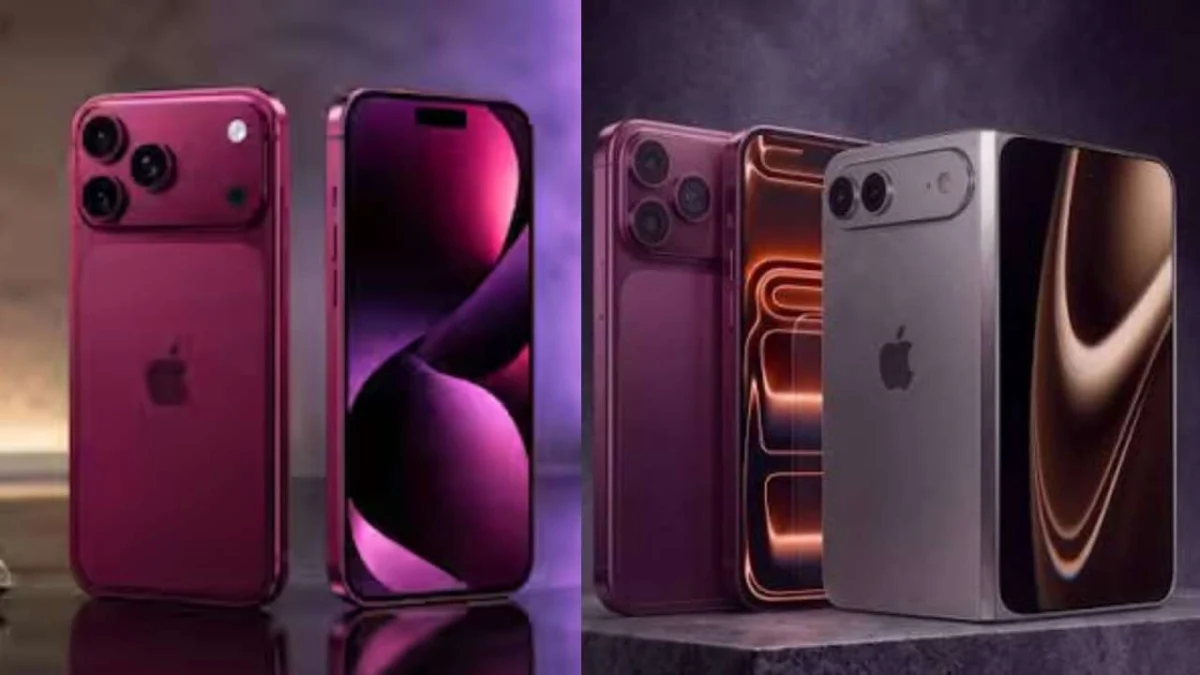
CUPERTINO, CALIFORNIA – The technological world is bracing for what could be one of Apple’s most pivotal product launch events in recent history. Industry insiders and reliable reports suggest that the Cupertino giant is poised to unveil its next-generation flagship smartphones, the iPhone 18 Pro and iPhone 18 Pro Max, alongside a groundbreaking entry into a new category: its very first foldable iPhone. All eyes are fixed on September 9, 2026, a date that promises to redefine Apple’s mobile strategy and send ripples across the global smartphone market.
This ambitious triple launch signifies a strategic acceleration for Apple, pushing the boundaries of innovation while simultaneously addressing evolving consumer demands and intensifying competition. The introduction of a foldable device, potentially dubbed the "iPhone Ultra," would mark the most significant diversification of the iPhone lineup since its inception, positioning Apple directly against established players in the burgeoning foldable segment.

The September 9th Revelation: A Deep Dive into Apple’s 2026 Event
The anticipation surrounding Apple’s annual September keynote is always palpable, but 2026 carries an unprecedented level of excitement. Reports, notably from Bloomberg’s revered Apple analyst Mark Gurman, indicate that the highly anticipated event is penciled in for Tuesday, September 9, 2026. While other texts have briefly mentioned September 8, Gurman’s consistent accuracy in forecasting Apple’s moves lends significant weight to the September 9th date. It aligns perfectly with Apple’s historical pattern of holding major product announcements on Tuesdays or Wednesdays in early to mid-September.
This meticulously planned date is not merely arbitrary; it is a critical component of Apple’s meticulously orchestrated product rollout. Should the September 9th announcement hold true, consumers can expect the pre-order window for the iPhone 18 Pro and Pro Max to open swiftly thereafter, specifically on Friday, September 11, 2026. This two-day gap between presentation and pre-orders is a time-honored Apple tradition, designed to generate maximum hype and allow for initial media impressions to settle before consumers commit to purchases. The actual retail availability and shipment of these devices would then typically follow one week later, around September 18, 2026, though specific regional rollouts may vary.
)
The event itself, likely to be a highly polished, pre-recorded digital presentation originating from Apple Park, will serve as the global stage where pricing structures, diverse storage configurations, and comprehensive availability details for key markets, including India, will be meticulously disclosed. As of now, Apple has yet to issue formal invitations, maintaining its characteristic veil of secrecy, but the industry consensus points firmly towards this early September timeframe.
The iPhone 18 Pro and Pro Max: Setting New Benchmarks
At the core of Apple’s 2026 September event will be the unveiling of the iPhone 18 Pro and iPhone 18 Pro Max. These devices are expected to continue Apple’s tradition of pushing the envelope in smartphone technology, serving as the benchmark for premium mobile experiences. While specific details remain under wraps, a look at Apple’s developmental trajectory and industry trends allows for educated speculation on the advancements these models will bring:

- A20 Bionic Chip: Powering these new flagships will be the next iteration of Apple’s custom-designed silicon, likely the A20 Bionic chip. Fabricated on an even more advanced process node (potentially 2nm), this chip is expected to deliver substantial improvements in raw processing power, graphics performance, and most critically, neural engine capabilities for on-device artificial intelligence. This will enable more sophisticated computational photography, enhanced augmented reality experiences, and a more responsive, intelligent user interface.
- Revolutionary Camera Systems: Photography has long been a cornerstone of the iPhone Pro lineup, and the iPhone 18 Pro models are anticipated to feature significant camera hardware and software upgrades. This could include larger sensor sizes for improved low-light performance, advanced optical zoom capabilities (perhaps a periscope lens system for the Pro Max), and next-generation computational photography algorithms that leverage the A20 Bionic’s neural engine for unparalleled image processing, dynamic range, and video quality. Expect new cinematic and photographic modes that further blur the line between professional cameras and smartphones.
- ProMotion XDR Display Enhancements: The ProMotion XDR displays are already industry-leading, but the iPhone 18 Pro series could introduce further refinements. This might include improved peak brightness, enhanced color accuracy, and more energy-efficient display technologies. There’s also speculation about the evolution of the Dynamic Island, possibly integrating under-display Face ID technology, which would allow for a completely uninterrupted display surface, maximizing screen real estate.
- Advanced Materials and Durability: Continuing the trend seen with previous Pro models, the iPhone 18 Pro series is likely to incorporate premium, durable materials. The use of aerospace-grade titanium, already present in the iPhone 15 Pro, could be refined, perhaps offering even lighter yet stronger frames. New Ceramic Shield iterations are expected to enhance screen durability, while improved water and dust resistance ratings would further cement their robust construction.
- Connectivity and Battery Life: Expect the latest in wireless connectivity, including Wi-Fi 7 for blazing-fast local network speeds and further enhancements to 5G modems for superior global coverage and efficiency. Battery life, always a key concern for power users, is also expected to see improvements through more efficient components and optimized software, ensuring these devices can keep pace with demanding usage throughout the day.
- USB-C with Thunderbolt Capabilities: Having fully transitioned to USB-C, the Pro models are likely to leverage the full potential of Thunderbolt technology, offering unparalleled data transfer speeds for professionals working with large media files, connecting external displays, and interfacing with high-bandwidth accessories.
These advancements underscore Apple’s commitment to delivering a premium, professional-grade mobile experience that caters to both power users and creative professionals. The "Pro" moniker is not just a marketing term; it signifies a device engineered for peak performance and cutting-edge capabilities.
Apple’s Foldable Frontier: The "iPhone Ultra" Emerges
Perhaps the most electrifying aspect of the 2026 launch event is the anticipated debut of Apple’s first foldable iPhone. This marks a monumental strategic shift for the company, signaling its readiness to enter a market segment that has, until now, been dominated by rivals like Samsung. The long-rumored device, potentially christened the "iPhone Ultra," is poised to be the most significant addition to the iPhone lineup in over a decade.
)
Why Now? The Strategic Imperative:
Apple’s entry into the foldable market, while seemingly late, is strategically timed. The company has a history of observing emerging technologies, allowing competitors to refine the concept and expose initial flaws, before entering with a polished, user-centric solution. The foldable market has matured significantly since its nascent stages, with improved hinge mechanisms, more durable display technologies, and refined software experiences. Market saturation for traditional slab smartphones also necessitates innovation in form factor to reignite consumer excitement and drive upgrade cycles.
Design and Form Factor Speculation:
The exact form factor of Apple’s foldable remains a subject of intense speculation. Will it be a "clamshell" design akin to Samsung’s Galaxy Z Flip, appealing to fashion-conscious users seeking a compact device? Or will it adopt a "book-style" fold, like the Galaxy Z Fold, offering a larger tablet-like screen for enhanced productivity and media consumption? Given the "Ultra" moniker, which implies premium and highest-end, a book-style fold that offers a larger, more versatile display experience seems more probable, allowing Apple to showcase its prowess in multitasking and professional applications.
)
Key design innovations are expected:
- Advanced Hinge Mechanism: Apple’s engineering teams are renowned for their precision. The foldable iPhone will undoubtedly feature a sophisticated hinge designed for durability, seamless operation, and minimal crease visibility. Patented technologies related to self-healing screens and robust hinge designs have been rumored for years.
- Ultra-Thin Glass (UTG) or Hybrid Display: To ensure durability and a premium feel, Apple is likely to employ an advanced ultra-thin glass or a proprietary hybrid display technology that can withstand repeated folding without compromising visual integrity.
- Optimized Software Experience: iOS 27 will be meticulously optimized for the unique demands of a foldable display, offering intuitive multitasking features, adaptive UIs that seamlessly transition between folded and unfolded states, and perhaps specialized apps that leverage the dual-screen form factor.
- Potential Apple Pencil Integration: For a "Pro" or "Ultra" device with a larger screen, Apple Pencil support, perhaps a new, smaller "Apple Pencil Mini," could significantly enhance its productivity credentials, appealing to artists, designers, and note-takers.
The "iPhone Ultra" Naming Convention:
The rumored "iPhone Ultra" name is highly significant. Apple has previously used "Ultra" to denote its most premium and capable products, such as the Apple Watch Ultra. This branding would immediately position the foldable iPhone at the absolute apex of Apple’s smartphone hierarchy, signaling its premium features, cutting-edge technology, and likely, a significantly higher price point than the Pro Max models.
)
Challenges and Opportunities:
Introducing a foldable iPhone presents several engineering and market challenges, including:
- Durability: The longevity of the folding screen and hinge mechanism remains a primary concern for consumers. Apple’s reputation for quality will be on the line.
- Cost: Foldable technology is inherently expensive. The "iPhone Ultra" will undoubtedly carry a premium price tag, limiting its initial market penetration.
- Battery Life: Powering two displays and a complex hinge mechanism while maintaining Apple’s expected battery performance will be a significant engineering feat.
- Supply Chain: Scaling production of a complex new form factor requires robust supply chain management.
Despite these hurdles, the opportunity for Apple is immense. Its entry into the foldable market would not only legitimize the category further but also potentially redefine consumer expectations, driving innovation across the industry and offering a fresh growth avenue for the iPhone brand.
)
The Standard Bearers: iPhone 18 and 18 Plus to Follow
While the September event will undoubtedly focus on the premium segment, with the iPhone 18 Pro, iPhone 18 Pro Max, and the foldable "iPhone Ultra" taking center stage, Apple is anticipated to stagger the release of its more mainstream offerings. The standard iPhone 18 and iPhone 18 Plus models are expected to launch later, likely in late September or early October 2026.
This staggered release strategy allows Apple to maximize the impact of its premium devices, giving them an exclusive spotlight before broadening the product portfolio. It also helps manage supply chain complexities, ensuring adequate stock for the high-demand Pro models. The standard iPhone 18 and 18 Plus will likely inherit many features from the previous year’s Pro models, offering robust performance, improved camera systems, and the latest iOS experience at a more accessible price point, catering to a broader consumer base. They will continue to be critical volume drivers for the iPhone lineup.
)
iOS 27: The Software Backbone
All new iPhone 18 Pro devices, including the groundbreaking foldable, will come pre-installed with iOS 27. Apple officially unveiled its latest mobile operating system at WWDC 2026 (Worldwide Developers Conference), and the public beta has already been accessible to developers and enthusiasts for several months.
iOS 27 is expected to be a significant leap forward, building upon the foundations of previous iterations while introducing powerful new capabilities, particularly in the realm of artificial intelligence. Key features anticipated include:
)
- Deeper AI Integration: Leveraging the A20 Bionic’s enhanced Neural Engine, iOS 27 is expected to feature pervasive AI capabilities across the system. This could manifest as a vastly improved, more conversational Siri, proactive suggestions across apps, advanced photo and video editing capabilities, and personalized user experiences that adapt dynamically to individual habits and preferences. Generative AI features, such as on-device text generation, image manipulation, and code completion, could become standard tools.
- Enhanced Multitasking (especially for Foldable): For the foldable iPhone, iOS 27 will be crucial. It will need to offer seamless app transitions between folded and unfolded states, intuitive split-screen multitasking, and perhaps a desktop-like experience when fully unfolded, leveraging the larger display for enhanced productivity.
- Privacy and Security Advancements: Apple consistently prioritizes user privacy. iOS 27 is expected to introduce new privacy controls, enhanced data encryption, and more transparent ways for users to understand and manage how their data is used by apps.
- User Interface Refinements: Expect subtle but impactful refinements to the user interface, potentially including redesigned widgets, new customization options, and a more streamlined notification system.
- New Accessibility Features: Apple is a leader in accessibility, and iOS 27 will undoubtedly bring new features to make the iPhone more usable for individuals with diverse needs.
While the public beta offers a glimpse into iOS 27, Apple strongly advises against installing beta software on primary devices due to potential bugs and instability. The final, stable version of iOS 27 will be released shortly before or concurrently with the launch of the new iPhone models in September.
Pricing, Availability, and Global Strategy
The September 9th event will be the moment of truth for global consumers, as Apple finally reveals the pricing, storage configurations, and market availability for its new lineup.
)
- Pricing Tiers: The iPhone 18 Pro and Pro Max are expected to command premium prices, potentially seeing a slight increase over their predecessors, reflecting the advanced technology and ongoing inflationary pressures. The foldable "iPhone Ultra" will undoubtedly be Apple’s most expensive smartphone to date, likely starting well above the current Pro Max pricing, positioning it as a luxury, cutting-edge device.
- Storage Options: Apple typically offers a range of storage options. We can expect the Pro models to start at a generous base storage (perhaps 256GB or 512GB) with options extending up to several terabytes, catering to the growing demands of high-resolution video and large applications.
- Global Rollout: Apple usually prioritizes key markets for its initial launch wave. Countries like the United States, Canada, the UK, Germany, France, Australia, Japan, and China are typically among the first to receive new iPhones. India, a rapidly growing and strategically important market for Apple, is increasingly included in the first or second wave of releases, ensuring timely availability for its vast consumer base. Specific dates for pre-orders and in-store availability will be detailed at the event.
Competitive Landscape: A Shifting Battlefield
Apple’s entry into the foldable market with the "iPhone Ultra" will dramatically reshape the competitive landscape. For years, Samsung has been the undisputed leader in this niche, pioneering foldable technology with its Galaxy Z Fold and Z Flip series. Other players like Google with its Pixel Fold, Huawei, Xiaomi, and Oppo have also carved out segments of the market.
Apple’s late but impactful entry will bring unprecedented scrutiny and legitimacy to the foldable category. Competitors will face intense pressure to innovate further, not just in hardware but also in software optimization and ecosystem integration, areas where Apple traditionally excels. The "iPhone Ultra" is poised to challenge Samsung’s dominance directly, potentially accelerating the mainstream adoption of foldable devices and igniting a new phase of innovation in smartphone design.
)
The iPhone 18 Pro and Pro Max will continue to compete fiercely with other premium flagships from Samsung’s Galaxy S series, Google’s Pixel Pro series, and offerings from Chinese manufacturers like Xiaomi and OnePlus. Apple’s focus on seamless hardware-software integration, robust privacy features, and a powerful ecosystem remains its core competitive advantage.
Apple’s Veil of Secrecy and the Art of the Leak
In the lead-up to every major product launch, Apple maintains an almost impenetrable wall of secrecy. This corporate culture, championed by Steve Jobs and continued by Tim Cook, is designed to maximize the impact of their unveilings. No official confirmation or detail is released until the keynote event itself.
)
However, a vibrant ecosystem of leakers, supply chain analysts, and industry insiders exists, providing a steady stream of credible information. Mark Gurman of Bloomberg, cited in the original report, is a prime example, known for his deep network within Apple’s supply chain and development teams. Other prominent analysts like Ming-Chi Kuo also regularly provide insights into Apple’s future product plans. These leaks, while unofficial, play a crucial role in building anticipation and shaping public discourse ahead of the official announcements. Apple, for its part, neither confirms nor denies these reports, preferring to control its narrative entirely through its meticulously crafted events. This dance between secrecy and leaks is an integral part of the Apple product cycle, fueling speculation and keeping the brand in the global spotlight.
Conclusion
September 9, 2026, is not just another date on the calendar; it is poised to be a landmark day for Apple and the broader technology industry. The simultaneous launch of the highly anticipated iPhone 18 Pro and Pro Max, alongside the groundbreaking "iPhone Ultra" foldable, signals a bold and strategic leap forward for the company. With iOS 27 providing the intelligent software backbone, these devices are set to redefine user expectations for performance, photography, and form factor innovation.
)
Apple’s entry into the foldable market will be a game-changer, intensifying competition and driving further advancements in mobile technology. While official details on specifications, exact pricing, and global availability await the formal invitation and the grand unveiling, the direction is clear: Apple is not merely iterating; it is innovating at a pace that promises to reshape the future of personal computing in our pockets. The world watches with bated breath as Apple prepares to write its next chapter.
