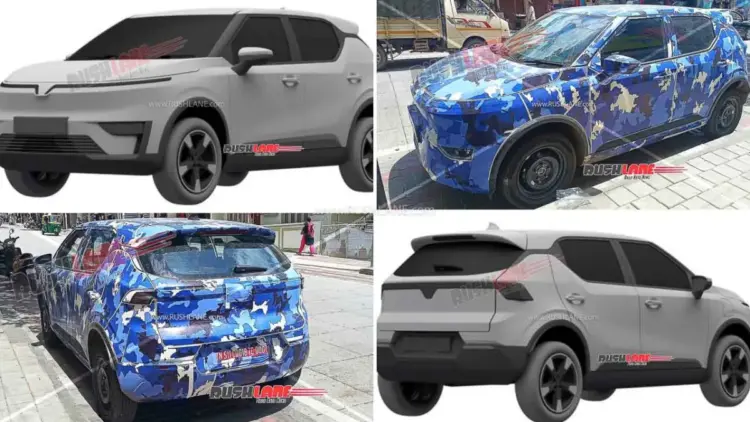
The Indian electric vehicle (EV) landscape is on the cusp of a significant transformation as global players seek to challenge the established dominance of domestic giants. Among the most ambitious newcomers is VinFast, the Vietnamese automotive powerhouse, which has recently signaled a major step forward in its Indian strategy. In a move that confirms its intent to capture the mass-market segment, VinFast has officially filed a design patent for the facelifted version of its VF5 electric SUV in India.
This development follows months of speculation and multiple sightings of test mules on Indian roads. The VF5, positioned as a volume-oriented offering, is expected to be the cornerstone of VinFast’s portfolio in the subcontinent, aiming to compete directly with popular models like the Tata Punch EV and the upcoming Mahindra XUV 3XO EV.
Main Facts: The Facelifted VF5 Revealed
The patent filings reveal a vehicle that has undergone a sophisticated aesthetic and functional evolution compared to the current version sold in international markets like Vietnam and Indonesia. The facelifted VF5 adopts a more "mature" and "geometric" design language, aligning it with VinFast’s larger, more premium siblings like the VF6 and VF9.
Exterior Refinements
The most striking changes are concentrated at the front fascia. The new design features sharper, more aggressive lines and a more upright stance, giving the compact SUV a more commanding presence. The traditional "grille" area is entirely closed off, as is standard for EVs, but it now spans the width of the vehicle more seamlessly.
The lighting architecture has been completely overhauled. The primary headlamp clusters are now mounted lower on the bumper, housed within precise, geometric cutouts. Above them, the signature V-shaped chrome or LED trim remains a focal point, lining the edge of the "bonnet." In higher trims, this V-element is expected to be fully illuminated, serving as a high-tech daytime running light (DRL) that has become a hallmark of the VinFast brand.

At the rear, the design moves toward a cleaner, more minimalist aesthetic. The previous model’s bumper-mounted lights have been replaced by a sophisticated full-width LED light bar that integrates the tail lamps and turn indicators. The "VINFAST" lettering is prominently displayed across the tailgate, reinforcing brand identity.
Interior Revolution
The patent leaks and international test mule sightings suggest a radical departure from traditional interior layouts. The facelifted VF5 is set to feature a larger, free-standing touchscreen infotainment system that dominates the dashboard.
Most notably, VinFast appears to be following a minimalist trend popularized by Tesla; the traditional instrument cluster behind the steering wheel has been removed. Instead, vital driving information—such as speed, battery percentage, and navigation—will likely be displayed on a portion of the central touchscreen or via a Head-Up Display (HUD). To complement this tech-forward approach, the SUV features a new two-spoke, yoke-style steering wheel and a rotary drive selector on the center console, freeing up space and enhancing the cabin’s modern feel.
Chronology: VinFast’s Journey to India
The patent filing for the VF5 facelift is not an isolated event but the latest milestone in a rapidly accelerating timeline for the Vietnamese automaker’s Indian debut.
- January 2024: VinFast officially announces its entry into the Indian market, signing a Memorandum of Understanding (MoU) with the Government of Tamil Nadu. The company commits to an initial investment of $500 million, with a long-term goal of $2 billion.
- February 2024: Groundbreaking ceremony takes place for VinFast’s integrated EV manufacturing facility in Thoothukudi, Tamil Nadu. The plant is designed to have a production capacity of up to 150,000 vehicles per year.
- May – August 2024: Multiple sightings of the VF5 (both current and facelifted versions) are reported on Indian highways. These test mules, often heavily camouflaged, suggest that VinFast is conducting extensive local testing to calibrate the suspension, battery cooling systems, and software for Indian road conditions and climate.
- September 2024: Reports emerge of VinFast patenting the designs for the VF6 and VF9 in India, indicating a multi-segment product offensive.
- October 2024: The design patent for the VF5 facelift is officially filed and leaked, confirming that India will likely receive the most up-to-date version of the compact SUV, potentially bypassing the older generation entirely.
Supporting Data: Specifications and Competitive Positioning
While VinFast has not officially confirmed the technical specifications for the Indian-spec VF5, data from international markets provides a clear picture of what consumers can expect.

Performance and Battery Options
In Southeast Asian markets, the VF5 is typically offered with two battery configurations:
- The Standard Variant: Equipped with a 29.6 kWh battery pack, delivering approximately 90 hp and 135 Nm of torque. This version offers a range of roughly 268 km under the New European Driving Cycle (NEDC) standards.
- The Extended Variant: Features a larger 37.23 kWh battery, boosting output to 136 hp and providing a certified range of 326 km (NEDC).
For the Indian market, where "range anxiety" remains a primary concern for buyers, VinFast is expected to lean toward the larger battery capacity or optimize the software to achieve a competitive ARAI-certified range of over 350 km.
Market Competition
The VF5 is expected to enter the market at a price point of approximately Rs 12 lakh to Rs 15 lakh (ex-showroom). This places it in the heart of the most competitive EV segment in India.
| Feature | VinFast VF5 (Est.) | Tata Punch EV | Mahindra XUV 3XO EV (Est.) |
|---|---|---|---|
| Battery Size | 30 – 37 kWh | 25 – 35 kWh | 34 – 40 kWh |
| Range (Est.) | 320+ km | 315 – 421 km | 350+ km |
| Infotainment | 10+ inch Floating | 10.25 inch | 10.25 inch |
| Key USP | Global Design, Yoke Steering | Brand Trust, High Ground Clearance | Performance, Cabin Space |
Official Context and Corporate Strategy
VinFast’s strategy in India is built on the pillars of "Local Production" and "Aggressive Infrastructure." Unlike many foreign OEMs that enter India via the CBU (Completely Built Unit) route, which attracts high import duties, VinFast is prioritizing its Tamil Nadu factory. This localization is essential for the VF5 to achieve the aggressive pricing required to disrupt Tata Motors’ 70% market share.
While official spokespeople have remained tight-lipped about the specific launch date of the VF5, the company’s leadership has consistently emphasized India’s role as a global export hub. By manufacturing the VF5 facelift in India, VinFast not only serves the domestic market but also creates a base for exporting right-hand-drive (RHD) vehicles to other Commonwealth nations.

Furthermore, VinFast is expected to introduce its unique Battery Subscription Model to India. This allows customers to purchase the car at a significantly lower upfront cost while paying a monthly fee for battery usage. This model could be the "X-factor" that makes the VF5 more affordable than its petrol-powered counterparts.
Implications: A New Era for Indian EV Buyers
The arrival of the VinFast VF5 facelift carries profound implications for the Indian automotive ecosystem.
1. Consumer Choice and Technological Parity
For years, Indian EV buyers in the sub-20 lakh segment had limited options, mostly restricted to converted internal combustion engine (ICE) platforms. The VF5 is a "born electric" platform, meaning its packaging, interior space, and weight distribution are optimized for a battery powertrain. Its minimalist, tech-heavy interior brings a premium "gadget-on-wheels" feel to the mass market.
2. Pressure on Domestic Manufacturers
The entry of a well-funded, vertically integrated player like VinFast will likely force Tata and Mahindra to accelerate their R&D cycles. We are already seeing this with Tata’s move toward the Acti.ev platform and Mahindra’s partnership with Volkswagen for EV components. The VF5’s patent filing is a signal that the "honeymoon period" for domestic players is ending, and global-standard competition has arrived.
3. Strengthening the "Make in India" Initiative
VinFast’s $2 billion commitment is a massive endorsement of India’s manufacturing prowess. The production of the VF5 facelift will create thousands of jobs in the Thoothukudi belt and foster a local supply chain for battery components and electric drivetrains, further lowering the cost of EVs for all manufacturers in the long run.

4. Infrastructure Expansion
VinFast has hinted at building its own charging network, similar to its strategy in Vietnam. If the company rolls out a proprietary fast-charging grid along major Indian highways to support VF5 owners, it will significantly contribute to the national charging infrastructure, benefiting the entire EV community.
Conclusion
The patenting of the VinFast VF5 facelift in India is more than just a legal formality; it is a declaration of intent. With its sharp new design, disruptive interior technology, and a localized manufacturing strategy, the VF5 has the potential to become a formidable challenger in the Indian EV space. As the company moves from patents to production lines, the Indian car buyer stands to be the ultimate winner in this high-stakes race toward electrification.