

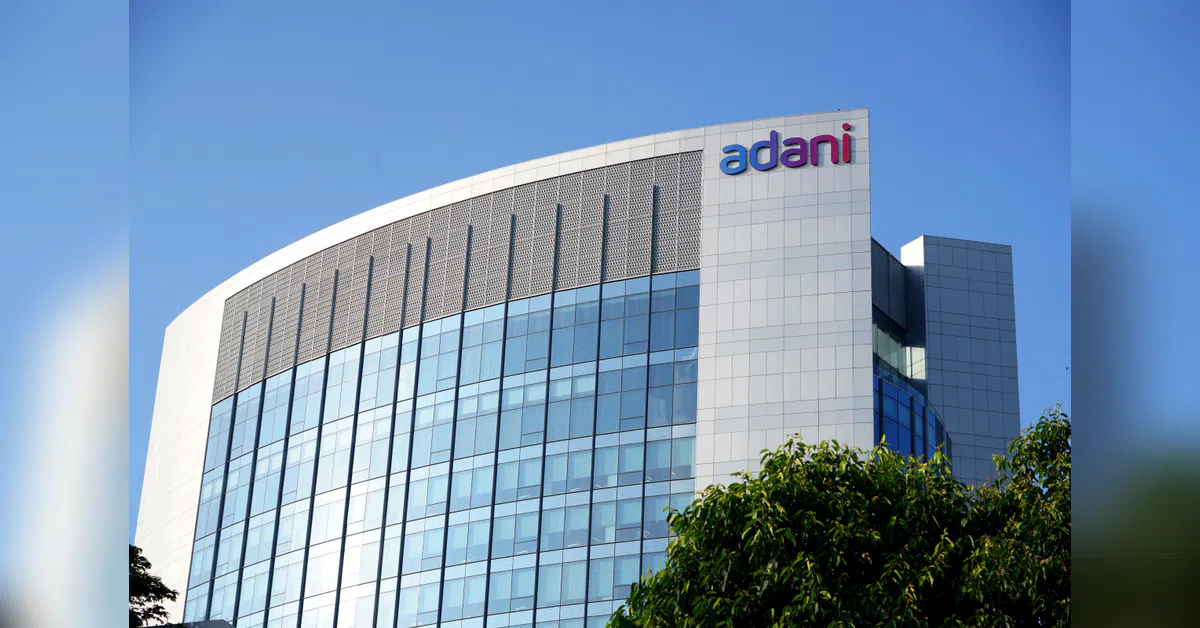
Ahmedabad, India – [Date of Publication, e.g., June 18, 2024] – The Adani Group, India’s largest and fastest-growing diversified infrastructure conglomerate, has reported an unprecedented financial and operational performance for the fiscal year 2025-26 (FY26). The group’s constituent companies collectively undertook a record capital expenditure (capex) of ₹1.53 trillion (approximately $16.1 billion), marking the largest annual investment programme ever initiated by an Indian corporate entity. This colossal outlay coincides with an all-time high Earnings Before Interest, Taxes, Depreciation, and Amortisation (EBITDA) of ₹94,834 crore (approximately $10 billion), underscoring a robust and accelerating infrastructure expansion cycle. Crucially, this aggressive growth has been managed while maintaining the group’s net leverage below its stated target, signaling a period of strategic expansion coupled with financial discipline.
The comprehensive annual results and credit compendium, released on Tuesday, paint a picture of a group firmly entrenched in India’s nation-building agenda, with nearly 80 percent of its significant FY26 investments channelled into core infrastructure businesses. These include vital sectors such as energy, utilities, transport, and logistics – areas critical to India’s economic growth and global competitiveness. The monumental investment has propelled the portfolio’s gross asset base to ₹7.85 trillion ($82.8 billion), setting a new benchmark for corporate investment in the country and positioning the Adani Group as a pivotal force in shaping India’s future infrastructure landscape.
A Chronology of Growth and Strategic Shifts
The fiscal year 2025-26 represents a significant inflection point in the Adani Group’s journey, marking a decisive pivot into a new and expansive investment phase. For years, the conglomerate had been characterised by rapid balance-sheet expansion, meticulously building a diverse portfolio spanning from ports to power generation. This period, while marked by impressive growth, also saw the group navigate various market dynamics and consolidate its operational capabilities.
The strategic shift observed in FY26 is not merely an increase in spending but a deliberate acceleration of an infrastructure build-out strategy that aligns seamlessly with India’s ambitious development goals. The group’s compendium explicitly states, "FY26 marks an important inflection point for the Adani Portfolio, as group companies began its next phase capex cycle. The scale of capital deployment during the year is comparable to the asset base we had built over our first 25 years, reflecting both the infrastructure opportunity before India and the group’s confidence in its long-term growth trajectory." This statement underscores a profound belief in the Indian growth story and the group’s integral role within it.
This current investment surge is a culmination of years of strategic planning, operational consolidation, and a renewed focus on core, cash-generating assets. Over the past two years, the group has systematically worked to strengthen its financial foundations, exemplified by a notable decline in its average borrowing cost from 9 percent to 7.8 percent in FY26. This improvement, driven by consistent rating upgrades across its operating companies, reflects enhanced lender confidence and a more robust credit profile. All of Adani’s assets now proudly carry domestic credit ratings of A- or higher, a testament to their improved financial health and risk management.
The group’s evolution has seen it mature from an aggressive accumulator of assets to a disciplined executor of large-scale, long-term projects. The experience gained in developing mega-projects across diverse sectors has provided it with an unparalleled advantage in deploying capital efficiently and executing complex ventures. This deep institutional knowledge and operational prowess are now being leveraged to propel the group into this next, even more ambitious, phase of expansion, solidifying its position as a cornerstone of India’s economic progress. The strategic foresight to focus on infrastructure, energy transition, and logistics is now bearing fruit, creating a robust framework for sustained, future-proof growth.
Unpacking the Financial Metrics: Supporting Data and Sectoral Performance
The Adani Group’s FY26 results offer a granular view of its financial strength and the strategic allocation of its resources. The figures not only highlight the sheer scale of its operations but also the efficiency with which it is converting investments into tangible earnings.
Record Capital Expenditure Fuels Infrastructure Engine
The staggering capital outlay of ₹1.53 trillion ($16.1 billion) in FY26 represents a significant commitment to bolstering India’s foundational infrastructure. This investment programme is not just about scale; it’s about strategic intent. A remarkable 80 percent of this spending was meticulously directed towards core infrastructure businesses, including energy, utilities, transport, and logistics. These sectors are the bedrock of any developing economy, and Adani’s concentrated investment here directly contributes to India’s long-term growth aspirations, fostering connectivity, energy security, and economic efficiency.
The impact of this capex is already becoming evident, with several large-scale projects transitioning from development to operational phases during FY26. These include:
- An additional 5.1 GW of renewable energy capacity, significantly boosting India’s green energy matrix.
- Advanced Battery Energy Storage Systems (BESS), crucial for grid stability and renewable energy integration.
- The much-anticipated Navi Mumbai International Airport, poised to become a key aviation hub.
- The Guwahati terminal, enhancing regional connectivity.
- Segments of the transformative Ganga Expressway, improving road infrastructure.
- A cutting-edge copper smelter, contributing to industrial capacity.
These newly operational assets are strategically positioned to contribute more meaningfully to the group’s earnings and cash flows from FY27 onwards, ensuring a sustained return on the substantial investments made.
Soaring EBITDA Reflects Operational Efficiency and Asset Monetization
The group’s consolidated EBITDA soared by 5.6 percent year-on-year, reaching an all-time high of ₹94,834 crore ($10 billion). This robust growth is a testament to improved operational efficiencies, effective project execution, and the increasing revenue streams from its diversified asset base.
A closer look at the sectoral contributions reveals the strategic importance of core infrastructure businesses, which generated ₹82,083 crore of EBITDA during FY26, accounting for a dominant 87 percent of the portfolio’s total earnings. This highlights the group’s successful strategy of focusing on and expanding high-value, essential services.
Within these core segments, the transport sector, spearheaded by Adani Ports & Special Economic Zone (APSEZ), demonstrated exceptional vitality. It recorded the strongest growth, with EBITDA surging by an impressive 23.2 percent to ₹25,228 crore. This performance underscores the critical role of APSEZ in India’s trade logistics and its ability to capitalize on increasing cargo volumes and operational efficiencies. Utility businesses, encompassing power generation, transmission, and distribution, also reported healthy growth, with EBITDA rising by 4.6 percent to ₹45,377 crore, reflecting steady demand and strategic capacity expansions.
Prudent Financial Management Amidst Aggressive Expansion
Despite the aggressive increase in capital spending, a hallmark of the Adani Group’s FY26 performance is its unwavering commitment to financial prudence. The group successfully maintained its net debt-to-EBITDA ratio at 3.3 times, comfortably below its stated ceiling of 3.5 times. This disciplined approach to leverage management, even amidst a record capex cycle, offers significant reassurance to investors and creditors regarding the group’s financial health and sustainability.
Furthermore, the group reported robust liquidity, with cash and cash equivalents standing at ₹55,852 crore at the end of March 2026, equivalent to a substantial 15 percent of its gross debt. This strong liquidity position ensures ample financial flexibility and operational resilience. The group has also strategically maintained sufficient liquidity across its portfolio companies to cover debt servicing requirements for at least the next 17 months, providing a significant buffer against unforeseen market fluctuations.
Another notable achievement is the decline in the group’s average borrowing cost, which fell to 7.8 percent in FY26 from 9 percent just two years prior. This reduction is a direct consequence of rating upgrades across various operating companies, reflecting enhanced creditworthiness and investor confidence. The fact that all of Adani’s assets now carry domestic credit ratings of A- or higher further reinforces its strengthened financial standing and improved access to capital markets on more favourable terms.
Divisional Highlights: A Deep Dive into Key Businesses
The stellar performance of the Adani Group in FY26 is a mosaic of individual successes across its diverse business verticals:
- Adani Green Energy Ltd (AGEL): The renewable energy arm expanded its operational capacity by a remarkable 5.1 GW, bringing its total to 19.3 GW. AGEL also significantly scaled its Battery Energy Storage System (BESS) capacity to 3.37 GWh at Khavda in Gujarat, establishing one of the largest single-location deployments globally, underscoring its leadership in the energy transition.
- Adani Ports & SEZ Ltd (APSEZ): Demonstrating its unparalleled dominance in India’s maritime trade, APSEZ handled a record 500.8 million metric tonnes of cargo, an impressive 11 percent increase from the previous year. The company also completed the acquisition of NQXT Australia (with 50 million tonnes capacity) in December 2025, further expanding its global footprint.
- Adani Energy Solutions Ltd (AESL): The electricity transmission company reported a robust under-construction transmission pipeline worth ₹71,779 crore and successfully crossed 10 million smart meter installations. With an order book of 25 million smart meters against a national opportunity of 103 million, AESL is poised for continued growth in India’s power distribution modernization.
- Adani Enterprises Ltd (AEL): The group’s incubator business successfully raised ₹24,930 crore through a rights issue during the fiscal year, showcasing strong investor confidence. Its airports portfolio managed 95.3 million passengers across its eight operational airports, reinforcing its position as a major player in India’s aviation sector.
- Adani Power: The thermal power generation arm is targeting a substantial capacity of 42 GW by FY32, with 23.7 GW already locked-in against its current 18.2 GW, indicating a clear trajectory for future growth in energy supply.
- Ambuja Cements: The cement business completed the strategic acquisition of Orient Cement, significantly strengthening its market position. This expansion contributed to a robust 16.1 percent rise in cement sales volumes, reaching 73.7 million tonnes in FY26.
Official Responses and Strategic Vision
The leadership of the Adani Group views FY26 not merely as a year of record achievements but as a pivotal moment heralding a new era of accelerated growth and strategic deployment. The credit compendium articulates this vision clearly: "The scale of capital deployment during the year is comparable to the asset base we had built over our first 25 years, reflecting both the infrastructure opportunity before India and the group’s confidence in its long-term growth trajectory." This statement is a powerful affirmation of the group’s renewed commitment and capacity to contribute significantly to India’s economic fabric.
Management’s strategic positioning of infrastructure, energy transition, and logistics as the primary drivers of future growth is not accidental. These sectors are intrinsically linked to India’s developmental imperatives, including urbanization, industrialization, and the urgent need for sustainable energy solutions. By focusing on these core areas, the Adani Group is not only securing its own growth but also aligning itself with national priorities, thereby creating a symbiotic relationship with the country’s progress. The confidence exuded by the group’s leadership stems from its proven track record of executing large-scale projects, its ability to attract capital, and its deep understanding of the Indian market. The significant investments in renewable energy and battery storage systems, for instance, are direct responses to India’s ambitious climate targets and its push towards energy independence. Similarly, enhancing port capacity and logistics networks directly addresses the need for improved trade efficiency and reduced supply chain costs, vital for India’s manufacturing and export ambitions.
Broader Implications for the Group and India’s Economy
The Adani Group’s exceptional performance in FY26 carries profound implications, not only for its own trajectory but also for the broader Indian economic landscape.
Solidifying a Dominant Position in India’s Infrastructure Landscape
The unprecedented capital expenditure reinforces the Adani Group’s unassailable position as India’s foremost infrastructure developer. By directing the vast majority of its investments into core sectors like energy, utilities, transport, and logistics, the group is not just expanding its asset base but is actively building the arteries and veins of India’s modern economy. These investments have a significant multiplier effect, creating substantial employment opportunities across various skill levels, stimulating local economies, and fostering ancillary industries. The development of critical infrastructure projects – from new airports and expressways to large-scale renewable energy parks and advanced transmission networks – directly contributes to enhanced national productivity, connectivity, and overall economic resilience. The group’s continued focus on these foundational sectors positions it as an indispensable partner in India’s journey towards becoming a $5 trillion economy.
Enhanced Investor Confidence and Credit Strength
The meticulous management of leverage, coupled with impressive EBITDA growth, sends a clear signal of financial discipline and operational excellence to global investors and creditors. Maintaining a net debt-to-EBITDA ratio well below its target, even during a period of record capex, demonstrates the group’s commitment to sustainable growth. The consistent rating upgrades across its operating companies and the subsequent reduction in borrowing costs are direct indicators of improved creditworthiness. This enhanced financial standing not only makes future capital raising more efficient and cost-effective but also reinforces the group’s resilience. Following periods of intense scrutiny, these robust financial results and strategic clarity serve to rebuild and solidify investor confidence, positioning the Adani Group as a stable and attractive investment proposition in the long term.
Fueling India’s Green Transition and Connectivity
The significant investments in renewable energy capacity and Battery Energy Storage Systems (BESS) underscore the Adani Group’s pivotal role in India’s green energy transition. As India strives to meet its ambitious climate change targets and enhance energy security, companies like Adani Green Energy are at the forefront, deploying large-scale clean energy solutions. Similarly, the expansion in ports, logistics, and aviation infrastructure is crucial for improving India’s global trade competitiveness and domestic connectivity. The development of projects like the Navi Mumbai International Airport and the Ganga Expressway are vital for streamlining passenger and cargo movement, reducing logistical costs, and unlocking new economic corridors. These strategic investments are not just commercial ventures; they are integral components of India’s national development agenda, promising a more sustainable and connected future.
A Blueprint for Future Growth
The operationalization of several large projects in FY26, including 5.1 GW of renewable energy capacity, new airport terminals, and industrial facilities, indicates that the current investment cycle is designed to yield substantial future returns. These assets are explicitly expected to contribute more meaningfully to earnings and cash flows from FY27 onwards, suggesting a sustained period of robust financial performance. The group’s long-term vision, centered on infrastructure, energy transition, and logistics, provides a clear blueprint for continued expansion. By consistently reinvesting its earnings into high-growth, strategically important sectors, the Adani Group is not only ensuring its own future prosperity but also laying down the groundwork for India’s economic ascent on the global stage. This strategic foresight and execution capability promise to maintain the group’s momentum and solidify its legacy as a key driver of India’s infrastructure-led growth story.
