

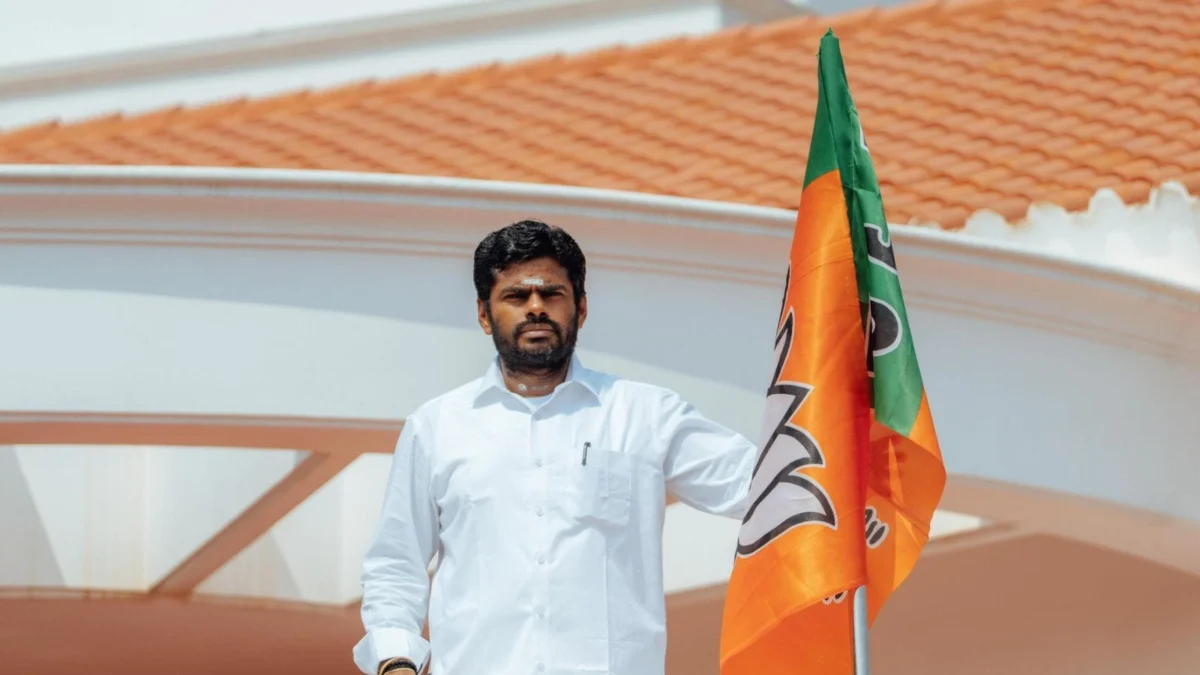
CHENNAI/NEW DELHI – For six tumultuous years, K. Annamalai was heralded as the Bharatiya Janata Party’s (BJP) most audacious experiment in Tamil Nadu, a state notoriously resistant to national party dominance. The question that once swirled around the charismatic former IPS officer was whether he possessed the acumen and charisma to establish the BJP as a formidable force in the Dravidian heartland. Now, in a dramatic twist that threatens to reshape the state’s political equilibrium, the query has fundamentally shifted: Does Tamil Nadu, and indeed the BJP itself, still offer the necessary space for Annamalai’s soaring ambitions?
Sources close to the development confirm that the 41-year-old firebrand has tendered his resignation to BJP President Nitin Nabin in Delhi, signaling a watershed moment for both Annamalai and the saffron party’s southern aspirations. This move, far from an impulsive emotional break, is widely interpreted by party insiders as the culmination of months of quiet calculation, a strategic recalibration significantly accelerated following the recent Assembly elections that saw actor-turned-politician C. Joseph Vijay ascend to the Chief Minister’s office. Annamalai’s departure underscores a profound structural challenge for national parties attempting to penetrate Tamil Nadu’s deeply entrenched regional politics, while simultaneously opening a new, unpredictable chapter for one of India’s most intriguing political mavericks.
Annamalai’s Trajectory: A Chronicle of Ambition and Ideology
The journey of K. Annamalai into the tumultuous arena of politics has been anything but conventional. From a decorated police officer to a high-profile state party chief, his ascent was meteoric, marked by an unusual blend of administrative gravitas and media savvy.
From Khaki to Kavi: The Aura of a Former Top Cop
Before donning the saffron scarf, Annamalai was known as ‘Karnataka’s Singham’ (Lion), a formidable Indian Police Service (IPS) officer renowned for his strict adherence to law, efficiency, and a no-nonsense approach to governance. His distinguished career in the police service, commanding districts and forces with authority, imbued him with an undeniable aura—a quality that Indian politics often prizes in former civil servants. This background lent an air of credibility and competence to his political pronouncements, distinguishing him from many career politicians.
His decision to resign from the IPS in 2019, at the peak of his career, was not merely a shift in profession but a declaration of a larger purpose. In a 2023 interview, Annamalai candidly admitted to being "very allergic to politicians" during his police tenure. Yet, politics ultimately beckoned, offering a canvas, he believed, to achieve objectives far more rapidly and comprehensively than civil service ever could. This underlying impatience, a desire for direct impact and unhindered agency, has remained a defining characteristic, often fueling his restlessness within established political structures. Friends describe him as someone who struggles to operate within frameworks he doesn’t control, a trait that supporters laud as leadership but critics sometimes perceive as an inability to compromise. Both interpretations, perhaps, hold a kernel of truth.
The BJP’s Tamil Hope: A Southern Strategy
For the BJP’s national strategists, Annamalai represented a rare and potent opportunity to crack the formidable Tamil Nadu code. He was young, articulate, energetic, and possessed a natural flair for media engagement, understanding the pulse of television debates, social media reels, and journalistic narratives with an innate ease. Crucially, he grasped a fundamental truth of Tamil Nadu politics: parties rarely gain widespread popularity before their leaders do. He was positioned as the face of the BJP’s ambitious "Southern Strategy," an effort to expand the party’s footprint beyond its traditional Hindi heartland.
Under his leadership, the state unit witnessed a surge in visibility, if not always in electoral success. He relentlessly toured the state, engaged in fierce debates, and consistently challenged the ruling Dravidian parties. His communication style, often confrontational yet articulate, resonated with a segment of the electorate seeking a departure from conventional political discourse. The BJP had invested significantly in grooming him, viewing him as a "franchise player" – someone trained and developed within their system, whose loss would be a substantial blow.
Navigating Ideological Waters: A Nuanced Hindutva
One of the most intriguing aspects of Annamalai’s political identity was his seemingly unusual fit within the broader BJP ecosystem. Unlike many national leaders of the party who frequently built their narratives around overt religious polarization, Annamalai’s speeches often centered on themes of governance, administrative efficiency, anti-corruption, economic development, and crucially, Tamil aspirations and political reform. He consciously attempted to bridge the gap between the BJP’s national Hindutva plank and the deeply rooted Dravidian identity of Tamil Nadu.
Even when he invoked Hindutva, it was frequently wrapped in a distinctly Tamil political vocabulary, a deliberate attempt to localize and integrate the ideology rather than impose it. This approach, while lauded by some as pragmatic and inclusive, occasionally put him at odds with purists within the party and led to misinterpretations externally. He was, in essence, trying to expand the political territory for the BJP by adapting its message, rather than rigidly defending existing ideological boundaries.
The Jayalalithaa Controversy: A Telltale Moment
This experimental approach was starkly illustrated by his controversial description of the late Chief Minister J. Jayalalithaa as a "far superior Hindutva leader." The statement, intended as a bold reinterpretation of a towering Dravidian icon through a BJP lens, backfired spectacularly. It triggered widespread outrage from Jayalalithaa’s closest associates, including V. K. Sasikala, and senior leaders of the AIADMK, who accused him of fundamentally misunderstanding the very political tradition he was attempting to claim.
The incident exposed both the audacity of Annamalai’s political instincts and the inherent limitations of his strategy. While he was keen to expand the BJP’s narrative to encompass a wider spectrum of Tamil identity, the deeply ingrained political history and ideological moorings of the state proved resistant to such facile re-branding. This controversy underscored a recurring feature of Annamalai’s politics: his greater interest in expanding political territory than in rigidly defending ideological boundaries. While this quality made him attractive to BJP strategists seeking growth, it also highlighted the friction points with a party known for its ideological rigor.
The Shifting Sands of Tamil Nadu Politics: The Vijay Factor
For years, BJP strategists harbored a strong belief that Tamil Nadu was ripe for a non-Dravidian alternative, a political force that could tap into a perceived anti-incumbency sentiment against the established regional players. Annamalai was meticulously groomed to embody this alternative, to become the youthful, dynamic face of this new political dawn. Then, C. Joseph Vijay arrived.
The Rise of a Cinematic Icon
Almost overnight, the political landscape of Tamil Nadu underwent a seismic shift with the formal entry of actor-turned-politician C. Joseph Vijay. With an unparalleled fan base and immense cultural reach, Vijay swiftly captured the anti-establishment space that many had anticipated Annamalai would occupy for the BJP. Vijay’s brand of politics, steeped in his cinematic persona, offered a potent blend of celebrity, perceived integrity, and a promise of generational change that resonated deeply with the electorate. For many voters seeking a fresh face and a departure from traditional political narratives, Vijay became the answer before Annamalai could fully articulate his question.
Vijay’s entry demonstrated that while Annamalai possessed intellect and political acumen, he lacked the sheer, unadulterated star power that, in Tamil Nadu, often translates directly into political capital. Vijay’s appeal cut across socio-economic strata and caste lines, giving him a broader electoral acceptance that Annamalai, despite his best efforts, was yet to fully cultivate. The sheer magnitude of Vijay’s celebrity, coupled with a carefully crafted political narrative, overshadowed Annamalai’s more policy-driven, reform-oriented approach.
Delhi’s Gambit and Potential Miscalculations
Several BJP leaders, now reflecting on the turn of events, suggest that the party’s central leadership, or "Delhi," might have misread the complex political dynamics of Tamil Nadu. They argue that Annamalai, despite organizational setbacks and the formidable challenge posed by Vijay, remained one of the NDA’s most significant crowd-pullers. There was a perception that he was often treated as a state-level campaigner, expected to galvanize support and deliver results, while simultaneously being burdened with the expectation of performing as a full-fledged state-level phenomenon – a political leader capable of single-handedly altering the electoral calculus.
Inside BJP circles, Annamalai’s message to Delhi was widely interpreted as a simple ultimatum: grant him complete authority and a long runway to implement his vision, or allow him to chart his own course. However, neither option was straightforward. The BJP had invested heavily in him, both financially and politically. To lose him would be akin to a major sports franchise losing a star player, meticulously trained and developed within its system, only to see him play for a rival team. "He is our investment," a senior leader lamented recently. "You don’t want him playing for somebody else." This sentiment encapsulates the BJP’s internal dilemma: a reluctance to lose a valuable asset, coupled with an inability or unwillingness to fully empower him within the existing party structure.
The BJP’s Conundrum: Investment vs. Independence
The structural challenge that K. Annamalai faced within the BJP is emblematic of the larger difficulties national parties encounter in Tamil Nadu. The state’s political landscape has historically been dominated by regional parties, whose entire existence revolves around the specific socio-cultural and political aspirations of Tamil Nadu.
A "Franchise Player" Lost?
The metaphor of Annamalai as a "franchise player" developed entirely within the BJP system is particularly apt. The party had invested significant political capital, organizational resources, and strategic guidance in nurturing his political career. He was projected as the future face of the BJP in the state, a fresh voice capable of appealing to a new generation of voters. His potential departure, therefore, represents not just the loss of an individual, but a significant setback to the party’s long-term expansion plans in the South. It raises questions about the efficacy of their talent identification and retention strategies in regions where political dynamics are vastly different from their traditional strongholds.
The Authority vs. Autonomy Debate
Annamalai’s inherent impatience and his struggle to remain within structures he does not fully control were central to his growing disillusionment. His political journey, initiated not by a search for a party but for a "larger arena," points to a fundamental desire for autonomy. This ambition inevitably clashed with the hierarchical and often centralized decision-making process of a national party like the BJP. The tension between his entrepreneurial spirit and the demands of party discipline, between his vision for Tamil Nadu and Delhi’s broader national agenda, became unsustainable. His insistence on a "long runway" and "complete authority" was, for him, a prerequisite for effective leadership, but for the party, it likely presented a challenge to its established command structure.
The Structural Imbalance: National vs. Regional Focus
Annamalai himself once articulated the core structural problem: regional parties "wake up every morning thinking only about Tamil Nadu," while national parties "wake up thinking about India." This fundamental asymmetry defines Tamil Nadu politics, a reality that has shaped the state for half a century. A national party, by its very nature, must balance regional aspirations with its pan-Indian agenda, often leading to compromises or perceived neglect of specific state issues. For an ambitious leader like Annamalai, deeply invested in Tamil Nadu’s unique identity and challenges, this inherent tension could be profoundly limiting. It meant that even as the state chief, his actions and priorities were always subject to a larger national calculus, potentially diluting his ability to act with the singular focus he desired. This structural imbalance may well be the defining factor in his next political decision.
Official Responses and the Silence from Delhi
As of the immediate aftermath of the resignation reports, official responses from the BJP central leadership have been largely guarded or non-existent, reflecting the sensitive nature of the development. This silence from Delhi underscores the party’s complex position: acknowledging the resignation would confirm a significant internal challenge, while downplaying it would be difficult given Annamalai’s prominence.
The BJP’s national spokesperson or high command is likely to issue a carefully worded statement, if any, that emphasizes internal party processes and avoids public commentary on individual decisions. Privately, however, the news will undoubtedly trigger extensive internal deliberations regarding the party’s future strategy in Tamil Nadu.
Within the Tamil Nadu BJP unit, the news has likely sent ripples of shock and uncertainty. While some loyalists might express disappointment or call for party unity, Annamalai’s supporters are expected to rally behind his decision, viewing it as a necessary step for his political growth.
Reactions from other political parties in Tamil Nadu, particularly the DMK and AIADMK, will be closely watched. The DMK might frame it as a sign of the BJP’s inherent weakness in the state or the failure of its "imported" leadership. The AIADMK, which has had a complex and often strained relationship with Annamalai, might view his departure with a mix of relief and strategic calculation, seeing it as an opportunity to renegotiate political alliances without his contentious presence. Annamalai’s close aides, meanwhile, are likely to strategically leak details or make carefully veiled statements to control the narrative, setting the stage for his next political act.
Implications: A New Political Chapter Unfolds
Annamalai’s departure from the BJP is not merely an internal party matter; it is a development with far-reaching implications for his own career, the BJP’s aspirations in Tamil Nadu, and the broader political dynamics of the state.
Annamalai’s Future: The Maverick’s Gambit
Among his fervent supporters, there is a growing, palpable confidence that if Annamalai were to launch a new political party, it would immediately command a significant base, potentially surpassing that of established national and regional minor parties like the Congress, the Left, VCK, and PMK. They point to several compelling factors: his substantial personal vote share, his exceptional oratorical skills, his extensive social media reach, the lingering credibility from his IPS background, and his demonstrated visibility and appeal across various caste and district boundaries.
A close aide of Annamalai confidently asserted, "His vote share, if his party contests, will begin at 10%." This estimate, while ambitious, reflects a belief that his personal popularity transcends party lines. The aide further posited that "while any party he launches may remain far smaller than the DMK in organisational strength, Annamalai would likely begin with a level of personal popularity that places him well ahead of Udhayanidhi Stalin, the DMK heir apparent and Chief Minister M. K. Stalin’s son. In the emerging political landscape, that would place him closer to Vijay than to most other second-generation leaders." This indicates a strategic positioning, aiming to carve out a niche as a credible, popular alternative to both established Dravidian fronts and the new force represented by Vijay.
However, the path of launching a new political party in Tamil Nadu is fraught with peril. The state has witnessed numerous charismatic launches over the decades, with many ultimately ending as mere footnotes in its rich political history. The challenge for Annamalai will be immense: converting personal popularity into a robust organizational structure, securing sustainable funding, building a dedicated cadre across the state, and overcoming the logistical hurdles inherent in electoral politics.
Impact on BJP Tamil Nadu: A Vacuum and a Rethink
For the BJP in Tamil Nadu, Annamalai’s exit creates a significant vacuum. He was, arguably, their most recognizable and vocal face. The party will now be forced to undertake a rapid reassessment of its strategy for the state, which has consistently proven to be one of its most challenging frontiers. This may involve identifying a new state leader, recalibrating its outreach efforts, and potentially re-evaluating its alliance strategy, particularly with the AIADMK, with whom Annamalai often had a contentious relationship. His departure could either pave the way for a smoother alliance with the AIADMK or further complicate it if the BJP is perceived as weakened.
Reshaping Tamil Nadu’s Political Chessboard
Dismissing Annamalai’s potential impact would be premature. What makes him politically compelling is not just his popularity, but his consistent refusal to fit neatly into existing political categories. He is neither a conventional Hindutva ideologue nor a traditional Dravidian leader. He embodies the complex reality of a politician caught between the demands of institutional structures and the force of personal ambition, between the rigidities of party organization and the dynamism of individual personality, and crucially, between the directives from Delhi and the distinct identity of Tamil Nadu.
This inherent tension, rather than being a weakness, may prove to be his greatest political strength, allowing him to carve a truly unique niche in a state known for its strong political identities. His potential emergence as an independent political force could lead to the fragmentation of votes, creating a more multi-polar contest in future elections. This could have significant implications for the 2026 Assembly elections and beyond, potentially reshaping alliances, forcing established parties to rethink their strategies, and offering Tamil Nadu a truly new alternative. The next chapter of Annamalai’s career, defined by this ongoing tension, promises to be a pivotal one, not just for him, but for the intricate and ever-evolving tapestry of Tamil Nadu politics.
