

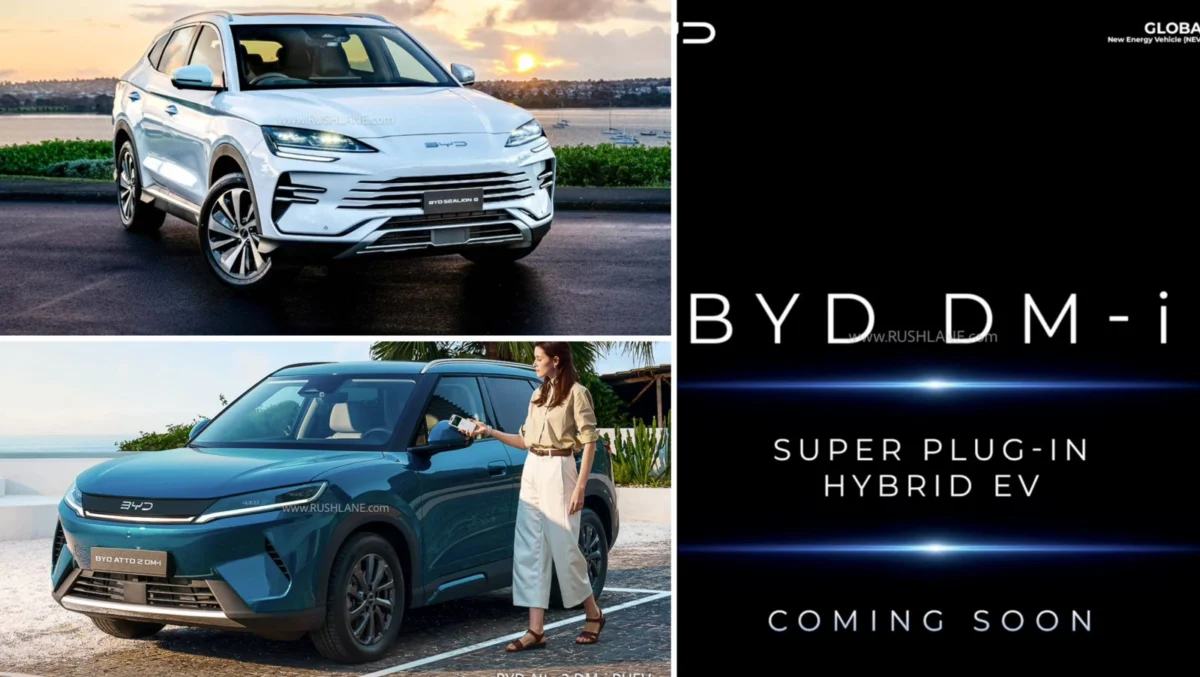
NEW DELHI — In a strategic move that signals a significant pivot in its South Asian product roadmap, BYD (Build Your Dreams), the world’s leading manufacturer of new energy vehicles (NEVs), has officially teased the introduction of its acclaimed DM-i (Dual Mode-intelligent) Super Plug-in Hybrid technology for the Indian market. Slated for a grand reveal on June 9, 2026, this development marks a departure from the company’s current all-electric portfolio in India, aiming to capture a burgeoning segment of consumers seeking a "bridge" between internal combustion engines (ICE) and pure battery electric vehicles (BEVs).
Since its entry into the Indian passenger vehicle space, BYD has established a premium niche with the e6 MPV, the Atto 3 SUV, the Seal sedan, and the recently launched Sealion 7. However, all these offerings have been pure electric models, primarily imported via the Completely Built Unit (CBU) route. The upcoming introduction of the DM-i platform suggests that BYD is ready to tackle the unique challenges of the Indian market—namely range anxiety and charging infrastructure gaps—by offering a powertrain that promises the efficiency of an EV with the long-distance versatility of a hybrid.
The Core Announcement: DM-i Technology Arrives
BYD’s social media channels have been abuzz with teasers highlighting the "DM-i Super Plug-In Hybrid EV" powertrain. Unlike traditional "strong hybrids" currently sold in India by manufacturers like Toyota and Maruti Suzuki, BYD’s DM-i system is a Plug-in Hybrid (PHEV). This distinction is critical: while a strong hybrid self-charges and offers limited electric-only range (usually 2–5 km), a DM-i PHEV can be plugged into an external power source, allowing for significant daily commuting on pure electricity (up to 140 km in some models) before the petrol engine ever needs to engage.
The June 9 event is expected to be a watershed moment for the brand. While the company has not explicitly confirmed which specific vehicle will lead the charge, automotive industry insiders and recent spy shots point toward two primary contenders: the Sealion 6 DM-i and the Atto 2 DM-i.

Chronology of BYD’s Indian Expansion
To understand the significance of this move, one must look at BYD’s trajectory in the subcontinent:
- 2021-2022: The Foundation. BYD launched the e6 MPV, initially targeting the B2B and fleet segment, proving the durability of its "Blade Battery" technology in Indian conditions.
- 2023: The Premium Push. The launch of the Atto 3 brought BYD into the consumer limelight, offering a high-tech, quirky, and performance-oriented electric SUV.
- 2024-2025: Portfolio Diversification. With the introduction of the Seal luxury sedan and the Sealion 7, BYD moved further upmarket, competing directly with European luxury marques.
- Early 2026: The Strategic Pivot. Recognizing that the mass-premium segment remains hesitant about pure EVs for long-distance travel, BYD began testing PHEV mules on Indian roads, leading to the current DM-i teaser.
The Contenders: Sealion 6 vs. Atto 2
The industry remains divided on which model will debut first, though there is a strong possibility that BYD might showcase both to demonstrate the scalability of the DM-i tech.
The Sealion 6 DM-i: The Premium Powerhouse
The Sealion 6 (known as the Seal U in some international markets) is a sophisticated SUV that rivals the likes of the Toyota Fortuner and Hyundai Tucson in dimensions.
- Powertrain: It features a 1.5L engine available in both naturally aspirated and turbocharged guises.
- Performance: The Turbo Petrol PHEV variant comes with All-Wheel Drive (AWD) as standard, delivering a staggering 344 bhp. The FWD version offers a respectable 218 bhp.
- Efficiency: Equipped with battery options of 18.3 kWh or 26.6 kWh, it offers a pure electric range of up to 140 km and a combined range (petrol + electric) exceeding 1,000 km.
The Atto 2 DM-i: The Volume Driver
Positioned to compete in the hyper-competitive C-segment (Creta, Seltos, Grand Vitara), the Atto 2 could be BYD’s most important launch for market share.
- Powertrain: A 1.5L naturally aspirated petrol engine paired with an electric motor.
- Battery Options: 7.8 kWh or 18 kWh packs.
- Range: It promises a pure electric range of 40 km to 90 km, which covers the average Indian daily commute. Crucially, its total range is estimated between 928 km and 998 km, effectively eliminating range anxiety.
Technical Deep Dive: Why DM-i Matters
The DM-i system is often described as "electric-based" hybrid technology. In most driving conditions, the electric motor drives the wheels, while the petrol engine acts as a high-efficiency generator to charge the battery. At higher speeds, the engine can connect directly to the wheels via a single-speed transmission for maximum efficiency.

This architecture allows BYD to claim thermal efficiency levels for their engines that are among the highest in the world (often exceeding 43%). For the Indian consumer, this translates to fuel economy figures that could potentially dwarf those of current segment leaders, even when the battery is not charged.
Supporting Data: The PHEV Opportunity in India
While the Indian government has historically favored pure EVs through a lower GST rate (5% vs. the 43% or higher levied on hybrids and ICE vehicles), the tide is beginning to shift at the state level. Uttar Pradesh, for instance, recently announced road tax waivers for hybrid vehicles, sparking a renewed interest in the technology.
Market data suggests that while EV sales are growing, the "second car" in most Indian households remains an ICE vehicle due to the perceived unreliability of highway charging networks. A PHEV like the Sealion 6 or Atto 2 addresses this by functioning as an EV in the city and a standard hybrid on the highway.
Official Responses and Market Speculation
While BYD India executives have remained tight-lipped regarding the specific pricing and assembly route (CBU vs. CKD), a company spokesperson noted, "BYD is committed to bringing the best of global green technology to India. Our DM-i platform represents the pinnacle of hybrid engineering, offering a no-compromise solution for the Indian driving cycle."
Industry analysts suggest that if BYD opts for the Completely Knocked Down (CKD) route—assembling the cars locally at their plant near Chennai—they could price the Atto 2 DM-i in the ₹18–25 lakh bracket, making it a formidable competitor to the Maruti Suzuki Grand Vitara Strong Hybrid and the upcoming Hyundai Creta EV.

Implications for the Indian Auto Industry
The entry of BYD’s PHEVs could force a rethink among domestic giants. Currently, Tata Motors and Mahindra & Mahindra have skipped the hybrid phase entirely, jumping straight from ICE to EV. If BYD finds success with the DM-i, it may validate the hybrid path, putting pressure on "EV-only" strategies.
Furthermore, the introduction of high-range PHEVs could set a new benchmark for "green" luxury. If the Sealion 6 can offer 140 km of pure electric driving, it essentially functions as an EV for 90% of its life, only using petrol for occasional long-distance trips. This "best of both worlds" narrative is a powerful marketing tool in a price-sensitive and infrastructure-developing market like India.
Looking Ahead to June 9
As the June 9 date approaches, the primary questions remain:
- Pricing: Will BYD absorb the high GST costs to keep the PHEVs competitive?
- Infrastructure: Will BYD bundle home chargers with PHEVs, a move rarely seen with hybrids in India?
- Localization: How much of the DM-i tech will be localized to meet the "Make in India" criteria for future incentives?
Whatever the answers, BYD’s move confirms one thing: the race for Indian road dominance is no longer just about who has the best engine or the biggest battery—it’s about who can offer the most seamless transition to a greener future. With the DM-i Super Plug-in Hybrid, BYD is betting that the future isn’t just electric; it’s intelligently hybrid.
About BYD:
BYD is a multinational high-tech company devoted to leveraging technological innovations for a better life. Founded in 1995, BYD has established over 30 industrial parks worldwide and has played a significant role in industries related to electronics, auto, new energy, and rail transit.
