

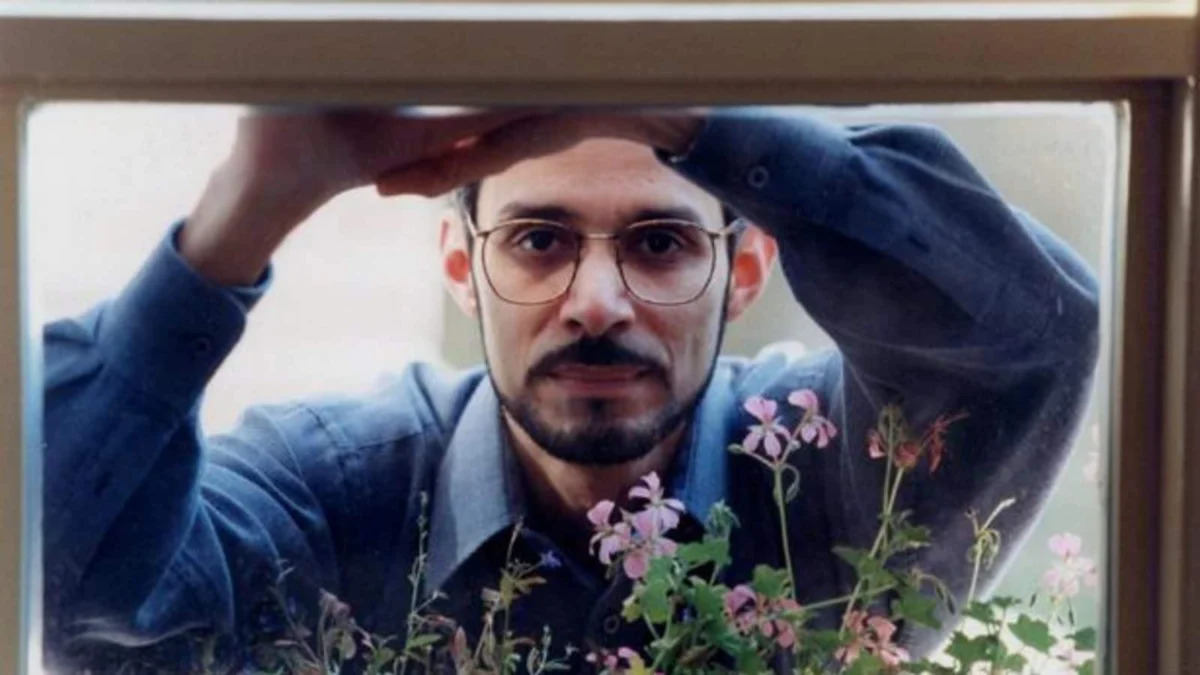
The golden age of literary television adaptations is set to reach a new milestone as HBO, the titan of prestige drama, embarks on a journey to bring one of the most celebrated works of modern Indian literature to the screen. Rohinton Mistry’s 1995 masterpiece, A Fine Balance, is being developed into a seven-part limited series, marking a significant moment for South Asian storytelling on the global stage. Directed by the visionary Ritesh Batra, the project promises to be a sprawling, emotionally resonant exploration of the human condition set against the turbulent backdrop of mid-20th-century India.
Main Facts: A Convergence of Cinematic and Literary Excellence
The announcement of A Fine Balance as an HBO series has sent ripples through both the literary and cinematic worlds. The project brings together a formidable array of talent and production powerhouses, ensuring that Mistry’s intricate prose receives the high-fidelity treatment it deserves.
The Creative Visionary: Ritesh Batra
At the helm of this ambitious project is Ritesh Batra, a director whose name has become synonymous with sensitive, character-driven storytelling. Batra rose to international prominence with his 2013 debut feature, The Lunchbox, starring the late Irrfan Khan. The film’s ability to capture the quiet desperation and fleeting hope of urban life in Mumbai makes Batra an ideal choice for A Fine Balance. His subsequent works, including The Sense of an Ending and Photograph, further cemented his reputation for handling complex emotional landscapes with a delicate touch.
Production Pedigree
The series is a collaborative effort between two heavyweights of the independent and prestige television sectors:
- Blueprint Pictures: Known for their sharp, award-winning productions such as Three Billboards Outside Ebbing, Missouri and the critically acclaimed A Very British Scandal. Their involvement suggests a focus on high-stakes drama and meticulous production design.
- Northwood Entertainment: The company behind the beloved and visually stunning Netflix series Anne with an E. Their expertise in adapting classic literature for a modern audience will be vital in translating Mistry’s dense narrative.
Format and Scope
The adaptation will be structured as a seven-part web series. This format allows for the narrative breathing room required to capture the novel’s expansive timeline and deep character development—elements that a standard two-hour feature film would likely struggle to accommodate. Production is slated to take place entirely in India, with a filming schedule spanning from early June to November, ensuring an authentic portrayal of the locales described in the book.
Chronology: The Journey of a Modern Classic
The path from the publication of A Fine Balance to its current development as an HBO series is a testament to the novel’s enduring relevance and its status as a cornerstone of post-colonial literature.
1995–1996: Literary Ascension
Published first in Canada by McClelland & Stewart in 1995, A Fine Balance was an immediate critical sensation. It won the prestigious Giller Prize in 1995 and was subsequently shortlisted for the 1996 Booker Prize. While it did not take home the Booker, it established Mistry as a premier voice in world literature, alongside contemporaries like Salman Rushdie and Vikram Seth.
2001: The Oprah Effect
A pivotal moment in the book’s history occurred in 2001 when it was selected for Oprah’s Book Club. At the time, it was a rare feat for a Canadian-Indian novel to receive such a massive endorsement in the United States. This selection propelled the book onto international bestseller lists and introduced Mistry’s harrowing yet beautiful story to millions of readers who might otherwise have missed it.
2021–2022: Recent Resurgence
Interest in the novel has never truly waned, but it saw a recent spike in 2021 when the BBC dramatized the story for a major radio play. This adaptation reminded audiences of the story’s cinematic potential. By early 2022, the news broke that HBO had secured the rights and attached Ritesh Batra to the project, signaling a new chapter for the story in the digital streaming era.
Supporting Data: The Narrative and Historical Context
To understand the weight of this adaptation, one must look at the narrative structure of the novel and the harrowing historical period it chronicles.
A Microcosm of India
The story centers on four disparate characters whose lives intersect in a "tiny apartment" in an unnamed city by the sea (widely understood to be Mumbai).
- Dina Dalal: A fiercely independent widow struggling to maintain her autonomy without remarrying.
- Ishvar and Omprakash Darji: Two tailors from the "untouchable" caste who have fled horrific village violence to find work in the city.
- Maneck Kohlah: A young student from a scenic mountain village who is sent to the city for his education, feeling displaced and alienated.
Their collective struggle to maintain "a fine balance between hope and despair" serves as a microcosm for the larger struggles of the Indian nation.
The Political Landscape: The Emergency
The novel spans decades, but its emotional and narrative core is set during the 21-month State of Emergency (1975–1977) declared by Prime Minister Indira Gandhi. This period remains one of the most controversial chapters in modern Indian history, characterized by:
- Civil Liberties Suspensions: The curbing of freedom of the press and the imprisonment of political opponents.
- The "Beautification" Programs: Forced slum clearances that left thousands homeless, a process vividly and painfully depicted in the novel.
- Compulsory Sterilization: The government’s aggressive population control measures, which targeted the poorest and most vulnerable citizens.
Mistry’s novel is often cited as the definitive fictional account of this era, providing a voice to those crushed by the machinery of the state.
Official Responses and Industry Context
While official statements from HBO have been characteristically guarded regarding casting and specific plot deviations, the industry reaction has been one of immense anticipation.
The Shift Toward South Asian Narratives
The adaptation of A Fine Balance follows a growing trend of major streaming platforms investing in high-budget Indian content. Following the success of Netflix’s Sacred Games and Mira Nair’s adaptation of A Suitable Boy for the BBC, global networks are increasingly looking toward the Indian subcontinent for "prestige" stories.
Industry analysts note that HBO’s entry into this space with a property as heavyweight as A Fine Balance indicates a desire to compete directly with Netflix and Amazon Prime in the South Asian market, not just with local genre content, but with high-brow literary adaptations that appeal to a global diaspora and international cinephiles.
The Batra Factor
Critics have praised the choice of Ritesh Batra, noting that his style is uniquely suited to Mistry’s "Parsi-inflected" prose. Mistry, a Mumbai-born St. Xavier’s College alumnus who later migrated to Canada, writes with a specific blend of Dickensian detail and Indian sensibility. Batra, who also shares a deep connection to Mumbai’s cultural fabric, is seen as the perfect conduit for this translation.
Implications: The Challenges and Opportunities of Adaptation
The transition from a 600-page novel to a seven-episode series carries both immense potential and significant risk.
The Challenge of "Unflinching Realism"
A Fine Balance is notoriously bleak. It does not shy away from the brutality of poverty, the cruelty of the caste system, or the tragedy of political corruption. One of the primary challenges for Batra and the HBO team will be maintaining the novel’s "unflinching realism" without alienating viewers. The book’s ending is famously devastating; how HBO chooses to handle this will be a major talking point among fans of the original text.
Global Representation
For the global Indian diaspora, this series represents a chance to see a complex, non-stereotypical portrayal of Indian history. Unlike many Western productions set in India that lean into "exoticism," Mistry’s work is grounded in the harsh, messy, and deeply human reality of survival. An HBO-backed series provides the budget to recreate 1970s India with historical accuracy, offering a visual record of a time that is often glossed over in mainstream cinema.
A Legacy Continued
The adaptation also serves to cement Rohinton Mistry’s legacy. Although he has been relatively quiet in the literary world in recent years, the revival of his most famous work ensures that a new generation will discover his "Bombay Trilogy" (which includes Such a Long Journey and Family Matters). Such a Long Journey was previously adapted into a 1998 film starring Roshan Seth, but the scale of the HBO A Fine Balance project is set to eclipse all previous adaptations of Mistry’s work.
In conclusion, HBO’s A Fine Balance is more than just another book-to-screen adaptation. It is a high-stakes cultural bridge-building exercise, connecting the pinnacle of Western television production with the depth of Indian literary genius. If successful, it will not only be a landmark in television but a definitive cinematic testament to the resilience of the human spirit in the face of overwhelming odds. As production commences in India, the world waits to see if Batra can indeed find that "fine balance" required to do justice to Mistry’s haunting masterpiece.
