

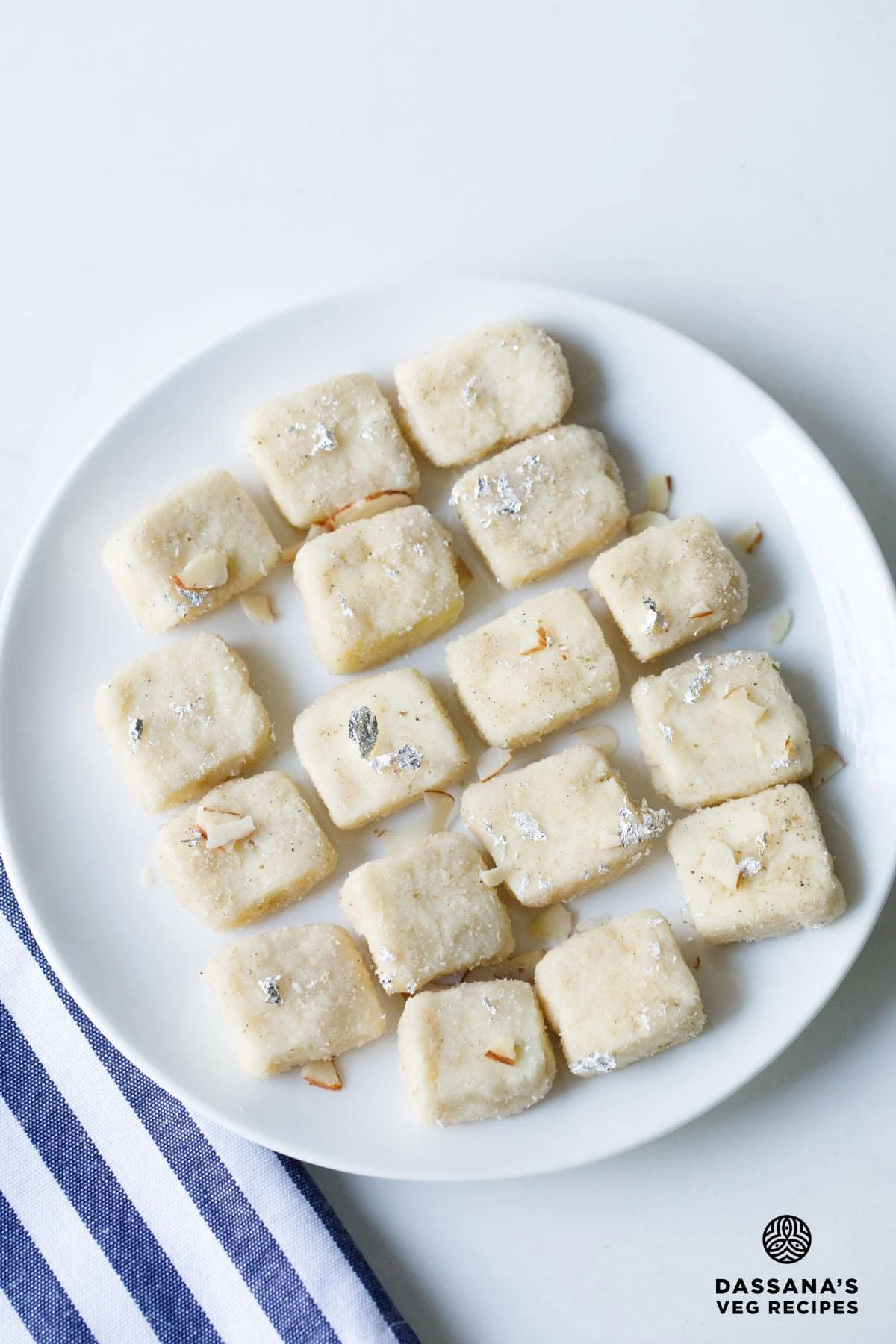
KOLKATA – In the vast and intricate landscape of Indian confectionery—a realm defined by its diversity of textures, temperatures, and techniques—few delicacies represent the marriage of simplicity and precision as elegantly as Chena Murki. A staple of Bengali "Mishti" (sweet) culture, this unassuming white cube has long served as a testament to the region’s sophisticated understanding of dairy and sugar chemistry.
As the festive season approaches, culinary historians and artisanal confectioners are turning their attention back to these traditional sweets, which offer a distinct sensory experience: a brittle, snow-white exterior of crystallized sugar giving way to a succulent, tender heart of fresh chhena (Indian cottage cheese). This report explores the technical nuances, cultural origins, and the evolving status of Chena Murki in the modern gastronomic world.

Main Facts: Defining the Bengali ‘Murki’
Chena Murki, occasionally spelled Chhena Murki, is a traditional Indian sweet characterized by its bite-sized, cubic form. Unlike the syrup-soaked Rasgulla or the dense, fudge-like Sandesh, Chena Murki relies on a specific "dry-coating" technique.
The term "Murki" in the Bengali lexicon traditionally refers to food items—often puffed rice or legumes—that have been enrobed in a layer of crystallized sugar or jaggery. In this specific iteration, the vessel for the sugar is chhena, the fresh curd cheese that forms the backbone of Eastern Indian dessert-making.

Key Characteristics:
- Composition: Fresh paneer or chhena cubes, refined or organic sugar, and aromatic infusions such as cardamom or rose water.
- Texture: A dual-texture profile featuring a crisp, granular outer shell and a soft, moist interior.
- Dietary Profile: Naturally gluten-free, making it an accessible option for those with celiac disease or gluten sensitivities.
- Visual Appeal: Ideally bright white, though variations in sugar quality can produce cream or pale-brown hues.
Chronology: The Lifecycle of a Chena Murki Cube
The production of Chena Murki is a chronological exercise in temperature control and mechanical agitation. Unlike fried sweets, the "cooking" here is subtle, focusing on the absorption of syrup rather than the browning of fats.
Phase I: Preparation and Desiccation
The process begins with the selection of high-quality paneer. Professional confectioners emphasize that the paneer must be firm enough to hold its shape but fresh enough to retain moisture. The dairy is sliced into uniform cubes, typically measuring 2.5 to 3 centimeters. A critical, often overlooked step in this phase is "air-drying." By allowing the cubes to sit for 15 minutes, the surface moisture evaporates, ensuring the sugar syrup adheres to the dairy rather than sliding off.

Phase II: The ‘One-String’ Threshold
The creation of the sugar syrup is the most technically demanding stage. Sugar and water are combined (typically in a 2:1 ratio by volume) and heated until they reach the "one-string" consistency (Ek-Taar). In scientific terms, this occurs when the syrup reaches a sugar concentration of approximately 80% and a temperature of roughly 110°C (230°F). At this stage, a drop of syrup pulled between two fingers will form a single, resilient thread.
Phase III: The Symbiosis of Heat and Dairy
Once the syrup is primed, the paneer cubes are introduced. They are simmered on low heat for 5 to 6 minutes. During this period, a process of osmosis occurs: the paneer releases a portion of its internal moisture while absorbing the concentrated sugar solution. The appearance of a whitish foam on the surface of the boiling syrup serves as the visual cue that the paneer has reached its saturation point.

Phase IV: The Crystallization Marathon
The final and most labor-intensive stage begins once the pan is removed from the heat. As the temperature drops, the solubility of the sugar decreases. To ensure a fine, even coating rather than a solid block of candy, the mixture must be stirred continuously for 10 to 20 minutes. This mechanical agitation encourages the formation of small crystals, eventually transforming the liquid syrup into a dry, snowy crust that envelopes each individual cube.
Supporting Data: Nutritional and Technical Specifications
While often viewed as an indulgence, Chena Murki offers a different nutritional profile compared to deep-fried Indian sweets like Gulab Jamun or Jalebi.

Nutritional Breakdown (Per 24-serving batch/approx. 1 piece):
- Calories: 49 kcal
- Protein: 1g (Derived from the bovine proteins in chhena)
- Carbohydrates: 6g (Primarily simple sugars)
- Fat: 2g (Saturated fat: 1g)
- Calcium: 41mg (Contributing to daily bone health requirements)
- Sodium: 2mg
The data suggests that while the sugar content is high, the portion-controlled nature of the sweet and the presence of dairy-based protein and calcium provide a marginal nutritional advantage over purely starch-and-sugar-based confections.
The Role of Sugar Refinement
The visual data of the final product is heavily influenced by the raw materials. Refined white sugar produces a "bright white" coating with larger, more reflective crystals. Conversely, organic cane sugar, which contains trace minerals and residual molasses, results in a "finer, powdery" coating with a light cream or pale brown tint. Culinary experts note that while refined sugar is preferred for commercial "visual purity," organic variants offer a deeper, more complex flavor profile.

Official Responses and Regional Distinctions
The identity of Chena Murki is frequently debated in the context of Geographical Indication (GI) and regional culinary pride. It is often confused with Odisha’s Chhena Gaja or Chena Khurma, though official culinary bodies and heritage chefs maintain clear distinctions.
Chef Manisha Bharadwaj, a noted authority on Indian regional cuisines, has previously highlighted that the Bengali version is defined by its "purity of color and lack of frying." While Odisha’s sweets are often deep-fried to a dark brown and then glazed, the Bengali Chena Murki remains uncolored and un-fried, emphasizing the "freshness of the curd."

Official culinary guilds in West Bengal have long advocated for the preservation of these "dry sweets," noting that they represent a specific era of Bengali history when sweets were designed to be portable and have a slightly longer shelf life than the highly perishable, syrup-laden varieties.
Implications: The Resurgence of Traditional Confectionery
The continued popularity of Chena Murki carries several implications for the modern food industry and cultural preservation.

1. The "Slow Food" Movement in Domestic Kitchens
Despite the convenience of store-bought sweets, there is a growing trend of making Chena Murki at home. This shift is driven by a desire for "clean labels"—homemade versions contain only four to five ingredients, avoiding the preservatives and artificial stabilizers often found in commercial dairy products. The process, which requires patience and "hand work" during the crystallization phase, is being reclaimed as a form of culinary mindfulness.
2. Commercial Export and Global Reach
As the Indian diaspora grows, the demand for "dry" sweets that can withstand transport has increased. Chena Murki, with its crystallized shell, is more robust than a Rasgulla. This has led to innovations in vacuum-sealing and modified atmosphere packaging (MAP), allowing Bengali confectioners to export these traditional tastes to global markets in London, New York, and Dubai.

3. Sustainability and Waste Reduction
A unique aspect of the Chena Murki process is the "loose sugar" management. Post-crystallization, the excess sugar that does not adhere to the paneer is not discarded. In traditional households, this "sweet dust" is repurposed for tea, coffee, or as a base for other desserts. This zero-waste approach aligns with modern sustainability goals in food production.
4. Preservation of Artisanal Skills
The "one-string" consistency test and the manual stirring technique are skills that cannot be easily replicated by high-speed industrial machinery without compromising the delicate texture of the paneer. The survival of Chena Murki, therefore, ensures the continued relevance of the Maira (the traditional Bengali confectioner caste) and their specialized knowledge of dairy chemistry.

Conclusion
Chena Murki stands as more than just a sweet; it is a structural marvel of the confectionery world. Through the precise manipulation of sugar’s physical states—from solid to liquid syrup and back to a crystallized solid—this Bengali classic elevates simple paneer into a sophisticated dessert. As global palates increasingly seek out authentic, regional, and gluten-free treats, the "snowy cube" of Bengal is well-positioned to remain a centerpiece of festive celebrations and a benchmark for artisanal excellence in the years to come.
