

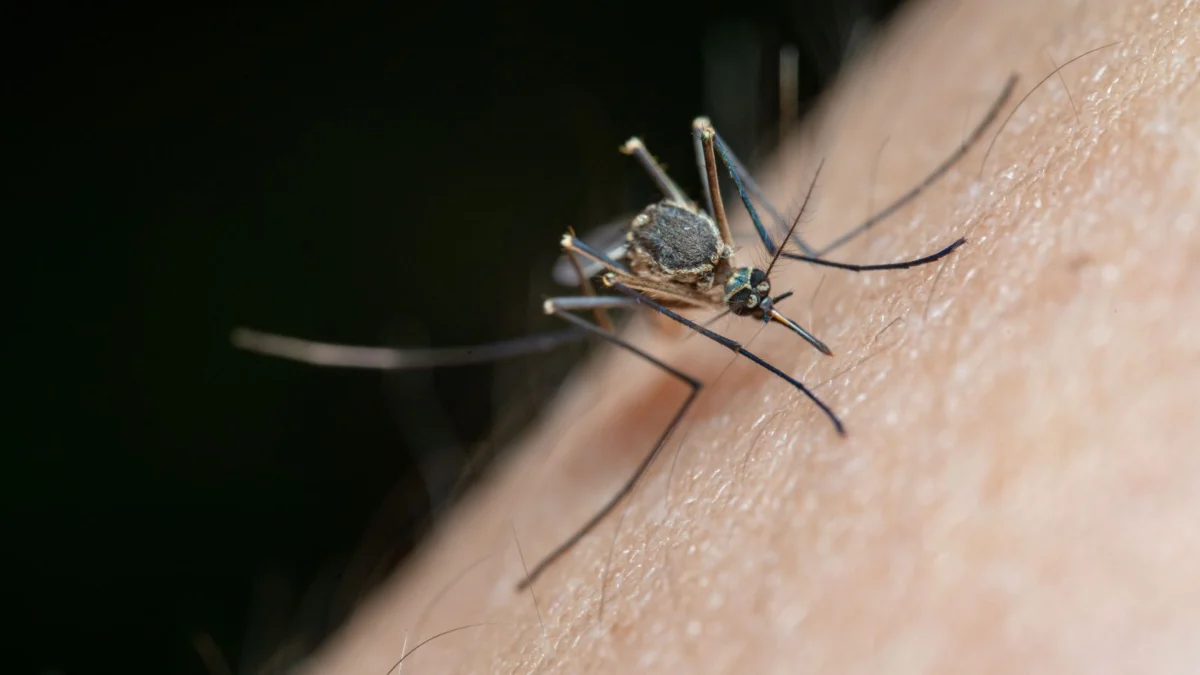
A groundbreaking new study has unveiled startling revelations about mosquito behavior, suggesting that the world’s most widely used insect repellent, DEET, may inadvertently be teaching mosquitoes to associate its smell with a meal. This paradigm-shifting research, published in the Journal of Experimental Biology, indicates that repeated exposure to DEET under specific circumstances can lead mosquitoes not only to ignore the chemical but, in some cases, to become attracted to it, potentially diminishing its effectiveness in combating vector-borne diseases.
For decades, DEET (N,N-diethyl-meta-toluamide) has been the cornerstone of personal protection against biting insects. Developed by the U.S. Army in 1946 and registered for public use in 1957, its primary mechanism of action has been understood to be its ability to interfere with mosquitoes’ olfactory senses, making it difficult for them to detect and locate their human hosts. The United States Environmental Protection Agency (EPA) currently lists approximately 120 products containing DEET, underscoring its widespread reliance in public health strategies. However, this new research challenges that fundamental understanding, suggesting a more complex interaction between mosquitoes and the repellent.
The Pavlovian Parallel: Mosquitoes and Associative Learning
The core of the new findings hinges on the concept of associative learning, a principle famously demonstrated by Russian physiologist Ivan Pavlov. Pavlov’s experiments showed how dogs could be conditioned to salivate at the sound of a bell if it was repeatedly paired with the presentation of food. The recent study, a collaborative effort between researchers at Virginia Tech and the University of Tours in France, posits that mosquitoes may exhibit a similar capacity for learning through association when it comes to DEET.
“If mosquitoes are repeatedly exposed to DEET, it becomes less effective as a repellent,” stated study co-author Claudio Lazzari of the University of Tours, France, in a statement reported by USA Today. He further elaborated on the concerning implications, noting that “in some situations, the repellent could eventually attract biting insects rather than deter them.”
This suggests that the conventional wisdom surrounding DEET’s efficacy – that it solely repels through its chemical properties – might be incomplete. The research implies that the insect’s experience with the repellent, particularly in real-world usage scenarios, can significantly alter its response.
Unraveling the Mechanism: How Mosquitoes Learn to Embrace DEET
The study meticulously detailed the experimental protocols designed to test this novel hypothesis. Researchers focused on the yellow fever mosquito (Aedes aegypti), a species notorious for its role in transmitting debilitating diseases such as dengue fever, Zika, yellow fever, and chikungunya. Globally, mosquitoes are estimated to cause up to one million deaths annually, making them the deadliest animals on Earth, a stark reminder of the critical importance of effective control measures.
H2: The Conditioning Experiments: A New Perspective on Repellent Efficacy
To investigate the learning capacity of mosquitoes, scientists employed a series of controlled conditioning experiments. In one crucial test, mosquitoes were placed behind a fabric mesh with a warm blood source tantalizingly out of reach. As they attempted to feed, the distinct smell of DEET was introduced into their environment. This process was repeated multiple times.
The results were striking. After four repetitions of this conditioning, a significant shift in behavior was observed. When subsequently exposed solely to the scent of DEET, over 60% of the mosquitoes actively attempted to feed, indicating a clear attraction to the chemical that was once designed to deter them.
In another experiment, researchers presented mosquitoes with a choice between two human hands: one untreated and the other sprayed with DEET at standard concentrations. Untrained mosquitoes, as expected, predictably avoided the DEET-treated hand. However, the "trained" mosquitoes, those that had undergone the conditioning process, exhibited a marked attraction to the hand treated with DEET, effectively demonstrating a learned association with a potential food source.
Further validation for this associative learning theory came from experiments where sugar, a readily available reward for mosquitoes, was used instead of blood. Similar behavioral changes were observed, reinforcing the idea that mosquitoes can learn to associate a scent with a positive outcome, even if that scent is typically considered a repellent.
H3: The Role of Real-World Usage Patterns
Clément Vinauger, an associate professor at Virginia Tech and co-author of the study, emphasized the critical role that real-world usage patterns might play in this phenomenon. “If someone applies DEET and the concentration fades over time, but a mosquito still manages to feed, the insect may begin associating that smell with a reward,” Vinauger explained in a news release. “That’s a possibility we should take seriously when we think about how repellents are used in the real world.”
This suggests that the effectiveness of DEET might not be a static property but rather a dynamic one, influenced by how and when it is applied. If a mosquito manages to bite a person several hours after DEET has been applied, at a time when the concentration has diminished but is still detectable, the insect may develop a positive association with that scent. Consequently, it might become more likely to be attracted to individuals carrying that residual scent in the future.
“The common assumption has always been that repellents work because of their chemistry – that DEET simply smells bad to mosquitoes and they flee or that its chemistry prevents mosquitoes from smelling us,” Vinauger remarked. The new findings, however, suggest that learning and past experiences are equally, if not more, significant in shaping how mosquitoes respond to these widely used protective agents.
Supporting Data: The Deadly Impact of Mosquito-Borne Diseases
The urgency of understanding and enhancing mosquito control measures is underscored by the immense global burden of diseases transmitted by these insects. The yellow fever mosquito, the focus of this study, is a vector for some of the most feared infectious diseases. Dengue fever alone affects hundreds of millions of people annually, causing significant morbidity and mortality. Zika virus gained notoriety for its association with microcephaly in newborns, while yellow fever and chikungunya continue to cause widespread outbreaks.
The collective impact of mosquito-borne illnesses is staggering. Estimates suggest that these insects are responsible for up to one million deaths each year, a grim statistic that solidifies their position as the deadliest animals on the planet. This research, therefore, has profound implications for public health strategies aimed at mitigating these devastating diseases.
Official Responses and Expert Concerns: A Call for Re-evaluation
The findings of this study have understandably raised concerns among public health officials and medical professionals. Dr. Aravinda S N, Lead Consultant – Internal Medicine at Aster RV Hospital in Bangalore, expressed his apprehension, highlighting the widespread use of DEET-based repellents. “These repellents are among those widely recommended to cut down the spread of vector-borne diseases like Dengue Fever, Malaria, Zika Virus Disease, and Chikungunya,” he stated.
The potential for DEET to lose its efficacy or even become attractive to mosquitoes necessitates a re-evaluation of current repellent strategies. Dr. Aravinda emphasized that relying solely on repellents may not be sufficient and advocated for a multi-pronged approach to mosquito control.
“Depending only on repellents may not be enough; there are other measures that are essential, like getting rid of stagnant water, using mosquito nets, and doing community-wide vector control, which together help prevent disease surges,” he advised.
This sentiment underscores the need for integrated vector management, a strategy that combines various methods to suppress mosquito populations and reduce disease transmission.
Implications for Public Health: A Broader Strategy is Crucial
The implications of this research extend far beyond the laboratory. It suggests that the public health community and individuals alike need to adopt a more nuanced understanding of how repellents function and how they interact with mosquito behavior over time.
H2: Beyond DEET: A Call for Diversified Protective Measures
Dr. Aravinda provided a comprehensive list of complementary protective measures that individuals should integrate into their routines alongside repellent use:
- Personal Protective Clothing: Wearing long-sleeved shirts and full-length trousers, particularly light-colored clothing, during peak mosquito activity hours can significantly reduce exposed skin.
- Environmental Modifications: Installing window screens, using mosquito nets while sleeping, and keeping doors and windows shut can effectively prevent mosquitoes from entering homes.
- Source Reduction: Eliminating stagnant water in containers, flower pots, coolers, drains, and other potential breeding grounds is paramount. Mosquitoes lay their eggs in standing water, and removing these sites directly disrupts their life cycle.
- Community-Level Interventions: In areas where mosquito-borne illnesses are prevalent, community-level vector control measures such as larvicidal treatments and fogging can play a crucial role in reducing mosquito populations.
The study’s findings serve as a critical reminder that while DEET has been an invaluable tool, it is not a singular solution. The possibility that mosquitoes can learn to associate DEET with food necessitates a more holistic and adaptable approach to preventing mosquito bites and the diseases they transmit. Future research will likely focus on understanding the specific conditions under which this associative learning occurs and developing strategies to mitigate this effect, potentially involving novel repellent formulations or integrated pest management techniques that go beyond chemical deterrence. The fight against mosquito-borne diseases is an ongoing battle, and this research highlights the need for continuous innovation and adaptation in our defense strategies.
