

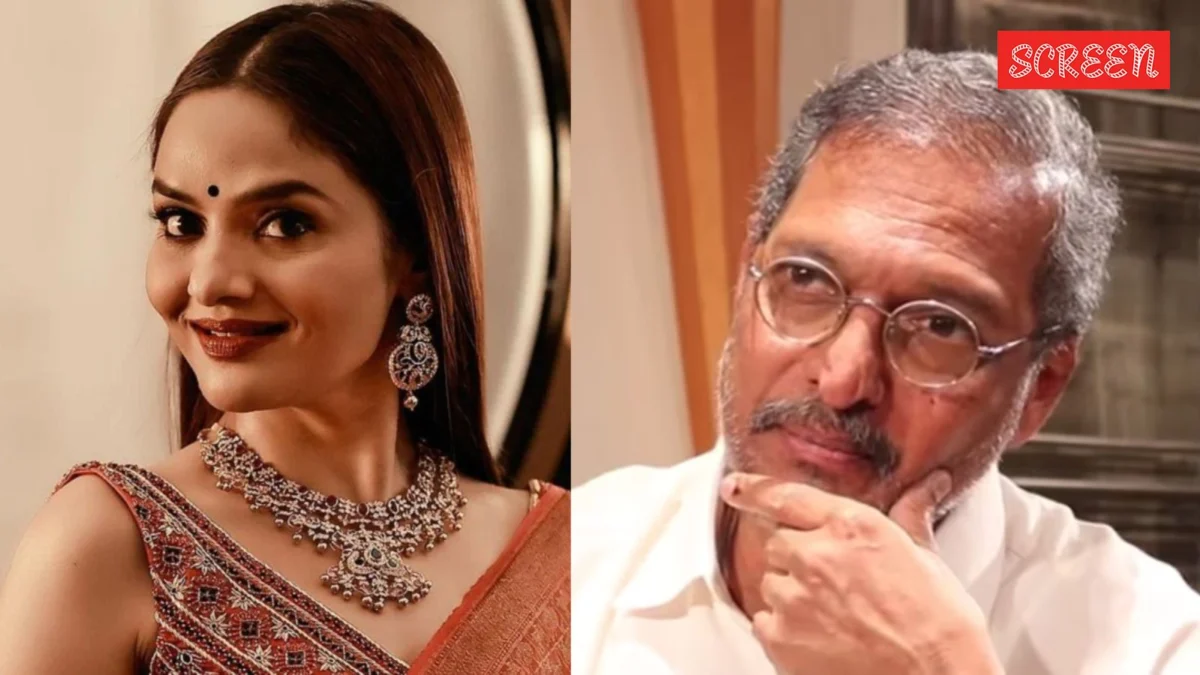
New Delhi, June 6, 2026 – The annals of Bollywood are replete with tales of artistic dedication, intense performances, and the occasional fiery on-set drama. Among the most enduring figures known for his raw, unvarnished acting prowess and a temperament to match is Nana Patekar. A recent recounting by actress Madhoo has brought to the forefront a particularly striking incident from the filming of the 1997 blockbuster "Yeshwant," a moment where art and raw emotion collided, resulting in a spontaneous act of physical reprisal that ultimately served the very scene it disrupted.
Madhoo, who played the wife to Nana Patekar’s character in Anil Mattoo’s directorial venture, shared the anecdote in a candid interview with Hindi Rush. The incident underscores Patekar’s unwavering commitment to achieving authentic emotional depth in his performances, a trait that has both defined and, at times, challenged his collaborators. This particular scene, crucial to the narrative of "Yeshwant," demanded a profound emotional outpouring from Madhoo, a feat she was initially attempting to achieve with the aid of artificial means.
The Glycerin Dispute: A Catalyst for Authenticity
The crux of the confrontation lay in a simple request: glycerin. Madhoo, finding herself unable to conjure the required tears for a pivotal scene, reached for the readily available prop. However, Nana Patekar, a staunch advocate for organic emotional expression, intervened decisively. He was reportedly adamant that the tears should stem from genuine feeling, not from a manufactured source.
"With Nana Patekar, I became a method actor," Madhoo recounted, highlighting the profound impact his approach had on her own understanding of performance. She explained the sequence of events: "There was a scene where I was supposed to use glycerin. He didn’t let me use it. He was like, ‘Feel it, you should have natural tears.’ But I couldn’t do it."
This refusal to allow artificial assistance escalated when Patekar, driven by his pursuit of authenticity, took a drastic measure. "What he did then was slap me for real," Madhoo revealed, her voice carrying the weight of the memory. "He slapped me so hard that I naturally had tears in my eyes." The unexpectedness and force of the physical reprimand, intended to provoke a genuine emotional response, caught Madhoo completely off guard.
A Swift Retaliation: The Reflex of Fury
The immediate aftermath of the slap was not one of quiet compliance. Madhoo, herself known for a fiery disposition, admitted to being "extremely mad at him." The betrayal of trust, especially after rehearsed sequences that had not involved such drastic measures, fueled her anger. "We had done rehearsals and he hadn’t done anything like that. His sudden slap shocked me," she explained.
Her own short temper, a characteristic she readily acknowledges, kicked in. In a move that mirrored the raw intensity of the moment, Madhoo retaliated instantly. "And I am so short-tempered that I slapped him back. He hit me and my reflex was to hit him back," she recalled. This spontaneous exchange, born out of shock and anger, became an unforgettable part of the film’s production history.
The Unforeseen Artistic Boon
Ironically, the highly charged, albeit confrontational, interaction proved to be a dramatic windfall for the film. The raw emotion, born from a genuine moment of shock and reciprocal anger, lent an unparalleled authenticity to the scene. Director Anil Mattoo, who had dedicated an entire day to filming this critical sequence, found his efforts expedited.
"It was the most crucial scene of ‘Yeshwant’, and director Anil Mattoo had dedicated an entire day to shoot it," Madhoo stated. "Because everything happened so naturally, we wrapped it up in half a day." Patekar, recognizing the potent effect of the unplanned incident, reportedly declared, "After this scene, what more shots do you want? Finish. Scene over." The incident, therefore, served as a powerful testament to Patekar’s belief in method acting, pushing his co-star to achieve a level of emotional veracity that artificial means could not replicate.
A Deeper Understanding: Beyond the Temperament
Despite the intensity of the on-set altercation, Madhoo was quick to clarify that Nana Patekar’s actions, while extreme, were not rooted in disrespect or malice towards her. She emphasized that his displeasure was always tied to her performance and commitment to the character.
"Nana was never rude to me," she asserted. "He only showed displeasure when he wanted me to improve my performance. He would get upset when I used glycerin or stepped out of the character’s mood after a shot." Madhoo described herself as a "switch-on, switch-off actor," a style that contrasted with Patekar’s philosophy. "Nanaji was against it. He believed in living the character you are playing." This difference in approach, while leading to conflict, was ultimately driven by a shared, albeit differently expressed, dedication to their craft.
A Pattern of Intensity: Echoes from the Past
The incident with Madhoo is not an isolated narrative concerning Nana Patekar’s demanding on-set presence. Filmmaker Sai Paranjpye, who directed Patekar in the 1990 film "Disha," previously shared her own experience with the actor’s particular brand of intensity. In an account that echoes similar themes of artistic integrity and directorial control, Paranjpye recounted a dispute over a seemingly trivial matter: a pair of slippers.
According to Paranjpye, the argument escalated to a point where she lost her temper and demanded Patekar leave the set. "I lost my temper and asked him to leave. I told him to either do this or walk out. I said, ‘I have had enough of your tantrums. Can’t you behave like a professional?’" she recalled.
The confrontation, as detailed by Paranjpye, saw Patekar storming off the set. However, he reportedly returned approximately thirty minutes later, delivering a veiled threat. "He came back and warned me, ‘You are safe because you are a woman, otherwise you would not have been here,’ and then he stormed out again," she stated. This account further illustrates Patekar’s reputation for being uncompromising when it came to his artistic vision and his expectations of professionalism from those around him.
Supporting Data and Context: The Legacy of Nana Patekar
Nana Patekar’s career, spanning decades, is marked by a consistent portrayal of complex, often morally ambiguous characters. Films like "Parinda," "Krantiveer," "Agni Sakshi," and "Vaastav: The Reality" showcase his ability to inhabit roles with a visceral intensity that has earned him critical acclaim and a dedicated fanbase. His acting style is characterized by a raw, often aggressive delivery, punctuated by profound emotional depth. This intensity, while celebrated on screen, has evidently translated into his working methods, leading to memorable, and at times challenging, collaborations.
The "Yeshwant" incident, while dramatic, underscores a broader theme in the film industry: the clash between different artistic methodologies. While some actors and directors prefer a more controlled, systematic approach, others, like Patekar, champion a more immersive, emotionally driven process. Madhoo’s account highlights the effectiveness of his method, even if it involved unconventional and physically impactful techniques. Her eventual acknowledgement of becoming a "method actor" under his tutelage speaks volumes about the transformative power of his approach.
The mention of a recent viral video showcasing Nana Patekar performing an impressive 15 tricep dips at the age of 76 further highlights his enduring dedication to physical and mental discipline, a commitment that likely fuels his artistic rigor. Fans expressed awe at his fitness, a testament to a life lived with a certain unyielding quality, both in his personal pursuits and his professional endeavors.
Implications for the Industry and Artistic Discourse
The resurfacing of these anecdotes serves as a valuable reminder of the diverse and often intense processes involved in filmmaking. Nana Patekar’s approach, while perhaps not universally applicable or comfortable for all, undeniably yields powerful results. His insistence on authenticity, even at the cost of discomfort, pushes boundaries and challenges conventional acting norms.
For aspiring actors and filmmakers, these stories offer insights into different facets of the craft. They highlight the importance of:
- Emotional Authenticity: The pursuit of genuine emotion, even if it requires pushing personal boundaries.
- Director-Actor Collaboration: The dynamics of working with actors who have strong artistic convictions and the importance of finding common ground.
- Professionalism vs. Method: The fine line between demanding professionalism and adhering to a specific acting methodology.
- The Impact of Intensity: How intense artistic drive can lead to both conflict and exceptional artistic outcomes.
The narrative also prompts a broader discussion about the acceptable limits of on-set interactions. While the incident with Madhoo ultimately served the film positively, the physical aspect raises questions about power dynamics and the potential for discomfort. However, Madhoo’s own retrospective framing of the event, emphasizing her understanding of Patekar’s intentions and his lack of personal disrespect, suggests a nuanced perspective that acknowledges the complex realities of artistic creation.
In conclusion, the tale of Nana Patekar and Madhoo on the sets of "Yeshwant" is more than just a celebrity anecdote; it’s a window into the demanding and often unpredictable world of filmmaking. It underscores the profound commitment of actors like Nana Patekar to their craft, a commitment that, while occasionally leading to fiery confrontations, ultimately contributes to the creation of memorable and impactful cinema. His legacy is not just in the characters he has portrayed, but in the very intensity with which he has approached their embodiment.
