

Tehran, Iran – In the bustling, labyrinthine streets of Tehran, a little girl might be seen, her small hand clutching precious coins, her heart set on the shimmering allure of a goldfish. In a remote, sun-baked village, a young boy might be frantically searching for a friend’s lost notebook, the urgency of dawn and the impending school bell his only companions. In humble homes, siblings might share the singular burden of a single pair of shoes. And in quiet moments, a child might bear witness as a revolution, a seismic shift in history, arrives at her very doorstep.
These are not mere vignettes; they are the potent, unforgettable images that have come to define a distinctive and deeply resonant tradition in Iranian cinema. Around these seemingly small, everyday details, some of Iran’s most celebrated filmmakers have meticulously constructed entire cinematic worlds. While revolutions rumble in the distance, poverty presses against the edges of the frame, governments rise and fall, ideologies ossify, and the very course of history is redrawn, it is often the child, with their unvarnished perspective, who stands at the epicenter of the narrative, watching.
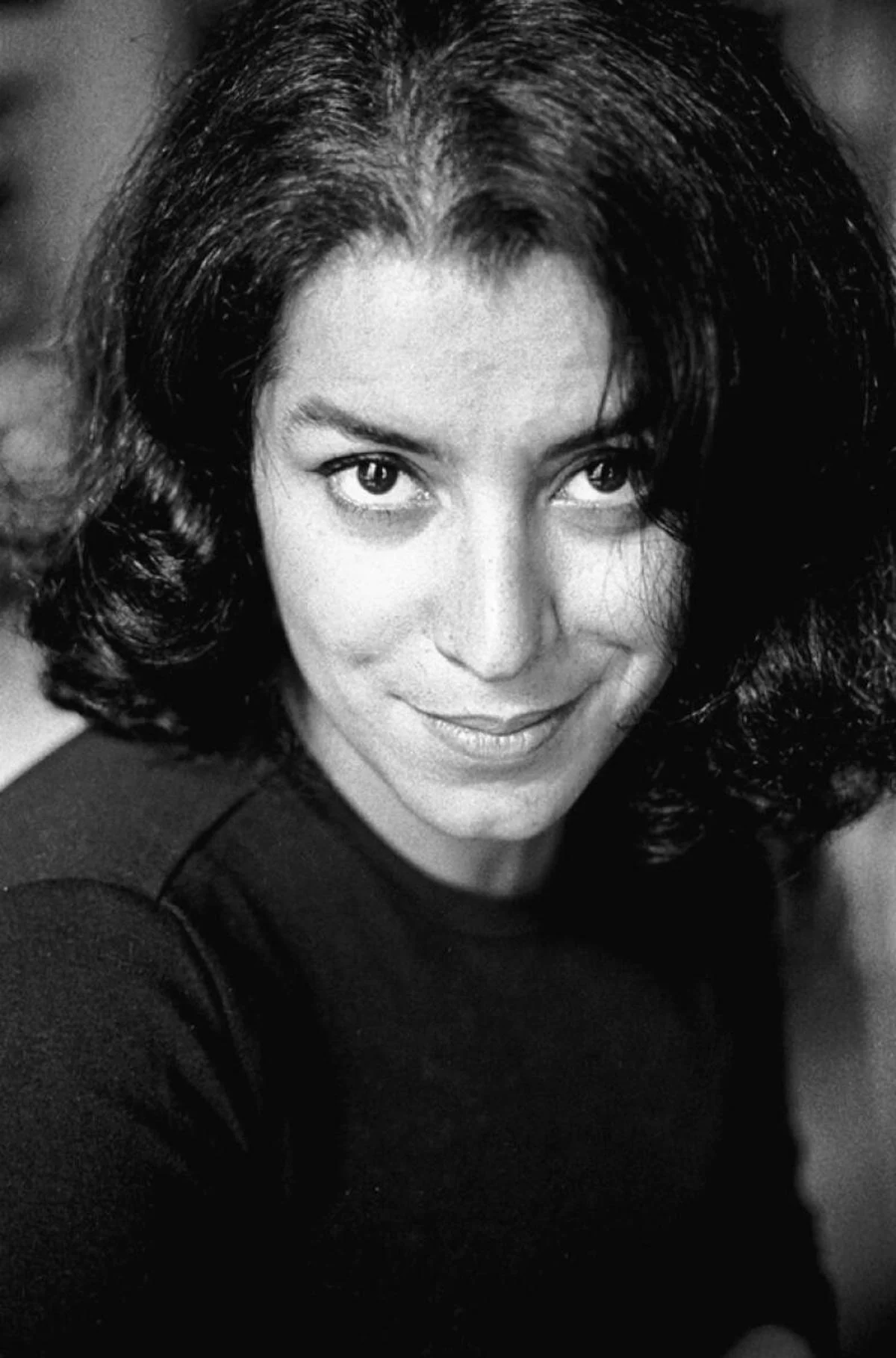
The recent passing of Marjane Satrapi, the visionary author of the graphic memoir Persepolis, serves as a poignant invitation to revisit not only her seminal work but also this profound tradition in modern storytelling. Iranian artists have consistently chosen to place children at the heart of their narratives, offering a unique lens through which to explore complex societal and political landscapes. From Abbas Kiarostami’s introspective schoolboys in Where Is the Friend’s House? and Jafar Panahi’s determined young protagonist in The White Balloon, to Majid Majidi’s resilient children navigating hardship in Children of Heaven, and Mohsen Makhmalbaf’s explorations of innocence and history in The President and A Moment of Innocence, the child recurs with remarkable persistence, becoming a cornerstone of Iranian cinematic expression.

This consistent focus on childhood is far more than an aesthetic choice; it is emblematic of a deep-seated philosophical approach, a subtle yet powerful political strategy, and, perhaps most importantly, a unique way of understanding and interpreting history itself.
The Unfolding of History Through a Child’s Lens
In the realm of Iranian cinema, history rarely makes its grand entrance through pronouncements in parliaments, the thunder of battlefields, or the impassioned speeches of leaders. Instead, it infiltrates like an unannounced season, often arriving through the seemingly mundane portals of a classroom, the charged atmosphere of a family argument, the ominous silence behind a closed door, or, most significantly, through the puzzled, unclouded gaze of a child who has not yet learned the intricate art of adult deception and the ways in which truth is often artfully disguised.
Marjane Satrapi’s Revolution: A Childhood Interrupted
Published in 2000 and later immortalized in an Academy Award-nominated animated film, Persepolis remains one of the most influential and widely recognized accounts of modern Iran. Its enduring genius lies in its deliberate refusal to conform to the conventions of traditional political history. Satrapi eschews grand political narratives, ideologies, and government pronouncements. Instead, she begins with a little girl, Marji, and through her eyes, the Iranian Revolution unfolds not as a historical event, but as a bewildering and transformative experience of childhood.

The revolution’s arrival is marked by the sudden appearance of veils in classrooms, the inexplicable disappearance of friends, the hushed urgency of family conversations, the distant rumble of bombs, and the ubiquitous posters adorning walls. Adults begin to speak in coded language, their words laced with veiled meanings. History, in essence, enters the intimate sanctuary of the home before it ever makes its way into the sterile pages of textbooks.
This profound connection between Satrapi’s narrative and the broader tradition of Iranian storytelling is striking. Much like the children in the films of Kiarostami, Panahi, Makhmalbaf, and Majidi, Marji is simultaneously a participant in and an observer of the unfolding events. She is positioned close enough to history to feel its immediate consequences, yet retains a crucial distance that allows her to perceive its inherent absurdities. Her inherent innocence serves as Satrapi’s most potent tool, enabling her to expose contradictions and hypocrisies that adults, in their learned capacity for rationalization, have long since accepted or overlooked.
The true triumph of Persepolis lies in its remarkable ability to transform one of the 20th century’s most consequential political upheavals into something profoundly intimate and personal. The revolution is not experienced as a grand national epic, but rather as the poignant and disruptive interruption of a young life. In Satrapi’s masterful hands, the child becomes history’s conscience, a silent, unyielding witness to the human cost of political machinations.

It is perhaps this universal resonance that allows Persepolis to transcend its Iranian origins and connect with audiences worldwide. While many readers may possess limited knowledge of the intricate historical and political complexities of the Iranian Revolution, they can profoundly recognize and empathize with the experience of watching the adult world, once familiar and secure, suddenly transform into something frightening and incomprehensible. Every child, in some fundamental way, experiences the unfolding of history through this lens of bewilderment and awe. Satrapi, through her art, has given a powerful and enduring voice to this universal childhood experience.
The Innocence of the Outsider: A Cinematic Trope
Professor Sanjoy Mukhopadhyay, former Head of the Department of Film Studies at Jadavpur University, elucidates the unique position of the child in cinema as stemming from a compelling paradox: the child is deeply embedded within the world yet remains curiously detached from its complexities and adult concerns.
"A child is an innocent observer," Mukhopadhyay states, "someone who remains outside the periphery of life’s most intricate machinations."

He traces this cinematic tradition back to the seminal work of Satyajit Ray in Pather Panchali. Through the eyes of young Apu, the audience witnesses the unfolding of life’s profound experiences – death, poverty, disappointment, and sheer wonder – with an equal intensity. However, because the child narrator does not fully grasp the magnitude or implications of what they are witnessing, the audience experiences these events with a unique emotional detachment. Life’s truths are revealed organically, before they are subjected to the filters of adult interpretation and judgment.
However, Mukhopadhyay draws a crucial distinction when discussing Iranian cinema. "While children in Ray’s cinema embody this emotional distance, children in Iranian cinema often become conduits for political action," he explains. "Through the visual trope of a child, filmmakers like Jafar Panahi or Abbas Kiarostami are able to articulate messages and observations that they might find far more challenging to convey through an adult narrator."
This distinction is vital. Children, in their natural state, observe before they judge. Their perspective is unburdened by the ideological frameworks, ingrained prejudices, and unwavering certainties that often shape adult perception. The result is a cinema of extraordinary attentiveness, where seemingly minor incidents, viewed through the child’s pure gaze, acquire the weight and force of profound revelation.

Consider Jafar Panahi’s critically acclaimed film, The White Balloon. On its surface, the narrative is deceptively simple. A young girl desires a goldfish for Nowruz, the Persian New Year. Yet, as she navigates the vibrant, bustling streets of Tehran in pursuit of her simple wish, the film gradually unfolds an entire society around her. Soldiers, shopkeepers, migrants, street performers, laborers, and a myriad of strangers drift in and out of the frame, each encounter a subtle brushstroke in a larger portrait. By the film’s conclusion, an entire society has been quietly, artfully revealed. The goldfish, it becomes clear, was never the true destination; the journey itself, and the world encountered along the way, was the real story.
The same principle is evident in Ritwik Ghatak’s Bari Theke Paliye (Runaway), where the young Kanchan serves as a vessel through which viewers encounter the world anew. The child character allows the audience to experience what Mukhopadhyay refers to as a "virgin experience" – an encounter with reality unclouded by pre-existing judgments or ideological biases.
However, in the context of Iranian filmmaking, the child’s role often transcends mere aesthetic detachment. They become active mediums for political commentary and critique. What might have been purely aesthetic in the hands of filmmakers like Ray often transforms into a potent form of political expression in the works of Panahi and Kiarostami.

The Politics of Innocence: Navigating Censorship
Professor Mukhopadhyay further elaborates on the strategic deployment of childhood innocence in Iranian cinema, highlighting its efficacy in navigating the complex landscape of censorship and ideological control that has often characterized the industry for decades. In such an environment, direct political commentary can be fraught with peril, as every word risks misinterpretation and every statement invites suspicion from authorities. The child, as a narrative device, offers a powerful means of circumventing these barriers.
"What happens is that if the child is taken as the dramatic persona, it becomes easier to negotiate with the establishment," Mukhopadhyay explains. "You can always argue that this is not an adult, politically charged interpretation of life. This is simply what a child saw, a child’s innocent perspective."
This distinction, though subtle, carries immense weight. An adult narrator arrives with a pre-existing set of opinions, a worldview shaped by experience and ideology. A child, however, arrives with questions, with an inherent curiosity that drives their interactions. An adult may appear overtly political, but a child, by their very nature, appears dreamy, inquisitive, and untainted by partisan allegiances. This allows a filmmaker to present difficult societal realities and critiques to the audience while maintaining a veneer of innocence and artistic neutrality.

"It becomes a game of hide-and-seek," Mukhopadhyay observes. "Through the visual trope of a child, filmmakers such as Jafar Panahi or Abbas Kiarostami are able to convey many important messages and observations that they might find far more challenging, if not impossible, to articulate through an adult narrator."
This strategic use of childhood innocence helps explain why so many masterpieces of Iranian cinema begin with premises that appear deceptively simple on the surface. In Abbas Kiarostami’s Where Is the Friend’s House?, the plot is driven by a boy’s earnest quest to return a classmate’s notebook. Yet, beneath this seemingly straightforward narrative lies a profound meditation on themes of authority, obligation, and the complex landscape of moral responsibility. The child’s innocent pursuit becomes a catalyst for exploring deeper societal structures and individual ethics.
Memory, Revolution, and the Lost Child: Reclaiming Innocence
No filmmaker has perhaps explored the intricate relationship between innocence and political memory with as much poignant depth as Mohsen Makhmalbaf. In his seminal film, A Moment of Innocence, Makhmalbaf revisits a pivotal incident from his own youth. As a fervent teenage revolutionary, he once stabbed a policeman. Instead of reconstructing this event as a straightforward historical account, Makhmalbaf stages a compelling encounter between memory and imagination. He casts young actors to embody the individuals they once were, creating a cinematic endeavor that is, at its core, an attempt to reclaim the lost innocence that the turbulent currents of history had irrevocably destroyed.

Years later, in his film The President, Makhmalbaf once again turns to the figure of the child to explore the enduring impact of political upheaval. As a disgraced dictator flees a revolution with his young grandson in tow, the child character emerges as the story’s moral compass. Moving through a landscape ravaged by the brutal exercise of power and the pervasive violence of conflict, the grandson possesses a clarity of vision that often eludes the adults around him. He perceives human beings before he recognizes ideologies. He witnesses suffering before he comprehends the machims of politics. Like countless other children who populate the landscape of Iranian cinema, he becomes a solitary witness, wandering through the desolate ruins of history, his unblemished gaze a testament to a purer form of understanding.
Much like the children portrayed by Kiarostami, Panahi, Majidi, and Makhmalbaf, Marjane Satrapi’s protagonist, Marji, stands at the precipice of history, an observer bearing silent witness. In doing so, Marjane Satrapi has not only created a globally resonant work of art but has also firmly cemented her place within one of Iran’s most remarkable and enduring artistic traditions: the profound trust placed in the unvarnished perspective of a child to articulate truths that the compromised voices of adults can no longer, or will no longer, speak.
