

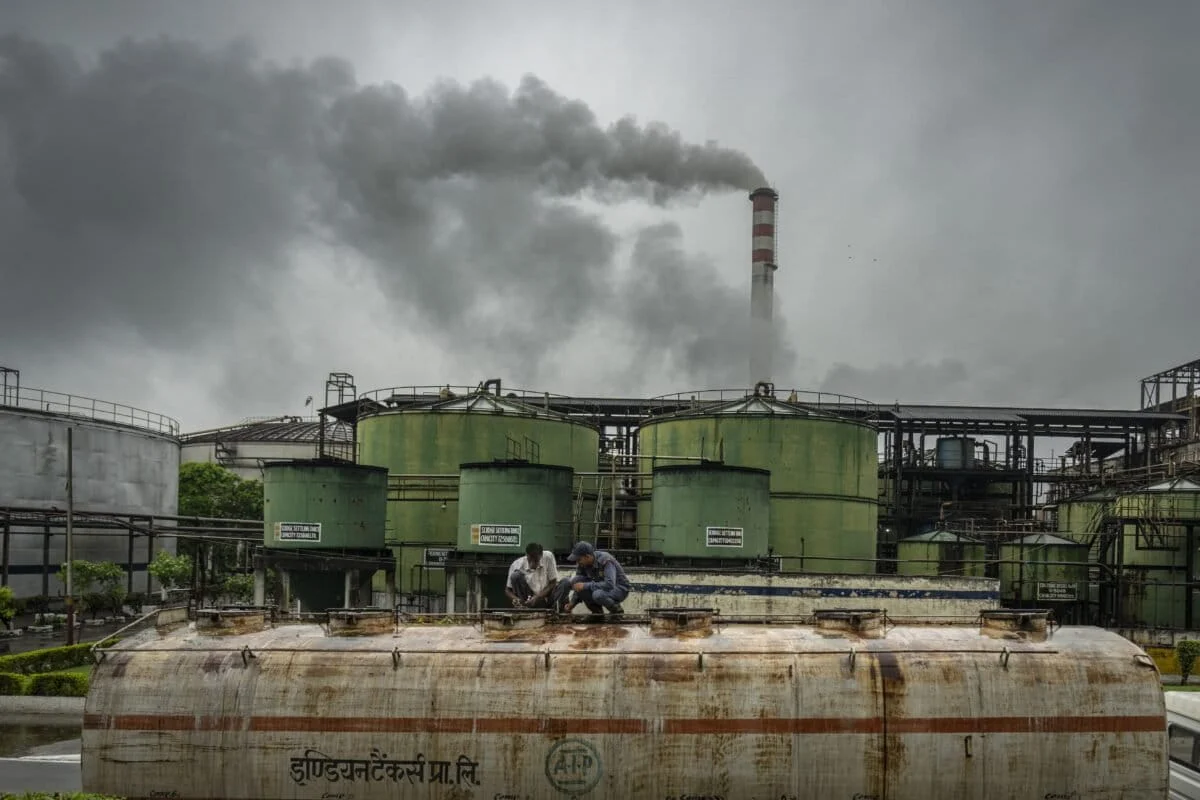
As India accelerates its transition toward a 20% ethanol-blended petrol (E20) mandate, it faces a hurdle far more complex than mere production: the "last mile" infrastructure. While Brazil has successfully navigated this path over five decades to reach an E30 standard, its experience suggests that the real test of a biofuel economy lies not in the fields of sugarcane, but in the pipes, tanks, and laboratories that ensure fuel quality and reliability.
Main Facts: The "Sugarcane Juice" Dilemma
At a bustling petrol pump in the Katara Hills of Bhopal, Madhya Pradesh, the transition to green energy is often met with a mix of curiosity and skepticism. "People come here and joke, ‘Ganne ka juice bhardo’ (Fill it up with sugarcane juice)," remarks a veteran pump attendant. This sarcasm, while lighthearted, underscores a significant public relations challenge for the Indian government. As E20 petrol—a blend of 20% ethanol and 80% fossil-based petrol—becomes the national standard, social media is rife with concerns regarding engine compatibility, decreased mileage, and fuel quality.
While Indian government agencies and automobile manufacturers have been quick to dismiss these claims, the debate has illuminated a critical vulnerability: the supply chain. Brazil, the global poster child for ethanol success, has already integrated a 32% ethanol blend (E30) as its default petrol. However, interactions with Brazilian industry leaders reveal that their success was not built on agricultural prowess alone, but on a robust "behind the pump" ecosystem.
For India, the challenge is two-fold. First, it must match Brazil’s production capabilities. Second, and more importantly, it must build the procurement contracts, storage depots, and transport networks required to move ethanol from surplus regions to every corner of the country without compromising quality.

Chronology: A Tale of Two Transitions
The evolution of ethanol in Brazil and India follows different timelines, offering a comparative look at how regulatory maturity is achieved.
The Brazilian Evolution (1975–Present)
Brazil’s journey is categorized into three distinct phases by Sindicom, the national union of fuel distributors:
- The Proálcool Era (1975–2000): Triggered by the global oil shocks of the 1970s, the Brazilian government launched the National Alcohol Programme. This phase was characterized by heavy subsidies and centralized distribution. The state-owned Petrobras managed the blending and infrastructure, creating the foundational terminal systems used today.
- The Flex-Fuel Revolution (2003–2017): The introduction of flex-fuel vehicles, which can run on any combination of petrol and ethanol, shifted the market. Procurement moved from government mandates to bilateral negotiations between private mills and distributors.
- The RenovaBio Era (2018–Present): Brazil introduced RenovaBio, a sophisticated biofuels policy that uses Decarbonization Credits (CBIOs). Under this system, fuel distributors must meet mandatory emissions-reduction targets by purchasing credits from certified biofuel producers, creating a market-driven incentive for green energy.
The Indian Acceleration (2014–Present)
In contrast, India’s push has been rapid and top-down:
- 2014-2015: India begins a concerted effort to increase blending, primarily to reduce oil import bills.
- 2023-2024: The rollout of E20 is fast-tracked across major cities.
- 2025-2026: The industry prepares for a massive procurement cycle, with bids invited for over 10.5 billion liters of ethanol.
Supporting Data: The Logistics of "The Wrong Place at the Wrong Time"
The primary hurdle identified by Brazilian experts is not the "how much" but the "where." Brazil operates approximately 360 ethanol plants, mostly concentrated in the Centre-West and Centre-South regions. However, this fuel must reach over 5,500 municipalities.

The Cost of Distance
According to the BRASILCOM Federation, transport costs can account for 20% to 40% of the delivered cost of ethanol. Sugarcane ethanol is concentrated in São Paulo and Minas Gerais, while maize ethanol is booming in Mato Grosso. These hubs are thousands of kilometers away from the high-demand regions in the North and Northeast.
"The problem has shifted from ‘is there enough ethanol?’ to ‘can we get it where it needs to be?’" BRASILCOM representatives stated. This serves as a warning for India, where production is also geographically skewed. States like Uttar Pradesh and Maharashtra are ethanol powerhouses, but the fuel must be transported to distant states where blending infrastructure is still in its infancy.
The Grain vs. Sugar Complexity
In India, the shift toward grain-based ethanol (maize and damaged food grains) introduces new variables. Akshay Modi, Managing Director of Modi Biotech, points out that unlike sugarcane, which is processed immediately, grains can be stored year-round. However, this requires sophisticated storage to prevent moisture-related toxins and fungus.
Furthermore, ethanol producers must compete with the starch and animal feed industries for feedstock. This competition creates price volatility that is difficult to hedge against, particularly during the off-season.

Official Responses and Industry Perspectives
The Indian government maintains that the ethanol push is a "remarkable public policy success." Since 2014, the government claims to have saved over ₹1 trillion by reducing oil imports by approximately 95 million metric tonnes. However, industry veterans suggest that the "numbers game" must now take a backseat to operational efficiency.
The Infrastructure Bottleneck
Athar Shahab, Managing Director of Zuari Industries Limited, notes that the industry has responded to policy signals by creating surplus capacity. "The question today is no longer whether India can produce enough ethanol," Shahab says. "The immediate challenge is utilization of existing capacity, predictable procurement, and efficient logistics."
Shahab emphasizes that a liter of ethanol produced but not "lifted" by an oil marketing company (OMC) provides no value to energy security or decarbonization. He argues for:
- Predictable Pricing: Long-term frameworks to protect investments.
- Depot-Level Infrastructure: Significant investment in storage tanks and dedicated handling systems at the blending points.
Quality as a Pillar of Trust
In Brazil, the National Agency of Petroleum, Natural Gas and Biofuels (ANP) enforces strict specifications. Distributors conduct laboratory tests at both entry and exit points of terminals, checking for electrical conductivity, pH levels, and potential contaminants like methanol or water.

Sindicom warns that as volumes grow, so does the risk of operational fraud and adulteration. For India to maintain consumer trust, quality regulation cannot be a "technical side issue"—it must be the cornerstone of the transition.
Implications: Oil Security and the Consumer Mandate
The overarching goal of ethanol blending remains energy security. Luiz Augusto Horta Nogueira, a Brazilian bioenergy expert, notes that ethanol is a geopolitical shield. During the oil crises of the past, Brazil advertised that its fuel "didn’t pass through the Strait of Hormuz." For a major crude importer like India, which is highly exposed to Middle Eastern volatility, this argument is potent.
Economic Trade-offs
However, the economic benefits are not a simple one-to-one offset. While India saves on foreign exchange for oil, it must pay domestic producers for ethanol, often at regulated prices that may be higher than the international market price of petrol before taxes.
The Path Forward
Brazil’s experience offers a roadmap with a clear warning: Build the infrastructure before expanding the mandate. The 1989-90 ethanol supply crisis in Brazil, caused by falling oil prices and a lack of storage, damaged the product’s reputation for a decade.

For India, the transition to E20 and beyond depends on three pillars:
- Logistical Parity: Ensuring that transport costs do not make ethanol prohibitively expensive in non-producing states.
- Technological Maturity: Moving beyond sugarcane to stable, grain-based supply chains with proper storage.
- Consumer Confidence: Implementing transparent, rigorous quality checks at the pump to turn "sugarcane juice" jokes into a sense of national pride.
The distributor, as Sindicom notes, is the central actor in this drama. They are the ones who transform a government mandate into a "safe, regular, and quality supply." As India moves toward its green goals, the success of the mission will be measured not by the billions of liters produced, but by the reliability of the fuel reaching the consumer’s tank.
