

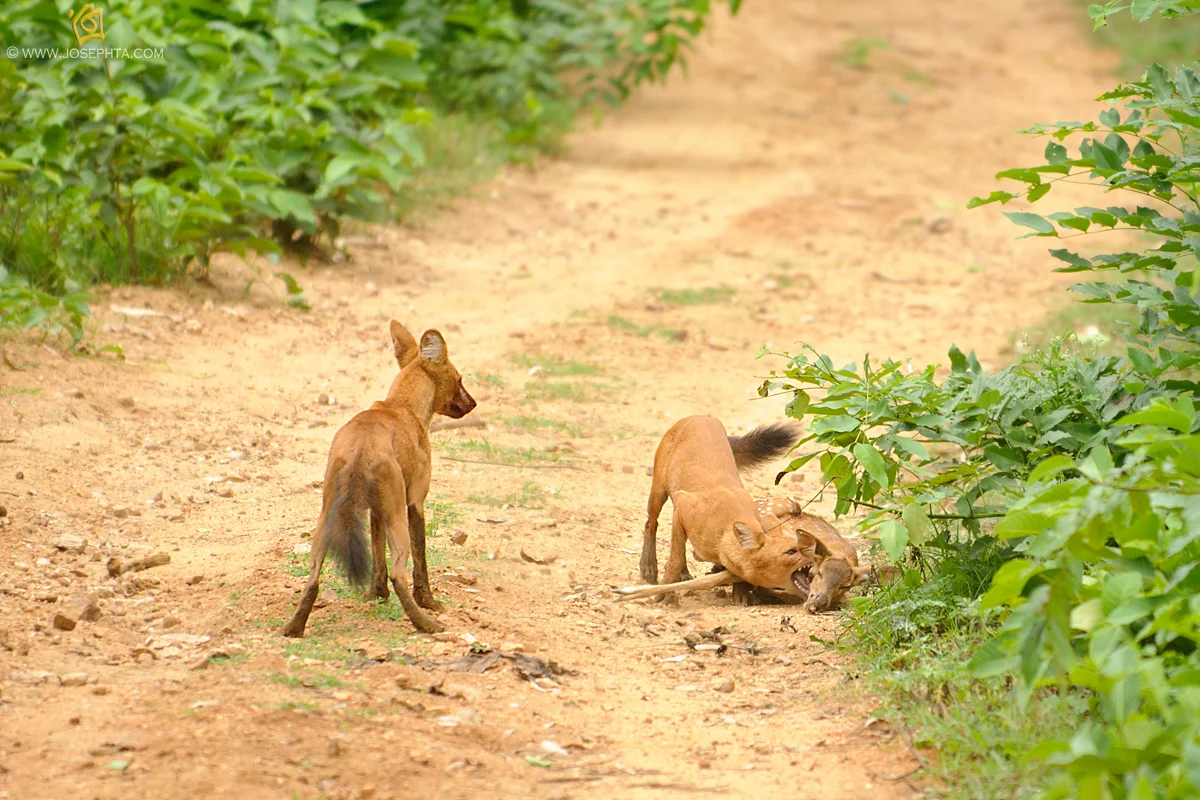
In the dense, teak-dominated forests of the Tadoba-Andhari Tiger Reserve in Maharashtra, a silent predator moves in whistling packs. The dhole (Cuon alpinus), also known as the Asiatic wild dog, is one of the world’s most elusive and endangered carnivores. For decades, these "ghosts of the forest" have lived in the shadow of the Bengal tiger, their dietary habits and ecological needs often inferred rather than precisely measured.
However, a groundbreaking study led by the National Centre for Biological Sciences (NCBS) in collaboration with the Maharashtra Forest Department is changing the narrative. By utilizing a revolutionary "pinch of scat" DNA metabarcoding technique, researchers are uncovering the dietary secrets of the dhole with unprecedented accuracy. This new methodology not only confirms the dhole’s preference for wild prey but also provides a scalable, bias-free tool for carnivore conservation across the Indian subcontinent.
Main Facts: A New Frontier in Non-Invasive Research
The dhole is currently listed as ‘Endangered’ by the International Union for Conservation of Nature (IUCN), with a global population estimated at fewer than 2,500 mature individuals. Their range has contracted by nearly 80% over the last century, leaving them confined to fragmented pockets of forest in South and Southeast Asia.
The primary challenge in dhole conservation has always been data collection. As elusive pack hunters, they are difficult to observe directly. Traditional dietary studies relied on microhistology—the microscopic examination of prey hair found in feces. This method, while pioneering, is fraught with human error and observer bias.
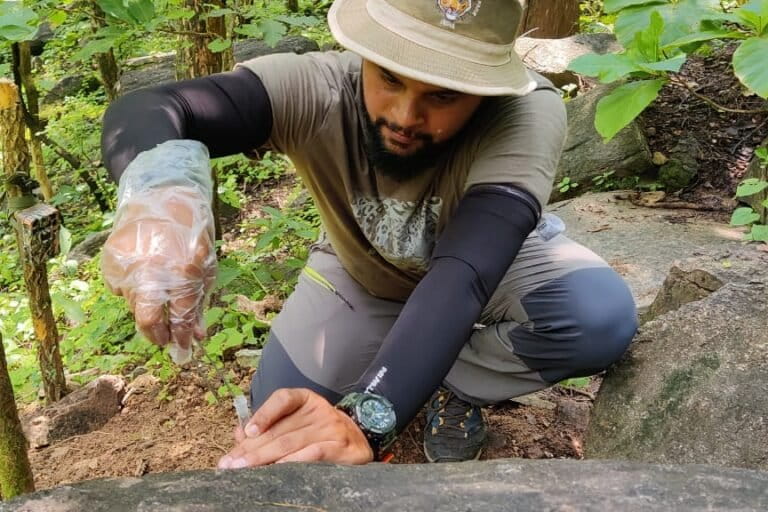
The recent study, published in the journal Environmental DNA, introduces a more refined approach. Lead researcher Abhinav Tyagi and his team developed a method that requires only a "small pinch" of scat material to extract a wealth of genetic information. Unlike previous metabarcoding efforts that required entire fecal samples to be collected and transported in bulky containers, this "minimalist" approach simplifies field logistics and reduces the risk of sample degradation.

Key Findings at a Glance:
- Hypercarnivore Identity: Dholes in the Tadoba-Andhari Tiger Reserve (TATR) rely almost exclusively on wild prey, specifically sambar deer, chital (spotted deer), and wild boar.
- Livestock Avoidance: Despite the presence of cattle in buffer zones, livestock constitutes a negligible portion of the dhole’s diet.
- Methodological Breakthrough: The use of "blocking primers" and randomized DNA sequences has made genetic sequencing more efficient and cost-effective.
- Seasonal Diversity: During the monsoon season, the dhole’s diet expands to include up to 15 different prey species, indicating complex trophic interactions.
Chronology: From the Field to the Laboratory
The journey of this research began in the rugged terrain of Maharashtra. To understand the dhole’s seasonal dietary shifts, the research team structured their field collection across two distinct periods: the monsoon (August–September 2022) and the winter (January–February 2023).
Phase 1: Field Collection (2022–2023)
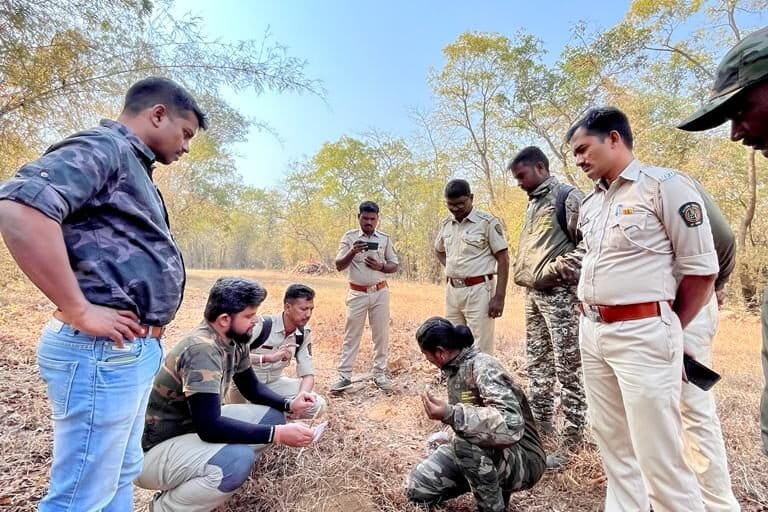
Unlike traditional scat collection, which often involves scooping up entire piles of feces into ziplock bags with silica beads, Tyagi trained Maharashtra Forest Department staff to take only representative "pinches." This subtle change in protocol allowed for faster collection and easier storage in the field. Samples were taken from both the core area of the reserve and the surrounding buffer zones, where human-wildlife interactions are more frequent.
Phase 2: Overcoming Genetic Hurdles (2023)
Once the samples reached the NCBS laboratory, the team faced a significant technical obstacle. In any fecal sample from a predator, the dominant DNA belongs to the predator itself, not the prey. To prevent the sequencing machines from being overwhelmed by dhole DNA, the researchers engineered a "blocking primer"—a short genetic sequence designed to prevent the amplification of dhole-specific DNA.
Furthermore, to optimize the capacity of the Illumina sequencing machines, the team designed special primers with random starting sequences. This innovation allowed the researchers to utilize 100% of the machine’s capacity, whereas traditional methods often required "wasting" 20% of the capacity on artificial bacterial DNA to ensure the machine functioned correctly.
Phase 3: Data Analysis and Publication (2024)
By matching the extracted DNA against the National Centre for Biotechnology Information (NCBI) global database, the team was able to identify prey species with a level of taxonomic resolution that microhistology could never achieve. The results were compiled and peer-reviewed, culminating in the study’s publication in Environmental DNA.
Supporting Data: Why DNA Beats the Microscope
For decades, microhistology was the gold standard for dietary analysis. By looking at the scales and medulla patterns of hair found in scat, researchers could guess what an animal had eaten. However, this method is notoriously subjective.
"Different people can categorize hair differently, and it induces a human or an observer’s bias," explains Abhinav Tyagi. Within a single species, hair can look different depending on the age of the prey, its sex, or even which part of the body the hair came from. Conversely, different species can have nearly identical hair structures, leading to frequent misidentification.
The Metabarcoding Advantage
DNA metabarcoding bypasses these physical ambiguities. It looks at the genetic code—the "barcode" of life—which remains constant regardless of the hair’s physical condition.
In the Tadoba study, the data revealed a striking consistency. Regardless of the season or the proximity to human settlements, dholes remained focused on wild ungulates. In the monsoon season, the genetic "fingerprinting" was sensitive enough to detect 15 different prey species, revealing that dholes are more opportunistic and ecologically integrated than previously thought. This high-resolution data also showed that dholes, tigers, and leopards likely experience increased spatial and trophic interactions during the rainy season, as they all converge on similar prey resources.
Official Responses: Expert Perspectives on the Findings
The conservation community has welcomed the study as a significant step forward for carnivore management in India.

Arjun Srivathsa, a renowned wildlife biologist with the Wildlife Conservation Society-India, noted that the findings reinforce the dhole’s status as a "hypercarnivore." In an email response to Mongabay-India, Srivathsa stated, "Dholes rely substantially on wild prey even when there is domestic livestock available in the landscape." He emphasized that Tyagi’s methodology provides "more reliability and clarity," offering a blueprint for future studies across the species’ range.
However, some researchers point out the practical trade-offs. Abraham Pious, who has studied dholes in the Western Ghats, noted that while DNA metabarcoding is superior in accuracy, it remains expensive. "Microhistology is much cheaper, and you get an overall idea," Pious said, though he admitted its accuracy is significantly lower. He suggested that in areas like Valparai, where dhole scat is less likely to be confused with tiger or leopard scat, traditional methods might still have a role, but for protected areas with high carnivore density, DNA is essential.
Srivathsa remains optimistic about the costs, noting that "as with any new tech, over time, the costs will likely reduce, and it will be adopted more widely."
Implications: Shaping the Future of Conservation
The data from Tadoba provides a clear directive for forest managers: to save the dhole, you must save the deer.
"The dietary data from Tadoba points to a simple conservation insight," Tyagi told Mongabay-India. "If we increase wild prey density, then dhole populations might come up in numbers." This "bottom-up" approach to conservation suggests that habitat restoration and the protection of ungulates like sambar and chital are the most effective ways to support dhole recovery.
Mitigating Human-Wildlife Conflict
Perhaps the most significant implication of the study is its impact on conflict mitigation. In many parts of India and Southeast Asia, dholes are vilified as livestock killers, leading to retaliatory poisonings and killings.
By proving that dholes in a healthy ecosystem (like Tadoba) choose wild prey over livestock—even in buffer zones—researchers can help change the public perception of the species. It shifts the narrative from the dhole being a "pest" to being a specialist predator that only turns to livestock when its natural prey base is depleted.
A Scalable Model
The "pinch of scat" technique is not limited to dholes. The researchers believe this standardized metabarcoding approach can be applied to other elusive carnivores, such as snow leopards in the Himalayas or clouded leopards in the Northeast. By creating a national or even global reference library of genetic data, scientists can monitor biodiversity health in real-time, identifying which species are thriving and which are on the brink of starvation.
Conclusion: The Path Forward
The dhole remains a symbol of the wild, untamed corridors of Asia. While they have long lived in the shadow of the "big cats," the development of high-resolution genetic tools is finally giving them the scientific attention they deserve.
The study by Tyagi and his colleagues serves as a reminder that conservation is as much about the "small pinches" of data as it is about large-scale policy. By understanding exactly what the dhole needs to survive, and by proving their preference for the wild over the domestic, science is providing the evidence needed to foster coexistence. As genetic sequencing becomes more accessible, the hope is that the whistling hunter of the Indian forest will continue to thrive, roaming the teak forests of Tadoba for generations to come.
