

By [Your Name/Journalist Name]
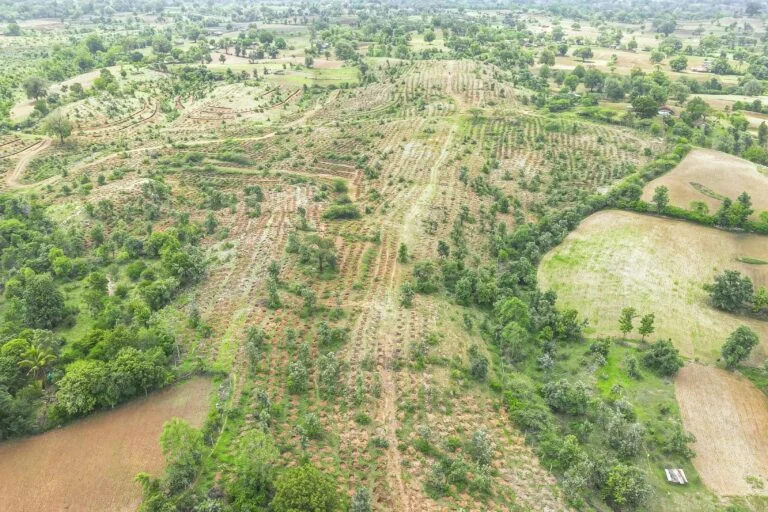
INDORE, MADHYA PRADESH – At first glance, the undulating hills of the Dewas and Indore districts in Madhya Pradesh present a picture of environmental triumph. Viewed from a satellite or a passing vehicle, the lush green canopy suggests a successful recovery of India’s deciduous heartland. However, beneath this emerald veil lies a troubling ecological reality: a "silent extinction" of native biodiversity that aggregate survival statistics fail to capture.
As India intensifies its afforestation drives to meet international climate commitments, a growing chorus of foresters and ecologists warns that the nation is confusing "tree cover" with "forest ecosystems." While the number of trees is rising, the diversity of species—the very fabric of a resilient forest—is unravelling.
The Main Facts: The Illusion of Survival
The central tension in Indian forestry today is the gap between quantitative targets and qualitative health. Currently, plantation drives are measured by two primary metrics: the number of saplings planted and their three-to-five-year survival rates. While these figures often paint an image of progress, they frequently mask a process of ecological homogenization.
![India’s afforestation needs a species lens [Commentary]](https://imgs.mongabay.com/wp-content/uploads/sites/30/2026/07/21130241/IMG_2-1200x800.jpg)
In the Indore Forest Division, data from the current Working Plan (2016-17 to 2025-26) reveals a stark disparity. While the total tree population remains stable, the composition has shifted dramatically. Out of 64 documented tree species, 35 now represent less than 0.1% of the total population. Another 18 species hover between 0.1% and 1%.
Species that were once cornerstones of the Central Indian landscape—such as Bija (Pterocarpus marsupium), Haldu (Haldina cordifolia), and Kullu (Sterculia urens)—are vanishing. Their decline is rarely noted in official progress reports because they are absorbed into an "aggregate survival statistic." If a plantation has an 80% survival rate, it is deemed a success, even if that 80% consists entirely of hardy Teak (Tectona grandis) while the rarer, more sensitive native species have died out completely.
Chronology: The Erasure of the ‘Kullu’ and the Shift in Management
The decline of biodiversity in Madhya Pradesh’s forests is not a sudden event but a decades-long trajectory of management shifts.
- 1978-1979: The Second Working Plan of the Indore Forest Division recognized the ecological importance of the Kullu tree (known for its ghost-like white bark and medicinal gum). A dedicated "Kullu Overlapping Working Circle" was established, ensuring specific silvicultural attention and protection for the species.
- 2005-2015: As management priorities shifted toward broader afforestation targets and timber-centric resilient species, the dedicated conservation circles for specific rare trees began to disappear from administrative documents.
- 2016-Present: The latest Working Plan omitted the Kullu conservation circle entirely. Consequently, the share of Kullu in the division’s tree population plummeted from approximately 0.24% in the late 1970s to less than 0.03% today.
- Early 2025: Recognizing the "invisible decline," forest officials in Indore launched a pilot intervention to pivot from "area-based" targets to "species-specific" accountability. This led to the creation of specialized nurseries and the "RET" (Rare, Endangered, and Threatened) monitoring framework.
- March 2026: The legal landscape shifted when the Supreme Court of India, in Naveen Solanki v. Rail Land Development Authority, ruled that mere vegetation cover cannot be equated with a natural forest ecosystem, mandating a focus on native species restoration.
Supporting Data: A Landscape of 1%
The "1% threshold" has become a critical marker for foresters in Madhya Pradesh. In local forestry parlance, a species is often treated as "Rare" within a specific division if it constitutes less than 1% of the local tree population, regardless of its national status.
![India’s afforestation needs a species lens [Commentary]](https://imgs.mongabay.com/wp-content/uploads/sites/30/2026/07/21131709/IMG_1-768x512.jpeg)
Rarity, as it turns out, is contextual. Salai (Boswellia serrata) is abundant in Burhanpur but critically rare in North Seoni. Achar (Buchanania cochinchinensis) thrives in North Seoni but has nearly vanished from Indore.
The decline in Indore is illustrated by the following species-specific data:
- Haldu (Haldina cordifolia): Once a common sight in the region’s working plans two decades ago, it is now functionally absent from most new plantation surveys.
- Dahiman (Cordia macleodii): A species prized for its timber and medicinal properties, it has seen its regeneration rates stall due to grazing pressure and climate stress.
- Teak Dominance: In many seven-year-old mixed plantations, while 14 species may have been planted initially, Teak and its immediate associates now account for over 90% of the surviving biomass.
The ecological cost of this trend is high. Unlike fast-growing "hardy" species, RET trees often grow slowly, develop deep taproots that recharge groundwater, and support specialized pollinators. When these species disappear, the forest loses its "ecological insurance"—its ability to withstand pests, droughts, and rising temperatures.
Institutional Perspectives and the "Indore Model"
In response to these findings, the Indore Forest Division, supported by the Madhya Pradesh State Biodiversity Board, has pioneered a decentralized management strategy. This model divides the landscape into three distinct zones, each requiring a different conservation philosophy:
![India’s afforestation needs a species lens [Commentary]](https://imgs.mongabay.com/wp-content/uploads/sites/30/2026/07/21133825/IMG_5-768x512.jpg)
1. Notified Forests: From Canopy to Composition
Within state-controlled forests, the focus has shifted to tracking RET species individually. Current guidelines now mandate that at least 2% of all planted trees must be RET species. Crucially, these are no longer just "planted and forgotten"; they are mapped and replaced individually if they die, moving management toward rebuilding the original forest composition.
2. Rural Non-Forest Areas: Linking Livelihoods to Rarity
In village commons, the primary threats are fuelwood collection and grazing. To combat this, Joint Forest Management Committees (JFMCs) have been transformed into conservation partners. Members are trained in the difficult art of RET seed collection and propagation. By allowing committees to sell surplus rare saplings, the state has linked biodiversity to local economic survival.
3. Urban Spaces: Beyond Ornamentals
Urban forestry in India has long been criticized for its reliance on "decorative" or invasive species like Peltoforum or Eucalyptus. In 2025, Indore’s Government Holkar Science College and Devi Ahilya Vishwavidyalaya broke this mold. Students and staff planted 5,000 RET saplings, creating "RET Vanikas" (Rare Tree Groves) that serve as living classrooms.
"The goal was to move beyond the aesthetic," says a spokesperson for the project. "We wanted to show that a college campus or a city park can be a sanctuary for species that are dying out in the wild."
![India’s afforestation needs a species lens [Commentary]](https://imgs.mongabay.com/wp-content/uploads/sites/30/2026/07/21132815/fruits-768x512.jpg)
Official Responses and Policy Gaps
While the "Indore Model" has drawn interest from neighboring districts like Ujjain and Dewas, experts argue that national policy remains a hurdle.
The Indian Council of Forestry Research and Education (ICFRE), through its Tropical Forest Research Institute in Jabalpur, has been tasked with developing tissue-culture protocols for "difficult" species. However, foresters on the ground note that the supply chain for rare seeds remains precarious. Most government nurseries are optimized for mass-producing resilient species, not for the delicate care required by species like Kullu or Bija.
Furthermore, the Supreme Court’s 2026 observation in the Naveen Solanki case highlights a significant legal gap. While the United States codified species-specific protection in 1973, India’s afforestation laws still largely treat a "tree" as a generic unit of environmental value.
"We don’t need a new law," says an Indian Forest Service officer working in the region. "We need a sharper question in our existing audits. Instead of asking ‘how many trees survived,’ the audit must ask ‘which species have we lost, and what are we doing to bring them back?’"
![India’s afforestation needs a species lens [Commentary]](https://imgs.mongabay.com/wp-content/uploads/sites/30/2026/07/21133253/IMG_4-768x512.jpg)
Implications: The Resilience of the Future
The long-term implications of India’s current afforestation strategy are profound. As climate change accelerates, "monoculture-adjacent" forests—those dominated by only one or two species—are increasingly vulnerable to catastrophic failure.
The Indore experiment suggests that restoration is possible, but it requires a fundamental shift in how success is defined. It requires moving away from "green cover" as a PR metric and toward "ecological integrity" as a scientific one.
If the lessons from the Shankargarh Hills and the Badgonda Nursery are ignored, India may find itself with millions of acres of new plantations that look green on a map but are "biological deserts" in reality. The survival of India’s dry deciduous forests depends not on the number of saplings planted this monsoon, but on the persistence of the rare, the slow-growing, and the forgotten species that hold the ecosystem together.
The path forward, as Indore demonstrates, is to treat the forest not as a collection of trees, but as a complex, diverse community where every 1% matters.
