JHANSI – In a move set to redefine the economic landscape of central India, the Uttar Pradesh government has received the Detailed Project Report (DPR) for a massive 1,000-acre data center and Information Technology (IT) hub in the Bundelkhand region. This ambitious project, centered near Jhansi, represents a cornerstone of the state’s strategy to decentralize industrial growth and replicate the "Noida model" in the historically underdeveloped Bundelkhand belt.
The project is a flagship component of the Bundelkhand Industrial Development Authority (BIDA), a mega-industrial township spanning over 56,000 acres. With the submission of the DPR, the state government is signaling its readiness to move from land acquisition to the active development of infrastructure, aiming to attract global tech giants and domestic industrial leaders to the heart of Uttar Pradesh.
1. Main Facts: The Scale of the BIDA Vision
The proposed IT and Data Center hub is not an isolated project but the vanguard of a much larger urban-industrial ecosystem. The Uttar Pradesh government, under its broader vision to become a $1 trillion economy, has identified Bundelkhand as the next frontier for high-tech investment.
The IT Hub and Data Center
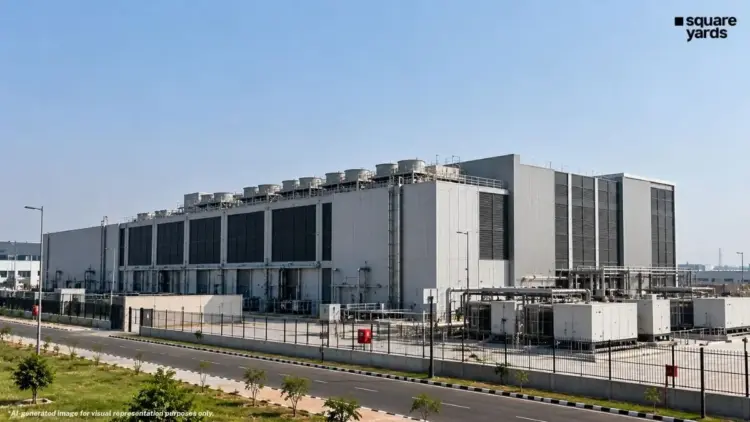
The specific 1,000-acre enclave is designed to cater to the burgeoning demand for data storage and digital services in India. Out of this targeted area, the state has already successfully acquired 810 acres, showcasing a rapid pace of administrative execution. The hub will offer specialized zoning for:
- Hyperscale Data Centers: Facilities requiring massive power and cooling infrastructure.
- IT/ITES Parks: Office spaces for software development, BPOs, and knowledge-based services.
- Research and Development (R&D) Centers: Spaces for innovation in emerging technologies like AI, robotics, and biotechnology.
The BIDA Framework
The IT hub sits within the larger BIDA jurisdiction, which encompasses 56,662 acres across 33 villages in the Jhansi district. BIDA is being developed as a "New Jhansi," a planned industrial city that mirrors the success of Noida in the National Capital Region (NCR). The project is divided into two major phases:
- Phase 1: Targeting 35,298 acres.
- Phase 2: Targeting 21,364 acres.
As of October 2026, the authority has already secured 28,874 acres, achieving over 80% of its Phase 1 target. This land bank is one of the largest ever assembled for an industrial project in northern India.
2. Chronology: From Concept to Detailed Project Report
The journey of BIDA and the IT hub reflects a multi-year effort to pivot Bundelkhand from an agrarian-focused economy to an industrial powerhouse.
- September 2023: The Uttar Pradesh cabinet officially approved the formation of the Bundelkhand Industrial Development Authority (BIDA), the first new industrial authority created in the state in 47 years.
- Late 2023 – Mid 2024: Land identification and notification processes were initiated across 33 villages near the junction of the Bundelkhand Expressway and the National Highways.
- Early 2025: The state government prioritized the IT and Data Center hub as the "anchor project" to attract initial high-value investment. Land acquisition for this specific 1,000-acre patch was fast-tracked.
- June – September 2026: Massive land acquisition drives saw BIDA cross the 80% threshold for Phase 1. Negotiation with local farmers and stakeholders was streamlined through a direct-purchase model.
- October 19, 2026: The Detailed Project Report (DPR) for the Data Center and IT Hub is officially submitted to the state government. This report outlines the technical specifications, investment requirements, and timeline for infrastructure bidding.
3. Supporting Data: Infrastructure and Sectoral Diversification
The viability of the IT hub depends on the surrounding ecosystem. Data provided by the state authorities suggests a multi-sectoral approach to ensure the sustainability of the new city.
Connectivity as a Catalyst
Bundelkhand was once considered remote, but massive infrastructure spending has changed its connectivity profile:
- Expressway Access: The BIDA area is strategically located to leverage the Bundelkhand Expressway, providing a direct link to Delhi via the Agra-Lucknow and Yamuna Expressways.
- Aviation: The government has proposed a greenfield airport within the BIDA zone to facilitate international business travel and high-value cargo.
- Rail and Logistics: Plans include a multimodal logistics park and dedicated railway sidings to support the heavy manufacturing sectors.
Sectoral Distribution within BIDA
While the IT hub is a primary focus, BIDA is designed as a diversified industrial base. The planned land use includes:
- Automotive and Defense: Capitalizing on the UP Defense Industrial Corridor, which has a node in Jhansi.
- Logistics and Warehousing: Serving as a central distribution hub for North and Central India.
- FMCG and Healthcare: Attracting manufacturing units for consumer goods and pharmaceuticals.
- Green Energy: Bundelkhand’s high solar radiation makes it ideal for the renewable energy units required to power energy-hungry data centers.
4. Official Responses: The Government’s Strategic Vision
State officials have emphasized that the BIDA project is not merely a real estate venture but a socio-economic intervention.
Chief Minister’s Office (CMO) Perspective:
Senior officials within the UP government have noted that the submission of the DPR is a "pivotal milestone." The administration views the IT hub as a magnet for "clean industry," which will provide high-paying jobs to the youth of Bundelkhand, who previously had to migrate to Delhi, Noida, or Bangalore for employment.
BIDA Authority Statements:
Spokespersons for BIDA have highlighted the speed of land acquisition as a testament to public trust. "Surpassing 80% of our Phase 1 land acquisition target in such a short window demonstrates the local community’s support for industrialization. We are now focusing on the ‘Plug-and-Play’ model, where investors can move into pre-developed plots with all utilities—power, water, and fiber optics—already in place."
The IT Department:
The UP IT and Electronics Department has highlighted the state’s Data Center Policy, which offers subsidies on capital investment, interest subvention, and stamp duty exemptions. They believe the Jhansi hub will benefit from these incentives, making it one of the most competitive destinations for data storage in South Asia.
5. Implications: Real Estate and Economic Forecast
The development of a 1,000-acre IT hub within a 56,000-acre industrial city has profound implications for the real estate market and the regional economy.
Industrial Land: The First Mover
The most immediate impact is being felt in the industrial land segment. As the government begins developing the 810 acres already acquired, demand for ancillary industrial plots is expected to surge. Warehousing and logistics firms are likely to be the first private players to seek land, followed by specialized contractors for data center construction.
The "Noida Effect" on Housing
Real estate experts predict a phased growth pattern for residential property:
- Short Term (1-3 Years): Speculative interest in land surrounding the BIDA boundaries.
- Medium Term (3-7 Years): Demand for workforce housing as construction of the IT hub and factories begins.
- Long Term (7+ Years): Development of premium residential townships, schools, and hospitals as the IT sector matures and attracts white-collar professionals.
The DPR’s focus on an IT hub suggests a higher concentration of high-income earners compared to traditional manufacturing, which could eventually drive demand for luxury and mid-segment housing in Jhansi.
Commercial Property and Services
A city of 56,000 acres will eventually require a robust commercial backbone. The DPR includes provisions for shopping complexes, hotels to accommodate business travelers, and office spaces for startups. However, as noted in the project summary, the scale of this demand is strictly tied to the pace of job creation.
Socio-Economic Upliftment
Historically, Bundelkhand has struggled with water scarcity and limited industrial presence. The BIDA project, coupled with the Ken-Betwa River Link Project and the Jal Jeevan Mission, aims to solve these systemic issues. The IT hub provides a "leapfrog" opportunity, allowing the region to bypass traditional industrialization phases and move straight into the digital economy.
Conclusion: A High-Stakes Transformation
The submission of the DPR for the Jhansi IT and Data Center hub marks the transition of the BIDA project from an ambitious map to a concrete developmental blueprint. While the path to completing a 56,000-acre industrial city is long and fraught with challenges—ranging from maintaining the pace of infrastructure spending to ensuring a consistent power supply for data centers—the progress made in land acquisition suggests a high level of political and administrative will.
For investors and the real estate sector, the message is clear: Jhansi is no longer just a historic city; it is being positioned as the future silicon heart of Uttar Pradesh. The success of the 1,000-acre IT hub will be the litmus test for whether Bundelkhand can truly become the next great engine of Indian economic growth.