

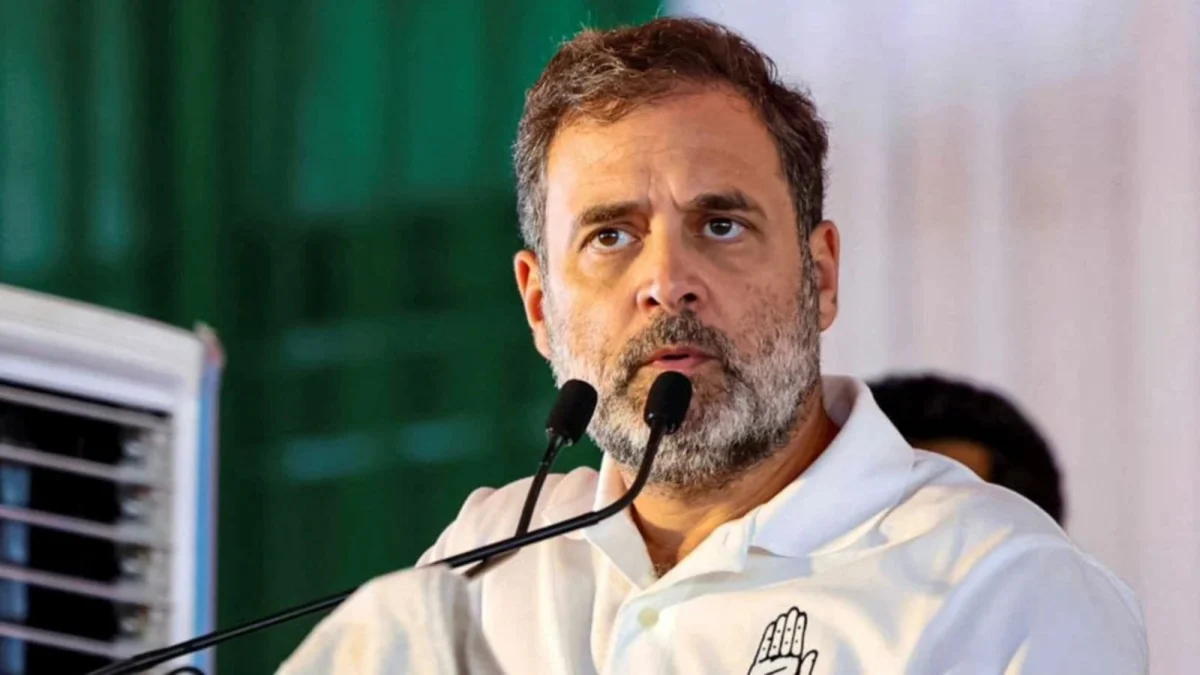
New Delhi, June 13, 2026 – Less than a week after the leadership of the INDIA (Indian National Developmental Inclusive Alliance) bloc convened with an expressed commitment to reinvigorate their formidable coalition, deep-seated fissures have dramatically resurfaced. The fragile unity, painstakingly assembled to challenge the incumbent Bharatiya Janata Party (BJP), appears to be under renewed strain following a scathing attack by the Communist Party of India (Marxist) [CPI(M)] on prominent Congress leader and Leader of the Opposition in the Lok Sabha, Rahul Gandhi. The CPI(M) has accused Gandhi of adopting a political approach that not only fails to strengthen the Opposition alliance but, perhaps inadvertently, often ends up bolstering the BJP’s narrative and electoral prospects.
This latest public spat, unfolding on Saturday, June 13, casts a long shadow over the future efficacy and cohesion of the INDIA bloc. It highlights the inherent contradictions and fierce regional rivalries that continue to plague the grand alliance, threatening to derail its overarching national objective of presenting a united front against the BJP. The CPI(M)’s criticism is not merely an isolated incident but the latest manifestation of a simmering discontent that came to a head during the bloc’s crucial June 8 meeting.
The Spark: A Week of Renewed Tensions
The recent developments are rooted in a series of events that began even before the high-stakes INDIA bloc summit. The very notion of "reinvigorating" the alliance, as proclaimed by its leaders, implicitly acknowledged the challenges and setbacks it had faced since its inception. However, the depth of internal dissent became glaringly apparent as the CPI(M), a pivotal constituent, voiced strong objections to the Congress’s conduct and, specifically, Rahul Gandhi’s actions.
Reinvigoration Hopes and Lingering Doubts
The June 8 meeting was ostensibly called to chart a new course for the INDIA bloc, to iron out differences, and to forge a more coherent strategy ahead of future electoral battles, including the crucial 2029 general elections. Leaders from various regional parties and the Congress gathered, projecting an image of renewed determination. Yet, behind the closed doors, discussions were far from harmonious, with several parties reportedly raising critical questions about the Congress’s operational style and leadership decisions. The public release of Rahul Gandhi’s address to the meeting by the Congress on Friday, June 12, was intended to project transparency and confidence, but it inadvertently triggered the very public confrontation it might have sought to avoid.
The Kerala Flashpoint: A Deep-Seated Rivalry
At the heart of the current dispute lies the perennial political rivalry between the Congress and the CPI(M) in Kerala. Days before the June 8 meeting, M A Baby, the CPI(M) General Secretary, had formally conveyed his party’s "strong displeasure" to Congress president Mallikarjun Kharge. This displeasure stemmed from what the CPI(M) perceived as unwarranted and aggressive attacks by Rahul Gandhi and other senior Congress national leaders on the then-Chief Minister and CPI(M) stalwart Pinarayi Vijayan during the recent Kerala Assembly elections.
The political landscape of Kerala has historically been dominated by two major coalitions: the Left Democratic Front (LDF), led by the CPI(M), and the United Democratic Front (UDF), led by the Congress. Elections in the state are fiercely contested, with both fronts viewing each other as primary adversaries. During the Assembly elections, Rahul Gandhi, a Member of Parliament from Wayanad in Kerala, had actively campaigned, often launching pointed criticisms against the Vijayan government and its policies. From the CPI(M)’s perspective, these attacks, coming from a leader of a purported national ally, were counterproductive and fundamentally undermined the spirit of the INDIA bloc, which seeks to unite against the BJP.
This contentious issue was not confined to private correspondence. CPI(M) leader John Brittas, a Rajya Sabha MP, brought the matter directly to the floor of the INDIA bloc meeting itself, highlighting the internal contradictions of an alliance where national partners are fierce state-level rivals. The CPI(M)’s argument was clear: how could an alliance function effectively if its key constituents were engaged in such bitter internecine warfare, particularly when the stated objective was to defeat a common national opponent?
Rahul Gandhi’s Address: A Call for Unity Amidst Criticism
The Congress’s decision to release the audio and text of Rahul Gandhi’s concluding address to the INDIA bloc meeting on Friday, June 12, was a significant move. It offered a rare glimpse into the internal dynamics of the alliance and Gandhi’s personal response to the criticisms leveled against the Congress. His speech was a carefully crafted blend of introspection, defense, and a renewed call for unity, framed within a distinct philosophical metaphor.
"Swallowing the Poison": Gandhi’s Metaphorical Response
According to the released text, Gandhi began his address by acknowledging the criticisms directed at the Congress party during the closed-door discussions. His response was notably conciliatory, drawing a powerful analogy from Hindu mythology. "It is not my place to answer any of the things that were said today about the Congress party. It is my place to – like in the Shaiva tradition – swallow everything. The idea of the blue-necked One (Shiva) who drinks all the poison. Whatever more you want to say, whatever criticism you have of me or the Congress party, we will accept it, and we will accept it happily, with a smile on our face."
This invocation of Shiva, the deity who consumed the Halahala poison to save the universe, was a profound statement. It positioned Gandhi, and by extension the Congress, as a magnanimous force willing to absorb all negativity for the greater good of the alliance. He further articulated this role: "We will try to make you happy, because our role is fundamentally different from yours. I do not say this with arrogance. Our role, as many of you have stated, is to unite all of you together with love and affection." This positioned the Congress as the glue of the alliance, emphasizing its historical role as a national party with a broad outreach, capable of bringing diverse regional entities together.
Defending the Congress and Drawing Lines
However, Gandhi’s conciliatory tone was tempered by a firm defense of the Congress’s position and its right to engage in regional political battles. He directly addressed the demand for absolute unity, particularly concerning the Kerala rivalry. "Get rid of the notion that we are not coordinated and do not act together. These are all ideas the BJP is putting out. This is not true. I am 100% sure, and I can vouch right now for the DMK. When it comes to defending the idea of India, every single person will be in this room. We have our fights, but if you are asking me to go and hug the ex-chief minister of Kerala. I cannot and I will not, because I have an ongoing political fight with him. So we have to be flexible and we have to realise that there is a full-scale assault on us, trying to prove that the Opposition is weak."
This segment of his speech was critical. It drew a clear distinction between the national imperative of defending "the idea of India" against the BJP and the realities of state-level electoral politics. Gandhi explicitly stated that while a national alliance was crucial, it did not necessitate abandoning legitimate political competition in states where Congress and other INDIA bloc parties were direct rivals. His mention of the DMK (Dravida Munnetra Kazhagam) and his confidence in their commitment to the alliance, despite recent reports of the Congress’s "decision to break up with the DMK following the Tamil Nadu elections," underscored the complexity of maintaining unity across diverse political landscapes. This "break up" or dispute with the DMK, another major constituent, was also reportedly raised at the closed-door meeting, indicating broader concerns about the Congress’s approach.
Dismissing BJP’s Narrative
Crucially, Gandhi also sought to delegitimize the narrative of disunity, attributing it to BJP propaganda. By framing internal disagreements as "ideas the BJP is putting out," he attempted to shift the focus from internal discord to an external threat, urging the alliance members not to fall prey to the ruling party’s divisive tactics. This was a direct appeal to the collective purpose of the INDIA bloc, urging members to look beyond their immediate grievances towards the larger national challenge.
CPI(M)’s Sharp Rebuttal: A Direct Challenge to Gandhi’s Stance
The CPI(M) leadership, however, was clearly unimpressed by Gandhi’s Shiva analogy and his defense of state-level rivalries. Their response on Saturday, June 13, was swift, direct, and exceptionally critical, signaling a deeper ideological and strategic divergence within the alliance.
Pinarayi Vijayan’s Counter-Narrative
Former Kerala Chief Minister Pinarayi Vijayan, the direct target of Gandhi’s electoral criticisms, wasted no time in hitting back. He ridiculed Gandhi’s "hugging" comment, turning it back on the Congress leader with biting sarcasm. "Hugging is not a common phenomenon in politics," Vijayan began, "It is rare for people to hug each other. When I and Rahul Gandhi meet, we generally greet each other or shake hands. But we all saw the photograph of Rahul Gandhi hugging Narendra Modi. I don’t have any problem with him hugging Modi. But, what he said (at the INDIA bloc meeting) was portraying it in a different way. It reflects Rahul Gandhi’s style of talking, how he sees the INDIA bloc."
Vijayan’s reference to Gandhi’s infamous embrace of Prime Minister Narendra Modi in Parliament several years ago was a calculated move. It aimed to expose what the CPI(M) perceived as hypocrisy, questioning Gandhi’s selective outrage over political "hugs" while downplaying his own gestures towards the very leader the INDIA bloc is united to oppose. More significantly, Vijayan directly attributed the alliance’s current precarious state to the Congress’s and specifically Rahul Gandhi’s approach. "The situation in which the INDIA bloc finds itself today, because of that situation, it is not only us, but Akhilesh Yadav, Tejashwi Yadav and other major non-Congress parties, they also spoke against the Congress position (at the meeting). We know where the DMK stands now. All this is because of the Congress’s approach and particularly because of Rahul Gandhi’s approach."
This statement was a crucial revelation, confirming that the CPI(M) was not alone in its criticism. It highlighted that other key regional players like the Samajwadi Party (SP) leader Akhilesh Yadav and Rashtriya Janata Dal (RJD) leader Tejashwi Yadav had also raised concerns about the Congress’s functioning at the closed-door meeting. Vijayan’s final accusation was perhaps the most damaging: "The reality is that this approach does not strengthen the INDIA alliance. It often ends up helping the BJP. Through such actions, Rahul Gandhi often ends up becoming an aid of the BJP." This charge moved beyond mere tactical disagreement to an accusation of inadvertently serving the opponent’s interests, a severe indictment within an anti-BJP alliance.
M.A. Baby’s Damning Accusation
Echoing Vijayan’s sentiments, CPI(M) chief M.A. Baby intensified the attack, delivering a more pointed and politically charged accusation against Rahul Gandhi. "Nobody is asking Rahul Gandhi to hug Pinarayi Vijayan. On the contrary, all that we are asking is that he stop being a facilitator for the ED and the Modi government by demanding the arrest of Pinarayi Vijayan and other Opposition leaders. That is not the job of the Leader of the Opposition," Baby asserted.
This statement introduced a new and graver dimension to the conflict. The charge of being a "facilitator for the ED and the Modi government" is a serious political accusation in India’s current climate. The Enforcement Directorate (ED) and other central investigative agencies have frequently been criticized by opposition parties for allegedly being used as tools by the ruling BJP to target and harass political adversaries. By accusing Gandhi of demanding the arrest of Pinarayi Vijayan and other opposition leaders, Baby implied that the Congress leader was effectively playing into the hands of the BJP, lending credence to politically motivated investigations against opposition figures. This suggests that the Congress’s campaign rhetoric in Kerala might have crossed a line, going beyond legitimate political criticism to actively calling for punitive action against a potential national ally, thereby aligning with the tactics often employed by the ruling party. This is a direct challenge to Gandhi’s role as Leader of the Opposition, a position traditionally expected to protect and unite opposition forces against government overreach.
Deeper Fault Lines: The Congress’s Style and Regional Dynamics
The recent public exchange underscores several deeper fault lines that threaten the very foundation of the INDIA bloc. These are not merely personality clashes but represent fundamental disagreements on strategy, leadership, and the delicate balance between national and regional political imperatives.
Beyond Kerala: Broader Concerns from SP, RJD, and DMK
The revelation by Pinarayi Vijayan that Akhilesh Yadav, Tejashwi Yadav, and other "major non-Congress parties" also spoke against the Congress’s position at the meeting indicates a wider discontent. While the specifics of their criticisms are not yet fully public, they likely revolve around issues of seat-sharing negotiations, the Congress’s perceived "big brother" attitude, and its inconsistent approach to alliances in different states. The mention of the DMK’s current stance, following reports of the Congress’s "decision to break up with the DMK following the Tamil Nadu elections," further highlights the Congress’s struggles in maintaining strong, consistent relationships with regional allies. Such internal disputes, particularly in states where regional parties are dominant, provide fertile ground for the BJP to exploit divisions and portray the opposition as disunited and unreliable.
The National vs. State Conundrum
Rahul Gandhi’s assertion that he "cannot and will not" hug Pinarayi Vijayan due to an "ongoing political fight" perfectly encapsulates the core dilemma of the INDIA bloc. The alliance aims to fight the BJP nationally, necessitating unity among diverse parties. However, in many states, these very parties are direct competitors, locked in fierce electoral battles. The Congress, with its national ambitions, often finds itself in opposition to regional parties that are also part of the INDIA bloc, leading to unavoidable friction.
This conundrum makes it exceedingly difficult to formulate a cohesive national strategy. Should national unity against the BJP override state-level political competition? Or should regional political realities dictate the extent of national cooperation? The CPI(M)’s position is that national unity should take precedence, especially in rhetoric, while the Congress seems to argue for a more flexible approach where state-level rivalries can coexist with national cooperation. This fundamental difference in philosophy poses a significant hurdle to any genuine, long-term collaboration.
Leadership Styles Under Scrutiny
The exchange also puts Rahul Gandhi’s leadership style under intense scrutiny. His "swallow the poison" approach, while perhaps intended to convey magnanimity and a willingness to absorb criticism, was clearly not well-received by the CPI(M). They perceived it as an evasion rather than a genuine acknowledgment of their concerns. His attempt to unite "with love and affection" clashes with the CPI(M)’s more pragmatic and often confrontational political realities. The CPI(M)’s counter-attack suggests that they expect a more robust and strategically aligned leadership from the Congress, one that prioritizes alliance cohesion over perceived individual or party interests in state elections, particularly when those interests might inadvertently aid the BJP.
Implications for the INDIA Bloc’s Future
The latest eruption of internal discord carries significant implications for the future trajectory and effectiveness of the INDIA bloc, especially as the 2029 general elections loom on the horizon.
A Test of Resilience and Cohesion
This public spat is a severe test of the INDIA bloc’s resilience and its ability to manage internal contradictions. For the alliance to be a credible alternative to the BJP, it must project an image of unity and purpose. Such open disagreements, particularly involving key leaders and major constituents, undermine public confidence and reinforce the BJP’s narrative that the opposition is fragmented and incapable of governing. The challenge now is not just to defeat the BJP but to demonstrate that the alliance itself is robust enough to withstand its own internal pressures.
The BJP’s Advantage
Every public display of disunity within the INDIA bloc is a strategic gift to the BJP. The ruling party consistently highlights the disparate ideologies and conflicting ambitions of the opposition parties, arguing that they lack a common vision beyond opposing Prime Minister Modi. The CPI(M)’s accusation that Rahul Gandhi’s actions "often ends up helping the BJP" directly plays into this narrative, providing ammunition for the ruling party to further discredit the alliance. This internal strife allows the BJP to divert attention from its own challenges and focus on the perceived weaknesses of its opponents.
Road to 2029: A Rocky Path?
The path to the 2029 general elections, and indeed any upcoming state elections, appears increasingly rocky for the INDIA bloc. Effective seat-sharing arrangements, which are crucial for maximizing electoral impact against the BJP, become exceedingly difficult when such deep-seated distrust and public animosity exist. If constituent parties cannot agree on a basic framework for mutual support, or at least mutual non-aggression, in contested regions, the alliance risks fracturing or becoming merely a symbolic entity. The ability to conduct joint campaigns, issue common manifestos, and present a united leadership will be severely hampered if these fundamental issues are not resolved.
Redefining Opposition Unity
This episode forces a critical re-evaluation of what "opposition unity" truly means in India’s diverse and often fragmented political landscape. Is it merely an electoral arrangement to pool votes, or does it require a deeper ideological convergence and a willingness to subordinate regional interests for a national cause? The INDIA bloc’s success hinges on its ability to strike a delicate balance: respecting regional autonomies and political battles while maintaining a cohesive front against a powerful incumbent. This latest conflict suggests that such a balance remains elusive, requiring more than just rhetoric to achieve.
Conclusion: A Precarious Balance
The fresh attack by the CPI(M) on Rahul Gandhi, coming just days after a summit aimed at rejuvenating the INDIA bloc, underscores the precarious balance on which the alliance operates. While Gandhi attempted to present a unifying front, drawing on metaphors of sacrifice and collective purpose, the CPI(M)’s scathing rebuttal exposed the raw nerve of inter-party rivalry and strategic disagreement. The accusations of inadvertently aiding the BJP and facilitating central agencies are not just criticisms but fundamental challenges to the Congress’s leadership and strategic direction within the alliance.
As the INDIA bloc navigates these treacherous internal waters, its ability to project a credible and united alternative to the BJP will be severely tested. The coming months will reveal whether the alliance can transcend these deep-seated contradictions and forge a truly cohesive front, or if these cracks will widen, ultimately jeopardizing its ambitious national aspirations. The future of opposition politics in India hangs in this delicate, often turbulent, balance.
