

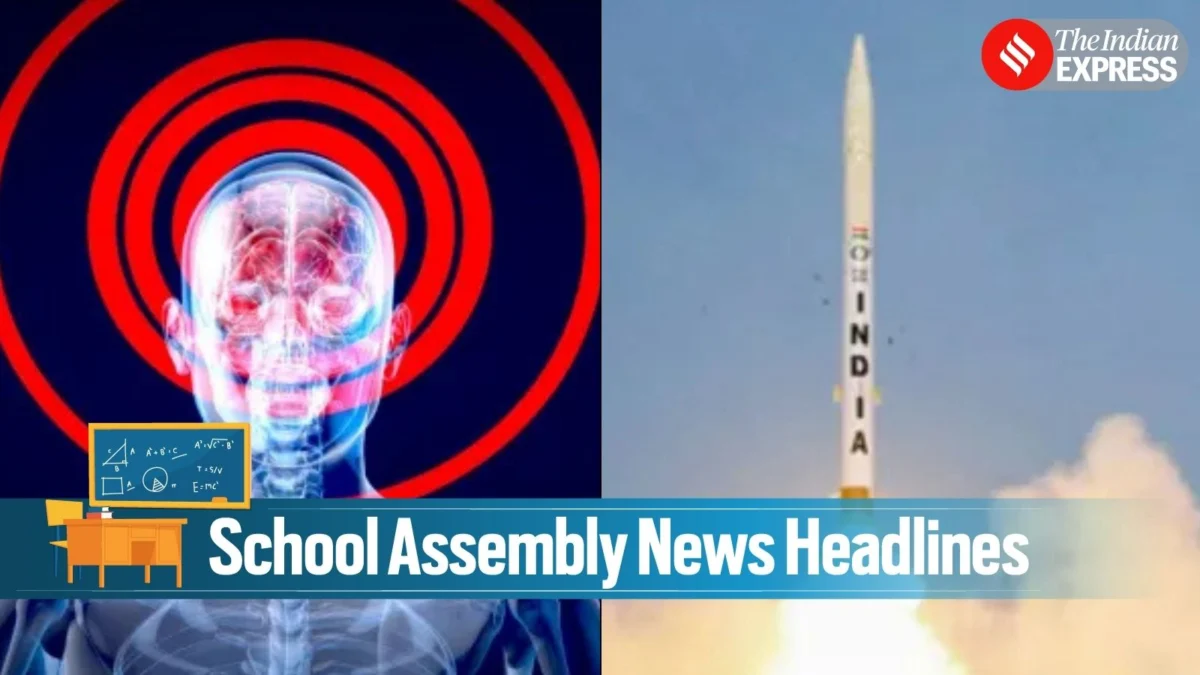
New Delhi, June 14, 2026: As students prepare to gather for their morning assemblies across the nation, a diverse range of significant events from the past 24 hours are set to dominate the headlines. From pressing public health concerns to groundbreaking defense advancements, and from complex international diplomacy to the latest in the sporting and business arenas, this briefing encapsulates the key news stories that will shape discussions and understanding for young minds on June 15, 2026.
The day’s significant developments include a concerning uptick in "brain-eating amoeba" cases in Kerala, prompting heightened vigilance from health authorities. Simultaneously, the Defence Research and Development Organisation (DRDO) has achieved a major milestone with the successful demonstration of India’s advanced ballistic missile defence capability, a testament to the nation’s growing strategic prowess. On the global stage, a draft Iran-US nuclear agreement has emerged, signaling a potential thaw in long-standing tensions, while the world awaits further details on the funeral arrangements for Iran’s late Supreme Leader, Ali Khamenei. In the realm of sports, key Indian cricketers are being highlighted for their crucial roles in the upcoming Women’s T20 World Cup, and Brazil’s national football team is reportedly undergoing a period of introspection after a recent draw. Closer to home, economic indicators reveal a rise in India’s retail inflation, influenced by global supply chain disruptions, while a prominent IT major announces a strategic partnership to bolster AI adoption. In education, new mandates regarding Sanskrit language instruction in Kendriya Vidyalayas and admissions opening for foreign language courses at Delhi University further underscore the diverse landscape of national developments.
This comprehensive overview aims to provide students with a well-rounded perspective on the events shaping their world, fostering informed awareness and critical thinking.
National Landscape: Health Concerns and Defense Milestones
H2: Kerala Grapples with Rising "Brain-Eating Amoeba" Infections
The Growing Threat:
Health authorities in the southern Indian state of Kerala are currently monitoring a notable increase in infections caused by Naegleria fowleri, commonly known as the "brain-eating amoeba." This single-celled organism, prevalent in warm freshwater bodies, can cause a rare but devastating primary amoebic meningoencephalitis (PAM), a rapidly fatal infection of the brain. While the exact number of cases is still being collated, preliminary reports indicate a concerning rise, prompting immediate public health advisories and intensified surveillance.
Expert Analysis and Contributing Factors:
Medical experts are attributing the surge in cases to a confluence of factors, primarily linked to the prevailing tropical climate conditions and concerns over water quality management. Prolonged periods of high temperatures, characteristic of Kerala’s climate, create an ideal breeding ground for Naegleria fowleri in stagnant or slow-moving freshwater bodies such as ponds, lakes, and rivers. Furthermore, inadequate sanitation practices and potential contamination of water sources are suspected to be significant contributors, increasing the risk of exposure. The amoeba typically enters the body through the nose when individuals engage in water-related activities like swimming or diving in infected water. Once inside, it travels to the brain, causing severe inflammation and destruction of brain tissue.
Public Health Response and Advisory:
In response to the escalating situation, the Kerala Health Department has intensified its public awareness campaigns, urging citizens to exercise extreme caution, particularly when engaging in recreational activities in freshwater bodies. Advisories emphasize the importance of using chlorinated or properly treated water for nasal irrigation and avoiding swimming in untreated water sources, especially during warmer months. Health officials are also collaborating with local authorities to monitor water quality in identified high-risk areas and are implementing enhanced diagnostic and treatment protocols for suspected cases. The focus remains on early detection and prompt medical intervention, though the prognosis for PAM remains grim.
H3: DRDO Achieves Landmark Success in Ballistic Missile Defence
A New Era for Indian Defense Preparedness:
In a significant stride towards bolstering national security, the Defence Research and Development Organisation (DRDO) has successfully demonstrated India’s indigenous ballistic missile defence (BMD) capability. This monumental achievement marks a pivotal moment in the country’s pursuit of self-reliance in advanced defense technologies and significantly enhances its ability to counter aerial threats. The successful interception of an incoming ballistic missile in a controlled test signifies the maturity and effectiveness of India’s multi-layered BMD system.
Technological Prowess on Display:
The demonstration showcased the sophisticated integration of various indigenous technologies, including advanced radar systems for early warning and tracking, sophisticated command and control networks, and high-speed interceptor missiles designed to neutralize incoming threats. The success of this test validates years of dedicated research, development, and rigorous testing by DRDO scientists and engineers. It underscores India’s growing capacity to develop and deploy cutting-edge defense mechanisms, capable of safeguarding its airspace against sophisticated ballistic missile attacks.
Implications for Regional Security:
The successful deployment of a robust BMD system has profound implications for India’s strategic posture and regional security dynamics. It significantly deters potential adversaries by raising the threshold for any aggressive military action involving ballistic missiles. This capability reinforces India’s commitment to maintaining peace and stability in the region while assuring its ability to protect its sovereignty and territorial integrity. The development is also expected to spur further innovation in India’s defense sector, potentially leading to export opportunities for its advanced technologies in the future. This achievement solidifies India’s position as a responsible nuclear power with a credible defense shield.
Global Affairs: Diplomatic Maneuvers and International Mourning
H2: Draft Iran-US Nuclear Agreement Signals Potential Diplomatic Breakthrough
A Fragile Path Towards De-escalation:
Reports have emerged indicating that Iran has agreed, in principle, to a draft peace deal with the United States, which includes a commitment not to develop or acquire nuclear weapons. This development, if finalized, could represent a significant diplomatic breakthrough after years of strained relations and escalating tensions between the two nations. The specifics of the proposed agreement are still under wraps, but the mere prospect of a consensus on Iran’s nuclear program has sent ripples of cautious optimism through the international community.
Navigating Complex Negotiations:
The ongoing negotiations, shrouded in secrecy, have likely been arduous, involving intricate discussions on a range of sensitive issues. The reported Iranian agreement to forgo nuclear weapons development is a critical concession that has been a central demand from the US and its allies. Details regarding the extent of international oversight, sanctions relief, and verification mechanisms will be crucial in determining the long-term viability and effectiveness of any such accord. The Strait of Hormuz, a vital waterway for global oil transport and a frequent point of contention, is also reportedly a key element of the discussions, suggesting a broader scope for peace and stability in the region.
Potential Ramifications and Global Impact:
The successful conclusion of such an agreement could have far-reaching implications. It could lead to a significant de-escalation of tensions in the Middle East, potentially easing concerns about nuclear proliferation and regional conflicts. For Iran, it could mean a lifting of crippling economic sanctions, paving the way for renewed engagement with the global economy. For the United States and its allies, it offers a path to a more predictable and less volatile geopolitical landscape. However, skepticism remains, and the successful implementation of any agreement will depend on sustained political will and adherence to its terms by all parties involved. The international community will be closely watching the next steps in this delicate diplomatic dance.
H3: World Awaits Details on Funeral Arrangements for Iran’s Late Supreme Leader
A Nation in Mourning, the World in Observation:
Following the recent passing of Iran’s Supreme Leader, Ali Khamenei, Iranian authorities have officially announced the schedule for his funeral and burial. This significant event is expected to draw immense crowds from across the nation and will undoubtedly attract considerable international attention. The transition of leadership in Iran, a pivotal player in regional and global politics, is a moment of considerable consequence, and the ceremonies surrounding it will be closely scrutinized for insights into the country’s future direction.
Symbolism and Anticipated Attendance:
The announcement of the funeral and burial arrangements, typically a somber and deeply symbolic affair in Iranian culture, will signal the official end of an era. The scale of the public ceremonies, the dignitaries in attendance, and the pronouncements made during this period will offer crucial indicators of the internal political dynamics and the potential contenders for the succession. Given Khamenei’s long tenure and profound influence, the process of selecting a successor is expected to be a complex and closely watched event, both domestically and internationally.
Implications for Geopolitical Stability:
The period following the funeral will be critical for understanding the future trajectory of Iran’s domestic and foreign policy. Any shifts in leadership could have significant ramifications for regional alliances, international relations, and ongoing geopolitical negotiations, including the aforementioned potential nuclear agreement. The world will be observing closely for any signs of continuity or change in Iran’s approach to its relationships with its neighbors and global powers. The outpouring of grief and the subsequent political maneuvers will be a significant story to follow in the coming weeks.
Sports Arena: Cricket Stars and Football’s Reassessment
H2: Indian Cricketers Poised for Impact in Women’s T20 World Cup
A Trio of Talent Leading the Charge:
As the Women’s T20 World Cup approaches, Indian cricket fans are looking with anticipation towards the pivotal roles expected to be played by star players Deepti Sharma, Shafali Verma, and Richa Ghosh. These athletes have consistently demonstrated exceptional skill, resilience, and match-winning capabilities, making them cornerstones of India’s campaign for the coveted title. Their recent performances in domestic and international circuits have solidified their positions as key assets for the Indian squad.
Sharma’s All-Round Prowess:
Deepti Sharma, renowned for her economical bowling and crucial lower-order batting contributions, brings invaluable experience and tactical acumen to the team. Her ability to perform under pressure and her knack for picking up crucial wickets make her an indispensable asset in the T20 format.
Verma’s Explosive Opening:
Shafali Verma, the dynamic young opener, has already established herself as one of the most feared batters in women’s T20 cricket. Her aggressive stroke play and fearless approach at the top of the order have the potential to set the tone for India’s innings and put opposition bowlers on the back foot from the outset.
Ghosh’s Wicketkeeping and Finishing Skills:
Richa Ghosh, a talented wicketkeeper-batter, offers a potent combination of solid glovework and explosive hitting in the middle order. Her ability to accelerate the scoring rate and finish innings strongly provides crucial depth and flexibility to the Indian batting lineup.
Hopes Pinned on Their Performance:
The collective experience and individual brilliance of these three players are expected to be instrumental in India’s quest for T20 World Cup glory. Their form and performance in the tournament will be closely watched, as they carry the hopes of a nation eager to see the Women in Blue lift the trophy.
H3: Brazil’s Football Team Undergoing Scrutiny After Draw
An Honest Assessment Following Morocco Stalemate:
Following a hard-fought 1-1 draw against the Morocco national football team, Brazil’s head coach, Carlo Ancelotti, has openly acknowledged that the Seleção did not perform to their full potential. The Italian tactician, known for his astute tactical insights, admitted that the team requires significant improvement ahead of their upcoming international fixtures. The draw, while not a defeat, has highlighted areas of concern for the five-time World Cup champions.
Analyzing the Performance:
The match against Morocco, often a resilient and tactically disciplined opponent, provided a stern test for the Brazilian squad. While the team showcased moments of individual brilliance, the overall cohesion and attacking fluidity that have characterized Brazil’s legendary footballing history appeared to be somewhat lacking. The inability to convert chances and maintain consistent pressure on the opposition are likely areas that Ancelotti and his coaching staff will be focusing on during their training sessions.
Looking Ahead: A Call for Improvement:
Ancelotti’s candid assessment signals a commitment to rigorous self-evaluation and a proactive approach to addressing the team’s shortcomings. The upcoming period will be crucial for the Brazilian team to regroup, refine their strategies, and implement necessary adjustments. The focus will undoubtedly be on enhancing their offensive capabilities, strengthening their defensive organization, and fostering a greater sense of collective performance. As Brazil continues its journey through international competitions, the lessons learned from this draw will be vital in their pursuit of success and the upholding of their esteemed footballing legacy.
Economic Pulse: Inflationary Pressures and Tech Advancements
H2: India’s Retail Inflation Rises to 3.93% in May Amidst West Asia Conflict Fallout
Consumer Prices Feel the Pinch:
India’s retail inflation, as measured by the Consumer Price Index (CPI), has witnessed an uptick, rising to 3.93% in May 2026. This increase, while still within the Reserve Bank of India’s target range, signals a renewed pressure on household budgets. The primary driver behind this surge is attributed to the inflationary impact of the ongoing conflict in West Asia, which has disrupted global supply chains and led to increased costs for essential commodities.
Global Geopolitics’ Domestic Impact:
The West Asia conflict has had a ripple effect across global markets, particularly impacting energy prices and shipping costs. These elevated costs are now being passed on to consumers in India, affecting the prices of a wide array of goods, from fuel and transportation to manufactured products. The government and the Reserve Bank of India will be closely monitoring this trend to ensure it does not derail economic recovery or disproportionately burden vulnerable sections of the population.
Economic Outlook and Policy Considerations:
While the inflation rate remains manageable, the upward trend warrants attention. Policymakers will need to balance the need to control inflation with the imperative of supporting economic growth. Potential measures could include monitoring global commodity prices, exploring alternative sourcing for critical imports, and ensuring efficient domestic distribution channels. The government’s proactive approach in mitigating the impact of external shocks will be crucial in maintaining economic stability and consumer confidence.
H3: TCS Partners with Anthropic to Accelerate AI Adoption
A Strategic Alliance for the Future of AI:
In a significant move to bolster its artificial intelligence capabilities, IT services giant Tata Consultancy Services (TCS) has announced a strategic partnership with Anthropic, a leading AI safety and research company. This collaboration is poised to accelerate the adoption of cutting-edge AI solutions across various industries, empowering businesses and enterprises with advanced technological tools. The partnership underscores the growing importance of artificial intelligence in driving innovation and efficiency in the contemporary business landscape.
Leveraging Generative AI for Business Transformation:
The collaboration is expected to focus on developing and deploying AI-based solutions that leverage Anthropic’s advanced generative AI models. These models have the potential to revolutionize tasks ranging from content creation and customer service to complex data analysis and software development. By integrating Anthropic’s expertise with TCS’s extensive industry knowledge and global delivery capabilities, the partnership aims to create transformative solutions that address the evolving needs of clients.
Expanding AI Horizons for Enterprises:
TCS, a frontrunner in digital transformation services, recognizes the immense potential of AI to reshape business operations. This partnership with Anthropic signifies a commitment to staying at the forefront of AI innovation, offering clients access to state-of-the-art AI technologies and expertise. The focus on AI adoption will not only enhance operational efficiencies but also unlock new avenues for growth and competitive advantage for businesses seeking to harness the power of artificial intelligence. This move by TCS signals a strong belief in the transformative power of AI for the future of business.
Educational Milestones: Language Mandates and New Course Offerings
H2: Kendriya Vidyalayas Mandate Sanskrit for Middle School Grades
Strengthening Linguistic Heritage:
The Kendriya Vidyalaya Sangathan (KVS), a prominent network of central government schools across India, has issued a significant directive mandating the inclusion of at least one Sanskrit subject section for students in Classes 6 to 9. This decision, effective from the upcoming academic year, is part of a broader initiative aimed at reinforcing language learning and promoting the study of India’s rich linguistic heritage.
Rationale Behind the Mandate:
Educationists and policymakers believe that introducing Sanskrit at an earlier stage can foster a deeper appreciation for classical languages, contribute to cognitive development, and provide students with a foundational understanding of many modern Indian languages. The KVS, in its official communication, emphasized that this move is intended to strengthen the overall educational curriculum and provide students with a broader spectrum of linguistic knowledge. While the mandate focuses on offering a dedicated section, the ultimate choice of opting for Sanskrit will still lie with the students and their parents.
Implementation and Student Reception:
The implementation of this mandate will require careful planning by KVS schools to ensure the availability of qualified Sanskrit teachers and adequate teaching resources. The Sangathan has indicated that it will provide necessary support and guidelines to facilitate this transition. The student community’s reception to this directive is anticipated to be varied, with some likely to embrace the opportunity to learn a classical language, while others may perceive it as an additional academic burden. Nevertheless, the KVS move highlights a growing emphasis on preserving and promoting traditional languages within the Indian education system.
H3: Delhi University’s Campus of Open Learning Opens Admissions for Foreign Languages and Professional Programs
Expanding Access to Global Skills:
The Campus of Open Learning (COL) under the University of Delhi has officially commenced its admission process for the new academic session, offering a diverse array of foreign language courses and professional programs. This initiative aims to provide aspiring students with opportunities to acquire specialized skills and global competencies, thereby enhancing their career prospects in an increasingly interconnected world.
A Spectrum of Language and Professional Development:
The foreign language courses on offer are expected to cover popular languages such as French, German, Spanish, and Mandarin, among others. These programs are designed to equip students with proficiency in communication, cultural understanding, and practical application of the chosen language. Complementing these linguistic offerings, the COL will also be admitting students to various professional programs, which could range from business management and journalism to digital marketing and event management, catering to a wide spectrum of career aspirations.
Empowering Students for a Globalized Future:
The opening of admissions by the Campus of Open Learning signifies Delhi University’s commitment to providing accessible and relevant educational opportunities. By focusing on foreign languages and professional programs, the COL is actively contributing to the development of a skilled workforce equipped to navigate the complexities of the globalized job market. This initiative empowers students with the knowledge and expertise needed to thrive in diverse professional environments and fosters cross-cultural understanding, a critical asset in today’s world.
