

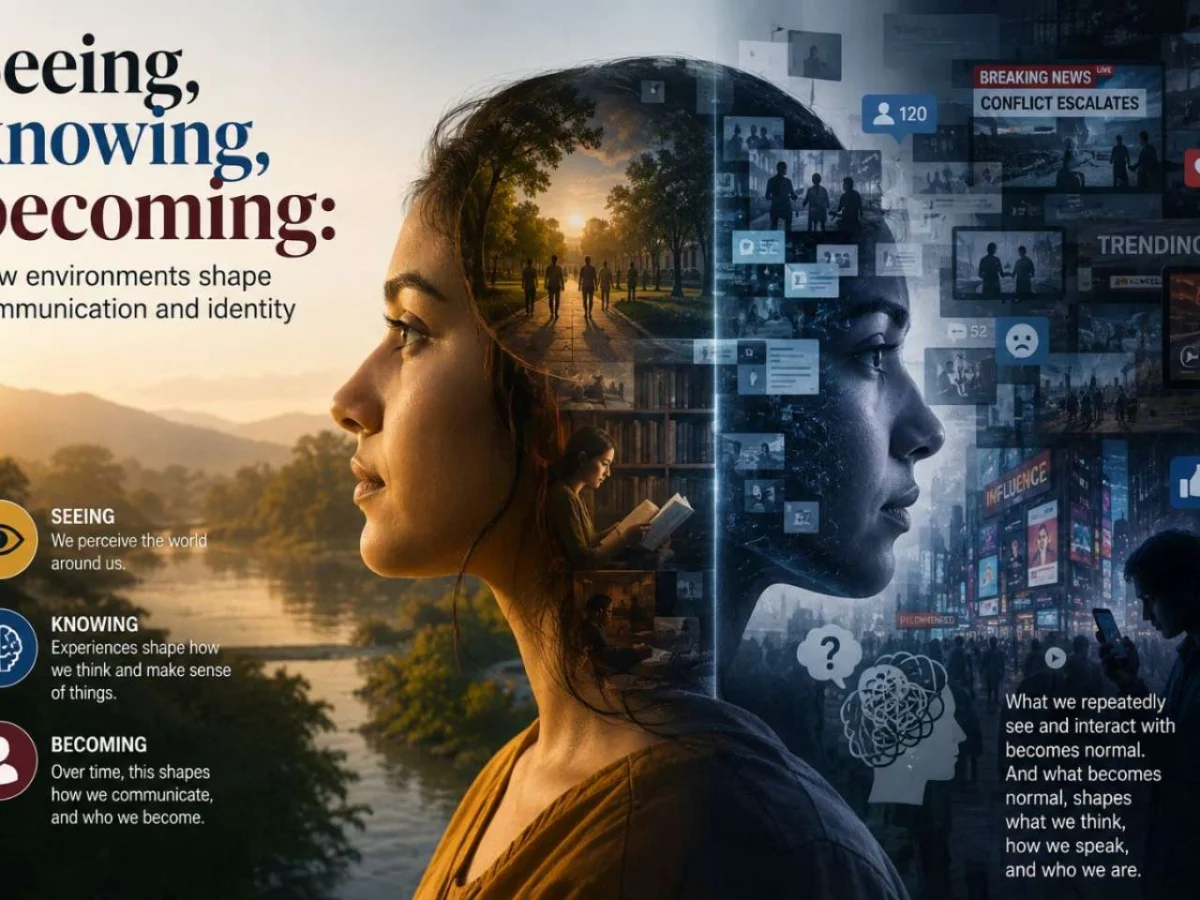
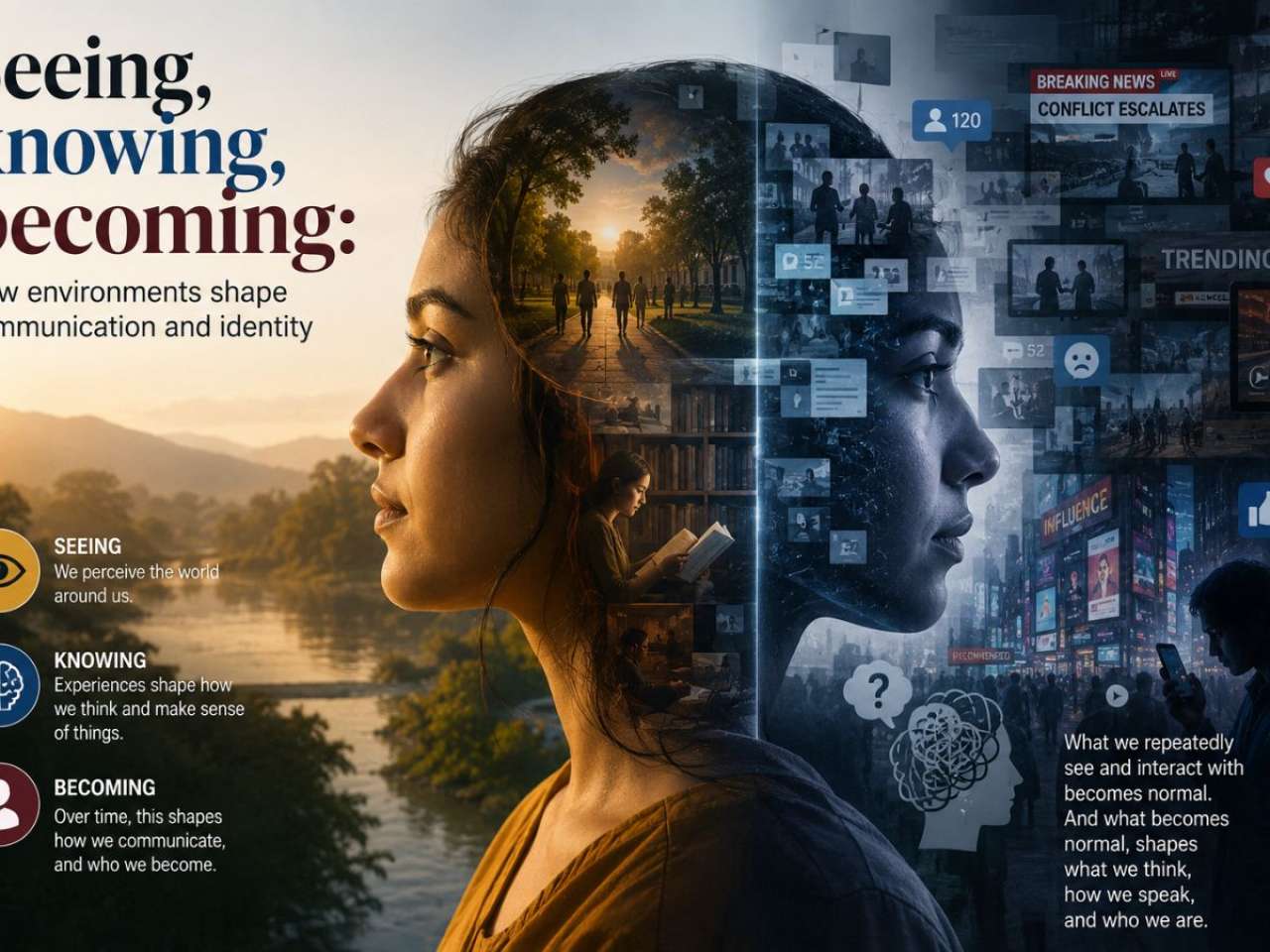
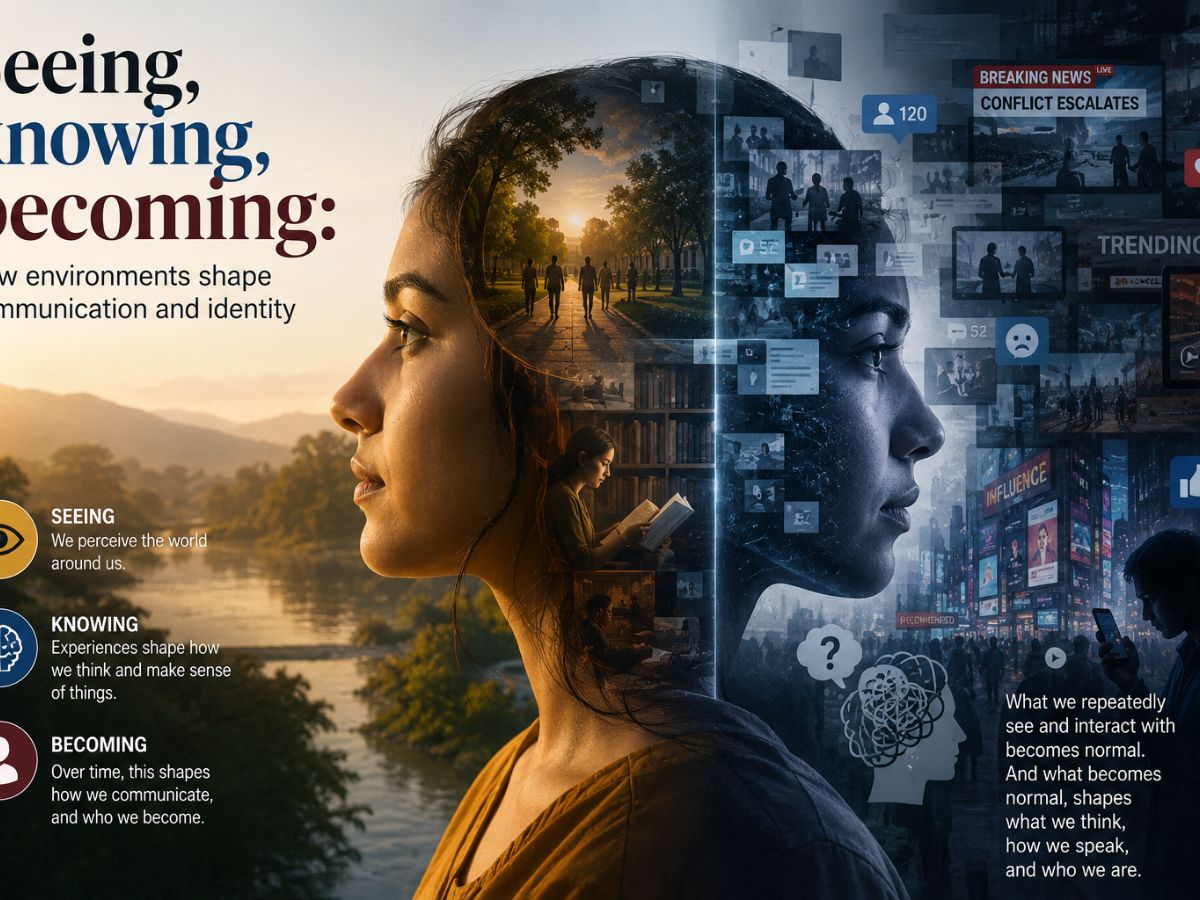
New Delhi, India – June 3, 2026 – In an era defined by an incessant deluge of information and interconnectedness, the very fabric of our communication and sense of self is being subtly, yet profoundly, reshaped. Far from being purely internal constructs, our identities and the way we articulate them are deeply molded by the constant visual, auditory, and experiential inputs that bombard us daily. This profound interplay between environment and individual, a concept recognized in ancient philosophical traditions, has taken on unprecedented urgency in our media-saturated world. The constant exposure, often curated and algorithmically driven, acts as an unseen architect, meticulously shaping our perceptions, our reasoning, and ultimately, who we become.
The Foundation: Ancient Wisdom in a Modern World
The notion that our external environments are potent forces in shaping our internal landscapes is not a modern revelation. Ancient philosophical schools, notably in India, grappled with this very concept. The Nyaya Sutra, a seminal text on logic and epistemology, posits perception (pratyaksha) as the primary gateway to knowledge. It asserts that valid knowledge originates from the direct contact between our senses and the external world. What we see, hear, and experience forms the bedrock upon which we build our inferences, judgments, and entire frameworks of reasoning. This sequential understanding – stimulus precedes cognition, and cognition informs articulation – highlights a fundamental truth: our initial encounters with the world lay the groundwork for all subsequent understanding and expression.
)
Further expanding on this, the Yoga Sutra delves into the realm of mental formation, describing the mind as a tapestry woven from vrittis, or mental fluctuations. These fluctuations, as articulated in the foundational verse "yogahchittavrittinirodhah" (Yoga Sutra 1.2), are not spontaneous but arise from impressions formed through sensory engagement and lived experiences. Over time, the relentless repetition of these sensory inputs etches deeper imprints, known as samskaras. These samskaras are not mere memories; they are the ingrained tendencies, preferences, and habitual patterns of response that coalesce to form our individual identities. This perspective fundamentally challenges the idea of a fixed, self-originating identity, presenting it instead as a cumulative construct, an accumulated echo of our environmental encounters.

The Digital Deluge: Amplifying the Environmental Influence
While the philosophical underpinnings are ancient, the contemporary media environment has amplified this influence to an unprecedented degree. We are no longer passive recipients of limited, localized experiences. Instead, we are immersed in a hyper-stimulated ecosystem of digital platforms, social media feeds, algorithmically curated content, and an unending stream of information. This environment is anything but neutral. It actively, and often implicitly, privileges certain forms of expression, amplifies specific linguistic patterns, and normalizes particular ways of interpreting and framing the world.
)
The consequences of this constant, curated exposure are far-reaching. Repeated immersion in these digital landscapes shapes not only how we communicate but also how we perceive ourselves. A striking example is the increasing standardization of language across various platforms. Words, phrases, and even entire stylistic nuances circulate with remarkable speed, rapidly acquiring shared meanings and serving as powerful markers of belonging and social cohesion. What might begin as a descriptive term or a fleeting trend can, through sheer repetition and widespread adoption, evolve into a fundamental aspect of self-definition. Terms that once denoted a preference or a specific activity now frequently function as core elements of personal identity.
)
This linguistic shift is not accidental. It is a direct reflection of the pervasive influence of repeated exposure to particular linguistic paradigms. These patterns, encountered consistently, begin to feel natural, expected, and even essential for meaningful participation within these digital spheres. The subtle power of repetition, as underscored by the Yoga Sutra’s concept of samskaras, transforms fleeting trends into ingrained linguistic habits.
)
The Narrowing Lens: How Exposure Shapes Thought and Opinion
The influence of our environment extends beyond language to the very formation of our opinions and worldviews. Exposure to a limited spectrum of perspectives can foster an illusory sense of consensus, making it appear as though a particular viewpoint is universally accepted. Conversely, continuous engagement with specific narratives can powerfully shape what individuals deem credible, legitimate, or even true.
)
The Nyaya Sutra’s emphasis on perception as the initial point of knowledge becomes particularly relevant here. If the scope of what we are exposed to—what we "perceive"—narrows, then the very capacity for reasoned thought and diverse argumentation also contracts. Our thinking, in essence, follows the path of our exposure. When the information landscape is dominated by a particular set of voices or a singular framing of issues, the mental space for alternative interpretations or critical dissent can shrink considerably.
)
The Yoga Sutra’s insights into the deepening impact of repetition further illuminate this phenomenon. A single exposure might offer information, but sustained exposure fundamentally forms. Over time, the patterns of interaction and information consumption leave behind cognitive and emotional residues that subtly influence our behavior, our judgments, and our emotional responses. Preferences that may have originated from external conditioning can begin to feel intrinsic and deeply personal, even when they are the direct result of accumulated environmental input. Similarly, our identities can appear remarkably stable and self-defined, masking the ongoing, often unconscious, process of their continuous formation.
)
Implications for Institutions: Designing Environments for Informed Minds
This intricate relationship between environment, cognition, and expression carries profound implications for institutions, particularly those involved in education and communication. If our thoughts and our ways of communicating are indeed shaped by the environments in which we are immersed, then the deliberate design and curation of these environments become critically important. What information is made visible, what ideas are emphasized, and what narratives are repeatedly reinforced will inevitably influence not only what individuals know but also how they think and how they articulate those thoughts.
)
Higher education institutions, for example, often prioritize content delivery and the development of specific skills. However, the communicative environment within which this learning takes place frequently receives less focused attention. Yet, if exposure is a key driver of cognition, then the quality of discourse, the diversity of perspectives encountered, and the nature of intellectual engagement become central to the effectiveness of the educational process. Fostering an environment that encourages critical inquiry, exposure to a multiplicity of viewpoints, and nuanced dialogue is as crucial as delivering the curriculum itself.
)
The same principles apply with equal force to the media and public communication spheres. The increasing compression of complex information into short, easily digestible formats, while potentially enhancing accessibility, carries the inherent risk of reducing nuance and oversimplifying multifaceted issues. When our exposure is limited to these simplified representations, our capacity for deep, critical, and nuanced thought can diminish. Communication might become more efficient, but it may also become less substantive, less capable of capturing the full complexity of the human experience and the world around us.
)
Navigating the Unseen: Towards Conscious Environmental Design
The challenge before us is not to eradicate external influence entirely—an impossible and perhaps even undesirable goal. Instead, the imperative lies in cultivating a profound awareness of this influence. It is about recognizing that what we repeatedly see will inevitably shape what we think, and what we think will, in turn, shape what we say. In a contemporary context where our environments are increasingly mediated, curated, and algorithmically shaped, this awareness is not merely beneficial; it is essential for intellectual autonomy and the development of robust, authentic identities.
)
Communication and identity do not spring forth from a vacuum. They are dynamically formed at the complex intersection of exposure, interpretation, and repetition. The fundamental question is not if we are influenced by what surrounds us, but rather whether we are attentive to the mechanisms of that influence and whether we are proactive in shaping the very environments that, in turn, shape us. By understanding the profound power of our surroundings, we can begin to foster environments that encourage critical thinking, diverse perspectives, and the cultivation of well-rounded, informed, and authentically expressed selves. This conscious engagement with our environmental architects is the key to navigating the complexities of the modern world and forging a more resilient and thoughtful future.
