

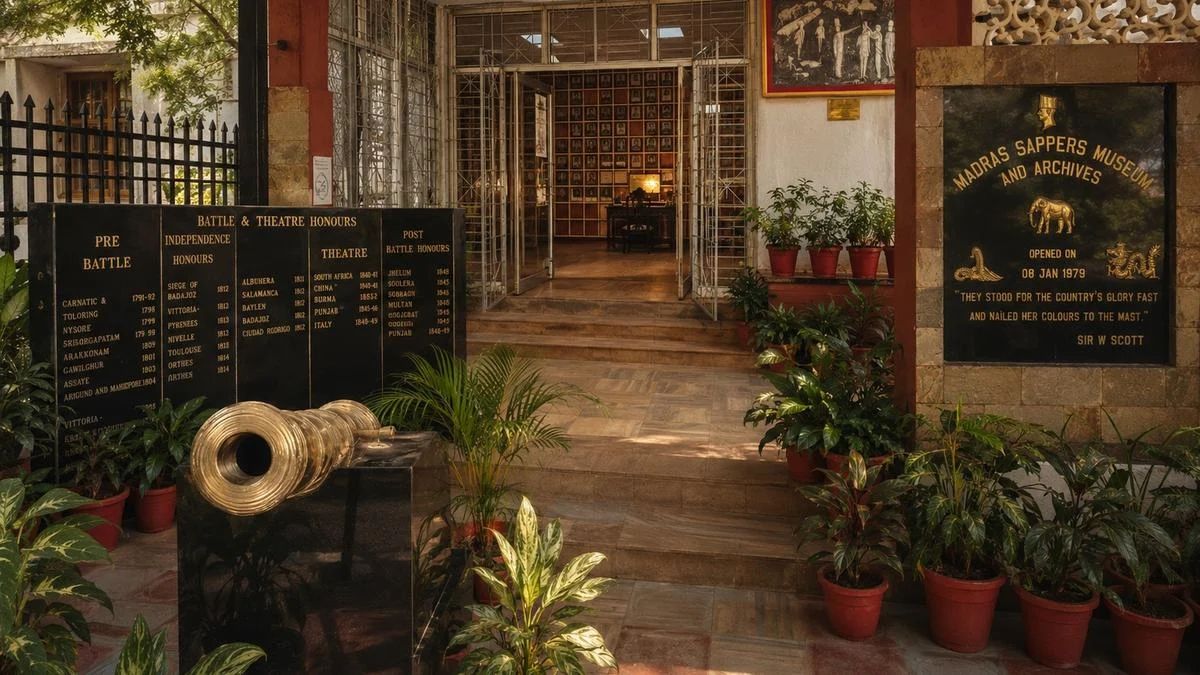
Bengaluru, India – [Current Date] – For generations, the history of the Madras Sappers, a regiment woven into the very fabric of Indian military engineering since 1780, remained largely within the confines of military archives. However, a significant shift is underway, as the Madras Sappers Museum and Archives (MSMA) in Bengaluru throws open its doors to the public, promising a profound journey through over two centuries of valor, innovation, and sacrifice. This transformation, spearheaded by a renewed vision and a commitment to public engagement, aims to bridge the gap between the regiment’s storied past and the aspirations of the younger generation.
The impetus for this grand unveiling is not solely driven by institutional directives. It is deeply rooted in personal narratives, like that of Kayal Kanni. Two years ago, driven by a poignant desire to connect with her heritage, Kayal, the granddaughter of Sapper Marimuthu, embarked on a visit to the MSMA. Her mission was deeply personal: to understand the circumstances of her grandfather’s passing. Marimuthu, a soldier of the Madras Sappers, had fought in the Second World War, a conflict that tragically claimed his life in Singapore.
The Echoes of Sacrifice: A Personal Quest for History
Kayal’s mother, Maheshwari, was barely a year old when her father left for the war. She was only two when the news of his death reached their neighboring village, long after the war’s end. The family learned of Marimuthu’s fate through a fellow prisoner of war who had returned home. This fragmented history fueled Kayal’s initial journey to Singapore, a quest to locate her grandfather’s burial site. "We found only Christian and Muslim graves," Kayal recounted, her voice tinged with the lingering sadness of that fruitless search. "We were told that the Hindus were cremated. After we learned that my grandfather was in the Madras Sappers, we visited the museum to learn more."
Her visit, alongside her mother, sister, and cousins, proved to be a profoundly emotional experience. Colonel Uday Sankeshwar (Retired), the Director of the MSMA, a facility that officially opened to the public on June 1, 2026, described the encounter as "emotionally-charged." He explained, "We showed them his photographs, and this also helped us identify images from that period, as many were undocumented." This poignant intergenerational connection, where personal history intersected with institutional memory, underscores the immense human stories waiting to be discovered within the museum’s walls.

A Regiment Forged in Time: The Genesis of the MSMA
The Madras Sappers, a cornerstone of the Indian Army’s Corps of Engineers, boast a lineage stretching back to 1780. The MSMA, established in 1979, was initially conceived as a repository for the regiment’s rich history. Colonel Uday, who assumed leadership in 2024 with a clear mandate to make the museum more "permissible to the younger generation," elaborated on its origins. "The team began with collecting artefacts such as workshop instruments, medals, machinery, weapons, and photographs that were gifted to the museum by retired officers," he stated. The decision to open the museum to the public marks a significant evolution, transforming it from a military sanctuary into a vibrant center for historical exploration and public education.
A Tapestry of Engineering Prowess and Wartime Valor
The MSMA is a meticulously curated space, encompassing an expansive outdoor gallery and an impressive indoor exhibition spread across three distinct halls. The indoor galleries are a testament to the Sappers’ multifaceted role, showcasing their evolution from their early days to their modern-day contributions.
Restoring the Past, Illuminating the Future: The Photograph Collection
A cornerstone of the museum’s collection is its vast array of photographs, with over 250 meticulously restored images. In a remarkable fusion of heritage preservation and cutting-edge technology, many of these photographs have been enhanced using Artificial Intelligence (AI). These visual narratives capture the essence of the Sappers’ journey: candid snapshots of drill practices at the picturesque Ulsoor Lake, the arduous task of repairing a railway line breach near the Tigris in West Asia, the solemnity of recruitment drills, and the triumphant jubilation of victory parades. These images offer a vivid window into the regiment’s operational history and the lives of the men who served.
Artefacts of Ingenuity and Global Encounters
Beyond the photographic records, the museum houses an extraordinary collection of artefacts that narrate tales of engineering ingenuity, historical conflicts, and far-flung encounters. These meticulously displayed items offer tangible connections to the past, detailing regimental history and showcasing the evolution of engineering equipment, instruments, and even prototype mines. Among the museum’s most prized possessions are:

- A 13th Century fired clay vase from China: A testament to early trade routes and cultural exchange.
- A bronze bell from China’s Peiping Temple: Echoing the spiritual and artistic influences that have traversed continents.
- A Japanese samurai sword: Symbolizing the diverse military traditions encountered by the Sappers throughout their history.
- Intricately hand-drawn Burma and Indo-China maps on silk: Highlighting the meticulous cartographic skills and strategic importance of these regions.
- A mural crafted by a ‘thambi’: The endearing term for Madras Sappers troops, this mural visually chronicles their footprint and contributions both before and after the World Wars, offering a personal and artistic perspective on their service.
The outdoor gallery further complements the indoor exhibitions, providing a broader perspective on the regiment’s presence and activities.
Cultivating Future Engineers and Leaders: Internship and Outreach Programs
Recognizing the critical importance of inspiring the next generation, the MSMA has embarked on a proactive outreach strategy. A key initiative is an internship program, launched two years ago, designed to engage college students from diverse academic backgrounds, including Political Science, History, Sociology, and Psychology. This program offers students a unique opportunity to immerse themselves in the military environment and gain invaluable practical experience.
Colonel Uday shared a compelling success story: "A student who interned with us and studied military psychology has now landed a job at the Army school in Jaipur." This anecdote highlights the program’s effectiveness in fostering career development and bridging the gap between academic learning and real-world application within the defense sector. The museum’s commitment to exposing young minds to the Indian Army extends beyond internships, aiming to demystify the armed forces and foster a sense of national pride and understanding.
Embracing Inclusivity and Community Engagement
In a significant stride towards accessibility, the MSMA has implemented measures to ensure it is welcoming to individuals with disabilities. The inclusion of a ramp is a practical step towards physical accessibility, and the development of audio and braille guides is underway, promising a more enriching experience for visually impaired visitors. "These are small steps we are taking to be inclusive and self-reliant," Colonel Uday emphasized.

The museum’s commitment to continuous improvement is evident in its ongoing efforts to update and enhance its offerings. The call for volunteers and the solicitation of CSR (Corporate Social Responsibility) funds underscore a collaborative approach to preserving and expanding this vital historical resource.
Heritage Walks: Unearthing Bengaluru’s Military Roots
Since January 2026, a collaboration with Bengaluru Prayana has seen the introduction of monthly heritage walks originating from The Madras Sappers Headquarters. These walks delve into the historical evolution of Bengaluru, tracing the origins of the Bangalore Cantonment, its subsequent expansion, and the intricate relationship between the military establishment and the city’s growth.
Colonel Uday articulated his vision for these initiatives: "They not only build character and personality, but help youngsters get over the fear of uniformed personnel. They get to see things beyond social media." This sentiment underscores the broader objective of fostering a more informed and connected citizenry, one that appreciates the contributions of its armed forces and understands their historical context.
Practical Information for Visitors
The Madras Sappers Museum and Archives is open to the public from Monday to Saturday, between 9 am and 3 pm. It is conveniently located at The MEG Centre, Kensington Road, Ulsoor, Bengaluru.

Ticket Prices:
- Adults: ₹50
- Children below 10 years: ₹20
For further details and inquiries, interested individuals can contact the museum at 6363838095.
The opening of the MSMA to the public marks a pivotal moment, not just for the Madras Sappers regiment, but for Bengaluru and India as a whole. It offers a tangible link to the nation’s military heritage, a platform for personal reflection, and a vital educational resource for generations to come. As the museum embarks on this new chapter, it stands as a beacon of remembrance, innovation, and enduring service.
