

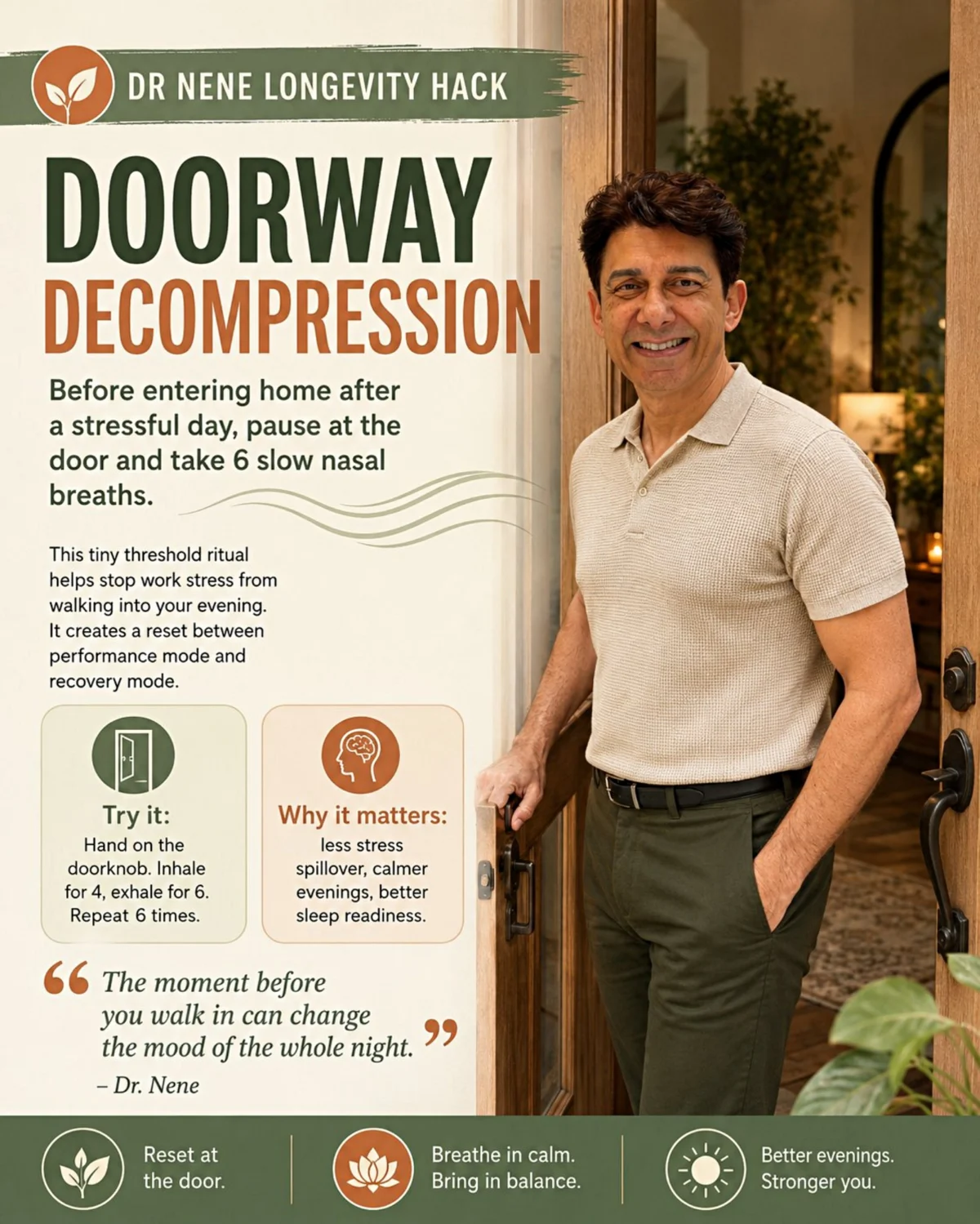
The relentless pace of modern life often leaves individuals feeling drained and overwhelmed, struggling to shed the accumulated stress of a long day. As the workday concludes, the mental and emotional residue can seep into personal lives, impacting mood, sleep, and relationships. However, a simple yet powerful technique championed by renowned cardiovascular surgeon Dr. Shriram Nene offers a novel solution: the "Doorway Decompression Technique." This one-minute ritual, shared recently on the social media platform X, promises to create a vital mental buffer, allowing individuals to transition from the pressures of work to the sanctuary of home with renewed calm and presence.
Dr. Nene’s approach hinges on a straightforward, accessible breathing exercise designed to forge a distinct separation between the demands of the professional sphere and the restorative embrace of personal time. The core principle is to pause, quite literally at the threshold of one’s home, and engage in a brief, intentional breathing practice. This deliberate act of stopping before stepping inside aims to interrupt the momentum of stress, offering a much-needed mental reset.
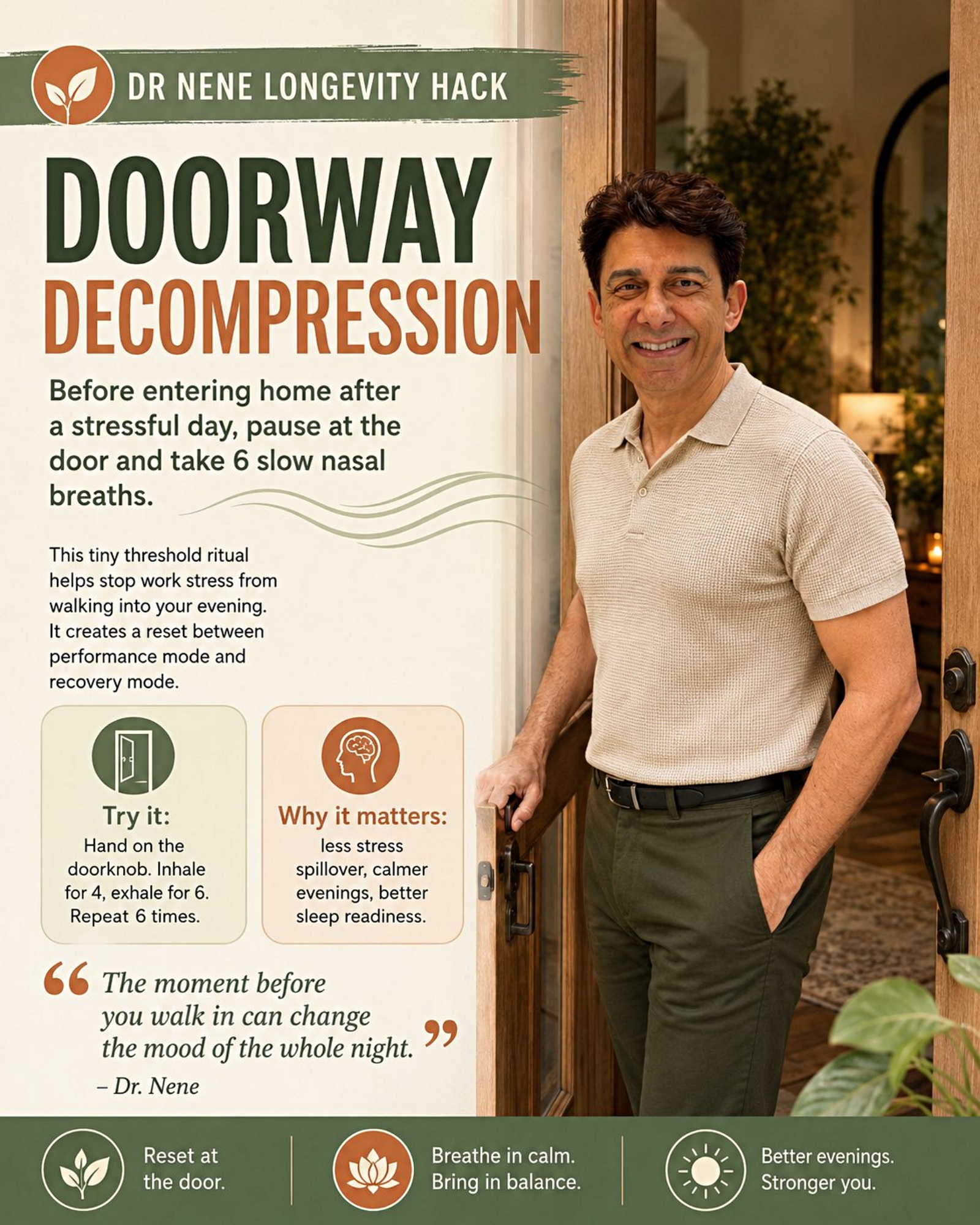
"Before you step into your evening, take one small pause," Dr. Nene articulated in his X post, accompanied by an image illustrating the concept. "The way you transition from stress to rest can shape your mood, your sleep, and the energy you bring to the people you love." This profound statement underscores the far-reaching impact of a seemingly small behavioral shift, suggesting that mindful transitions can significantly influence overall well-being and the quality of our interactions with loved ones.
The Science Behind the Pause: Why Breathing Matters
The efficacy of Dr. Nene’s "Doorway Decompression Technique" is not merely anecdotal; it is grounded in established physiological principles that highlight the profound connection between breath and the nervous system. Experts in the medical field corroborate the transformative power of conscious breathing, emphasizing its role in mitigating stress and fostering a sense of tranquility.
Dr. (Col) Vijay Dutta, Director of Internal Medicine and Respiratory Services at ISIC Multispeciality Hospital, wholeheartedly endorses the technique. "The doorway decompression technique can be a simple and effective way to transition from a stressful day to a calmer home environment," he states. Dr. Dutta elaborates that the act of pausing at the door serves as a crucial psychological demarcation, effectively creating a mental buffer zone between the pressures of work and the demands of personal life.
"Even a minute of intentional breathing may reduce feelings of tension and help someone enter their home feeling calmer and more present," Dr. Dutta explains to indianexpress.com. This brief interlude, he suggests, allows individuals to consciously shed the emotional baggage of the day, preventing the carryover of workplace frustrations into their home environment. By providing an opportunity to reset, the technique empowers individuals to engage with their families and household routines with a more composed and mindful disposition.
The physiological underpinnings of this benefit are rooted in how stress impacts our breathing patterns. When individuals experience stress, their respiration often becomes shallow and rapid, a primal response designed to prepare the body for "fight or flight." This type of breathing can exacerbate feelings of anxiety and tension. Conversely, slow, controlled breathing acts as an antidote to this physiological cascade.
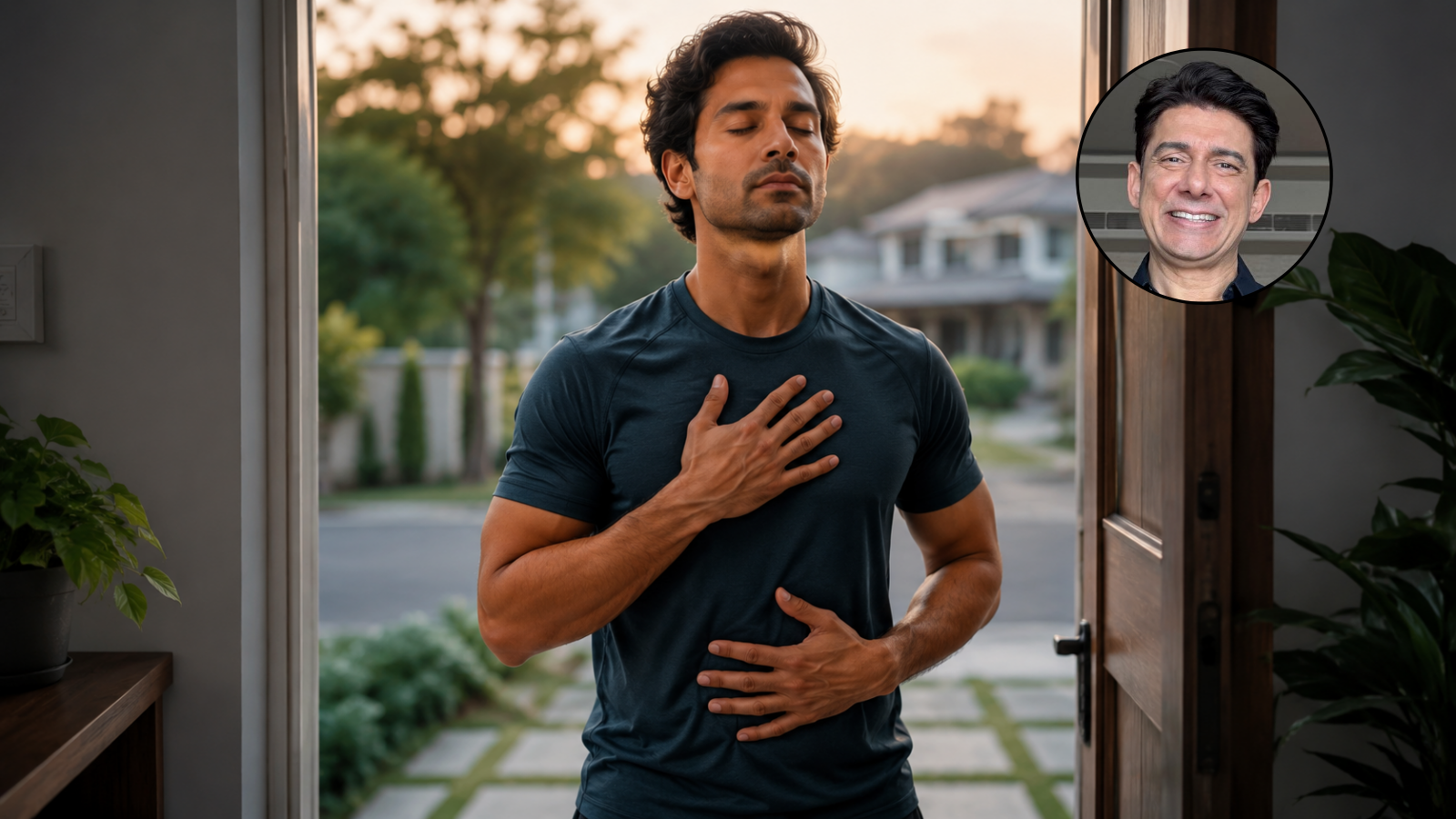
Dr. Samir Garde, Director of the Department of Pulmonology and Lung Transplant at Gleneagles Hospital, Parel, explains this phenomenon: "Conscious deep breathing can help calm the body by slowing the breathing rate and reducing the sensation of breathlessness or tension that often accompanies stress." By deliberately engaging in slower, deeper breaths, individuals can actively counteract the body’s stress response. This practice not only helps regulate breathing patterns but also improves oxygen exchange throughout the body, thereby reducing the physical manifestations of stress such as muscle tension and a racing heart.
The Mechanics of Calm: Activating the Relaxation Response
The specific breathing pattern recommended by Dr. Nene – inhaling for four counts and exhaling for six – is particularly potent in its ability to induce relaxation. This deliberate emphasis on a longer exhalation is a key component in activating the body’s parasympathetic nervous system, often referred to as the "rest and digest" system.
"When a person breathes slowly and deeply, especially with a longer exhale than inhale, it activates the body’s relaxation response," Dr. Dutta further explains. "This can slow the heart rate, reduce muscle tension, and create a sense of calm." The parasympathetic nervous system counteracts the effects of the sympathetic nervous system, which is responsible for the stress response. By stimulating the former, individuals can actively shift their physiological state from one of arousal and tension to one of peace and recovery.
Dr. Garde concurs, noting that "Slow, controlled breathing can influence the autonomic nervous system, helping reduce stress-related physical responses such as rapid breathing and increased heart rate." The consistent practice of this breathing technique can, over time, lead to a more resilient response to stress, making individuals less susceptible to its detrimental effects. The outcome is not merely a fleeting moment of calm but a tangible improvement in overall well-being and emotional regulation.
Scientific Validation: Beyond the Placebo Effect
The calming effects associated with slow, controlled breathing are not merely a subjective experience or a placebo effect; they are supported by robust scientific research. Dr. Dutta emphasizes that these benefits are "not simply a placebo effect." The physiological changes triggered by deliberate breathing are measurable and contribute to a genuine reduction in stress.
The activation of the parasympathetic nervous system, as mentioned earlier, is a well-documented physiological response. This system plays a crucial role in maintaining homeostasis within the body, promoting recovery and restoration after periods of stress. By engaging in prolonged exhalations, individuals are essentially signaling to their bodies that it is safe to relax, thereby down-regulating the fight-or-flight response and fostering a state of equilibrium.
Research has consistently demonstrated that practices involving controlled breathing, such as meditation and yoga, can lead to significant reductions in cortisol levels (a key stress hormone), lower blood pressure, and improved heart rate variability – all indicators of a healthier and more balanced autonomic nervous system. The "Doorway Decompression Technique," by incorporating a specific breathing rhythm that prioritizes exhalation, taps directly into these scientifically validated mechanisms for stress reduction.
Implications and Accessibility: Tiny Rituals, Big Impact
While the "Doorway Decompression Technique" is not presented as a panacea for chronic stress or mental health conditions, its value lies in its remarkable accessibility and effectiveness as a daily habit. Its simplicity makes it an ideal tool for individuals seeking practical, low-barrier strategies for managing the everyday stresses of life.
The technique’s primary implication is its ability to establish a clear and healthy boundary between professional responsibilities and personal life. In an era where work-life balance is increasingly elusive, this one-minute ritual offers a tangible method for mentally "clocking out" and reclaiming personal time. By consciously creating this division, individuals can protect their home environment from the intrusion of work-related anxieties, fostering a more peaceful and supportive atmosphere for themselves and their families.
Furthermore, the consistent practice of the technique can cultivate greater mindfulness and emotional awareness. By taking a moment to pause and focus on their breath, individuals become more attuned to their internal states, recognizing and processing their emotions before they become overwhelming. This heightened self-awareness can lead to more constructive responses to challenges and a greater capacity for emotional regulation.
The beauty of Dr. Nene’s approach lies in its practicality. It requires no special equipment, no extensive training, and can be seamlessly integrated into almost any daily routine. The minimal time commitment – less than a minute – makes it an exceptionally easy habit to adopt and maintain. As Dr. Nene himself eloquently puts it, "Tiny rituals. Big impact." This mantra encapsulates the philosophy behind the technique: that small, consistent actions can yield profound and lasting positive changes in our lives.
The "Doorway Decompression Technique" serves as a potent reminder that effective stress management doesn’t always require elaborate interventions. Sometimes, the most powerful tools are the simplest ones, readily available to us in the form of our own breath. By embracing this one-minute ritual, individuals can unlock a more balanced, calmer, and fulfilling transition from the demands of the day to the peace of their homes.
Disclaimer: This article is based on information from the public domain and insights from medical professionals. It is crucial to remember that this information is for general knowledge and informational purposes only, and does not constitute medical advice. Always consult with a qualified healthcare practitioner or physician for any health concerns or before making any decisions related to your health or treatment.
