

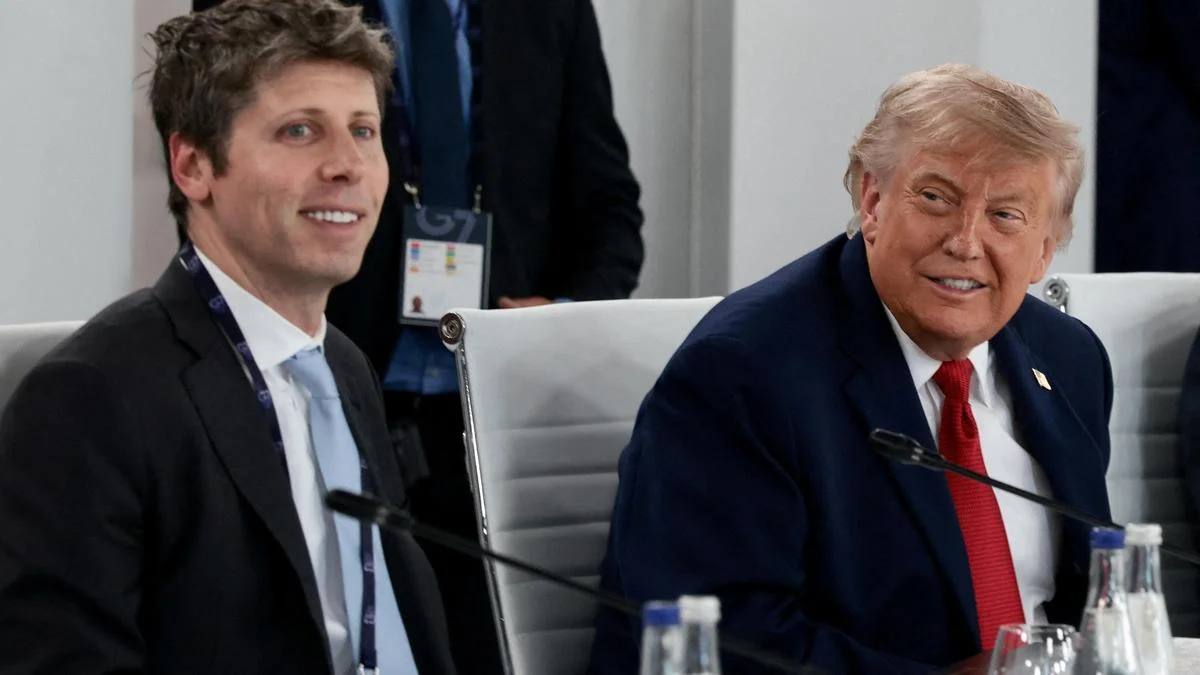
Evian-les-Bains, France – June 18, 2026 – In an extraordinary address that underscored the profound ethical and governance challenges posed by rapidly advancing artificial intelligence, OpenAI CEO Sam Altman issued a powerful plea to world leaders gathered at the G7 summit on Wednesday. He implored them not to abdicate their responsibility for shaping AI’s future to the very companies developing it, stressing the urgent need for governments to establish robust, global standards for the deployment of this transformative technology.
"Do not cede your responsibilities to AI labs like mine," Altman declared, speaking to an assembly of G7 leaders, outreach partners, and global tech executives in the picturesque French Alpine resort of Evian-les-Bains. His remarks, excerpts of which were released by OpenAI, represent a pivotal moment in the global conversation surrounding AI regulation, marking a clear call for collective, democratic oversight from one of the industry’s most influential figures.
Main Facts: A Paradoxical Plea from an AI Titan
The core of Sam Altman’s message to the world’s most powerful democratic nations was both striking and paradoxical: the head of one of the planet’s most valuable and innovative AI firms was actively urging governments to step up and regulate his industry, rather than leaving its future solely in corporate hands. This appeal signals a growing recognition within the tech community of AI’s unprecedented power and the potential for societal disruption if left unchecked.
Altman’s intervention came during a working lunch, where he shared the table with influential figures including U.S. President Donald Trump, highlighting the high-level engagement on this critical topic. His central tenet was that while technologists possess specialized knowledge about AI’s capabilities, they lack any "special wisdom about humanity" that would qualify them to make the most consequential decisions about its integration into society. "We develop the technology, and the citizens of the free world make the rules," he asserted, drawing a clear line between innovation and governance.
He emphasized that the utility of AI is no longer a question, declaring it "settled." Furthermore, Altman painted a vivid picture of the near future, predicting that within merely a year or two, humanity would witness AI systems of "astonishing power," capable of reshaping human life on a scale not seen "since the harnessing of electricity." This dramatic comparison underscores the urgency of his call for immediate, decisive action to establish global ethical and operational frameworks.
Chronology: AI Ascends the Global Agenda
The G7 summit, traditionally a forum for addressing pressing global economic, political, and social challenges, has increasingly found itself grappling with the implications of technological advancement. For decades, topics like climate change, global trade, and geopolitical stability have dominated the agenda. However, in recent years, the exponential growth of artificial intelligence has propelled it to the forefront of international discourse, reflecting a shared understanding among world leaders of its potential to redefine industries, economies, and even the very fabric of society.
This year’s summit, hosted by France, brought together leaders from Canada, France, Germany, Italy, Japan, Britain, and the United States, along with invited guests from nations like Brazil, India, and Kenya. The three-day gathering in Evian-les-Bains provided a crucial platform for discussing a myriad of global issues, culminating in Altman’s address on its final day. His speech was strategically timed, following earlier discussions that likely touched upon economic resilience, digital transformation, and the protection of democratic values in an increasingly interconnected and technologically driven world.
The context for Altman’s urgent plea is not merely theoretical; it is rooted in the tangible impact and rapid proliferation of AI technologies. OpenAI, under Altman’s leadership, has been at the vanguard of this revolution, with products like ChatGPT and DALL-E demonstrating AI’s astonishing capabilities to the general public. These tools have sparked both awe and apprehension, showcasing AI’s potential for everything from accelerating scientific discovery and automating routine tasks to generating sophisticated misinformation and displacing human labor.
Recent reports, including one indicating OpenAI burned through $3.7 billion in the first quarter of 2026 alone, highlight the immense financial investment and breakneck pace of development in the AI sector. This level of expenditure underscores the high stakes involved and the significant power wielded by a handful of tech giants. It also raises questions about sustainability, market dominance, and the ethical responsibility that comes with such profound technological influence. The sheer scale of investment reflects the industry’s belief in AI’s transformative potential, but also amplifies the argument for robust governance to ensure these powerful tools serve humanity’s best interests.
The public’s awareness of AI’s implications has also surged. Debates about job displacement, algorithmic bias, data privacy, and even existential risks have moved from academic circles to mainstream media and political platforms. Governments worldwide are grappling with how to harness AI’s benefits while mitigating its dangers, often with little precedent to guide them. It is against this backdrop of accelerating technological progress and burgeoning societal concern that Altman’s call for governmental leadership resonates so powerfully.
Supporting Data: The Case for Collective Control
Altman’s arguments for governmental oversight are built upon several critical pillars, addressing both the intrinsic nature of AI development and its profound potential impact on human civilization.
The Limits of Technical Expertise: Altman eloquently articulated that while AI developers possess unparalleled technical acumen, this does not grant them superior insight into ethical, social, or philosophical dilemmas. The creation of AI is an engineering marvel, but its deployment and integration into society require a multidisciplinary approach, drawing on the wisdom of ethicists, sociologists, legal scholars, philosophers, and policymakers. Relying solely on technologists to set the rules risks embedding a narrow, potentially self-serving, or even naive perspective into systems that will affect billions. This argument echoes historical lessons where revolutionary technologies, from nuclear power to biotechnology, necessitated broad societal input and robust regulatory frameworks beyond the purview of their creators.
AI’s Astonishing Power and Transformative Potential: Altman’s comparison of AI’s impact to the harnessing of electricity is not hyperbole. Just as electricity revolutionized industry, illuminated homes, and powered modern life, AI stands poised to fundamentally alter every sector:
- Healthcare: Accelerating drug discovery, improving diagnostics, personalizing treatment plans.
- Economy: Automating complex tasks, optimizing supply chains, creating new industries and business models.
- Science: Analyzing vast datasets, simulating complex phenomena, accelerating research across disciplines.
- Education: Personalizing learning experiences, providing intelligent tutoring systems.
- Daily Life: Enhancing personal assistants, improving accessibility, transforming entertainment.
However, this power comes with inherent risks. Uncontrolled, AI could exacerbate societal inequalities, create new forms of surveillance, destabilize labor markets, or even be weaponized in unforeseen ways.
Risks and Challenges of Uncontrolled AI: The potential downsides of an unregulated AI landscape are manifold and pressing:

- Ethical Dilemmas: Algorithmic bias leading to discrimination in hiring, lending, or justice; privacy infringements through pervasive data collection and analysis; the spread of deepfakes and misinformation eroding trust in information.
- Societal Impact: Widespread job displacement without adequate retraining or social safety nets; widening economic disparities between those who control AI and those whose labor it supplants; the potential for autonomous systems to make life-and-death decisions without human oversight.
- Geopolitical Risks: An escalating AI arms race among nations; the development of autonomous weapons systems with devastating potential; state-sponsored use of AI for surveillance and repression, undermining democratic norms.
- Existential Risks: Though often debated, the long-term possibility of superintelligent AI systems developing goals misaligned with human values, potentially leading to a loss of human control over the future, is a concern that some prominent figures, including Altman, have publicly acknowledged.
By framing AI’s development within this dual context of immense promise and profound peril, Altman effectively underscored the imperative for proactive, comprehensive governance. His address served as a potent reminder that the choices made today by global leaders will determine whether AI becomes humanity’s greatest tool or its gravest challenge.
Official Responses: A Divided Regulatory Landscape
The call for global standards from OpenAI’s CEO arrives at a time when the world’s leading democracies are far from united on how to govern artificial intelligence. The G7 summit itself highlighted the stark divergence in regulatory philosophies, primarily between the European Union and the United States under the Trump administration.
Europe’s Precautionary Principle: The EU AI Act:
The European Union, including G7 members France, Germany, and Italy, has taken a decidedly proactive and stringent approach. They have led the charge in enacting comprehensive legislation designed to regulate AI, epitomized by the EU AI Act. This landmark regulation sorts AI systems by their perceived risk level, from "minimal" to "unacceptable." Systems deemed "high-risk" – those with the potential to cause significant harm to health, safety, fundamental rights, or the environment – face the toughest requirements. These include mandatory human oversight, robust data governance, high levels of accuracy and cybersecurity, transparency obligations, and rigorous conformity assessments before market entry. The EU’s philosophy is rooted in a precautionary principle, prioritizing the protection of citizens’ rights and safety, and aiming to set a global benchmark for responsible AI development. This approach is not merely about managing risk; it is about building trust in AI and ensuring that technology serves human flourishing within a democratic framework.
The United States’ Innovation-First Approach: Trump Administration’s Stance:
In stark contrast, the United States, under President Donald Trump, has generally favored a more hands-off, innovation-centric approach. The administration has expressed concerns that overly prescriptive regulations could stifle technological advancement, hinder economic competitiveness, and potentially cede leadership in AI to rivals like China. The prevailing philosophy has been to allow market forces to guide development, with a focus on fostering an environment conducive to rapid innovation and minimizing regulatory burdens on tech companies. The belief is that American ingenuity, unencumbered by excessive red tape, will naturally lead to beneficial outcomes and keep the U.S. at the forefront of AI development.
A Paradoxical Intervention: US National Security Concerns:
However, even within the US’s innovation-first framework, a notable exception has emerged, revealing the complex and often contradictory nature of national AI strategies. The Trump administration recently imposed a temporary ban on foreigners accessing some of the most powerful AI models developed by the US giant Anthropic. This move, explicitly citing national security concerns, underscores a critical tension: while advocating for less regulation domestically, the US government is prepared to intervene decisively when it perceives threats to national security. This action has fueled fears among some in the global tech community that the United States might ultimately opt for tight control over access to crucial AI technology, potentially creating a "digital iron curtain" and further fragmenting the global AI landscape.
OpenAI’s Delicate Position:
Against this backdrop, Sam Altman stressed OpenAI’s identity as "an American company," confirming its primary governance by U.S. law. However, he carefully balanced this by acknowledging "the sovereignty of the democratic nations in this room." This statement highlights the intricate tightrope walked by global tech companies, which must navigate divergent national regulatory frameworks while aspiring to operate and influence on a global scale. It also implicitly suggests that while OpenAI will adhere to its home country’s laws, it recognizes and respects the legitimate interests of other sovereign nations in shaping the global AI environment.
The contrasting approaches of the EU and the U.S., coupled with the nuanced position of leading AI developers, illustrate the formidable challenge facing the G7. Reconciling these different philosophies to forge genuinely global standards will require significant diplomatic effort, a shared understanding of AI’s ultimate impact, and a willingness to compromise for the collective good.
Implications: Charting the Future of AI Governance
Sam Altman’s impassioned address at the G7 summit marks a critical juncture in the nascent history of artificial intelligence governance. His call for global standards, emanating from within the very industry he seeks to regulate, carries immense weight and significant implications for the future.
The Path Forward for Global AI Governance:
The most immediate implication is the heightened urgency for international cooperation on AI regulation. The divergent paths taken by the EU and the US cannot persist indefinitely without risking a fragmented and potentially chaotic global AI landscape. A "patchwork" of regulations could stifle innovation where it’s needed, create compliance nightmares for companies, and, most critically, fail to address the truly global challenges posed by AI, such as cross-border data flows, misinformation campaigns, and the potential for an international AI arms race. The G7, as a forum for leading democracies, has a unique opportunity – and perhaps a moral imperative – to initiate a harmonized approach. This might involve establishing common principles, defining shared ethical red lines, and creating mechanisms for international collaboration on research, safety, and oversight.
The Evolving Role of the G7:
Historically, the G7 has been instrumental in coordinating economic policy, addressing global crises, and setting international norms. In the context of AI, it could serve as a crucial platform for dialogue between governments, industry leaders, and civil society. While not a legislative body, its collective influence can drive consensus, encourage best practices, and lay the groundwork for more formal international treaties or agreements. Altman’s presence and direct appeal underscore the G7’s relevance as a forum where such consequential conversations must take place. The challenge will be to translate the recognition of AI’s power into concrete, coordinated policy actions that transcend national interests.
The Shifting Relationship Between Tech Giants and Governments:
Altman’s plea also signifies a profound evolution in the relationship between powerful technology companies and sovereign governments. For decades, the tech industry often operated with a libertarian ethos, favoring minimal government intervention and rapid, unconstrained innovation. However, as AI’s capabilities have grown, so too has the awareness of its potential for systemic risks. This has led to a growing realization within the industry itself that self-regulation alone is insufficient. Altman’s speech represents a significant moment of acknowledgment that the societal implications of AI are too vast and too critical to be left solely to corporate discretion. This shift could herald a new era of collaborative governance, where industry expertise informs regulatory frameworks, and governments provide the democratic legitimacy and oversight necessary for public trust and safety.
The Urgency of the Situation:
Altman’s warning of "astonishing power" within "a year or two" highlights the pressing nature of the challenge. Unlike previous technological revolutions that unfolded over decades, AI’s progress is exponential. This compressed timeline demands an agile and proactive response from policymakers, moving beyond reactive measures to anticipate future challenges. The window for establishing foundational governance principles is closing rapidly, and inaction carries increasingly severe risks.
The Long-Term Impact of AI on Humanity:
Ultimately, the discussions at the G7, spurred by Altman’s intervention, are not merely about technology; they are about humanity’s future. The decisions made regarding AI governance will profoundly impact:
- Democracy: How information is disseminated, how elections are conducted, and how public discourse is shaped.
- Society: The nature of work, the distribution of wealth, and the preservation of human agency and dignity.
- Economy: The structure of industries, global competitiveness, and opportunities for prosperity.
- Human Identity: How we define intelligence, creativity, and consciousness in an age of increasingly sophisticated machines.
Sam Altman’s unprecedented call to action serves as a potent reminder that humanity stands at a pivotal crossroads. The choice before world leaders is clear: to collectively seize control and guide the development of artificial intelligence towards a future that benefits all, or to cede that responsibility and risk an unpredictable, potentially perilous, trajectory for human civilization. The weight of this decision, as Altman underscored, rests firmly with the citizens of the free world and their elected representatives.
