

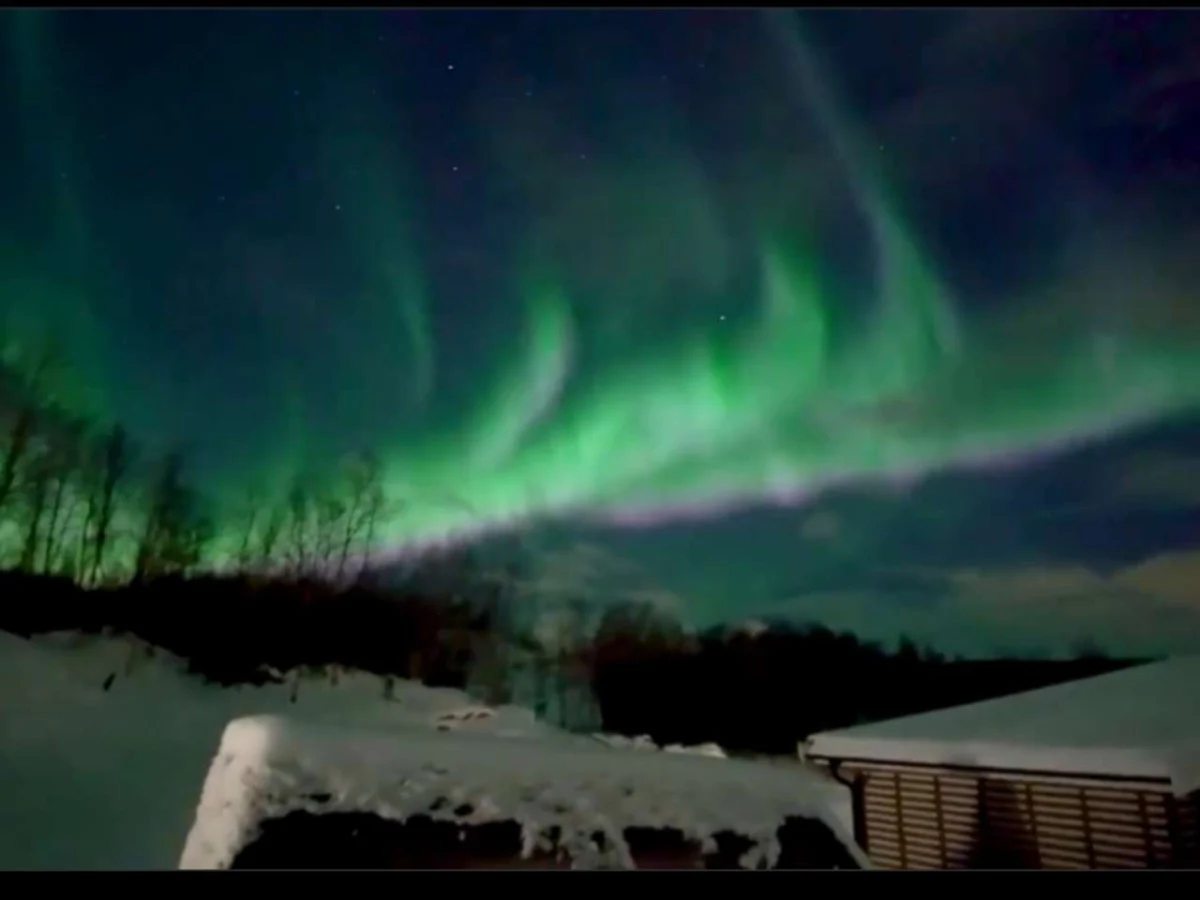
NEW DELHI, INDIA – June 8, 2026 – The heavens are poised to deliver a dramatic display today as a powerful solar eruption, hurtling through space at astonishing speeds, is expected to collide with Earth’s magnetic field. This celestial encounter has triggered a "Strong" (G3) geomagnetic storm watch from space weather forecasters worldwide, significantly increasing the likelihood of widespread and unusually vibrant aurora sightings, potentially even stretching to lower latitudes, including parts of northern India.
The event, originating from a particularly active region on the Sun, has captured the attention of scientists and the public alike, promising a breathtaking natural light show while simultaneously prompting vigilance over potential disruptions to critical infrastructure.
A Celestial Cascade: The Chronology of Events
The journey of this impending space weather event began on June 6, 2026, when an area of heightened solar activity designated as Active Region 4461 unleashed a significant M1.8-class solar flare. While M-class flares are considered mid-level on the solar flare scale, what truly set this event apart and heightened scientific interest was its accompaniment: the eruption of a massive, dense core filament. These colossal structures of magnetized plasma, suspended above the Sun’s surface, are known for their ability to deliver a more potent punch than typical solar eruptions.
As observed and analyzed by leading space weather experts, including Dr. Tamitha Skov, the eruption was not merely a flash of X-rays but a substantial expulsion of solar material. "Just when everyone thinks the recent set of solar storm fizzles were all we were going to have this week, WHAM! Region 4461 fires a massive blast and launches a fast moving solar storm towards Earth," Dr. Skov noted, emphasizing the unexpected intensity of the event.
The material ejected during this powerful coronal mass ejection (CME) is now racing towards Earth at an astounding velocity of nearly 1,400 kilometres per second (approximately 3.1 million miles per hour). This formidable speed means the solar cloud is expected to impact Earth’s magnetosphere sometime today, June 8, 2026, setting the stage for the anticipated geomagnetic storm. The swiftness of its approach has provided forecasters with a relatively short window to prepare for its arrival and assess its potential impact.
Unpacking the Science: Supporting Data
To fully appreciate the significance of this incoming solar storm, it’s crucial to understand the underlying solar phenomena and their interaction with our planet.
Solar Flares and Coronal Mass Ejections: The Sun’s Explosive Nature
Solar flares are intense bursts of radiation originating from the Sun’s surface, often associated with sunspots – regions of concentrated magnetic activity. They are classified by their X-ray brightness, ranging from C-class (small) to M-class (medium, like the M1.8 flare from AR 4461) and X-class (largest and most powerful). While flares themselves can cause radio blackouts on Earth, it is often their companion events that pose a greater threat to our technological world: Coronal Mass Ejections (CMEs).
CMEs are massive expulsions of plasma and magnetic field from the Sun’s corona (outer atmosphere). These enormous clouds of superheated gas, containing billions of tons of material, can travel through space at speeds ranging from a few hundred to over two thousand kilometers per second. When a CME is directed towards Earth, as in the current scenario, it becomes the primary driver of geomagnetic storms.
The Potency of Filaments: A Denser, More Magnetic Punch
The eruption of a dense core filament alongside the M1.8 flare is a critical detail in this event. A solar filament is essentially a giant ribbon of relatively cool, dense plasma suspended high above the Sun’s surface by powerful magnetic fields. Despite its internal temperatures ranging between 5,000 and 10,000 degrees Celsius, it is considered "cool" in comparison to the scorching outer atmosphere of the Sun, which can exceed one million degrees Celsius.
When the intricate magnetic fields supporting a filament become unstable, they can violently snap, causing the entire structure to erupt into space. This expulsion carries enormous quantities of plasma and, crucially, a significant amount of magnetic energy. Scientists emphasize that filament eruptions often lead to stronger geomagnetic effects on Earth because they are inherently denser and carry a greater concentration of magnetic material compared to many ordinary solar eruptions. This increased density and magnetic flux are key factors in the current G3 (and potentially G4) storm watch.
Earth’s Shield: The Magnetosphere and Geomagnetic Storms
Our planet is protected by an invisible, yet immensely powerful, magnetic field known as the magnetosphere. This field acts as a shield, deflecting the constant stream of charged particles (solar wind) emitted by the Sun. However, when a powerful CME strikes the magnetosphere, this shield can be temporarily overwhelmed.
The interaction is complex but critical: for a strong geomagnetic storm to occur, the magnetic field embedded within the incoming solar cloud must align in a specific way. Specifically, if that magnetic field points southward (the "Bz" component) when it reaches Earth, it can connect directly and efficiently with Earth’s northward-pointing magnetic field lines. This process, known as magnetic reconnection, acts like an open gate, allowing vast amounts of solar energy and charged particles to stream into Earth’s magnetosphere. This influx intensifies the geomagnetic storm, causing rapid fluctuations in Earth’s magnetic field.
Dancing Lights: The Phenomenon of Auroras
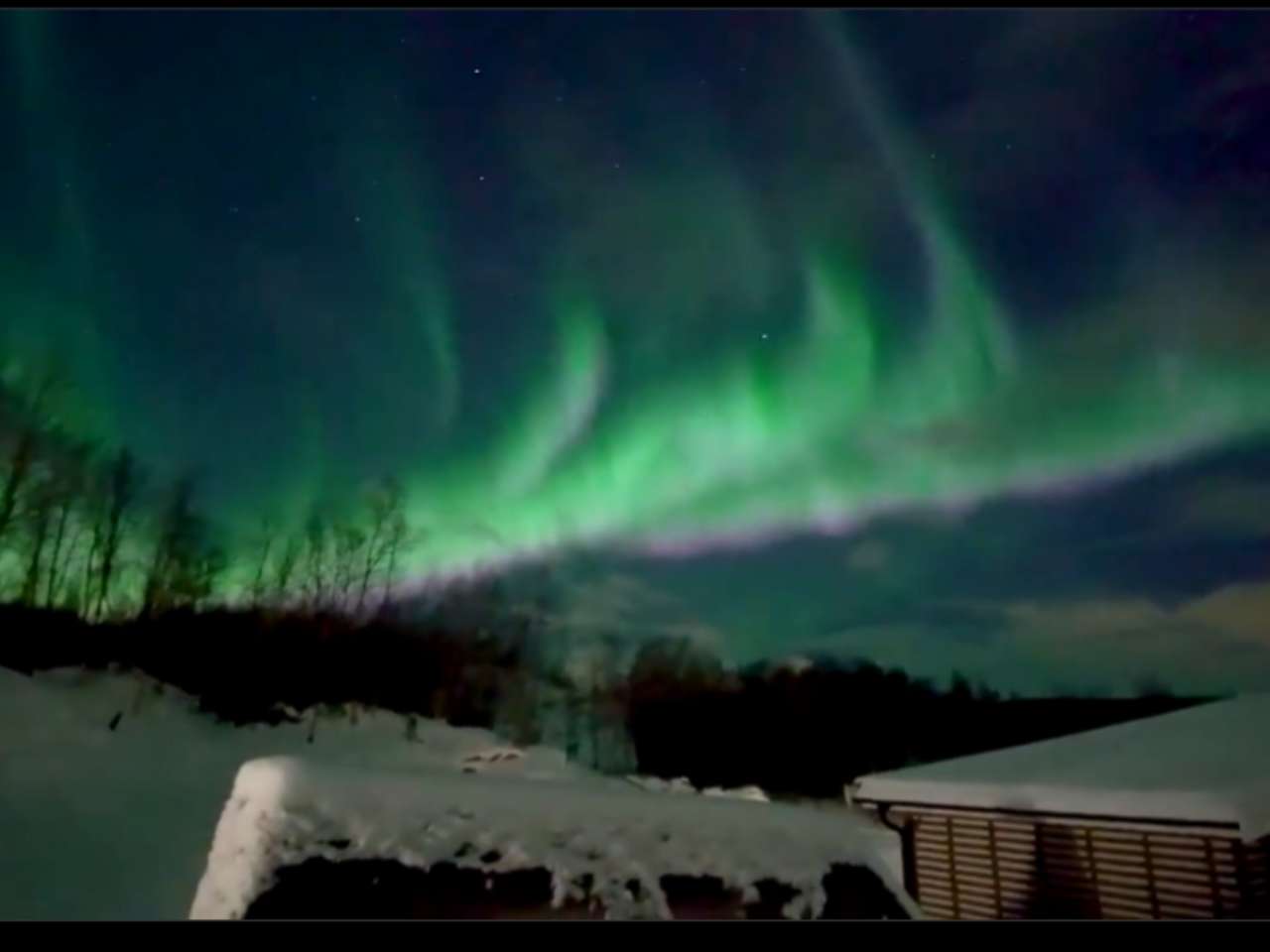
One of the most visually stunning consequences of a geomagnetic storm is the aurora – the breathtaking natural light displays known as the Northern Lights (Aurora Borealis) and Southern Lights (Aurora Australis). When charged particles from the Sun, accelerated by the geomagnetic storm, collide with atoms and molecules in Earth’s upper atmosphere, they excite these atmospheric gases. As the excited atoms return to their normal state, they emit photons of light, creating the vibrant reds, greens, blues, and purples that paint the polar skies.
The color variations depend on the type of gas being excited and the altitude at which the collisions occur. Oxygen atoms, for instance, typically produce green and red light, while nitrogen atoms contribute blue and purple hues. During a strong geomagnetic storm, the influx of energy is so significant that the auroral oval – the region around Earth’s magnetic poles where auroras are usually seen – expands dramatically, pushing the visible displays to much lower latitudes than normal.
Grading the Storm: The G-Scale
Geomagnetic storms are classified on a five-level scale, from G1 to G5, developed by the National Oceanic and Atmospheric Administration (NOAA) Space Weather Prediction Center (SWPC):
- G1: Minor – Can cause minor impacts on power grids, weak fluctuations in power systems, and slight impacts on satellite operations. Auroras are visible in higher latitudes.
- G2: Moderate – Potential for damage to power system components, increased drag on low-Earth orbit satellites, and radio communication disruptions. Auroras visible at middle latitudes.
- G3: Strong – This is the current forecast. Can cause voltage irregularities in power systems, false alarms on protective devices, and require corrective actions. Intermittent satellite navigation issues and degraded high-frequency radio communication are possible. Auroras can become visible far from the poles.
- G4: Severe – If conditions align, this brief intensity remains possible. Potential for widespread voltage control problems, grid system protection issues, and possible blackouts. Satellite navigation and radio communications can be severely degraded or interrupted. Widespread auroras are seen at very low latitudes.
- G5: Extreme – The most powerful classification, rare but historically significant (e.g., the Carrington Event). Can cause widespread power system collapse, severe satellite damage, and long-lasting radio blackouts. Auroras are seen globally.
The current forecast calls for a G3 storm, indicating a high probability of spectacular auroras and minor technological impacts. However, space weather experts caution that brief periods of G4-level conditions remain possible if the orientation of the incoming magnetic field proves particularly favorable for storm development, intensifying the interaction with Earth’s magnetosphere.
)
The Human Element: Official Responses and Monitoring
Given the potential for both awe-inspiring natural phenomena and disruptive technological impacts, a global network of scientific agencies and experts tirelessly monitors the Sun and space weather.
Leading the charge are organizations such as NOAA’s Space Weather Prediction Center (SWPC) in the United States, NASA with its fleet of solar observatories, the European Space Agency (ESA), and national space agencies like the Indian Space Research Organisation (ISRO). These bodies utilize an array of sophisticated instruments to observe the Sun’s surface and atmosphere, track CMEs, and monitor the solar wind environment near Earth.
Satellites like the Solar and Heliospheric Observatory (SOHO), the Solar Dynamics Observatory (SDO), and the STEREO (Solar TErrestrial RElations Observatory) mission constantly observe the Sun, providing crucial data on flares, CMEs, and sunspot activity. Closer to Earth, satellites like DSCOVR (Deep Space Climate Observatory) and ACE (Advanced Composition Explorer) act as sentinels, positioned roughly 1.5 million kilometers (about 930,000 miles) from Earth at the L1 Lagrangian point. These upstream monitors provide vital real-time measurements of the solar wind’s speed, density, and, critically, the orientation of its embedded magnetic field – information that is essential for short-term forecasting.
The collaborative effort among these international agencies ensures that data is shared, models are refined, and warnings are issued promptly. This vigilance allows vulnerable industries, such as power grid operators, satellite companies, and airlines, to take precautionary measures to mitigate potential damage.
Far-Reaching Ripples: Implications and Potential Impacts
The impending G3 geomagnetic storm, with its possibility of briefly reaching G4 levels, carries a range of implications, from dazzling sky shows to tangible risks for modern technology.
Auroral Displays: A Spectacle for the Ages?
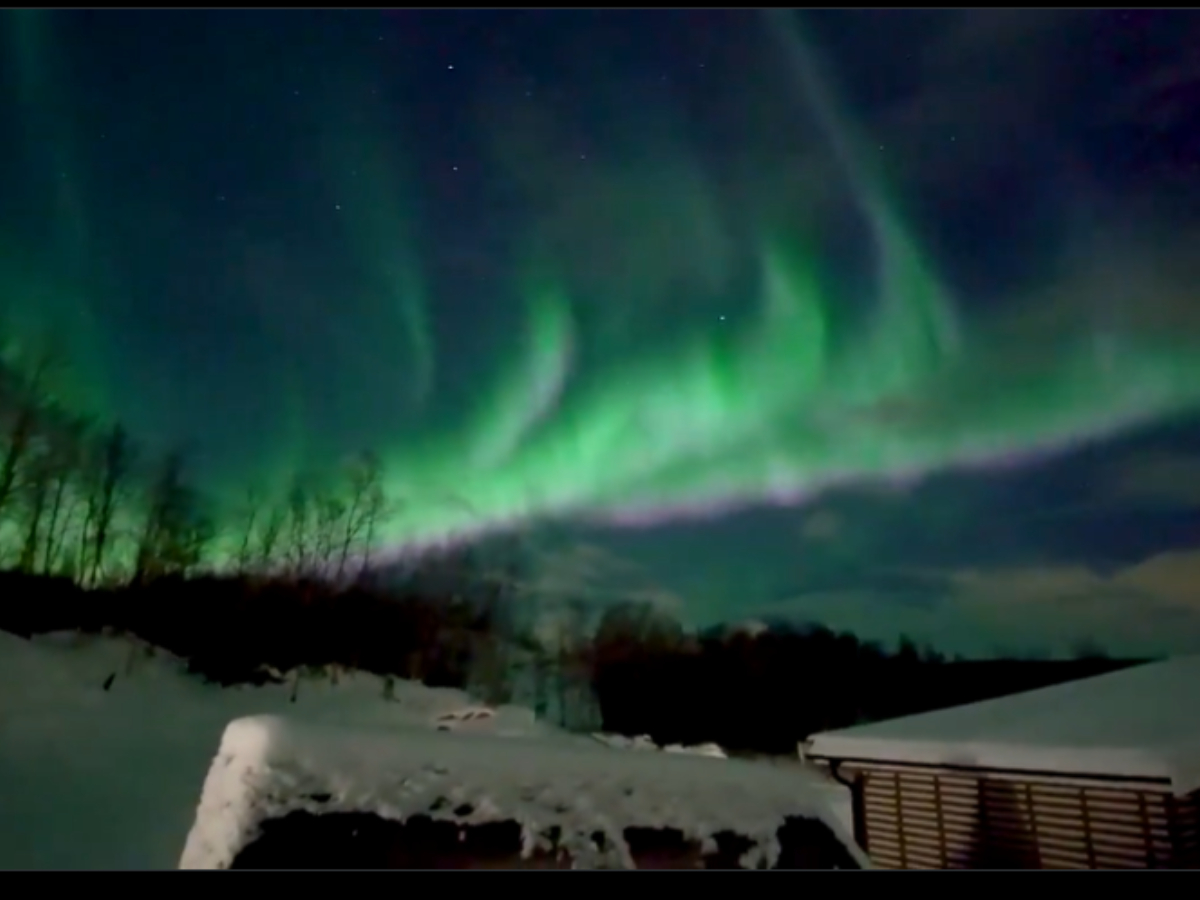
The most anticipated outcome for the general public is the prospect of extraordinary auroral displays. During a G3 storm, auroras can extend significantly beyond their usual polar ovals, becoming visible in regions that rarely experience them. Countries most likely to witness spectacular and vibrant displays include Canada, the northern United States, parts of Europe (especially Scandinavia and the UK), New Zealand, and southern Australia. Enthusiasts in these regions are already preparing for a potential once-in-a-lifetime viewing opportunity.
Could the Northern Lights Be Seen From India?
The question of aurora visibility in India is always met with a mix of excitement and skepticism, and for good reason: such sightings are exceedingly rare. However, during a powerful G4-level geomagnetic storm, the auroral oval can expand dramatically enough that faint auroral activity could theoretically be observed near the horizon from the extreme northern latitudes of India. Regions like Ladakh, Kashmir, Himachal Pradesh, and Uttarakhand, particularly those with clear, dark northern horizons, might have a slim chance.
It is crucial to manage expectations: even if visible, it would likely be a faint glow, low on the horizon, rather than the vibrant, overhead displays typically associated with higher latitudes. Clear, dark skies away from light pollution would be absolutely essential. Such an event would represent an extremely rare occurrence for the Indian subcontinent, highlighting the unusual strength of the current solar storm. While not impossible, it remains a long shot compared to the more common viewing opportunities in countries closer to the magnetic poles.
)
Technological Vulnerabilities: A Modern Concern
While the auroras are a beautiful consequence, geomagnetic storms also pose significant challenges to our increasingly technology-dependent world.
- Power Grids: One of the most serious concerns involves geomagnetically induced currents (GICs) in long conductors like power transmission lines. During a strong storm, rapid fluctuations in Earth’s magnetic field can induce currents in these lines, potentially overloading transformers and other grid components. This can lead to voltage irregularities, false alarms on protective devices, and in severe cases, widespread power outages. The 1989 Quebec blackout, which plunged millions into darkness, serves as a stark reminder of this vulnerability.
- Satellites: Satellites operating in Earth orbit are susceptible to increased atmospheric drag (due to the heating and expansion of the upper atmosphere), radiation damage to sensitive electronics, and disruptions to their internal systems. This can affect critical services such as GPS navigation, satellite-based internet and television, weather forecasting, and defense communications.
- Radio Communications: High-frequency (HF) radio communications, vital for aviation, maritime operations, and military uses, can be severely degraded or completely blacked out during geomagnetic storms. This is due to increased absorption and scattering of radio waves in the ionosphere, an atmospheric layer affected by solar particles.
- Pipelines and Infrastructure: Long metal pipelines, like those used for oil and gas, can also experience GICs, potentially accelerating corrosion and affecting cathodic protection systems designed to prevent it.
- Spacecraft and Astronaut Safety: Astronauts aboard the International Space Station (ISS) and other spacecraft are exposed to higher levels of radiation during intense solar storms, requiring them to take shelter in protected areas.
The Forecasting Challenge: The Bz Conundrum
Despite the sophisticated array of instruments and models, there remains one crucial piece of information that scientists cannot accurately determine until the solar cloud is almost at Earth: the exact orientation of its embedded magnetic field, particularly its southward component (Bz). This is the "one thing scientists still don’t know."
The internal magnetic structure of a CME is complex and can twist and turn as it propagates through space. While models can predict its trajectory and speed, the precise Bz orientation can only be measured in real-time by upstream monitoring satellites like DSCOVR and ACE. These satellites, positioned at L1, act as an early warning system. Once the CME passes these sentinels, forecasters typically have only a short window – anywhere from 15 to 60 minutes – before the solar cloud impacts Earth’s magnetosphere. This narrow timeframe makes precise, last-minute predictions about the storm’s ultimate strength and its effects a significant challenge. It means the difference between a modest auroral display and a truly spectacular sky show, or between minor disruptions and more significant impacts, can hinge on this eleventh-hour data.
Looking Ahead: The Sun’s Activity Cycle and Future Events
This current solar storm is not an isolated incident but rather a testament to the Sun’s natural activity cycle. We are currently approaching the peak of Solar Cycle 25, an approximately 11-year cycle during which the Sun’s magnetic activity intensifies. As the peak nears and passes, the frequency and intensity of solar flares, CMEs, and subsequent geomagnetic storms are expected to increase. This underscores the ongoing importance of space weather research, improved forecasting capabilities, and robust infrastructure resilience measures.
Continued investment in solar observatories, space weather models, and international collaboration is essential to better understand, predict, and mitigate the impacts of future solar events. The goal is not just to prepare for potential disruptions but also to maximize the opportunities for scientific discovery and the public enjoyment of natural wonders like the aurora.
Conclusion: A Woven Tapestry of Beauty and Vigilance
As the powerful solar eruption closes in on Earth, the world stands at a unique intersection of scientific intrigue, natural wonder, and technological vulnerability. The potential for a breathtaking celestial ballet of auroral lights, visible in unexpected corners of the globe, is a powerful reminder of the dynamic forces at play in our solar system. Simultaneously, the vigilance of space weather agencies and the preparedness of critical infrastructure operators highlight the profound impact that these cosmic events can have on our modern, interconnected lives.
Tonight, as the solar storm interacts with our planet’s magnetic shield, we will witness a dramatic demonstration of the Sun’s power – a power that sculpts beautiful phenomena in our skies even as it demands our respect and careful preparation. The final hours of waiting are filled with anticipation, as humanity watches the heavens, poised for both spectacle and challenge.
