

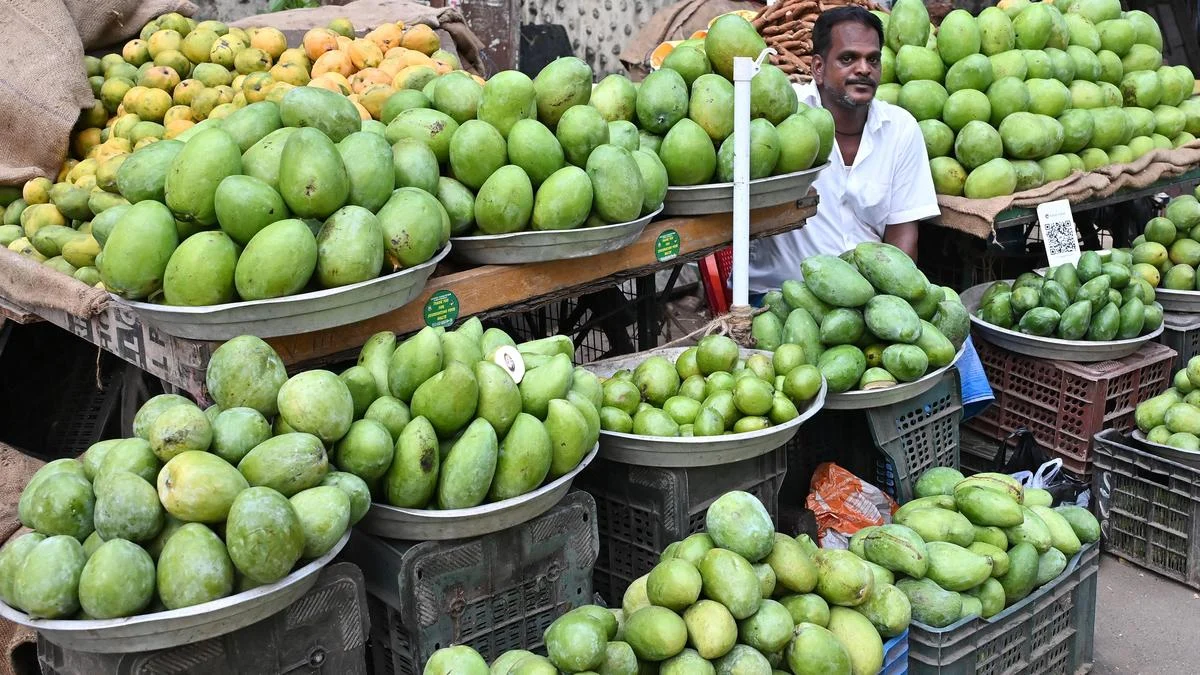
The air in Chennai, particularly along the bustling South Mada Street, transforms into a fragrant tapestry during the months of March and April. It’s a season marked by the pungent aroma of fresh turmeric, the zesty tang of mango ginger, and the bright, citrusy notes of kaikkari (citron). This olfactory symphony heralds the arrival of vadu manga, also known as maavadu, a beloved delicacy that floods the local markets in countless varieties of tiny, unripe mangoes. Traditionally prepared without oil, these miniature mangoes are meticulously transformed into pickles, a culinary alchemy of turmeric, chili powder, mustard seeds, and salt, balanced in precise proportions. This seasonal ritual, deeply embedded in the cultural fabric of Chennai, is more than just food preservation; it’s a vibrant celebration of heritage, a testament to culinary artistry, and a tangible link to generations past.
The Abundance of the Season: A Cornucopia of Pickling Ingredients
South Mada Street, a vibrant artery in the heart of Mylapore, becomes a temporary epicentre for culinary enthusiasts and home picklers alike. More than a dozen vegetable vendors meticulously curate their stalls, showcasing an impressive array of seasonal pickling ingredients. Beyond the star attraction, vadu manga, shoppers can find avakkai mangoes, prized for their tangy flesh, alongside kadaranga (kefir lime), narthangai (citron), plump lemons, aromatic manga inji (mango ginger), nellikkai (gooseberry), and the intriguing mahali kizhangu – an aromatic root steeped in tradition and a secret weapon for authentic South Indian pickles. Fresh turmeric, its vibrant hue promising potent flavour, also finds a prominent place.
M. Mallika, a seasoned vendor who has graced the vicinity of Chitrakulam in Mylapore for six decades, her voice a gentle murmur against the market’s hum, speaks of the diverse offerings. "I sell Thirumurthi mala vadu, a long variety, as well as urundai vadu from the Madurai region, Periyakulam vadu, Coimbatore vadu, and Azhagarkoil vadu, which is greenish and round with striking red stems," she shares, her weathered hands expertly arranging the precious cargo. Her stall, a testament to her enduring presence, is a pilgrimage site for many seeking the finest ingredients.

The current month, while still within the broader pickling season, sees a shift in focus. Ezhil Arasi, whose shop is strategically located opposite Bharatiya Vidya Bhavan on East Mada Street, notes, "This month, the focus has shifted to avakkai mangoes, most of which arrive from Andhra Pradesh. Although the vadu manga season is over, we can still source them for customers on request, albeit at a slightly higher price. Vadu manga from Kancheepuram and Vellore are expected over the next few weeks." This dynamic availability underscores the reliance on a network of suppliers, with many vendors sourcing their mangoes through agents in the sprawling Koyambedu market, the city’s wholesale hub.
During the peak vadu manga season, Ezhil Arasi’s sales soared, with approximately 100 kilograms finding their way into eager hands each day. Even now, with the season winding down, the demand for avakkai mangoes remains robust, with daily sales ranging from 10 to 25 kilograms. K. Kabali, another vendor specializing in avakkai mangoes, echoes the sentiment, highlighting the geographical origins of his produce. "Most of my produce comes from Andhra Pradesh, while mahali kizhangu is sourced from the Kolli Hills and fresh turmeric from Erode," he states. The vendors, in a bid to cater to the city’s burgeoning community of home picklers, also offer a valuable service: cutting avakkai mangoes to customers’ specific requirements for a nominal charge of ₹40 per kilogram, simplifying the preparation process for many households.
From Market Stall to Home Kitchen: The Intricate Art of Pickling
The vibrant marketplace serves as the launchpad for a deeply personal and time-honoured culinary tradition. For many in Chennai, the act of pickling is an inherited skill, passed down through generations. S. Prasanna, who learned the art from his mother and aunt, embodies this continuation. This season, he has diligently prepared multiple batches of vadu manga pickle. "I usually visit the vendors near Chitrakulam to handpick my vadu manga, and this year I bought 30 kg of Coimbatore vadu, a variety known for minimal shrinkage," he explains, his eyes alight with the passion for his craft. His culinary explorations this year extend beyond the classic vadu manga, encompassing salted kadaranga (kefir lime) pickles and an experimental sweet-and-spicy mango pickle, a tantalizing fusion of jaggery and spices designed to deliver a zingy flavour profile.

The meticulousness of home pickling is evident in Prasanna’s approach. " Vadu manga pickle is prepared through a lacto-fermentation process and requires strict hygiene standards. We use food-grade containers throughout the process. We also make avakkai pickles without garlic," he elaborates. His sourcing extends to the Thiruvanmiyur market area for avakkai mangoes. This summer, his pickling efforts have yielded an impressive six kilograms of avakka pickle, five kilograms of thokku manga pickle, and a substantial 25 kilograms of vadu manga pickle.
Recipes Preserved Through Generations: The Enduring Legacy of Traditional Picklers
In the serene neighbourhood of Besant Nagar, Sri Vidhya Coffee, an establishment renowned for its home-style pickles, podis, and vadams, stands as a testament to culinary longevity. Its proprietor, octogenarian Vidhya Srinivasan, presides over a room adorned with glass jars and plastic buckets, each a vessel holding the fruits of her labor. Her vadu manga and garlic pickles are particularly celebrated, drawing a loyal clientele who appreciate the authentic, time-tested flavours.
"Until the pandemic, I would hire an autorickshaw and travel to the Mada Streets in Mylapore to source the best ingredients directly from vendors. These days, however, my vendor delivers everything I need to my doorstep. Having been a loyal customer for over 40 years, I have never had to compromise on quality," Vidhya reminisces, her voice carrying the weight of decades of experience.

The preparation of avakkai pickle, she explains, is a labor-intensive undertaking. "The mangoes must first be washed and shade-dried, then wiped clean and left overnight to ensure there is no moisture. The next morning, we assemble the spices, salt, and oil before mixing the ingredients thoroughly. Each batch fills a 50-kilogram bucket and is left to mature for about a fortnight. Hygienic handling is crucial; even a small amount of contamination can lead to mold and spoil the entire batch," she cautions. Vidhya reveals a secret to enhancing the pickle’s flavour: adding fenugreek powder and asafoetida after the pickle has matured for two weeks.
Another pickle that enjoys significant demand, especially from customers outside Chennai, is mahali kizhangu pickle. This aromatic forest tuber, botanically known as Decalepis hamiltonii, is widely used in South Indian pickling. "Preparing mahali kizhangu is time-consuming, as the roots must be cleaned with great care. I prepare the pickle in batches and, when customers place an order, I mix a portion with buttermilk (moru mahali uruga)," she explains, offering a glimpse into the nuanced preparation of this regional specialty.
New Influences, Old Traditions: A Culinary Crossroads
While traditional recipes remain the cornerstone of Chennai’s pickling culture, newer influences are subtly weaving their way into the culinary landscape. Thamima Shamsuddin, better known for her fruit preserves and jams under the brand name 101 Strawberries, also crafts a diverse range of pickles, including lemon, mango, gooseberry, carrot, and garlic. Her sourcing strategy mirrors that of many dedicated picklers. "I visit the Koyambedu wholesale market to source the best mangoes, lemons, and amla during the season. Over the years, my vendor has become a friend and often alerts me when the finest-quality produce arrives," she shares.

Thamima draws inspiration from unexpected sources, her daughter’s multicultural family. "My daughter is married to a man of Kurdish origin. In their family, pickles are made in large barrels using a mix of vegetables, vinegar, salt, and garlic. They are served with almost every meal. The flavour profile is completely different from that of our South Indian pickles," she notes, highlighting the potential for cross-cultural culinary exchange. This openness to new ideas, while staying true to foundational traditions, enriches the evolving narrative of Chennai’s culinary heritage.
From Vathals to Pickles: Adapting to Modern Lifestyles
The changing rhythms of urban life have undeniably influenced culinary practices. M. Mallika, the seasoned vendor on South Mada Street, observes a significant shift in customer preferences over the decades. "From the 1960s until the late 1990s, customers would buy vegetables such as brinjal, cluster beans, green chilies, and sundakkai (Turkey berry) in bulk during the summer months to prepare vathals and mor milagai for use during the rainy season. The process involved careful sun-drying over several days," she recalls.
"Today, with more women in the workforce and busier lifestyles, fewer households have the time to prepare and dry vathals at home," Mallika explains. "Instead, pickling has gained popularity because it is less time-consuming and requires little or no sun-drying. Once the ingredients are assembled, the pickling process can be completed within a few hours." This pragmatic adaptation reflects a societal evolution, where convenience and efficiency are increasingly valued, yet the desire for homemade, flavourful accompaniments remains strong.

As Chennai’s summers continue to intensify and the pace of life quickens, the city’s picklers stand as guardians of a cherished tradition. In every jar of avakkai, in every batch of vadu manga, lies not just preserved fruit, but a story – a family recipe, a cultural legacy that has gracefully adapted to the passage of time, yet remains inextricably rooted in the essence of the season. The summer symphony of Chennai’s pickles is a testament to resilience, a celebration of flavour, and an enduring ode to the art of preserving memories.
