

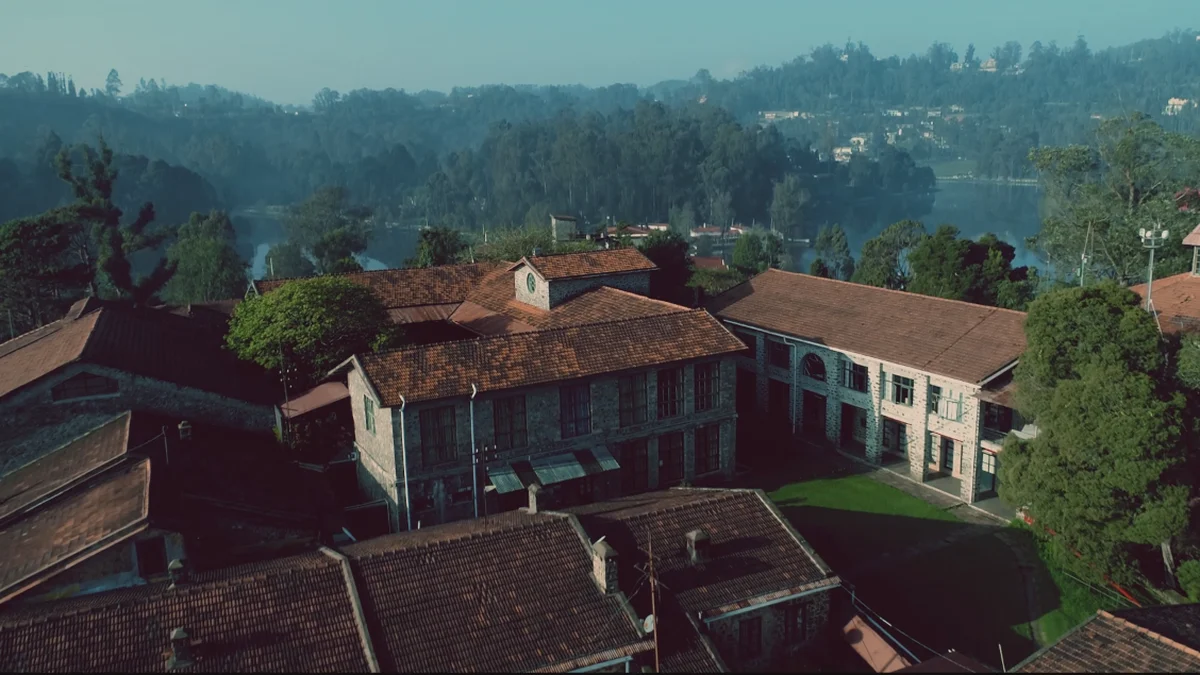
Kodaikanal, India – Nestled amidst the verdant embrace of the Palani Hills, Kodaikanal International School (KIS) stands as a testament to enduring educational ideals, a beacon of multiculturalism, and a pioneering institution that has shaped generations of global citizens. As the school proudly marks its 125th anniversary, a series of celebratory events are underway, reflecting on a rich history and embracing a future driven by innovation, environmental consciousness, and a profound commitment to holistic development.
This landmark anniversary offers a poignant opportunity to revisit the school’s origins, trace its evolution into a leading International Baccalaureate (IB) World School, and understand its enduring impact on students who have traversed its hallowed grounds from across India and the globe. The spirit of KIS, deeply intertwined with its breathtaking natural surroundings, continues to foster resilience, independence, and a profound sense of stewardship among its students.
The Genesis of a Hill Station Haven: From Highclerc to KIS
The story of Kodaikanal International School begins in 1901 with the establishment of Highclerc School. Founded by Margaret Eddy, a visionary driven by a pressing need, the institution was conceived as an English-medium residential school catering to the children of missionary families serving across South India. Eddy’s personal journey to India in the early 1900s to visit her son, Sherwood, a missionary in Batlagundu, illuminated a critical gap in educational provisions. She observed that the children of missionaries, often exposed to the challenges of tropical climates, suffered from illnesses and lacked access to a suitable local educational establishment.
Highclerc School was thus born out of a practical necessity, aiming to provide a safe and nurturing environment where these children could receive a quality education amidst the salubrious climate of the hills. However, the school’s vision soon transcended its initial mandate. Over the ensuing decades, KIS blossomed into a dynamic, multi-cultural, and multi-national institution, extending its embrace to students from diverse backgrounds and fostering an environment of global understanding and interconnectedness.
A Living Laboratory: The Palani Hills as an Educational Catalyst
The unique geographical setting of KIS is not merely an address; it is an integral component of the school’s identity and educational philosophy. Keith Ribeiro, Director of Admissions and Advancement at KIS, eloquently articulates this deep connection: "Kodaikanal is not simply where KIS happens to be located; it is part of our identity." The majestic Western Ghats, a UNESCO World Heritage site, serve as an extraordinary living laboratory, offering unparalleled opportunities for experiential learning.
The curriculum at KIS seamlessly integrates outdoor pursuits with academic rigor. Hiking, camping, field studies, environmental research, and outdoor sports are not extracurricular diversions but rather fundamental pedagogical tools. These activities are instrumental in cultivating essential life skills such as resilience, independence, teamwork, and a profound sense of stewardship for the natural world. The school’s expansive 135-acre Poondi wilderness campus further amplifies these learning experiences, providing an immersive environment for students to connect with nature and develop a deeper appreciation for its intricacies.

This profound connection with the natural world has left an indelible mark on countless alumni. Taira Malaney, a documentary filmmaker and alumna of KIS, reflects on her return to the school after 17 years: "It’s been incredibly nostalgic to return to Kodaikanal International School after 17 years of graduating." She fondly recalls her formative years at the institution, stating, "My connection with Nature began here. I was exposed to social and environmental issues in our immediate surroundings through experiential programmes." Malaney’s vivid memories include a field trip to a shola forest with Mr. Plymale, where she learned about invasive species like the eucalyptus tree, a poignant lesson in ecological balance and the long-term consequences of human intervention. This early exposure to environmental issues, nurtured within the KIS ethos, laid the groundwork for her career in environmental filmmaking.
Pioneering International Education: The IB Advantage
A significant milestone in KIS’s journey was its adoption of the International Baccalaureate Diploma Programme (IB DP) in 1976, making it the first school in India to offer this globally recognized curriculum. The IB DP is renowned for its rigorous academic standards, emphasis on critical thinking, and commitment to developing well-rounded individuals who are prepared to thrive in an increasingly complex world.
This forward-thinking approach has consistently positioned KIS at the forefront of international education in Asia. The school’s commitment to the IB framework ensures that students receive an education that fosters not only intellectual growth but also a global perspective, intercultural understanding, and a strong sense of personal responsibility.
Celebrating a Legacy, Embracing the Future: 125 Years of Impact
The 125th-anniversary celebrations at KIS are more than just a commemoration of its past; they are a vibrant affirmation of its enduring relevance and its visionary outlook for the future. The events are designed to engage the entire KIS community – students, faculty, alumni, and parents – in a shared reflection and a collective look ahead.
Taira Malaney’s return to KIS to screen her award-winning documentary, The Turtle Walker, as part of a nationwide campaign, exemplifies the school’s role in fostering creative expression and environmental advocacy among its alumni. Her presence underscores the profound impact KIS has had on shaping individuals who go on to make meaningful contributions to society.
Environmental Stewardship in an Era of Urgency
In an era acutely defined by the climate crisis and ecological challenges, KIS’s long-standing emphasis on environmental education has become more critical than ever. Keith Ribeiro highlights the urgent realities facing the Palani Hills: "The Palani Hills are ecologically fragile, and issues such as biodiversity loss, waste, water, land use and climate change are no longer abstract classroom topics."

The school actively engages students in addressing these pressing issues through hands-on initiatives. Biodiversity conservation, regenerative agriculture, waste management, and climate action are integrated into the curriculum, often in collaboration with researchers and local communities. This approach instills a sense of agency and empowers students to become active participants in finding sustainable solutions. The school’s commitment to environmental education is not merely academic; it is a deeply ingrained value that permeates every aspect of student life.
Evolving Education for an Unpredictable Future
As KIS embarks on its second century, the institution remains committed to evolving its educational approach to prepare students for an increasingly unpredictable future. The advancements in artificial intelligence, the escalating impacts of climate change, rapid technological disruptions, and a world characterized by both interconnectedness and polarization demand a new breed of educated individuals.
"Modernise the tools without losing the purpose," is the guiding principle articulated by Keith Ribeiro, describing KIS’s enduring approach to change. The school recognizes that success in the 21st century will require young people to possess not only technological prowess but also the ability to think critically, adapt swiftly, collaborate effectively across diverse cultures, and temper their technical skills with empathy and sound judgment.
Nurturing Curiosity and Unconventional Paths
A hallmark of a KIS education is the cultivation of curiosity, a trait that has led many alumni to forge unconventional yet deeply fulfilling paths. Tara Menon, Alumni and Development Coordinator, emphasizes that the most inspiring alumni stories are not solely those of conventional professional success but rather of individuals who have pursued their passions with unwavering curiosity and purpose, often venturing into unexpected territories.
Examples of such transformative journeys abound within the KIS alumni network. Joy Morshed (’99), who transitioned from molecular biology and genetics to entrepreneurship in the food industry, exemplifies this spirit of exploration. Architect Ketsa Jerome (’13) credits her childhood experiences at KIS with shaping her design philosophy, while Ruth Mabry (’86) has built a career in global public health, embodying the school’s values of empathy, service, and bridge-building. As Menon aptly puts it, "The common thread isn’t the profession; it’s the person they become."
The school also celebrates alumni like Zac O’Yeah, an accomplished author, musician, and journalist, who recently conducted a creative writing workshop for students. O’Yeah underscored the transformative power of language, encouraging young minds to view writing not just as a functional tool but as a gateway to myriad possibilities across journalism, translation, literary criticism, theatre, cinema, editing, and lyric writing.

Furthermore, the inspiring story of Viji Venkatesh, an actor, author, and cancer-care advocate, highlights the school’s encouragement of lifelong learning and reinvention. Venkatesh discovered her passion for acting at the age of 70, after a distinguished career in cancer care, demonstrating that age is no barrier to embracing new avenues and pursuing latent talents. Her journey underscores the KIS ethos that learning is a continuous and often surprising process.
The KIS Experience: A Foundation for a Purposeful Life
The lasting impact of a Kodaikanal International School education is best captured by the words of its alumni. Taira Malaney, reflecting on her time at KIS, shares, "I found true joy in learning at KIS, particularly through subjects such as Psychology, English and Visual Arts. The school, she says, changed not just what she learnt but ‘how I think, problem-solve, and ideate overall.’" These foundational skills, honed through a holistic educational experience, have been instrumental in shaping her career and her perspective on the world.
For Keith Ribeiro, the ultimate aim of KIS is not merely to prepare students for university or employment, but to equip them for an unpredictable future. The overarching ambition is to nurture young individuals who are capable of asking the most profound question: "What does the world need from me?" This question, he suggests, encapsulates the spirit of purpose-driven education that KIS strives to instill in every student.
As Kodaikanal International School celebrates 125 years of shaping minds and fostering futures, it stands as a beacon of educational excellence, a testament to the enduring power of holistic development, and a vital contributor to a world increasingly in need of compassionate, critically thinking, and environmentally conscious global citizens. The celebrations are not just a look back at a distinguished past, but a vibrant affirmation of a commitment to continuing its legacy of impactful education for generations to come.
