

By Automotive Correspondent
The automotive landscape is currently undergoing a paradigm shift, moving away from the traditional "displacement is king" philosophy toward a more nuanced, engineering-heavy approach. For years, car buyers have harbored a subconscious bias against small-capacity engines, particularly when tasked with powering the substantial frame of a Sport Utility Vehicle (SUV). The prevailing logic suggested that a 1.0-liter engine would inevitably struggle, feeling breathless under load and unrefined at high speeds.
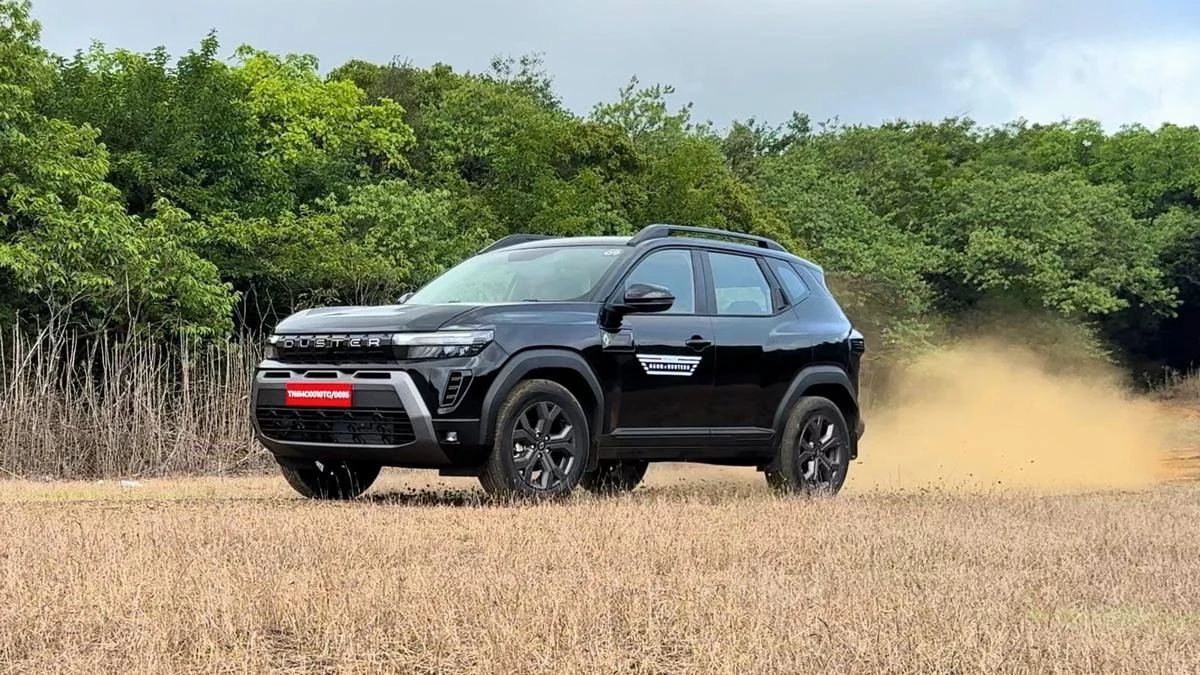
However, the introduction of the Renault Duster TCe 100 is systematically dismantling these preconceptions. By combining a 999cc turbocharged powertrain with a chassis tuned for driver engagement, Renault has produced a vehicle that challenges the status quo. Positioned within the highly competitive price bracket of ₹10.49 lakh to ₹13.49 lakh, the TCe 100 variant is emerging as a sophisticated alternative to both budget-friendly sub-compacts and more expensive European rivals.
Main Facts: Performance That Defies Specifications
On paper, the Renault Duster TCe 100 presents figures that might seem modest to the uninitiated. The heart of the vehicle is a 999cc, three-cylinder turbocharged petrol engine. It produces a maximum power output of 100PS and a peak torque of 166Nm. While these numbers are respectable, they do not immediately convey the "effortless" nature of the driving experience.
The real-world efficacy of this powertrain lies in its calibration. Unlike many small-capacity turbo-petrol engines that suffer from debilitating "turbo lag"—the delay between pressing the accelerator and the turbocharger providing boost—the TCe 100 unit offers a crisp, immediate response. This is largely due to the engine’s torque delivery; the full 166Nm is available from just 2,000rpm. This low-end grunt provides a broad mid-range, allowing the Duster to navigate urban traffic and steep inclines with a level of tractability usually reserved for 1.5-liter or 1.6-liter naturally aspirated engines.

Key Technical Specifications at a Glance:
- Engine: 999cc, 3-cylinder Turbocharged Petrol (TCe 100)
- Maximum Power: 100PS
- Peak Torque: 166Nm @ 2,000rpm
- Transmission: 6-speed Manual
- Braking: All-wheel disc brakes (Techno variant)
- Wheels: 17-inch Alloy wheels
- Price Range: ₹10.49 lakh – ₹13.49 lakh
Chronology: The Evolution of a Global Icon
To understand the significance of the TCe 100, one must look at the Duster’s evolution. The original Renault Duster was a global phenomenon, credited with popularizing the compact SUV segment in markets like India, Europe (under the Dacia brand), and South America. Its reputation was built on a foundation of ruggedness, a "go-anywhere" suspension, and a utilitarian charm.
The Shift from Diesel to Turbo-Petrol
For much of its early life, the Duster was synonymous with its 1.5-liter dCi diesel engine, lauded for its torque and efficiency. However, as global emission standards (such as BS6 in India and Euro 6 in Europe) tightened, Renault shifted its focus toward advanced petrol powertrains.
The development of the TCe (Turbo Control efficiency) family of engines represents years of research into "downsizing." While Renault shares the basic engine block with the Kiger’s turbocharged motor, the unit in the Duster has undergone substantial re-engineering. This chronology of development highlights a move from simple utilitarian transport to a more refined, "European-flavored" driving machine. The current TCe 100 is the culmination of this effort, designed to bridge the gap between fuel economy and the punchy performance expected of a Duster.
Supporting Data: Driving Dynamics and NVH Levels
The Duster’s appeal has always been rooted in its mechanical honesty, and the TCe 100 variant doubles down on this trait. Extensive testing across varied terrains—including highways, broken rural roads, and mountain passes—reveals data points that support its "mature" character.
Highway Composure and Flexibility
On the highway, the Duster maintains a comfortable cruise at three-digit speeds. Despite the small displacement, the engine does not feel "strained" at 100km/h. A gentle squeeze of the throttle in sixth gear produces a reassuring surge, allowing for clean overtakes without the necessity of constant downshifting. This flexibility is a direct result of the well-judged gear ratios in the six-speed manual transmission, which keep the engine within its "sweet spot."

Chassis and Suspension Calibration
The Duster’s suspension leans toward a firmer setup compared to its predecessor, but it avoids being harsh. This firmness pays dividends in body discipline; the vehicle remains planted during high-speed maneuvers and exhibits minimal body roll in corners.
Furthermore, the steering setup remains one of the best in its segment. Unlike the overly light and disconnected steering found in many modern SUVs, the Duster’s rack is precise and communicative. This provides the driver with a genuine sense of connection to the road, making the vehicle surprisingly engaging on winding mountain roads.
Refinement (NVH)
Three-cylinder engines are inherently prone to vibrations due to their odd-firing order. However, Renault has employed advanced damping and insulation techniques to mitigate this. While a faint thrum is audible at idle, the engine becomes remarkably smooth once underway. Noise, Vibration, and Harshness (NVH) levels are kept low, reinforcing the impression that this is a premium, well-insulated product.
Official Responses: Renault’s Engineering Philosophy
While official corporate statements often focus on market share, Renault’s engineering team has made it clear that the TCe 100 was designed to be the "rational choice" for the modern family. The focus was not on achieving the highest top speed, but on "usable power."
Engineers at Renault emphasize that the six-speed manual gearbox was specifically calibrated for this 1.0-liter unit to ensure it never felt "out of its depth." By offering all-wheel disc brakes on the higher Techno variant, Renault is also signaling a commitment to safety and stopping power that matches the vehicle’s improved performance. The company’s strategy involves positioning the Duster not just as a value-for-money proposition, but as a legitimate rival to the Volkswagen Taigun and Skoda Kushaq—vehicles known for their superior driving dynamics.

Implications: A New Benchmark for Value and Character
The success of the Renault Duster TCe 100 has significant implications for the future of the SUV market. It serves as a case study in how manufacturers can meet stringent environmental regulations without sacrificing the "soul" of a vehicle.
Market Positioning
At its current price point, the Duster TCe 100 occupies a unique space. It offers more interior volume and a more rugged chassis than most sub-4-meter SUVs, yet it undercuts the pricing of many mid-size SUVs. For buyers who find the 1.3-liter turbo variant too expensive or unnecessarily powerful, the TCe 100 represents the "sweet spot"—balancing performance, practicality, and price.
Interior Sophistication and Technology
The shift in the Duster’s character is also evident inside the cabin. Renault has moved away from the hard plastics of the past, incorporating:
- Dual-tone finishes and brown accents for a sophisticated aesthetic.
- Extensive use of fabric on seats and door trims to add warmth and texture.
- A responsive touchscreen with seamless Android Auto and Apple CarPlay integration.
However, there is still room for growth. The absence of ventilated seats and electric seat adjustment is a notable omission in a market where these features are increasingly becoming standard in the ₹13 lakh+ range.
Conclusion: Challenging the Numbers
The Renault Duster TCe 100 is a reminder that a vehicle is more than the sum of its specifications. It proves that a 1.0-liter engine, when paired with a world-class chassis and a well-calibrated gearbox, can provide a driving experience that feels "big."

For the majority of SUV buyers, the TCe 100 offers everything necessary: enough power for the hills, enough refinement for the city, and enough engagement for the enthusiast. It challenges the buyer to stop looking at the displacement figures and start looking at the road. In doing so, Renault has not only revitalized the Duster brand but has also set a new standard for what a "small" engine can achieve in a "large" role.
Renault Duster TCe 100 Price Range: ₹10.49 lakh – ₹13.49 lakh. Performance data and feature sets based on the Techno variant.
Motorscribes, in association with The Hindu, brings you the latest in automotive engineering and reviews. Follow them on Instagram @motorscribes for more updates on the evolving world of cars and bikes.
