

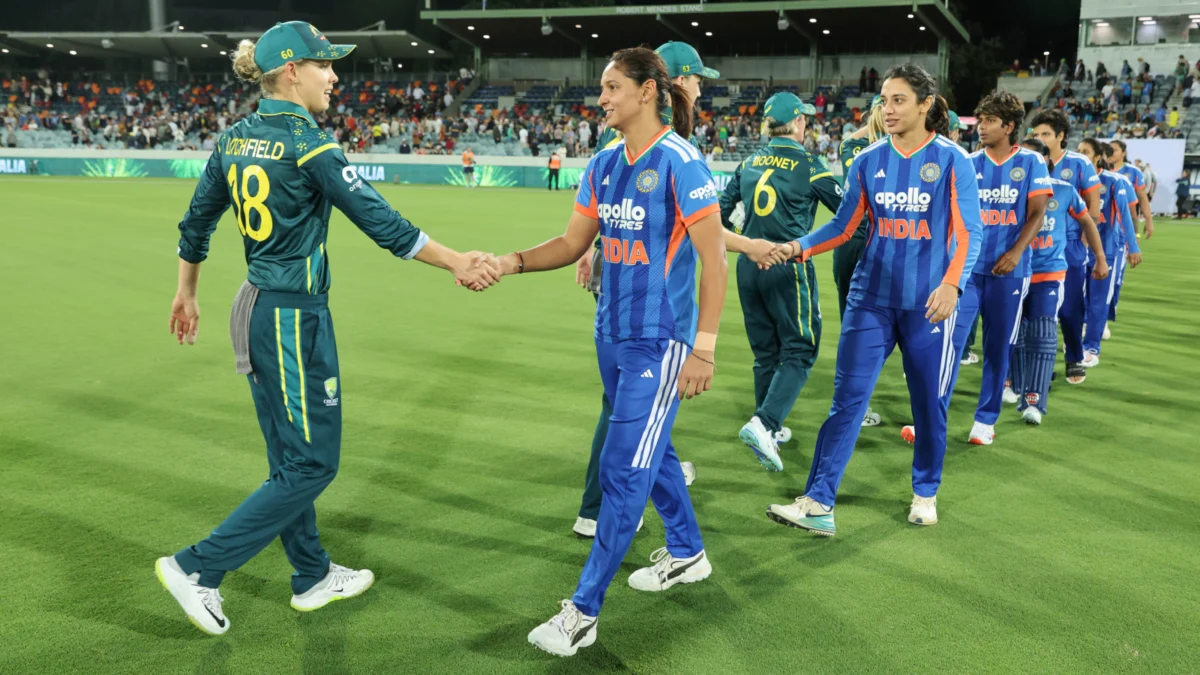
Lord’s, London – June XX, 2026 – The hallowed grounds of Lord’s are set to witness a high-octane encounter this Sunday as the India Women’s cricket team battles their formidable rivals, Australia, in a pivotal Group Stage match of the T20 World Cup 2026. For Harmanpreet Kaur’s Indian squad, this isn’t just another fixture; it’s a do-or-die clash that will determine their fate in the tournament. A victory is imperative to keep their semi-final aspirations alive, while a defeat against the reigning champions would see them make a premature exit from the competition, a stark and disappointing end for a team that arrived in England with significant expectations.
The cricketing world holds its breath as two of the sport’s titans prepare for what promises to be an electrifying contest. India, despite winning three of their four group matches, find themselves in a precarious position due to a solitary, yet impactful, loss against South Africa. This format’s unforgiving nature means that one slip-up can drastically alter a team’s trajectory. Standing in their way is an Australian side, led by the astute Sophie Molineux, who have been nothing short of ruthless, sweeping aside all four of their opponents with an almost casual brilliance. The question on every fan’s mind is whether India can summon their absolute best to overcome the tournament’s most dominant force and replicate past heroics on the grand stage.
The Road to Lord’s: A Tournament Chronology
The journey to this crunch encounter has been marked by contrasting narratives for the two cricketing powerhouses.
India’s Tumultuous Path
India entered the T20 World Cup 2026 brimming with confidence, carrying the momentum of their historic ODI World Cup triumph. Their campaign began with a convincing victory over Ireland, where openers Smriti Mandhana and Shafali Verma laid a strong foundation, followed by a disciplined bowling performance that sealed a comfortable win. This was followed by another dominant display against a spirited but ultimately outclassed Sri Lankan side, showcasing India’s batting depth and the potency of their spin attack.
However, the third group match against South Africa proved to be their Achilles’ heel. In a thrilling encounter, India’s usually reliable batting unit faltered under pressure, posting a chaseable total. While their bowlers fought valiantly, South Africa managed to chase down the target in the final over, inflicting a painful defeat. This loss not only dented India’s net run rate but, more critically, put them on the brink of elimination, making their final group game against Australia a must-win.
Following the setback, India rebounded with a crucial victory against Bangladesh, where Harmanpreet Kaur led from the front with a captain’s knock, ensuring they remained in contention. Yet, the performance wasn’t without its nervous moments, highlighting a recurring theme of inconsistency despite their wins. The team’s fielding, in particular, has been a cause for concern, with several dropped catches throughout the tournament potentially costing them crucial runs and momentum. These lapses in concentration will be under intense scrutiny against an Australian side known for exploiting every opportunity.
Australia’s Unblemished Dominance
In stark contrast, Australia’s campaign has been a masterclass in consistency and strategic execution. Under the astute leadership of Sophie Molineux, they have carved a path of destruction through the group stage, winning all four of their matches with remarkable ease. Their journey began with a commanding performance against Bangladesh, where their top order fired, setting a formidable total that their bowlers defended comfortably.
They then faced a sterner test against England in what was anticipated to be a fierce Ashes rivalry clash. However, Australia asserted their dominance, outplaying their arch-rivals in all departments. Beth Mooney’s sublime half-century anchored their innings, while Megan Schutt’s precision bowling dismantled England’s batting line-up. Subsequent victories against Sri Lanka and Ireland further solidified their position at the top of the group standings.
What sets this Australian team apart is their collective strength. Every player has contributed at crucial junctures, showcasing their incredible depth and versatility. From the explosive starts provided by Alyssa Healy and Beth Mooney, to the destructive all-round capabilities of Ashleigh Gardner and Tahlia McGrath, and the relentless pressure applied by their pace and spin attack, Australia has consistently delivered high-calibre performances. Their fielding has been exemplary, a stark contrast to India’s struggles, with acrobatic catches and sharp run-outs becoming a regular feature of their matches. They approach this final group game not just to win, but to maintain their unbeaten streak and carry an unshakeable momentum into the knockout stages.
The "Mumbai Miracle" and Recent Head-to-Head
While Australia typically holds the psychological edge in major tournaments, India has shown flashes of brilliance against them in recent times, offering a glimmer of hope. The most memorable of these was the "Mumbai miracle" during a bilateral T20I series in October 2025. At the electrifying DY Patil Stadium in Navi Mumbai, India pulled off a stunning victory against Australia, a match that Harmanpreet Kaur herself cited as a significant "barrier breaker" for the team.
In that encounter, chasing a challenging total, India’s batting unit, spearheaded by a blistering knock from Smriti Mandhana and a composed finish from Deepti Sharma, held their nerve to clinch a famous win in the final over. The atmosphere was electric, and the confidence derived from that performance was immense. It proved to India that Australia, while formidable, is not invincible.
This victory was part of a broader trend where India has managed to defeat Australia in two of their last three T20 International matches. While one-off bilateral series wins don’t entirely translate to World Cup pressure, they provide crucial psychological ammunition. These recent successes suggest that India has found a way to decode Australia’s strategies, or at least, has developed the belief required to challenge them effectively. However, doing it again on the grandest stage, at an iconic venue like Lord’s, with the added pressure of a World Cup knockout scenario, will demand an even greater level of performance and mental fortitude.
Supporting Data: A Deep Dive into Team Dynamics and Statistics
To understand the magnitude of this clash, a closer look at the statistical performances and key player dynamics is essential.
Batting Powerhouses and Bowling Maestros
India’s Batting:
India’s batting has been top-heavy, relying heavily on the explosive starts from Shafali Verma and Smriti Mandhana. Mandhana has been India’s leading run-scorer in the tournament, consistently providing stability and aggression at the top. Shafali, while capable of devastating knocks, has shown flashes of inconsistency. Harmanpreet Kaur has played crucial anchor roles, but the middle order’s ability to accelerate in the death overs has been inconsistent. Deepti Sharma’s all-round capabilities have been vital, but more consistent contributions from Richa Ghosh and Jemimah Rodrigues would significantly bolster their totals.
- Top Run-Scorers (Tournament Avg.): Smriti Mandhana (Avg. 45.2, SR 130.5), Harmanpreet Kaur (Avg. 38.0, SR 125.1)
- Team Highest Score: 178/4 vs Ireland
- Powerplay Run Rate: 7.5 runs/over (average)
Australia’s Batting:
Australia’s batting unit is a relentless machine, with power and finesse throughout the order. Beth Mooney has been a pillar of consistency, often anchoring the innings, while Alyssa Healy provides explosive starts. The likes of Tahlia McGrath, Ashleigh Gardner, and Grace Harris offer immense firepower in the middle and lower order, ensuring that Australia rarely falters in posting or chasing big totals. Their ability to rotate strike and find boundaries with ease makes them incredibly difficult to contain.
- Top Run-Scorers (Tournament Avg.): Beth Mooney (Avg. 62.8, SR 138.2), Alyssa Healy (Avg. 49.5, SR 145.0)
- Team Highest Score: 192/3 vs Bangladesh
- Powerplay Run Rate: 8.2 runs/over (average)
Bowling Prowess:
India’s bowling attack has been spearheaded by the pace of Renuka Singh Thakur, who has consistently picked up early wickets. The spin duo of Deepti Sharma and Radha Yadav has been crucial in the middle overs, stifling opposition scoring. However, the lack of a genuine death-bowling specialist has sometimes seen them leak runs in the final overs.
- Leading Wicket-Takers: Deepti Sharma (8 wickets, Econ. 6.2), Renuka Singh Thakur (7 wickets, Econ. 6.8)
- Team Economy Rate: 7.1 runs/over (average)
Australia’s bowling attack is balanced and incisive. Captain Sophie Molineux leads the spin department with her left-arm orthodox, while Ashleigh Gardner and Georgia Wareham provide crucial breakthroughs. Megan Schutt’s swing and accuracy with the new ball, coupled with Tahlia McGrath’s medium pace, ensure a constant threat. Their ability to pick up wickets at regular intervals and maintain tight economy rates has been a hallmark of their success.
- Leading Wicket-Takers: Sophie Molineux (9 wickets, Econ. 5.8), Megan Schutt (7 wickets, Econ. 6.5)
- Team Economy Rate: 6.4 runs/over (average)
Fielding and Pressure: The Unseen Battle
The disparity in fielding standards between the two teams has been noticeable. India has been "guilty of dropping their fair share of catches this tournament," a critical flaw in T20 cricket where every run and every wicket matters. These errors not only concede runs but also deflate team morale and allow opposition batters to build momentum. Against an Australian side known for its ruthless efficiency, such mistakes could be catastrophic.
Australia, conversely, boasts one of the best fielding units in world cricket. Their athleticism, anticipation, and sharp reflexes have translated into spectacular catches, direct-hit run-outs, and consistently tight ground fielding, saving crucial runs and creating pressure. This aspect of the game could very well prove to be a decisive factor at Lord’s.

Lord’s Pitch and Conditions
Lord’s typically offers a balanced pitch that can assist both pacers and spinners, especially early on. The famous slope can also add an extra dimension for bowlers. While the pitch is generally good for batting, it’s rarely a flat highway, demanding skill and application. Given the time of year (June), conditions could range from bright sunshine to overcast skies, which might influence swing and spin. The historical significance of the venue adds another layer of pressure and excitement, especially for players who dream of performing well at the "Home of Cricket."
Official Responses and Strategic Outlook
The pressure is palpable, and both camps are addressing it with their distinct approaches.
Harmanpreet Kaur’s Perspective: Embracing the Challenge
Harmanpreet Kaur, India’s inspirational captain, has been vocal about the team’s belief and the lessons learned from past encounters. "All set for Australia, one of our best oppositions. We’ll get a lot of confidence if we win that. Last win in Navi Mumbai gave a lot of confidence and broke barriers," she stated, highlighting the psychological impact of their recent successes against Australia.
When pressed on the team’s inconsistent performances and fielding woes, Kaur remained resolute. "We know where we need to improve. Dropped catches are frustrating, but the girls are working hard. This is a World Cup, and every mistake is magnified. We have had intense fielding sessions, focusing on concentration and execution. We cannot afford any lapses against Australia."
She also emphasized the importance of individual players stepping up. "We have a core group that won the ODI World Cup. The talent is there. It’s about playing with freedom, trusting our processes, and delivering our best performance when it matters most. We respect Australia, but we don’t fear them. We believe we can beat them." Her message to the team is clear: embrace the pressure, learn from past experiences, and play with the fearless attitude that brought them the ODI World Cup.
Sophie Molineux’s Calm Confidence: Maintaining Momentum
Australia’s captain, Sophie Molineux, while acknowledging India’s potential, exudes a calm confidence typical of her dominant side. "India is a fantastic team, and we always expect a tough contest against them. They have some world-class players who can turn a game on its head very quickly," Molineux remarked in her pre-match press conference. "Our focus, however, remains on our own game – maintaining our standards, executing our plans, and not getting complacent. Every match in a World Cup is important, regardless of our position in the group."
She highlighted the team’s emphasis on consistency and adaptability. "We’ve had a strong run, but we know T20 cricket can be unpredictable. We’ve prepared for various scenarios and conditions. Lord’s is a special venue, and we’re looking forward to the challenge." Molineux’s understated confidence masks a fierce competitive spirit, and her team’s disciplined approach suggests they will leave no stone unturned in their quest for another victory.
Coaching Staff and Expert Opinions
Coaches from both sides will undoubtedly be stressing the importance of the first six overs with both bat and ball, the tactical battleground of T20 cricket. For India, it will be about negating Australia’s early breakthroughs and getting a strong start, while for Australia, it will be about exploiting India’s early vulnerabilities.
Cricket pundits are divided, with many acknowledging Australia’s superior form but refusing to rule out an Indian upset. Former England captain Charlotte Edwards commented, "Australia are favorites, no doubt. Their consistency is unmatched. But India, especially with Harmanpreet leading, have that spark, that ability to pull off something special. If their top order fires and their fielders hold onto catches, it could be a classic."
Implications: The Road Ahead
The outcome of this match will have profound implications, not just for the two teams involved but for the narrative of the T20 World Cup 2026 and the broader landscape of women’s cricket.
If India Wins: A Renewed Campaign and Shattered Doubts
A victory for India would be monumental. It would immediately secure their qualification for the semi-finals, likely setting up a clash against another strong contender from the opposite group. More than just qualification, a win against the dominant Australians at Lord’s would provide an immense psychological boost, validating their status as a top-tier cricketing nation capable of performing under extreme pressure. It would silence critics who questioned their consistency and ability to deliver in crucial moments beyond their ODI World Cup triumph.
Such a win would fuel their confidence, turning them into genuine title contenders. It would demonstrate that the "Mumbai miracle" was not a fluke but a testament to their evolving resilience and tactical prowess against the best in the world. The narrative would shift from a team struggling to find its rhythm to one that peaked at the right time, ready to challenge for the T20 World Cup trophy.
If India Loses: A Disappointing End and Future Questions
Conversely, a loss would result in India’s elimination from the group stage, a bitter pill to swallow for a team that arrived with such high hopes and a core of ODI World Cup winners. This early exit would inevitably lead to intense scrutiny and introspection. Questions would be raised about their T20 strategy, their ability to handle pressure in multi-nation tournaments, and the recurring issues of dropped catches and inconsistent batting performances.
For Harmanpreet Kaur and the coaching staff, it would mean a period of critical evaluation regarding player selections, tactical approaches, and mental conditioning. The disappointment could cast a shadow on the team’s morale and might prompt significant changes in the squad or support staff moving forward. It would be a significant setback for a team that has been instrumental in raising the profile of women’s cricket in India.
For Australia: Cementing Dominance or Exposing Vulnerabilities
For Australia, a victory would further cement their status as the tournament’s overwhelming favorites and an almost invincible force. It would ensure they carry an unbeaten record and formidable momentum into the semi-finals, sending a clear message to any potential challengers. Their continued dominance would reinforce their legacy as one of the greatest teams in cricketing history.
However, even if they lose, Australia would likely still qualify for the semi-finals given their superior net run rate. A defeat, while a dent to their unbeaten streak, might serve as a timely wake-up call, exposing any latent vulnerabilities that other teams could exploit in the knockout stages. It could provide valuable lessons without costing them their tournament life.
The Broader Impact on Women’s Cricket
Regardless of the outcome, this high-stakes encounter between two of the world’s best teams at an iconic venue like Lord’s underscores the growing global appeal and competitive intensity of women’s cricket. Matches of this calibre, filled with drama, skill, and immense pressure, are vital for inspiring future generations and continuing to elevate the sport on the international stage. The world will be watching as India and Australia battle it out, not just for a semi-final spot, but for pride, legacy, and the very soul of their T20 World Cup campaign.
Stay updated with the latest sports news across Cricket, Football, Chess, and more. Catch all the action with real-time live cricket score updates and in-depth coverage of ongoing matches.
