

ROME — For over eight decades, the name Ferrari has been synonymous with the visceral scream of internal combustion engines, the smell of high-octane fuel, and a design language that captures the aggressive elegance of Italian motorsport. However, in a historic reveal in Rome, the Prancing Horse has signaled its most radical departure since Enzo Ferrari first bolted his name to a cylinder head.
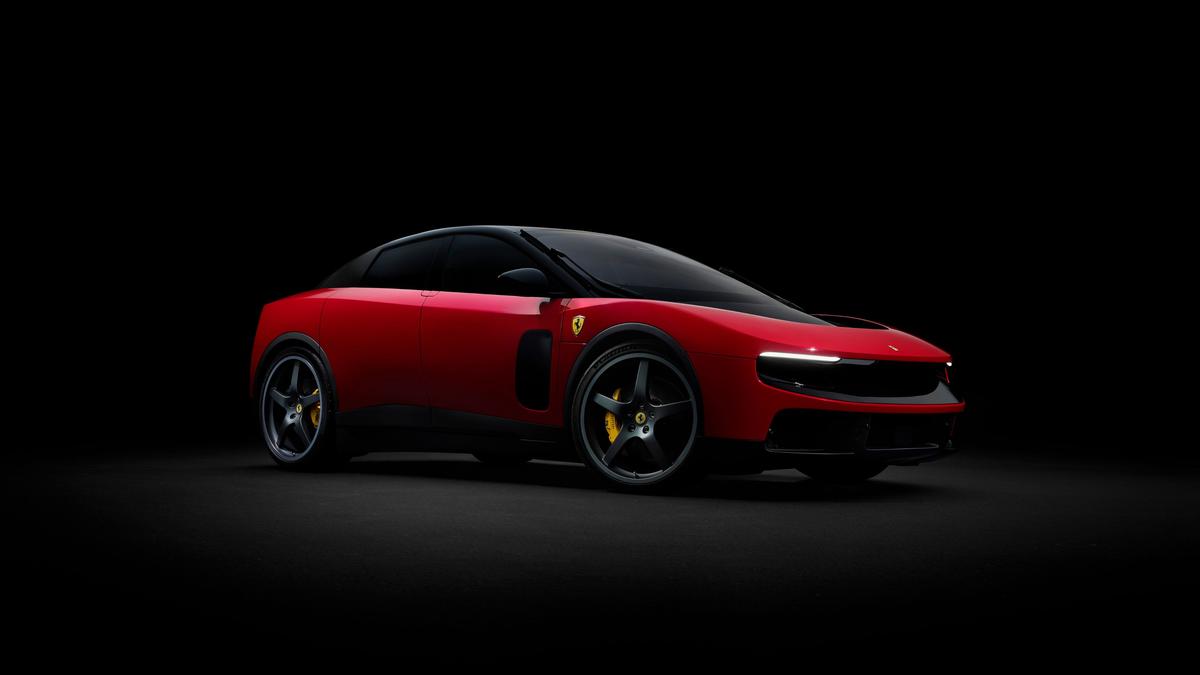
The unveiling of the Ferrari Luce—the brand’s first-ever fully electric vehicle (EV)—is not merely a product launch; it is an existential pivot. A five-seat, four-door grand tourer that eschews the traditional Ferrari silhouette for a minimalist, "shell-like" aesthetic, the Luce represents a bold gamble on the future of performance luxury. While its technical specifications are undeniably world-class, the car has immediately ignited a firestorm of debate among enthusiasts and investors alike, raising a fundamental question: Can a Ferrari still be a Ferrari without the soul of a piston engine?
I. Main Facts: Redefining the Prancing Horse
The Ferrari Luce is a clean-sheet design, built on a bespoke electric architecture developed entirely in-house at Maranello. Unlike many competitors who have adapted existing internal combustion platforms for electrification, Ferrari opted for a dedicated EV foundation to maximize the packaging advantages of a battery-electric powertrain.
Key Specifications at a Glance:
- Powertrain: Four independent electric motors (one per wheel).
- Total Output: 1,050 horsepower.
- Acceleration: 0-100 km/h in 2.5 seconds; 0-200 km/h in 6.8 seconds.
- Top Speed: In excess of 310 km/h (193 mph).
- Battery Capacity: 122 kWh integrated vehicle-structure pack.
- Range: Over 530 kilometers (WLTP).
- Charging: 350 kW DC fast charging (adds 70 kWh in approximately 20 minutes).
- Weight: 2,260 kg (kerb weight).
The Luce is positioned as a high-end Grand Tourer (GT), aiming to blend hyper-car performance with the usability of a five-seat cabin. However, its most striking feature is its price tag. Expected to retail at approximately €500,000 (roughly ₹5 crore in India before local taxes and duties), the Luce sits at the apex of the luxury EV market, competing with the likes of the Rimac Nevera and high-end Porsche Taycan variants, while carving out a unique "Performance Luxury" niche.
II. Chronology: From Concept to Controversial Reveal
The journey to the Luce began several years ago under Ferrari’s "multi-energy strategy." While the company had successfully integrated hybrid technology into models like the LaFerrari and the SF90 Stradale, the transition to a "zero-emission" vehicle remained a guarded secret.
- The LoveFrom Partnership: In a surprising move, Ferrari bypassed its traditional internal styling cues, partnering with LoveFrom, the creative collective led by former Apple design chief Sir Jony Ive and renowned industrial designer Marc Newson. This collaboration, announced in late 2021, signaled that Ferrari’s first EV would be a "lifestyle" product as much as a performance machine.
- The Rome Unveiling: The Luce was revealed in a high-profile event in the Italian capital. Ferrari Chairman John Elkann and CEO Benedetto Vigna presented the car not as a replacement for the V12 bloodline, but as a "new chapter" intended to expand the brand’s ecosystem.
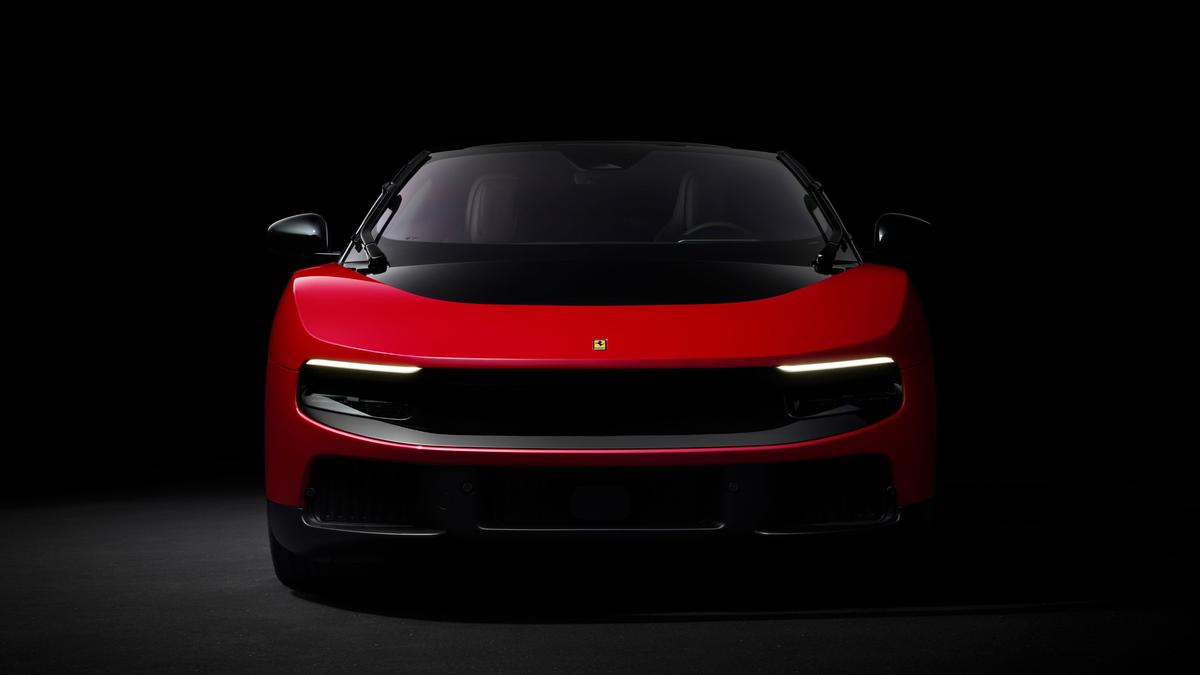
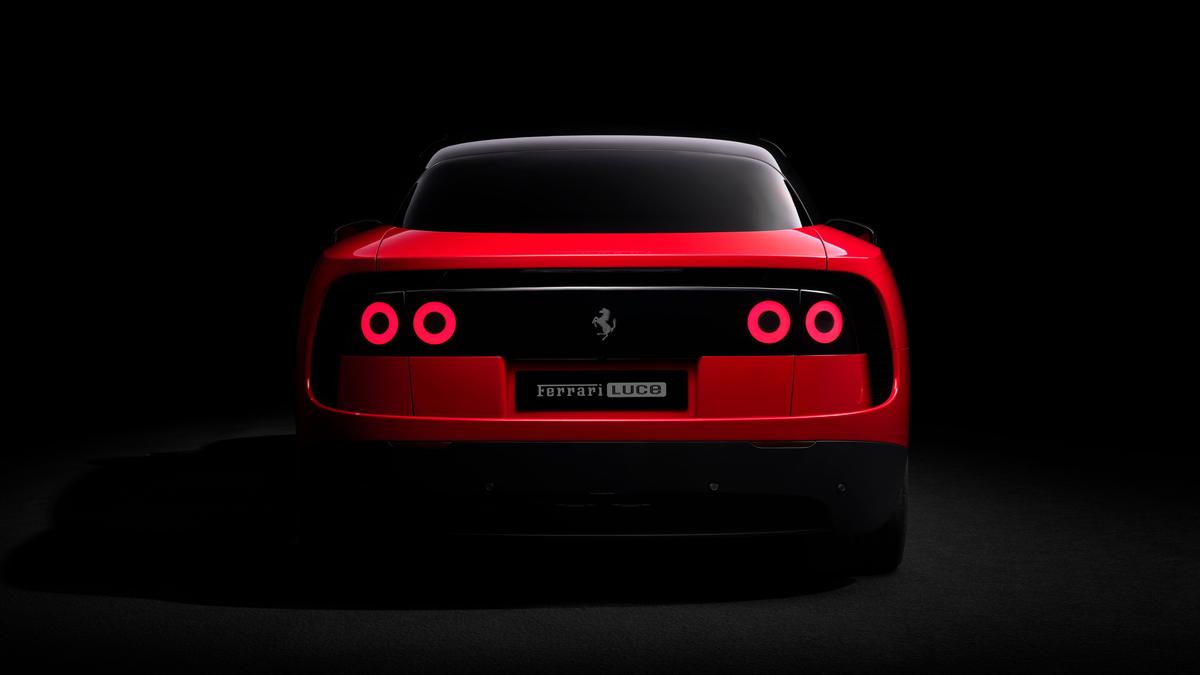
- Immediate Backlash: Within hours of the digital and physical reveal, social media platforms and Ferrari owner forums (such as FerrariChat) were flooded with criticism. Enthusiasts took aim at the "clinical" design, noting that the Luce lacked the "sensual aggression" of predecessors like the 458 Italia or the 812 Superfast.
- Market Reaction: Perhaps most tellingly, Ferrari’s stock (RACE) reportedly dipped by nearly seven percent following the reveal. Analysts suggest this was a reaction to the perceived risk of brand dilution and the radical departure from the aesthetic "DNA" that has traditionally supported Ferrari’s industry-leading margins.
III. Supporting Data: Engineering the "Emotional" EV
To counter the criticism that electric cars are "soulless," Ferrari has poured immense R&D into the Luce’s driving dynamics. The challenge was to manage the car’s 2,260-kilogram weight—a significant figure for a brand obsessed with lightness.
Advanced Dynamics and Torque Management
The Luce utilizes a sophisticated all-wheel-drive system governed by proprietary software. By using four independent motors, the car can perform "active torque vectoring" at a level impossible for an internal combustion engine. This allows the Luce to pivot into corners with an agility that Ferrari claims masks its substantial mass.
The "Authentic" Sound Philosophy
One of the most debated features of the Luce is its sound system. Ferrari rejected the idea of "fake" engine noises pumped through speakers. Instead, engineers developed a system that captures the natural mechanical vibrations of the electric motors and drivetrain. These frequencies are amplified and transmitted into the cabin, providing a real-time "acoustic signature" that changes based on load and speed. It is a high-tech solution to the sensory void left by the absence of an exhaust note.

Interior Innovation: The "Digital Cocoon"
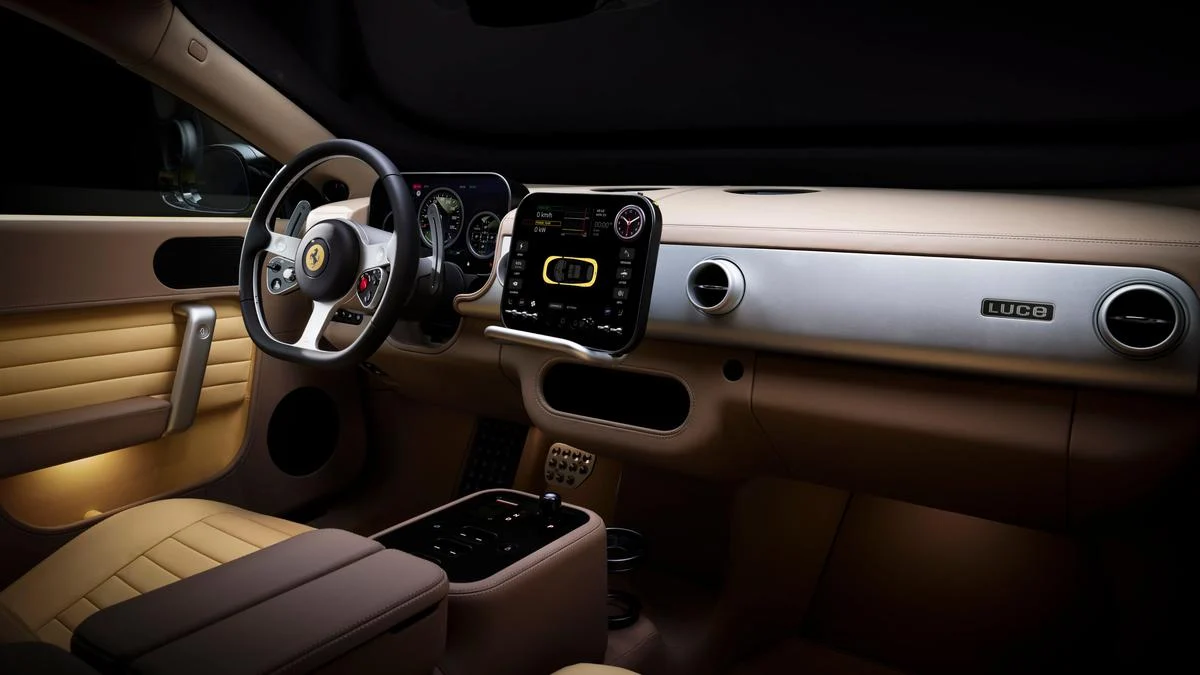
If the exterior is divisive, the interior is a masterclass in modern luxury. Ferrari collaborated with Samsung for the OLED displays and utilized Corning Gorilla Glass throughout the cabin.
- The E Ink Key: When docked, the car’s key changes its visual display using electronic ink technology.
- The Interface: Unlike many modern EVs that rely solely on touchscreens, Ferrari has retained tactile, aluminum switches for critical functions, ensuring a "mechanical" feel remains part of the user experience.
- Audio: A bespoke 21-speaker, 3,000-watt sound system provides an auditorium-like experience for all five passengers.
IV. Official Responses: A New Strategy for a New Era
Ferrari’s leadership has been firm in defending the Luce, framing it as an additive rather than a subtractive move for the company.
Benedetto Vigna, CEO of Ferrari, emphasized during the launch that electrification is a tool for innovation rather than a regulatory burden. "The Luce is the beginning of a new chapter," Vigna stated. "It was never intended to replace our petrol-powered icons. It is an expansion—a new way to experience Ferrari performance that was simply not possible with a thermal engine."
Company insiders suggest that the Luce is aimed at a "new generation" of wealth—tech entrepreneurs and younger collectors who may find the traditional "theatre" of a V12 intimidating or socially outdated, but who still demand the prestige of the Prancing Horse. Ferrari’s "multi-energy" approach means the company will continue to produce internal combustion engines (ICE) and hybrids as long as regulations allow, positioning the Luce as a third pillar in a diversified portfolio.
V. Implications: Risk, Reward, and the Future of Luxury
The Luce represents the biggest gamble in Maranello since the company went public. The implications of this launch reach far beyond the automotive sector.
1. Brand Identity vs. Innovation
Ferrari’s value is built on its "mythology." By adopting a design language that many critics compare to "luxury consumer technology" rather than "Italian exotica," Ferrari risks alienating the Tifosi (the loyal fan base). If the brand becomes indistinguishable from a high-end Tesla or Lucid in terms of design philosophy, it may lose the "scarcity of emotion" that allows it to command half-million-dollar prices.
2. The Jony Ive Effect
The involvement of LoveFrom suggests that Ferrari is looking to Apple’s playbook: creating a closed, highly aestheticized ecosystem where design and software are as important as mechanical hardware. This could redefine what "performance" means in the 21st century—moving the goalposts from 0-100 times to "digital seamlessness" and "sustainable luxury."
3. Financial and Market Pressure
The 7% drop in stock price highlights the tightrope Ferrari must walk. Investors are wary of the massive CapEx required for EV development and the potential for lower margins if the Luce does not meet sales targets. However, if the Luce successfully captures the "Green-Wealth" demographic in markets like China and California, it could provide a massive new revenue stream that is decoupled from the traditional ICE enthusiast market.
4. The Global EV Landscape
With the Luce, Ferrari has officially entered the "EV Arms Race." While Lamborghini and McLaren are still perfecting their full-electric strategies, Ferrari has planted a flag. The Luce’s success or failure will likely dictate the design and engineering direction of the entire supercar industry for the next decade.
Conclusion: A Landmark or a Misstep?
The Ferrari Luce is a polarizing masterpiece of engineering. On paper, it is an extraordinary achievement—1,050 horsepower, a five-seat layout, and a range that makes it a viable cross-continental tourer. Yet, the emotional disconnect felt by the traditionalist community cannot be ignored.
As the covers came off in Rome, it became clear that Ferrari is no longer just a car company; it is attempting to become a technology-driven luxury house. Whether the Luce will be remembered as the car that saved Ferrari for a carbon-neutral future or the car that broke the spell of the Prancing Horse remains to be seen. For now, the world watches to see if buyers will choose this silent, futuristic vision of Italy, or if they will continue to clamor for the "proper" petrol-blooded Ferraris that built the legend.
This report was prepared in association with Motorscribes and The Hindu. For more updates on the evolving luxury automotive landscape, follow our digital editions.
