

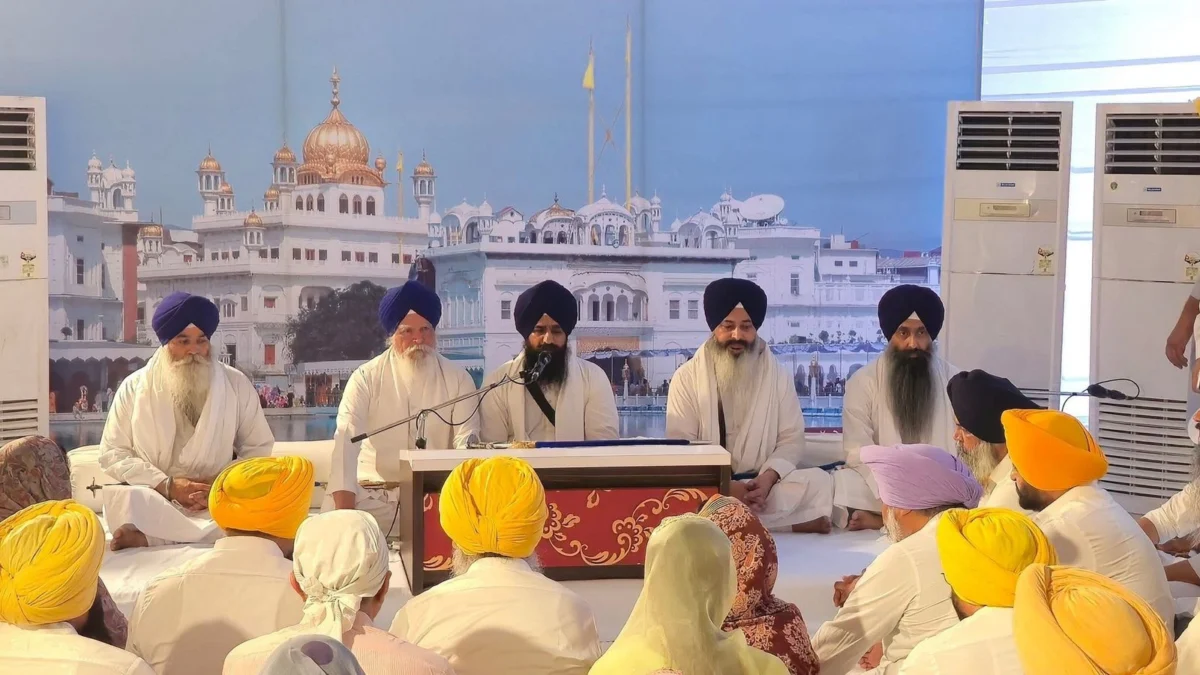
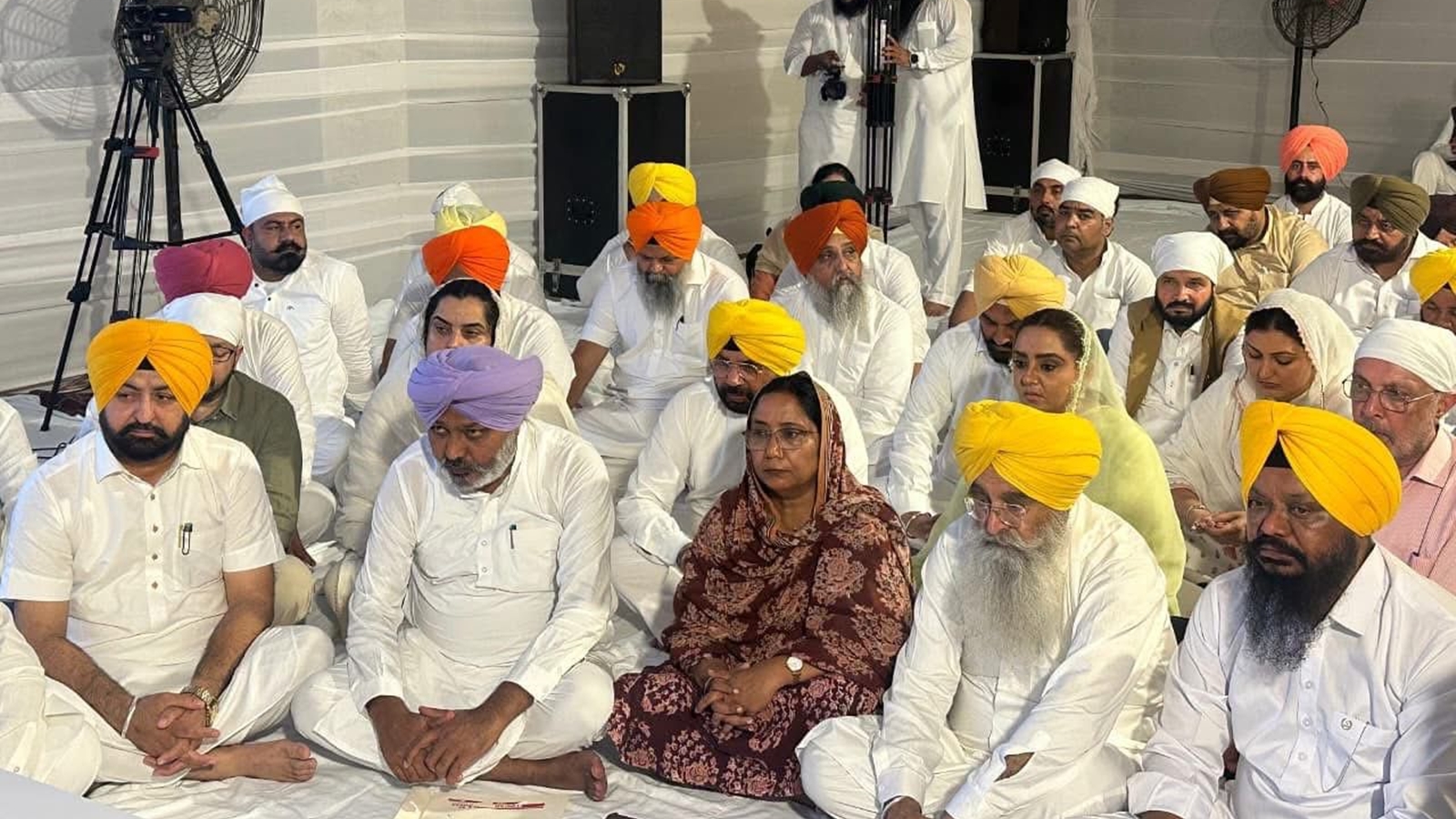
Amritsar, Punjab – In an unprecedented revelation that has sent shockwaves through political and religious circles, several Punjab MLAs from across party lines publicly admitted before the revered Akal Takht on Monday that they had passed the highly sensitive anti-sacrilege legislation without having read its contents. Their collective confession cited the last-minute circulation of the Bill’s copies as the primary reason for their oversight, raising serious questions about legislative integrity and the sanctity of democratic processes.
The extraordinary admission came during a summons by the Akal Takht, the supreme temporal authority of Sikhism, which had convened Sikh MLAs and ministers to address significant objections to the provisions of the recently enacted Jaagat Jot Sri Guru Granth Sahib Satkar (Amendment) Act, 2026. The Takht, under the leadership of its Jathedar, Giani Kuldeep Singh Gargajj, has firmly asserted that the ruling Aam Aadmi Party (AAP) government pushed the legislation through without engaging in crucial consultations with key Sikh stakeholders, including the Akal Takht itself and the Shiromani Gurdwara Parbandhak Committee (SGPC), the apex body for the management of Sikh Gurdwaras.
This startling admission by elected representatives underscores a deepening crisis in legislative conduct, drawing sharp condemnation from legal and political experts who have labeled such actions as "criminal and irresponsible." The incident not only highlights a systemic disregard for parliamentary procedures but also ignites a fierce debate over the erosion of democratic checks and balances in state assemblies.
A Legislative Breach: The Akal Takht Summons
The Akal Takht’s decision to summon the Sikh legislators was rooted in profound concerns over the 2026 Amendment Act, which aims to enhance penalties for sacrilege against the Guru Granth Sahib. While the intent of protecting the holy scripture is universally supported within the Sikh community, the process by which the law was enacted has become a focal point of contention. The Akal Takht’s primary grievance revolved around the perceived unilateral approach of the AAP government, which allegedly bypassed traditional channels of consultation with Sikh religious and administrative bodies.
For Sikhs, the Akal Takht holds unparalleled spiritual and temporal authority. A summons from this hallowed institution is considered a deeply serious matter, often carrying significant moral and social weight. Appearing before the Akal Takht requires absolute truthfulness, and it was this solemn atmosphere that reportedly compelled the MLAs to confess their legislative negligence. Their admission, made in such a revered setting, lends undeniable gravity to the issue, making it impossible to dismiss as mere political rhetoric.
The Jathedar, Giani Kuldeep Singh Gargajj, had explicitly stated that any law pertaining to the sanctity of the Guru Granth Sahib – which Sikhs revere as a living Guru – must be formulated with the utmost deliberation and in complete harmony with the collective will and wisdom of the Sikh Panth, represented by its established institutions. The failure to consult these bodies, therefore, was seen as a direct affront to Sikh traditions and an undermining of the Akal Takht’s authority.
Chronology of Contention: Two Bills, One Controversy
The controversy surrounding the 2026 Amendment Act is not an isolated incident but is intertwined with a parallel legislative effort, further complicating the narrative of governmental transparency and stakeholder engagement.
The initial legislative endeavor was "The Punjab Prevention of Offences Against Holy Scriptures Bill, 2025," a broader, all-faith legislation intended to protect religious texts of various faiths, including the Gita, Ramayana, Quran, and Bible, alongside the Guru Granth Sahib. This bill, after its introduction, was referred to a Select Committee, headed by AAP MLA Dr. Inderbir Singh Nijjar, by the state Assembly in July of the preceding year.
Paramvir Singh, a professor in the Department of Encyclopaedia of Sikhism at Punjabi University, Patiala, and a respected member of the SGPC’s Sikh History Research Board, recounted his involvement in a 15-member SGPC committee specifically constituted to advise the Punjab government on this 2025 all-faith legislation. However, his experience reveals a troubling pattern of governmental unresponsiveness. "First, the government never responded to our queries or shared details despite repeated reminders on the 2025 proposed new law to protect scriptures of all faiths," Singh stated, highlighting a breakdown in communication and consultation from the outset.
Adding to the complexity, the government, while the 2025 all-faith legislation was still languishing in the Select Committee, quietly introduced and passed the Jaagat Jot Sri Guru Granth Sahib Satkar (Amendment) Act, 2026. This new legislation was specific to the Guru Granth Sahib and acted as an amendment to a previous 2008 Act. Crucially, Singh confirmed, "For the 2026 Amendment Act, our committee was never consulted." This circumventing of established advisory channels and the abrupt shift from an all-faith bill to a Guru Granth Sahib-specific amendment without stakeholder input fueled suspicions and ultimately led to the Akal Takht’s intervention.
The timeline suggests a deliberate move by the government to expedite legislation on sacrilege, potentially driven by political considerations or a desire to project a strong stance on a deeply emotional issue for the Sikh community. However, this haste appears to have come at the cost of due diligence, legislative transparency, and respect for established religious institutions.
Supporting Data: Experts Decry "Criminal and Irresponsible" Conduct
The admissions by the MLAs have drawn sharp criticism from legal and political experts, who universally condemned the practice of passing laws without thorough understanding. They view it as a severe dereliction of duty and a fundamental betrayal of the trust placed in elected representatives.
Ashutosh Kumar, a professor of political science at Panjab University, Chandigarh, minced no words in his assessment. "In a vibrant democracy, it is ‘criminal and irresponsible’ for legislators to pass laws, which have a bearing on people’s lives, without reading them," he asserted. Kumar also raised concerns about a growing trend of "sensitive Bills being passed within minutes and often without meaningful debate."
He elaborated on the fundamental stages of legislative process, which are designed as constitutional safeguards:
- First Reading (Introduction): The formal introduction of the Bill to the legislative body.
- Second Reading (Detailed Discussion and Scrutiny): Considered the "heart of the legislative process," this stage involves extensive debate, clause-by-clause scrutiny, and, if necessary, referral to a Select Committee for wider consultation and expert input.
- Third Reading (Final Vote): The final stage before the Bill is sent to the President or Governor for assent.
"Broadly, the procedure is the same in Parliament and Assemblies. But these constitutional safeguards are hardly being followed," Kumar lamented. He noted a particularly alarming trend where the second reading, intended for robust deliberation, is often bypassed or rushed. "Today, the second reading – the heart of the legislative process – is no longer being taken seriously. Bills are being passed within minutes, without discussion, including in Punjab. Many lawmakers now see constituency work as their primary responsibility, not lawmaking. At the state level, it has become an even bigger circus, with multiple Bills being passed in quick succession without MLAs reading a word," he added, painting a grim picture of legislative atrophy.
Kumar also criticized the increasing practice of passing legislation in the absence of the Opposition, further stifling debate and diverse perspectives. He concluded by directly addressing the sacrilege bill controversy: "Passing legislation without reading or debating it is criminal and irresponsible… Not consulting the Akal Takht on such (anti-sacrilege) legislation was a grave mistake."
Dr. Kehar Singh, a former professor and head of the political science department at Punjabi University, echoed these sentiments, observing that the episode reflected a "disturbing national trend." "It has become an unhealthy practice for MPs and MLAs to pass laws without reading them. This responsibility has effectively been left to a select few," he stated. Dr. Singh further highlighted the rushed nature of the anti-sacrilege Bill, emphasizing that it "was not circulated in advance and members were given no time to study it. The government appeared more interested in scoring political points than ensuring proper legislative scrutiny." His observation that "For Sikhs, one cannot lie before the Akal Takht. That is why the MLAs admitted they had not read the Bill" underscores the moral pressure that led to the confessions.
Former Punjab Assembly Speaker Rana K P Singh also weighed in, expressing dismay at the legislative conduct. "What happened today shows how seriously legislators treat sensitive laws. Members of the House must be given reasonable time to study and reflect on proposed legislation before voting on it," he stressed, pointing to a fundamental breach of legislative protocol.
Official Responses: Admissions and Accusations
While the MLAs’ admissions before the Akal Takht served as a form of official response – a confession of legislative negligence – a direct, comprehensive official response from the AAP government or its leadership regarding the process remains largely absent. The MLAs’ claim of "last-minute circulation" implicitly points fingers at the government’s handling of the legislative agenda, suggesting either disorganization or a deliberate attempt to rush the bill through without scrutiny.
Paramvir Singh’s account of the SGPC committee’s experience further highlights the lack of official engagement. Despite repeated attempts to engage with the government on the 2025 all-faith bill, there was "no response to queries" or sharing of details. This demonstrates a consistent pattern of non-consultation and opaqueness in the legislative process, particularly concerning matters of profound religious significance. Singh characterized the MLAs’ admissions as "extremely unfortunate," warning that it "set a wrong precedent that legislators had passed such a sensitive law without even reading it."
The absence of a robust defense from the government side regarding the procedural lapses further reinforces the perception that due process was indeed compromised. The focus appears to have been on passing the law swiftly, perhaps to appease public sentiment or demonstrate resolve on sacrilege, rather than adhering to the meticulous legislative process that ensures good governance.
Implications: Erosion of Democracy and the Anti-Defection Conundrum
The repercussions of this incident extend far beyond the immediate controversy surrounding the anti-sacrilege law. It lays bare several critical implications for Indian democracy, legislative integrity, and the delicate balance between political expediency and constitutional duty.
1. Erosion of Legislative Scrutiny: The most immediate implication is the alarming erosion of legislative scrutiny. When elected representatives admit to passing laws without reading them, it signifies a profound failure of their primary duty: to legislate thoughtfully and responsibly. Laws passed without proper understanding can have unintended consequences, create legal ambiguities, and ultimately harm the very citizens they are meant to serve. This incident highlights a systemic issue where the legislative process is reduced to a mere formality, with bills often becoming tools for political posturing rather than carefully crafted instruments of governance.
2. Undermining Public Trust: Such admissions inevitably erode public trust in democratic institutions. If legislators themselves do not take their lawmaking responsibilities seriously, how can citizens be expected to have faith in the laws enacted or the system that produces them? This crisis of confidence can lead to increased cynicism, political apathy, and even social unrest, particularly when sensitive religious issues are involved.
3. Disregard for Religious Sentiments and Institutions: The failure to consult the Akal Takht and SGPC on a law directly impacting the sanctity of the Guru Granth Sahib is a grave misstep. It not only disrespects the established religious authority of the Sikh community but also risks alienating a significant section of the populace. In a multi-religious society, respecting community sentiments and engaging with religious institutions on matters affecting them is crucial for maintaining social harmony. The Akal Takht’s intervention underscores the community’s demand for genuine participation in such critical legislative endeavors.
4. The Anti-Defection Law’s Shadow: Senior Congress leader and Lok Sabha MP Manish Tewari offered a nuanced perspective, linking the legislative malaise to the Tenth Schedule of the Constitution, commonly known as the anti-defection law. While acknowledging the constitutional and moral duty of legislators to read every word of a Bill, Tewari argued that the anti-defection law "has significantly curtailed independent legislative judgment."
"Whenever a legislation comes before any House it is incumbent upon every MP and MLA to read every word before saying ‘Aye’," Tewari stated. "The difficulty, however, lies with the Tenth Schedule of the Constitution… Once a party whip is issued, legislators are often unable to exercise their conscience, represent constituency concerns or apply independent judgment, as defying the whip can invite disqualification. That is deeply unfortunate."
The anti-defection law, originally introduced to prevent political horse-trading and ensure party stability, has inadvertently created a scenario where individual legislators become bound by party directives, often at the expense of independent thought and scrutiny. This means that even if an MLA wanted to thoroughly read and debate a bill, or even vote against it based on their conscience or constituency interests, the threat of disqualification can compel them to fall in line, effectively turning them into "rubber stamps" for their party’s agenda. This fundamental tension between party loyalty and individual legislative responsibility is a critical challenge facing Indian parliamentary democracy.
5. Future Ramifications: The Akal Takht’s response to the MLAs’ admission and the government’s future course of action will be closely watched. The religious body may impose religious penalties or issue directives, which could have significant political ramifications for the AAP government and the implicated MLAs. Politically, the incident could tarnish the AAP’s image, particularly among Sikh voters who value the sanctity of religious institutions and transparent governance. It also sets a dangerous precedent for future legislation, risking further erosion of democratic principles if not addressed with seriousness and systemic reforms.
In conclusion, the admissions before the Akal Takht represent more than just a procedural lapse; they signify a profound crisis in legislative ethics and democratic accountability in Punjab. The incident serves as a stark reminder of the sacred duty of elected representatives and the imperative to uphold the integrity of the lawmaking process, ensuring that laws are not merely passed but are thoughtfully deliberated, thoroughly understood, and enacted with the full consultation of affected stakeholders. Failure to do so risks not only legal chaos but also a deeper fracture in the social and democratic fabric of the state.
