

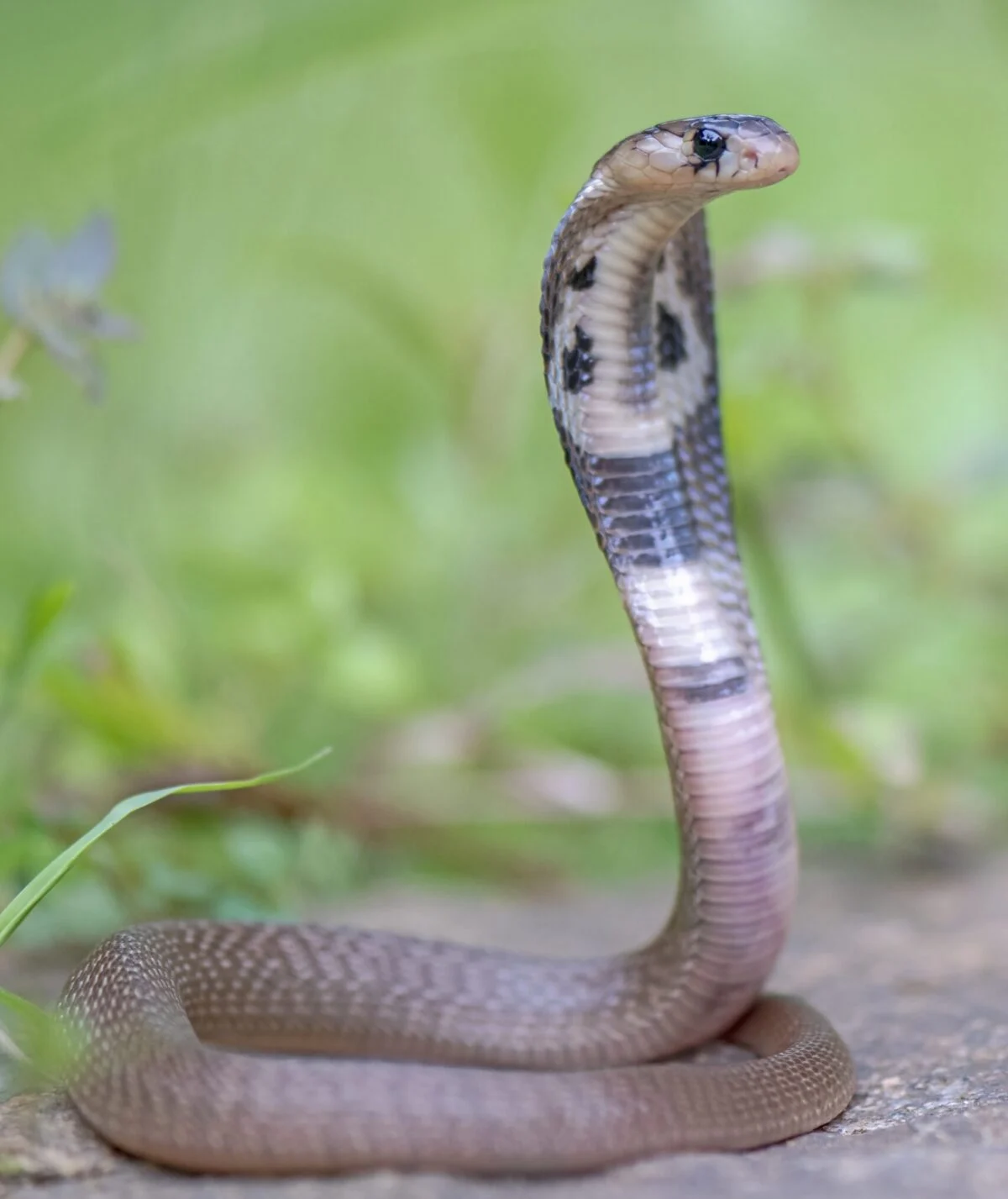
THIRUVANANTHAPURAM — In the sweltering heat of the 2024 summer, a wave of primal fear swept across Kerala. Within a narrow window of just eight weeks, eight lives were lost to snakebites across six districts. The peak of this crisis occurred between April 20 and April 26, when six fatalities were recorded in a single week. As mainstream media headlines and social media feeds became saturated with reports of venomous encounters, public anxiety reached a fever pitch.
However, beneath the veneer of immediate panic lies a more complex narrative of ecological shifts, technological innovation, and a significant long-term decline in mortality. While the summer spike suggests a worsening crisis, longitudinal data reveals that Kerala is actually succeeding in a decade-long battle against one of its most persistent public health challenges. Through the integration of mobile technology, community-led rescue networks, and landmark policy changes, the state is transforming from a region of conflict into a laboratory for human-wildlife coexistence.
The Summer Surge: Heatwaves and Hatchlings
The primary catalyst for the recent surge in human-snake encounters is a combination of climatic and biological factors. According to Sandeep Das, a research associate at the University of Calicut and a master trainer for the SARPA (Snake Awareness, Rescue, Protection App) initiative, the state’s record-breaking atmospheric temperatures played a decisive role.
“A combination of factors such as the unusually high atmospheric temperatures triggered by the heatwave, and the egg-hatching season of venomous snakes such as the Indian cobra, Russell’s viper, and saw-scaled viper, led to more human-snake encounters during the summer this year,” Das explains.

Snakes are ectothermic (cold-blooded) animals that rely on the environment to regulate their body temperature. While they often seek cool, sheltered spaces during extreme heat, the search for water and prey—driven by the same heatwave—frequently brings them into the proximity of human dwellings. This biological necessity, coupled with the seasonal emergence of hatchlings, created a "perfect storm" for accidental encounters.
The psychological impact of these encounters was amplified by the digital age. The SARPA team, a network of 3,500 licensed rescuers, reported receiving over 100 calls per day during the height of the summer. Interestingly, the volume of panic calls plummeted not when the snakes disappeared, but when the news cycle shifted toward election coverage and political developments. This suggests that while the physical presence of snakes was real, the level of public panic was heavily modulated by media saturation.
A Chronology of Innovation: From SARPA to Notifiable Disease Status
Kerala’s proactive stance on snakebite management did not begin with this year’s heatwave. It is the result of a structured, multi-year evolution in policy and technology:
- August 2020: The Kerala Forest Department introduced formal guidelines for the rescue and release of snakes. This led to the certification of snake rescuers and the launch of the SARPA app. The platform serves as a bridge between the public and trained professionals, ensuring that snakes are removed humanely and data is recorded systematically.
- 2021: A collaborative team of doctors, scientists, and enthusiasts launched Snakepedia, a comprehensive digital encyclopedia designed to combat myths and provide immediate first-aid information.
- October 2025: In a landmark move, the Kerala government declared snakebite envenomation a notifiable disease. This mandate requires all hospitals to report snakebite cases to health authorities, ensuring a robust and accurate state-wide database.
- 2026 and Beyond: The introduction of Sarpa Paadam, an educational curriculum integrated into schools, marks the state’s shift toward long-term cultural change regarding wildlife.
This chronological progression demonstrates a shift from reactive measures (catching a snake in a house) to systemic solutions (tracking epidemiological trends and educating the next generation).

Supporting Data: The Paradox of Rising Sightings and Falling Deaths
While the headlines of 2024 focused on tragedy, the broader statistical trend in Kerala is one of remarkable success. According to Forest Department records, snakebite mortality has plummeted by approximately 70-75% over the last six years.
| Period | Recorded Snakebite Deaths |
|---|---|
| 2016–2017 | 119 |
| 2018–2019 | 123 |
| 2020–2021 | 52 |
| 2021–2022 | 65 |
| 2025 | 34 |
This decline is particularly striking because it occurred alongside an increase in reported sightings. Experts argue that the rise in reports does not necessarily indicate a population explosion among snakes, but rather an explosion in public awareness and better reporting tools.
Pratyush Mohapatra, a scientist at the Zoological Survey of India, notes that earlier generations might have ignored a snake sighting or killed the animal without reporting it. Today, citizens are more likely to use the SARPA app to call a rescuer. “It remains unclear whether the increase in snake sightings is linked to current climatic conditions or other factors,” Mohapatra says. “While rising construction activity and habitat loss could be contributing factors, there is no concrete data available yet to support these claims.”
The Urban Frontier: Waste Management and Rodent Attraction
One of the most significant takeaways from recent expert analysis is the debunking of the myth that snakebites are exclusively a rural or "forest-edge" problem. Dr. Jaideep C. Menon, a world-renowned expert in snake envenomation management, emphasizes that urban centers are increasingly becoming hotspots for conflict.

“Rapid urbanization and poor waste management create favorable conditions for rodents, which naturally attract snakes into human settlements,” says Dr. Menon. In Kerala’s unique landscape, the prevalence of vacant houses—both in rural and urban areas—provides ideal, undisturbed breeding grounds for species like the cobra and the common krait.
Furthermore, the rise of "human commensals"—species that thrive in human-altered environments—is a growing concern. While deep-forest snake species may be declining due to habitat loss, the populations of Indian cobras and Russell’s vipers may actually be stabilizing or increasing because they have adapted to live in built-up habitats, feeding on the rats and mice that follow human trash.
Clinical Challenges and the Digital Response
Despite the progress in rescue operations, the clinical management of snakebites remains a complex field. The primary treatment remains the Indian Polyvalent Antivenom, which is designed to neutralize the venom of the "Big Four": the Spectacled Cobra, the Common Krait, the Russell’s Viper, and the Saw-scaled Viper.
However, antivenom is not a silver bullet. It can cause severe allergic reactions (anaphylaxis) and may be less effective against regional variations of venom. This is where Kerala’s digital infrastructure provides a life-saving edge. When a victim is bitten, rescuers or bystanders are encouraged to safely photograph the snake.

“In Kerala, 3,000 to 8,000 snakebites are reported annually. Most are non-venomous or ‘dry bites’ [where no venom is injected],” explains Abhijith Das, a herpetologist at the Wildlife Institute of India. By identifying the snake via the SARPA app or Snakepedia, doctors can make faster, more accurate clinical decisions. Currently, the response time in specialized doctor-consultation groups in Kerala is an astounding 0.5 seconds, allowing for near-instant identification and treatment protocols.
Implications: Moving Toward a Culture of Coexistence
The ultimate goal of Kerala’s various initiatives is not the eradication of snakes, but the mitigation of conflict. Experts agree that snakes are vital components of the ecosystem, acting as natural pest controllers that save billions in agricultural losses by keeping rodent populations in check.
The introduction of the Sarpa Paadam curriculum in schools represents a fundamental shift in the state’s philosophy. By teaching children about snake behavior, the difference between venomous and non-venomous species, and proper first aid, the state is raising a generation that views snakes with informed caution rather than irrational terror.
As the monsoon season sets in—a period Dr. Menon warns could see another rise in incidents—the focus remains on data and discipline. “The rising cases of sightings, though alarming, is the natural outcome of increased public participation and better reporting systems,” says Mohapatra. He suggests that the state needs another four to five years of consistent data collection before it can fully understand the long-term impacts of climate change on snake distribution.

Kerala’s model—combining citizen science, rapid-response technology, and legislative action—offers a blueprint for the rest of India. In a country that accounts for a significant portion of global snakebite deaths, the "Kerala Experiment" suggests that while we may never fully remove the risk of the coil, we can certainly prevent the tragedy of the bite.
The message from the experts is clear: Coexistence is not merely an environmental ideal; it is a public health necessity. By managing our waste, understanding animal behavior, and utilizing the technology at our fingertips, the panic of the summer can be replaced by the stability of science.
