

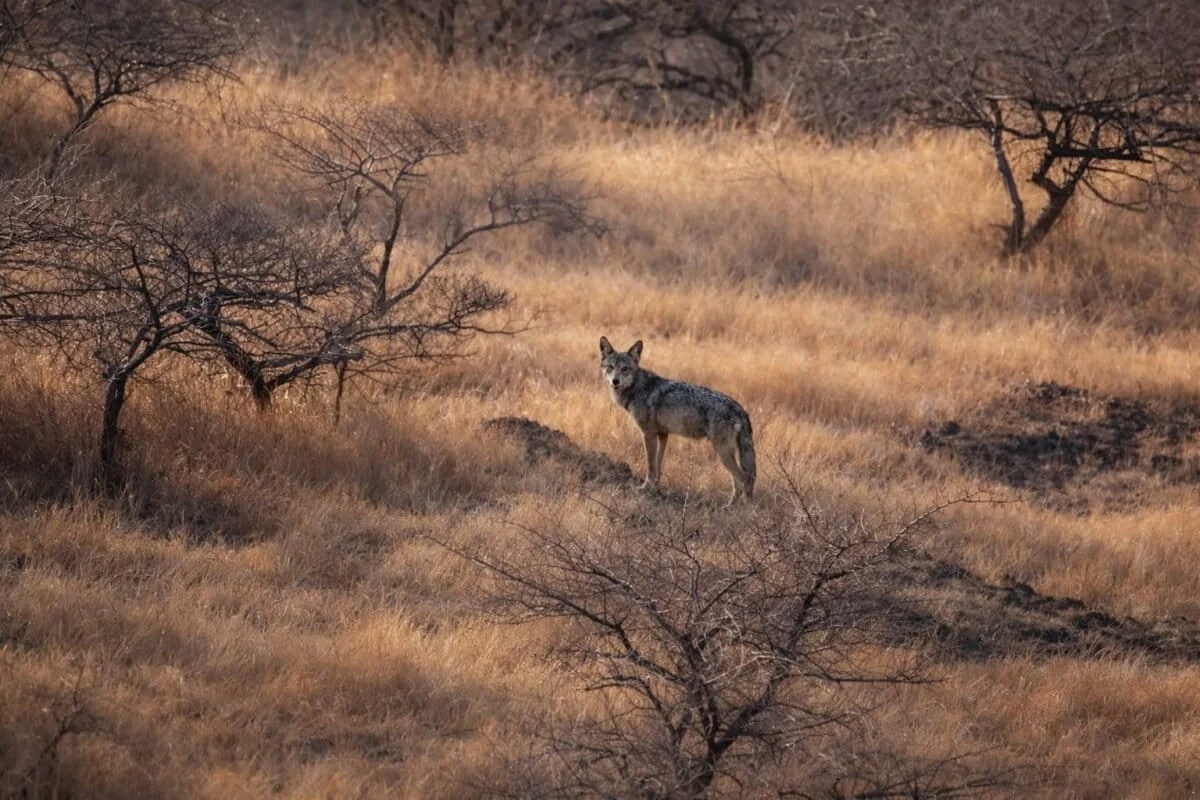
KIRAKSAL, MAHARASHTRA — In the arid, sun-drenched landscape of Maan taluka within Maharashtra’s Satara district, a quiet revolution is unfolding. What was once dismissed as "wasteland" is being revealed as a vibrant, complex ecosystem. Through a combination of community-led vigilance and scientific rigor, the village of Kiraksal has transitioned from a site of undocumented biodiversity to the epicenter of a proposed 4,793-hectare conservation reserve.
The story of Kiraksal is not merely one of animal sightings; it is a blueprint for how local communities, supported by scientific expertise and international grants, can reclaim their natural heritage and influence state-level environmental policy.
Main Facts: A Biodiversity Hub in the Shadow of the Ghats
Kiraksal is a small village situated in a landscape characterized by dense scrublands and rolling "table mountains." While historically overlooked by mainstream conservation efforts focused on tigers and tropical forests, recent studies have identified this region as a critical habitat for the Indian grey wolf (Canis lupus pallipes), the striped hyena, the Bengal fox, and the golden jackal.
The Scale of Discovery
A community-led scientific survey, bolstered by a grant from the World Wide Fund for Nature (WWF) spanning 2023 to 2025, has meticulously documented the village’s ecological wealth. The findings are staggering for an area previously considered barren:

- Total Species Documented: 606
- Birds: 212 species
- Plants: 160 species
- Mammals: 18 species
- Herpetofauna: 34 species
The Proposal for Legal Protection
Based on this data, a formal proposal has been submitted to the Satara Forest Division to establish the Kiraksal-Kukudwad Conservation Reserve. If approved, this reserve would span 23 villages across the Maan (Dahiwadi) and Khatav (Vaduj) forest ranges, providing legal protection to 47.93 square kilometers of continuous grassland and scrubland habitat.
Chronology: From Extinction to Restoration
The ecological trajectory of Kiraksal follows a narrative of loss, resilience, and eventual rediscovery.
The Era of Loss (1950s – 2010s)
According to village elders, the Kiraksal landscape was once a thriving grassland ecosystem. Up until the mid-20th century, it was home to large populations of ungulates, specifically blackbucks and chinkaras. However, after the 1950s, these species faced local extinction due to unregulated hunting and the conversion of grasslands into agricultural plots. While the apex predators—wolves and hyenas—remained, they survived in the shadows, their presence largely undocumented by the scientific community.
The Lockdown Catalyst (2020 – 2022)
The turning point came during the global COVID-19 pandemic. Chinmay Sawant, a wildlife biologist based in Mumbai with ancestral roots in Kiraksal, spent the lockdown period in the village. Noticing the untapped potential of the surrounding hills, Sawant collaborated with Amol Katkar, then a member of the gram panchayat.

Under Katkar’s endorsement, Sawant began the monumental task of creating the village’s People’s Biodiversity Register (PBR). This period saw the formation of a dedicated team of local youth who were trained in scientific documentation, transforming a time of global crisis into a period of local ecological census.
The WWF Phase and GIS Mapping (2023 – 2024)
In 2023, the project received a significant boost through a WWF grant. This allowed for the integration of modern technology, including camera traps and Geographic Information System (GIS) mapping. The GIS data revealed a sobering reality: over the last five years, 1.67 square kilometers of native grasslands had been lost to agricultural expansion and infrastructure development. This data provided the "smoking gun" needed to argue for urgent legal intervention.
Supporting Data: The Ecology of Survival
The research conducted in Kiraksal addresses a fundamental biological mystery: how have large carnivores like the Indian grey wolf survived in a landscape where their primary wild prey (ungulates) has been extinct for 70 years?
The Wolf’s Diet and Adaptability
Field biologist Arnav Gandhe and other researchers discovered that the wolves of Kiraksal have become masters of opportunistic survival. Their diet currently consists of:

- Small Game: Rodents, black-naped hares, civets, and mongooses.
- Scavenging: Poultry waste and carcasses.
- Livestock: Occasional predation on sheep belonging to the nomadic Dhangar community, particularly during the monsoon.
Experts like Abi T. Vanak of the Ashoka Trust for Research in Ecology and the Environment (ATREE) note that while wolves are adaptable, this reliance on human-derived food is a double-edged sword, often leading to human-wildlife conflict.
The Flora and the "Janubaicha Vad"
The documentation isn’t limited to fauna. The survey highlighted the presence of 160 plant species, including a 150-year-old Ficus bengalensis (Banyan tree) known locally as Janubaicha Vad. Such trees serve as "keystone structures" in the scrubland, providing nesting sites for birds and shade for mammals in an otherwise harsh, sun-baked environment.
The Community Model: The Three-Point Ban
The success of the Kiraksal project rests on a foundation of self-governance. The village has implemented a "three-point ban" that has become a model for the Adarsh Gaon Prakalp (Model Village Project).
1. Kurhad Bandhi (Ban on Tree Felling)
This ban was designed to allow the stunted scrub forest to regenerate. Vishal Katkar, a member of the Biodiversity Management Committee, notes that in the past, wood was cut indiscriminately. Today, the hills are covered in waist-high grasses, which villagers are permitted to cut and carry away for fodder—a sustainable alternative to allowing livestock to overgraze the land.

2. Vanva Bandhi (Fire Control)
Grassland fires, often sparked by short circuits from local windmills or human negligence, are a major threat. The forest department and villagers have collaborated to create 10-12 meter fire lines. The community has developed a rapid-response system where youth rush to extinguish accidental fires using gunny bags and fire blowers.
3. Shikar Bandhi (Ban on Hunting)
Perhaps the most significant cultural shift involves the cessation of the traditional Nag Panchami hunt. Historically, killing wild animals and burying their heads near the village temple was an integral cultural practice. Through the influence of the conservation project and increased patrolling by forest guards like Bhimrao Shankar Bhosale, this practice has been entirely abandoned.
Official Responses: The Path to a Conservation Reserve
The proposal to turn the area into a Conservation Reserve has met with a mix of bureaucratic support and expert caution.
Amol Satpute, Deputy Conservator of Forests (DCF), Satara:
Satpute has expressed strong support for the reserve, noting that landscapes dedicated to hyenas and wolves are rare in India. He emphasized that the process would be democratic, involving a Jan Sunavni (public hearing) to ensure the 23 villages involved do not feel the decision is being "imposed" from above. Satpute also suggested that if the reserve is established, the forest department could holistically reintroduce native deer species to provide a natural prey base and reduce wolf attacks on livestock.

Dr. Y.V. Jhala, Former Dean, Wildlife Institute of India (WII):
Dr. Jhala offers a nuanced perspective, suggesting that a "Community Reserve" might be more appropriate than a "Conservation Reserve." He argues that community reserves offer more flexibility in land-use patterns, which is essential for maintaining local support. He also warned that without a restored prey base, long-term wolf conservation is unsustainable.
Mihir Godbole, Grasslands Trust:
Godbole highlights a looming threat: the expansion of sugarcane farming. As irrigation improves and sugarcane fields proliferate, the landscape becomes more attractive to leopards. "Wolves cannot out-compete leopards," Godbole warns, noting that leopards favor dense vegetation while wolves require open semi-arid spaces.
Implications: Redefining "Wasteland"
The Kiraksal project has implications that reach far beyond the borders of Satara.
Legislative Shifts
For decades, Indian policy classified grasslands as "wastelands," making them prime targets for industrial "greening" through tree plantation drives—which actually destroy the grassland ecosystem. However, a landmark Maharashtra Government Resolution passed on May 7, 2026, now mandates that grasslands be recognized as unique ecosystems. The work in Kiraksal served as a vital case study in proving the biological value of these lands.

A Template for Rural India
Kiraksal demonstrates that conservation does not always require the exclusion of humans. By empowering the Biodiversity Management Committee and training local youth in GIS and camera trapping, the project has turned the "guardians of the land" into "scientists of the land."
The Future of the Indian Wolf
As the proposal moves through the corridors of the Maharashtra Forest Department, the fate of the Indian grey wolf hangs in the balance. The transition to a Conservation Reserve would offer these "tough survivors" a chance to thrive on natural prey rather than scavenged waste.
The success of Kiraksal suggests that the survival of India’s dry-land predators depends not on high-fences, but on the willingness of a village to remember its past and scientifically document its present. As the waist-high grasses return to the hills of Maan, the howl of the wolf is no longer a sound of the wilderness, but a testament to a community’s resolve.
