

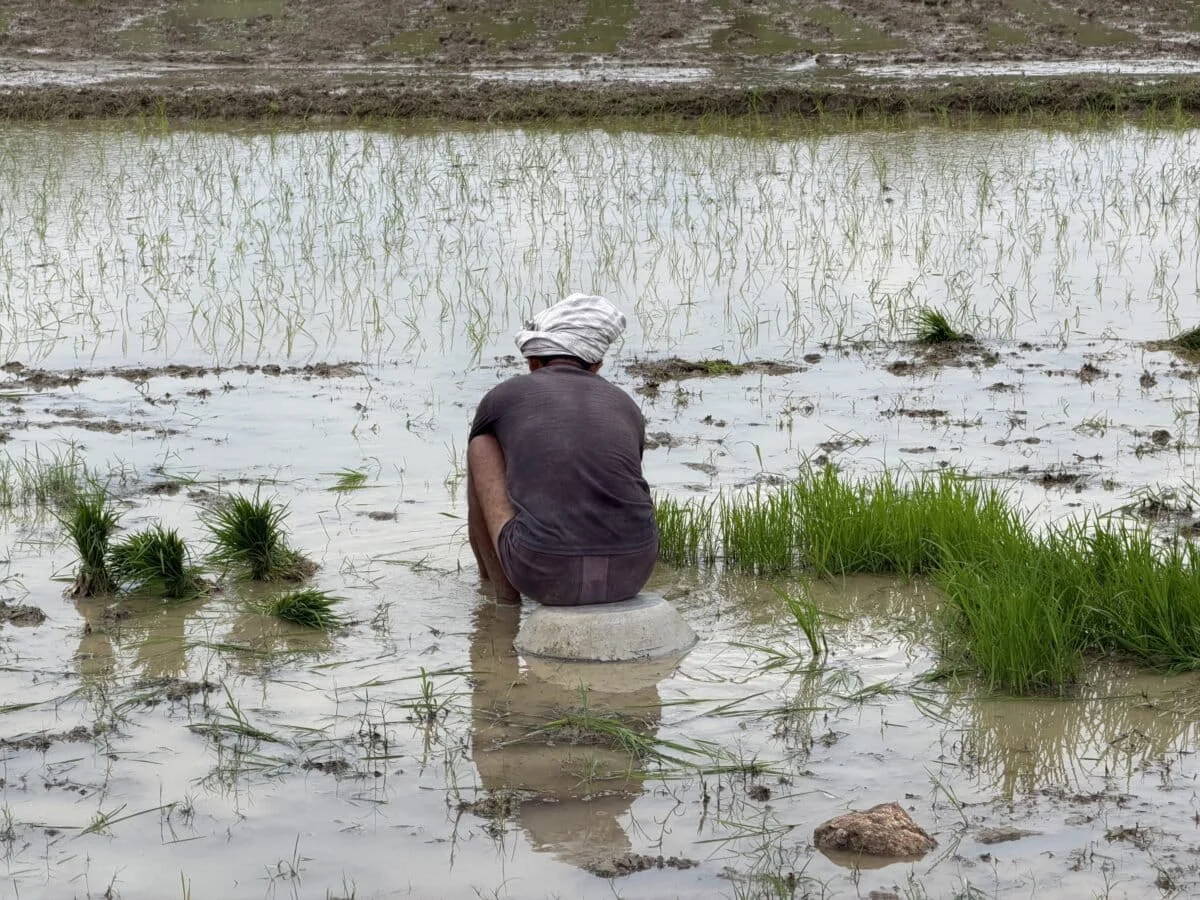
PALAMU, JHARKHAND — Standing amidst a vast expanse of scorched earth in Darudih village, 52-year-old Koushal Kishore Vishvakarma gestures toward a horizon that offers no shade. “This is all barren land now, but here we used to farm,” he says, his voice carrying the weight of a legacy lost to the dust. The ground is currently dusted with a thin layer of monsoon grass, but Vishvakarma is quick to dismiss it. “It’s nothing more than grazing land now. It provides for the cattle, but it can no longer provide for the people.”
The tragedy of Palamu, a district in the heart of Jharkhand’s Chotanagpur plateau, is not just a story of a changing climate; it is a story of a monumental failure in engineering and governance. For over six decades, through famines and droughts, the Indian government has poured hundreds of crores into "drought-proofing" this region. Yet, as a strengthening El Niño threatens the current agricultural cycle, the infrastructure intended to save Palamu stands as a collection of rusted pipes, silted ponds, and dry canals.
Main Facts: The Anatomy of a Collapse
Palamu has long been the epicenter of Jharkhand’s water crisis. Despite being crisscrossed by tributaries and historical water-harvesting structures, the region remains one of the most vulnerable agricultural zones in India. The primary issue is not just the lack of water, but the systemic failure to deliver it to the upland fields that define the local geography.
The centerpiece of the region’s failed resilience is the "lift irrigation" system. Designed to overcome the undulating terrain of the plateau, these systems use heavy-duty electric or diesel pumps to draw water from perennial rivers and push it uphill through underground pipelines to fields that gravity-based canals cannot reach.
In Vishvakarma’s village, a lift irrigation project once served ten surrounding villages. At its peak twenty years ago, Vishvakarma farmed 10 acres, producing enough surplus to sell 50 quintals of grain annually—a fortune for a smallholder. Today, that system is a corpse of iron and concrete. A single damaged pipe, left unrepaired for nearly two decades, rendered the entire multi-village network useless.

This story is replicated across the district. According to official records, Jharkhand possesses 17,285 surface water lift schemes. However, on the ground, many of these are "ghost schemes"—infrastructure that exists on paper but has long ceased to function due to a lack of maintenance, stolen components, or bureaucratic neglect.
Chronology: From the Famine of 1966 to the El Niño of 2024
The history of water management in Palamu is written in the scars of past disasters.
- The 1966 Famine: The modern era of drought-proofing began following the Great Bihar Famine of 1966. At the time, Palamu was part of undivided Bihar and was among the hardest-hit districts. Shrikrishna Oraon, now 72, remembers surviving on dry ber (Indian jujube). The government’s response was a massive mobilization of manual labor. "We dug the ahara (pond) with our hands," Oraon recalls. "We weren’t paid in cash; we were paid in five kilos of sorghum and bajra." These structures, built in desperation, remain some of the only functional water sources today.
- The 1970s Expansion: This decade saw the launch of the Drought Prone Areas Programme (DPAP) and the ambitious Mandal Dam project. The Mandal Dam was intended to be the ultimate solution, meant to irrigate hundreds of villages across Jharkhand and Bihar. Decades later, the project remains incomplete, and the canals that were built—such as the one through Chiyanki village—have never carried a drop of water.
- The 2015-16 Dobha Push: In response to a series of droughts in the early 2010s, the state launched a policy to build thousands of dobhas (small farm ponds). In Palamu alone, 2,500 were constructed.
- The Current Crisis (2022–2024): Jharkhand has declared drought ten times in the last 25 years. The most recent consecutive droughts in 2023 and 2024 have been exacerbated by extreme heatwaves. In 2024, the India Meteorological Department (IMD) warned of strengthening El Niño conditions, which have already resulted in a 48% rainfall deficit in Palamu between June and August.
Supporting Data: A Landscape of Dependency
The statistics regarding Palamu’s agricultural health are sobering. Despite sixty years of "irrigation projects," the district’s reliance on the monsoon has barely budged.

- Irrigation Deficit: According to Akhilesh Saha, Deputy Director of Krishi Vigyan Kendra (KVK) Palamu, less than 5% of the district’s agricultural land is under formal irrigation. Statewide, 92% of Jharkhand’s farmland remains entirely dependent on rainfall.
- Rainfall Shifts: The climate is demonstrably changing. Saha notes that over the last 20 years, the number of annual rainy days in the region has plummeted from approximately 90 days to just 50. This compression of the monsoon season makes traditional paddy farming nearly impossible without storage infrastructure.
- Sowing Collapse: The impact of the 2024 monsoon delay is stark. By late July 2023, Palamu had achieved 107% of its sowing target due to timely rains. In the same period in 2024, the district has managed less than 1%.
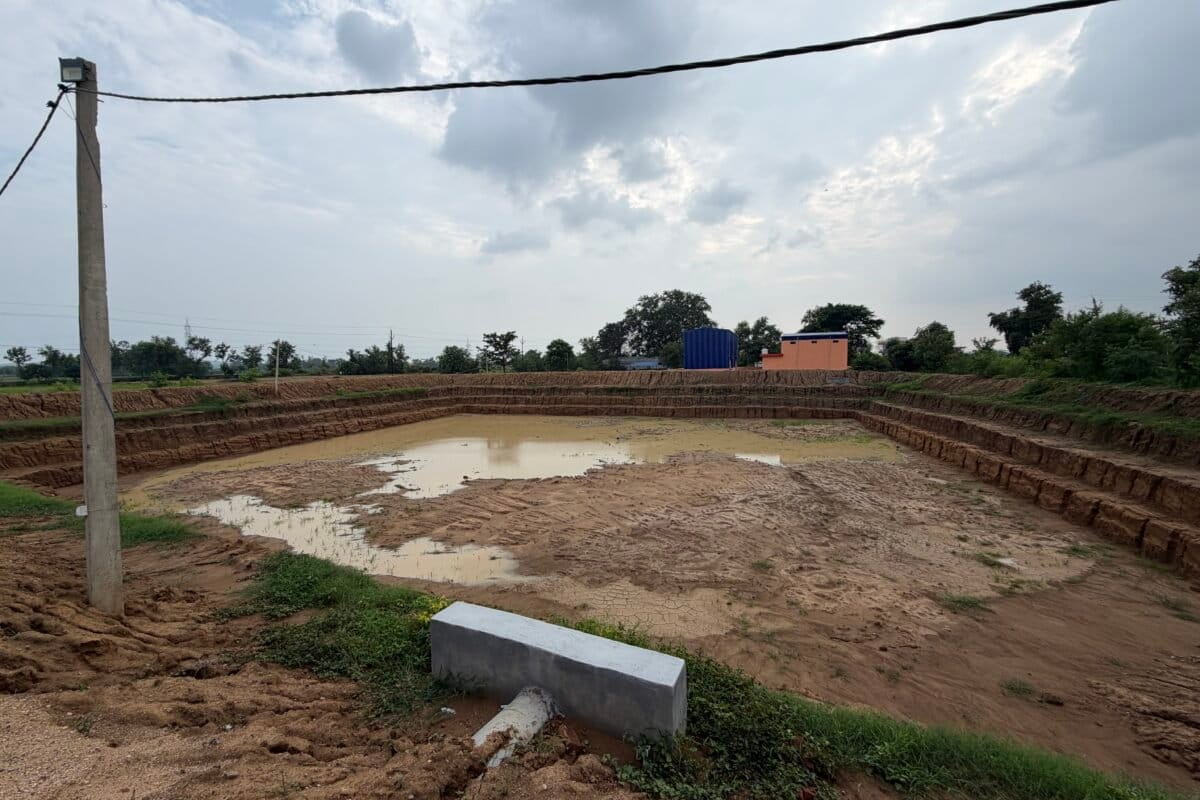
- The "Dobha" Decay: Of the 2,500 farm ponds (dobhas) built since 2015, the government has no records of how many remain functional. Without annual desilting, these ponds typically become useless within three monsoon cycles.
Official Responses: Maintenance as the Missing Link
When confronted with the failure of these multi-crore investments, officials point to a breakdown in the transition from construction to community management.
Shyam Bind, the Soil Conservation Officer for Palamu, admits that the lift irrigation schemes were a "total failure on the maintenance side." He explains that while the state was adept at laying heavy metallic underground pipelines and installing pumps, there was no budget or mechanism for long-term upkeep. "Once a system is handed over, it’s either never maintained or the middlemen take all the money," Bind stated. He further admitted that the district lacks a consolidated record of which surface water lift schemes are still operational.
Regarding the more recent dobha and pond projects, the strategy has shifted from creation to "revival." Bind says the current policy focuses on reviving old ponds rather than building new ones, but even this is a race against time. A pond visited by Mongabay-India in Basaura village, constructed as recently as 2025 (in the current fiscal cycle planning), already sits nearly dry. Officials claim the groundwater will "revive" the pond in two to three years, but for farmers facing a dry 2024, such promises offer little comfort.

The Agriculture Department’s primary "contingency plan" is to advise farmers to switch to short-duration paddy or pulses. However, there is a significant disconnect between these high-level advisories and the reality on the ground. Farmers like Basant Singh in Chiyanki village claim they have never received the free "contingency seeds" promised by the state.
Implications: The Human Cost and the Great Migration
The failure of Palamu’s water infrastructure has triggered a profound socio-economic shift. Agriculture, once the backbone of the village economy, is no longer seen as a viable livelihood.
1. Forced Migration:
The most visible implication is the exodus of the working-age population. In Chiyanki village, Basant Singh estimates that one out of every four men has migrated to cities like Bengaluru or Delhi to work as daily-wage laborers. His own two sons have abandoned the family farm for the construction sites of the South. When irrigation fails, the village becomes a residence for the elderly and children, sustained by remittances rather than the soil.

2. Erosion of Food Security:
The shift from two-season farming (Kharif and Rabi) to a precarious, rain-fed Kharif-only cycle has decimated local food security. Farmers who once sold quintals of surplus grain now struggle to produce enough for their own consumption. The loss of the Rabi (winter) crop means that for six months of the year, the land produces nothing.
3. Agricultural Transformation:
The climate crisis is forcing a reluctant change in what is grown. Across Jharkhand, 150,000 hectares have shifted from paddy to hardier crops like maize and pigeon pea. While this is a necessary adaptation, it represents a loss of cultural heritage and often a lower caloric yield for families who rely on rice as their staple.
4. The Livestock Crisis:
Drought-proofing isn’t just about crops; it’s about survival for livestock. During the 2023-24 drought, the lack of water was so severe that grass disappeared entirely, leading to a crisis in cattle health. Without functional ponds (aharas), the rural economy loses its "insurance policy"—the livestock that can be sold in times of crop failure.

Conclusion: A Question of Survival
As the sun sets over the dry canal in Chiyanki, the silence is a reminder of the water that never came. Palamu is a testament to the fact that infrastructure without maintenance is merely a monument to wasted resources. The district has everything it needs to be resilient: a history of traditional water wisdom, a network of modern pipes, and a hardworking population. Yet, because of a broken maintenance loop and a lack of accountability, it remains trapped in 1966.
For Koushal Kishore Vishvakarma, the future is as hazy as the heat shimmering off his barren 10 acres. "If the rains come on time, we can somehow survive," he says. "If they don’t, there is nothing we can do." In the age of El Niño and climate change, "somehow surviving" is no longer a sustainable policy. Until the government moves beyond digging holes to ensuring water actually flows, Palamu’s farmers will continue to be the primary victims of a climate they did not create and a system that failed to protect them.
