

The relationship between climate change and financial stability has long been discussed in abstract terms, but in India, this relationship has moved from the theoretical to the material. As record-breaking heatwaves sweep across the subcontinent, a new and formidable risk category has emerged for the nation’s banking and financial services (BFS) sector: extreme heat.
No longer merely an environmental or public health concern, extreme heat is now a measurable credit and liquidity risk. Data from the 2025 and 2026 summer quarters indicates that as the mercury rises, lender collection efficiencies wilt. This phenomenon is reshaping the landscape of Indian finance, forcing regulators to rethink disclosure norms and pushing banks to innovate in order to protect their loan books from a warming world.
Main Facts: The Thermal Erosion of Credit Quality
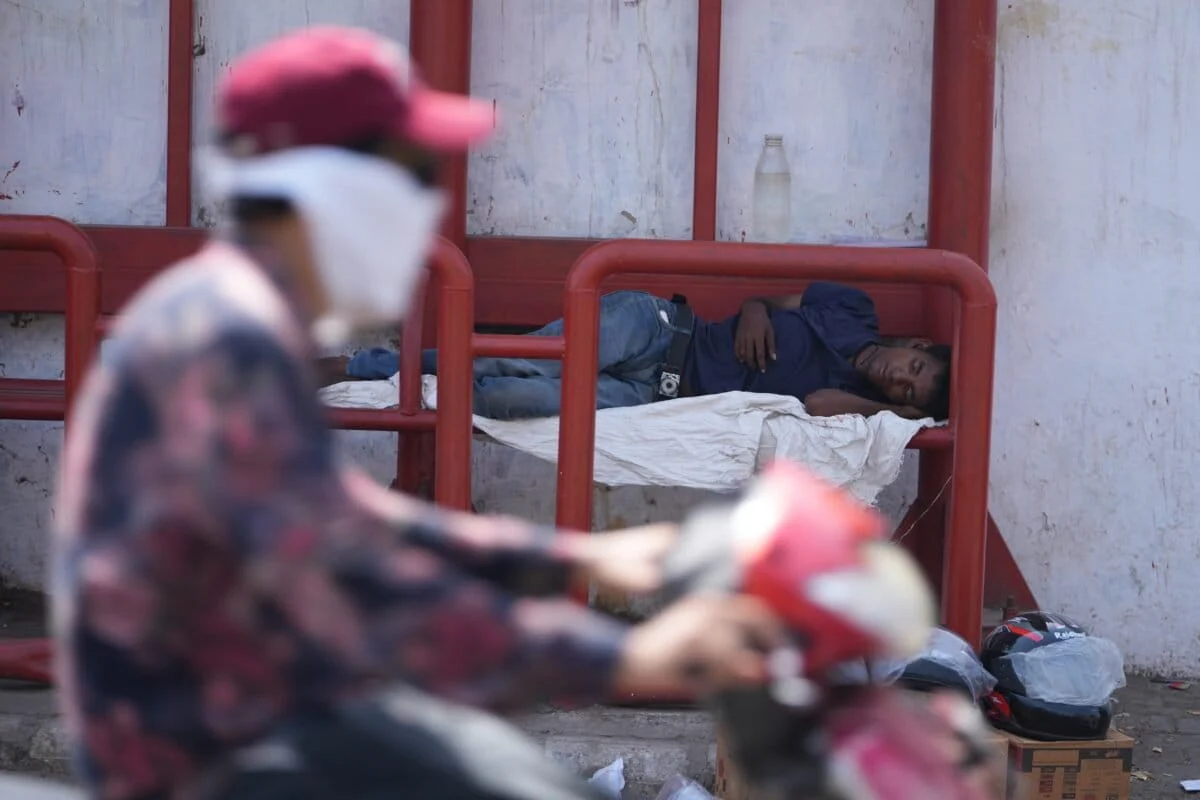
The primary mechanism through which extreme heat impacts the financial sector is the erosion of borrower repayment capacity. In India, a significant portion of the workforce operates in the informal economy, where physical mobility and outdoor labor are prerequisites for income generation. When temperatures cross critical thresholds—often cited as 40°C and above—working hours are involuntarily cut, and labor productivity plummets.
For the banking sector, this translates into a "triple threat":
![India’s banks are sitting on a heat risk they have barely begun to price [Commentary]](https://imgs.mongabay.com/wp-content/uploads/sites/30/2026/06/29120153/AP26161536934509-1200x800.jpg)
- Credit Risk: Borrowers, particularly in microfinance and agriculture, face sudden income shocks. When a daily wage worker or a smallholder farmer cannot work due to heat stress, or when crops are scorched, the surplus cash required to service debt evaporates.
- Liquidity Risk: As collection efficiency drops, particularly in field-dependent portfolios, lenders face a subsequent cash crunch. This is especially true for Non-Banking Financial Companies (NBFCs) and Microfinance Institutions (MFIs) that rely on steady collections to meet their own repayment obligations to larger commercial banks. To fill these gaps, lenders are often forced to seek costlier short-term funding, squeezing their margins.
- Operational Risk: Extreme heat does not only affect borrowers; it affects the lenders’ infrastructure. Branch closures in high-heat zones, staff limitations, and increased maintenance costs for physical assets (such as cooling systems for server rooms and branches) add a layer of operational complexity and cost.
The segments most exposed to this "heat stress" are those at the heart of India’s financial inclusion story: microfinance clients, agricultural households, gold-loan borrowers, and the self-employed informal workforce.
Chronology: From Seasonal Abnormality to Systemic Risk (2023–2026)
The recognition of heat as a systemic financial risk has evolved rapidly over the last few years:
- 2023: The Pilot Phase. Organizations like the Self-Employed Women’s Association (SEWA) launched pioneering parametric heat insurance products. This marked the first formal recognition that heat-triggered income loss required a financial buffer.
- 2024: The Warning Signs. Regional data began to show a correlation between prolonged heatwaves and a dip in rural collection efficiencies. However, these were largely treated as temporary disruptions rather than structural risks.
- 2025: The Material Shift. The June quarter of 2025 served as a wake-up call for the industry. Extreme heat across northern and central India led to a measurable decline in lender collection efficiency. Field agents reported reduced interaction with borrowers, and site visits became nearly impossible during peak daylight hours, leading to a spike in overdue accounts.
- 2026: The Regulatory Pivot. By early 2026, projections suggested that the trend would not only continue but intensify. In response, the Reserve Bank of India (RBI) began treating heatwaves as a "prudential risk." Banks like Union Bank of India started integrating heat as one of their core climate hazards, moving beyond the traditional focus on floods and droughts.
Supporting Data: Quantifying the Vulnerability
The scale of the risk is best understood through the lens of India’s microfinance and agricultural lending portfolios.
India’s microfinance portfolio is valued at approximately ₹3.81 trillion. Crucially, about 60% of this portfolio is concentrated in agriculture and allied activities. These are sectors where income is directly tied to the climate. In Eastern India, which accounts for roughly one-third of the total microfinance portfolio, the vulnerability is even more acute due to the region’s high climate sensitivity.
![India’s banks are sitting on a heat risk they have barely begun to price [Commentary]](https://imgs.mongabay.com/wp-content/uploads/sites/30/2026/06/29120805/India_-_Kolkata_coolies_-_3192-768x512.jpg)
According to emerging-market evidence, exposure to physical climate risks systematically constrains bank lending. When a region is flagged as high-risk for heat, banks may preemptively tighten credit, making it harder for vulnerable populations to access the capital they need to adapt. This creates a "vicious cycle" where heat reduces income, which reduces credit access, which in turn reduces the ability to invest in heat-resilient livelihoods.
Furthermore, the "second-order" costs are mounting. Banks are now investing heavily in digital collection systems to bypass the need for physical field visits. While necessary, these investments in AI-enabled monitoring and heat-adjusted operating models represent a significant capital expenditure that was not on the balance sheets five years ago.
Official Responses: Regulators and Banks Step Up
The Indian regulatory environment is shifting, though critics argue the pace remains insufficient for the scale of the crisis.
The Reserve Bank of India (RBI)
The RBI has moved to categorize heatwaves as a material financial risk. The central bank’s Draft Climate Risk Disclosure directions are a cornerstone of this shift. These guidelines compel banks to map and stress-test their exposure to heat across three dimensions: credit, liquidity, and operations. By mandating that banks disclose these risks, the RBI aims to bring transparency to how much "thermal risk" is sitting on bank balance sheets. However, many of these disclosures remain voluntary for smaller players, and the capacity to accurately "stress-test" for a 50°C summer is still being built.
![India’s banks are sitting on a heat risk they have barely begun to price [Commentary]](https://imgs.mongabay.com/wp-content/uploads/sites/30/2026/06/29123622/2775760225_4725642e6a_3k-768x512.jpg)
Institutional Case Study: Union Bank of India
Union Bank has emerged as an early adopter of climate-risk frameworks. The bank has identified 13 key climate hazards, with heat now prioritized alongside traditional disasters. Over the next six to nine months, the bank is developing sector-wise vulnerability assessment tools. This allows the bank to look at a loan application not just through the lens of credit score, but through the lens of "geographic heat vulnerability."
International Support: The IFC and Blended Finance
Global institutions are also stepping in to provide the "risk capital" needed for adaptation. The International Finance Corporation (IFC) recently partnered with Arya.ag, a technology-led agri-platform. By deploying $12.8 million in equity (as part of a larger $48 million round with BII and others), the IFC is supporting near-farm storage and logistics. This infrastructure is a direct defense against heat; it prevents post-harvest spoilage during heatwaves, allowing farmers to store their crops safely rather than being forced into "distress sales" when temperatures soar.
Implications: Financing Resilience Instead of Vulnerability
The long-term health of India’s financial system depends on its ability to transition from financing vulnerability to financing resilience. If the banking sector continues to lend to heat-exposed sectors without requiring adaptation measures, the risk of "stranded assets" and mass defaults will only grow.
The Role of Parametric Insurance
One of the most promising implications of this crisis is the rise of parametric insurance. Unlike traditional insurance, which requires a lengthy claims process to prove loss, parametric insurance triggers automatic payouts when a specific threshold (e.g., 40°C for three consecutive days) is met. Scaling this from 50,000 workers to 50 million is the next great challenge for India’s insurance and banking sectors.
![India’s banks are sitting on a heat risk they have barely begun to price [Commentary]](https://imgs.mongabay.com/wp-content/uploads/sites/30/2026/06/29122722/3059119685_aa79ec5bcf_k-768x512.jpg)
The Need for "Cooling" Infrastructure
Financial institutions must begin directing capital toward "climate-proofed" livelihoods. This includes:
- Urban Systems: Financing cool roofs and district cooling through municipal bonds (similar to the Green Sukuk model in Indonesia).
- Agriculture: Investing in heat-resilient seeds and solar-powered cold storage.
- Digital Infrastructure: Moving toward UPI-based and mobile-first collection models to decouple financial activity from physical mobility.
Data as the New Bedrock
The creation of the RBI-Climate Risk Information System (RBI-CRIS) is a critical step. By providing standardized meteorological and geospatial data, the RBI is giving lenders the tools to conduct location-specific analysis. In the near future, the interest rate on a loan might be partially determined by the "heat-resilience score" of the borrower’s location or business model.
Conclusion: A Prerequisite for Stability
Extreme heat has moved from the "Environmental, Social, and Governance" (ESG) periphery to the very center of risk management. For India’s banks, the costs of delayed action are already appearing in the form of lower collections and higher operating expenses.
Building a heat-resilient financial system is no longer a matter of corporate social responsibility; it is a prerequisite for maintaining financial stability and sustaining long-term economic growth. As the summers of 2025 and 2026 have demonstrated, when the country swelters, the economy feels the burn. The banks that survive and thrive will be those that learn to measure, price, and ultimately mitigate the rising heat.
