

In the sweltering heat of April 2024, as Bengaluru’s temperatures climbed to a record-breaking 38.5°C, a subtle but profound silence settled over the city’s remaining green pockets. For Akshay Vidhate, a natural landscape architect, the heat was not just a matter of personal discomfort; it was an ecological alarm. Standing in his terrace garden, surrounded by 30 varieties of flowering plants, he realized the familiar, rhythmic hum of the dwarf honey bee (Apis florea) had vanished.
Vidhate’s subsequent experiment—creating makeshift sugar-water feeders that eventually drew the bees back on a "scheduled" morning routine—is more than a feel-good story of individual conservation. It is a microcosm of a larger, more perilous transition unfolding across India’s urban landscapes. As cities expand and temperatures soar, the natural systems that once sustained wild, open-air bees are collapsing, forcing a shift toward an environment that requires constant human intervention to maintain basic ecosystem functions.
Main Facts: The Ecological Safety Net at Risk
While global conversations about pollinator decline often center on the Western honey bee (Apis mellifera), India’s ecological health rests on a different set of wings. The country’s agricultural and urban biodiversity is largely maintained by free-living, wild bee populations, most notably the giant honey bee (Apis dorsata) and the diminutive dwarf honey bee (Apis florea).
The dwarf honey bee, in particular, serves as India’s "ecological safety net." Unlike larger species, its small size allows it to access the tiny blossoms of backyard kitchen gardens, wild weeds, and essential urban crops like gourds, drumsticks, and mangoes. These are flowers that the larger giant rock bees often cannot effectively pollinate.

Despite their critical role in local food security, these native bees are facing a "quiet crisis." Unlike managed hives that can be moved or shielded, wild bees are at the mercy of the elements. Recent studies and expert observations indicate that the combination of rapid urbanization, extreme weather patterns, and indiscriminate pesticide use is pushing these generalist pollinators to a breaking point.
Chronology: From Garden City to Concrete Heat Island
The decline of Bengaluru’s wild bees is a timeline of rapid environmental transformation. Historically known as the "Garden City," Bengaluru provided the ideal mosaic of scrubland, thorny vegetation, and diverse floral resources required for Apis florea to thrive.
- The Urban Boom (2000–2020): Over two decades, Bengaluru witnessed a massive shift from "green" to "gray." Concrete infrastructure replaced the "brambly" habitats preferred by dwarf bees for nesting.
- The 2021 Landmark Study: A study published in Ecological Applications documented a direct correlation between urbanization and bee decline. It found that social bee abundance—which accounts for 85% of all bees recorded—dropped significantly as "gray areas" (construction) increased. Apis florea showed the sharpest decline among all species.
- The 2024 Heatwave: In April 2024, temperatures reached 38.5°C, the second-highest in 50 years. This extreme heat pushed many wild populations beyond their thermal tolerance, forcing them to either abscond (abandon their nests) or face colony collapse.
- The Molecular Reveal (2024): Recent research published in the Journal of Experimental Biology finally provided the molecular explanation for why these bees are so vulnerable to the current climate trajectory, revealing a biological rigidity that makes recovery from population shocks nearly impossible.
Supporting Data: The Biological Blueprint of Vulnerability
To understand why the dwarf honey bee is struggling, researchers at the National Centre for Biological Sciences (NCBS) in Bengaluru have begun mapping the insect’s internal genetic and hormonal mechanisms. This "molecular blueprint" reveals an ancient evolutionary trade-off that is now working against the species.
The "Living Curtain" and Vitellogenin
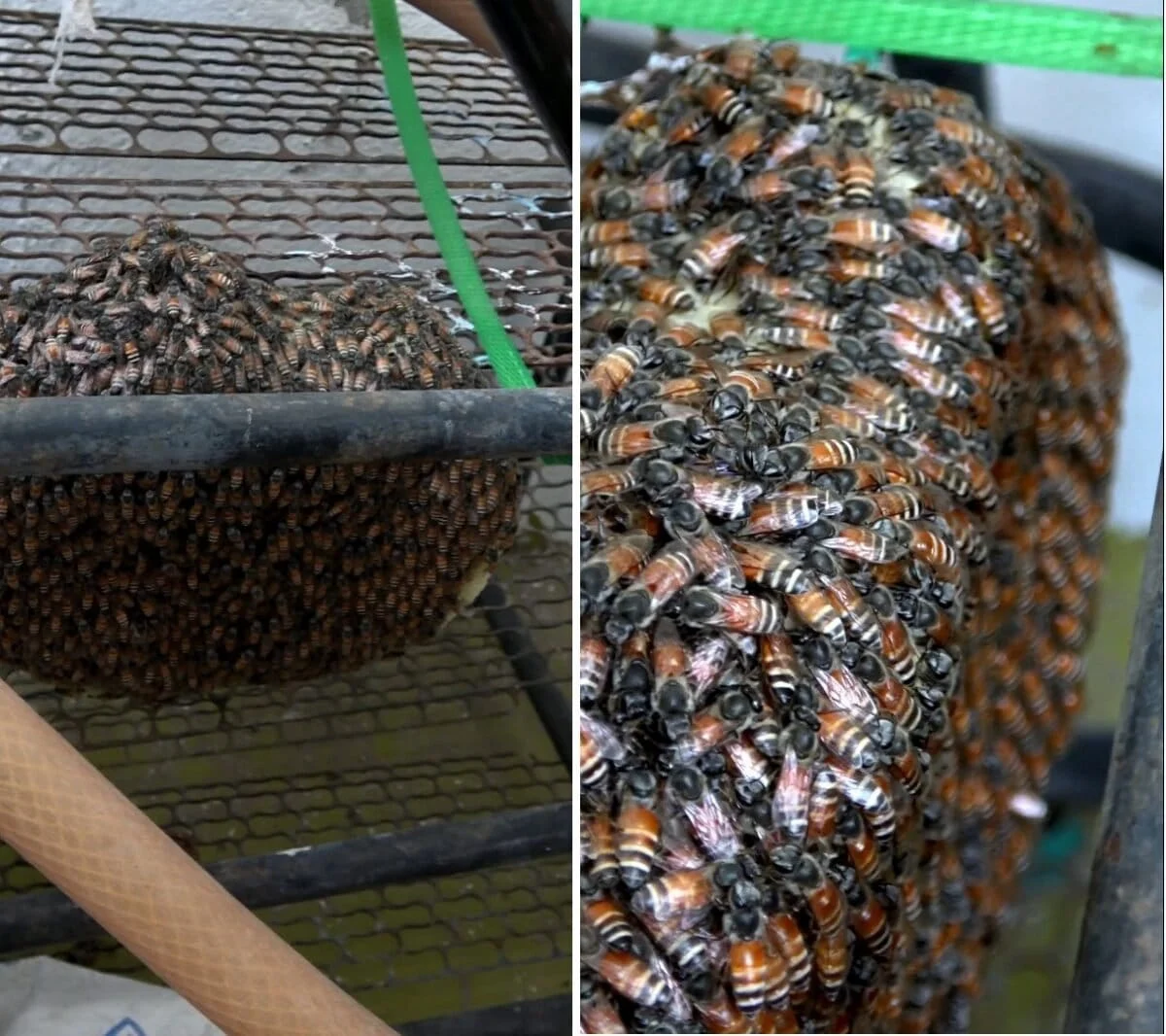
Unlike cavity-nesting bees that live in the safety of tree hollows or man-made boxes, Apis florea builds its nests in the open, often suspended from a single branch. To survive, the colony creates a "living curtain"—a dense, multi-layered wall of worker bees that physically shields the brood from predators and regulates the nest’s temperature.

The NCBS study, led by Sruthi Unnikrishnan and Axel Brockmann, found that these bees maintain high levels of a protective protein called vitellogenin throughout their lives. While this protein allows them to maintain the "living curtain," it comes at a cost. Because a massive portion of the workforce is "stuck" performing defensive duties, fewer workers are available to forage or care for the brood.
The Three-Week Maturation Trap
Perhaps the most startling data point is the species’ slow maturation. Dwarf honey bees take more than three weeks to transition from internal nest duties to outdoor foraging. In a stable environment, this staggered maturation acts as a buffer. However, in a modern urban setting, it is a death trap.
"A single instance of spraying pesticides will wipe out most of the foragers," warns Apoorva B.V., founder of HoneyDay Bee Farms. "The colony simply cannot replace its workforce overnight because of this three-week delay. The timeline is broken."
Habitat Fragmentation
Regional field studies in Karnataka further support the link between floral diversity and colony health. Nest volume and honey production for Apis florea peak during the summer flowering season. However, as cities fragment these green spaces, the bees must travel further for less reward. When the distance between "food islands" becomes too great, or when human disturbance becomes constant, the colonies abscond—often moving to higher, cooler altitudes like the Himalayas, effectively removing their pollination services from the urban core.

Official Responses and Expert Perspectives
The lack of a centralized, long-term monitoring database for wild insects in India has made it difficult for policymakers to grasp the scale of the loss. However, the scientific community is becoming increasingly vocal.
Axel Brockmann (NCBS): Brockmann emphasizes that India is currently flying blind. "There is little research on how honey bees suffer from heat stress and pollution in India," he notes. He argues that when temperatures permanently exceed a species’ thermal tolerance, we aren’t just losing an insect; we are losing a functional part of the landscape.
M. Soubadra Devy (ATREE): Devy points out a bias in conservation policy. "Many people prefer managed honey bees because they can be controlled and commercialized. But dwarf bees are free-roaming generalists that cannot be domesticated." She argues that urban crop yields will face severe strain if these "wild workers" are not protected. Devy suggests that "ecosystem buffering"—where one species steps in for another—has limits. If nesting spaces are lost entirely, the entire system crashes.
Dhruba Naug (Colorado State University): Naug views these bees as "urban biosensors." Because they live in open-air nests, they absorb the brunt of air pollution and environmental degradation. Their health is a direct reflection of the air quality and chemical load of the city itself.

Implications: Food Security and the Future of Urban Coexistence
The decline of the dwarf honey bee is not merely a concern for entomologists; it is a direct threat to urban food security and biodiversity.
The Pollination Gap
If Apis florea populations continue to dwindle, the first casualty will be the "kitchen garden." Millions of urban Indians rely on small-scale cultivation for nutrition. Crops like gourds, which require specific, small-scale pollinators, will see a "yield crash." While commercial farms might turn to expensive managed hives, the urban poor and hobbyist gardeners will have no such recourse.
The Loss of Urban Biosensors
As Naug suggested, the disappearance of these bees is a warning sign of a landscape that is becoming toxic to life. If a species that has survived for millions of years through an "ancient evolutionary strategy" can no longer survive a Bengaluru summer, the implications for human health and the urban heat island effect are dire.
The Path Toward a Pollinator Policy
Experts are now calling for a formal Urban Pollinator Policy. Such a framework would include:

- Habitat Protection: Identifying and preserving the "thorny, brambly" scrublands that modern landscaping often dismisses as "wasteland."
- Pesticide Regulation: Implementing "bee-friendly" zones in residential areas where toxic spraying is prohibited during peak foraging hours.
- Relocation Protocols: Creating expert panels to safely relocate colonies that pose a public safety risk, rather than exterminating them.
- Public Awareness: Moving away from the "pest" narrative. As Akshay Vidhate’s experience shows, the presence of bees is a sign of a healthy garden, not a threat to be neutralized.
"Coexistence requires balance," concludes Devy. Without a concerted effort to understand and protect the molecular and ecological needs of the dwarf honey bee, the "Garden Cities" of India may find themselves in a silent, sterile future, where the only hum remaining is the sound of air conditioners fighting a heat that the bees could no longer endure.
