

Bengaluru, [Insert Date] – Karnataka Chief Minister D.K. Shivakumar is embarking on a significant personal and political move, shunning the traditionally designated Chief Minister’s residence, ‘Anugraha,’ in favour of a extensively renovated Kumara Krupa guest house. The decision, rooted in deep personal conviction regarding Vaastu and astrology, has triggered a massive overhaul of the historic guest house complex and ignited a public debate, drawing criticism from the opposition regarding the alteration of a heritage structure and the allocation of public funds for personal beliefs.
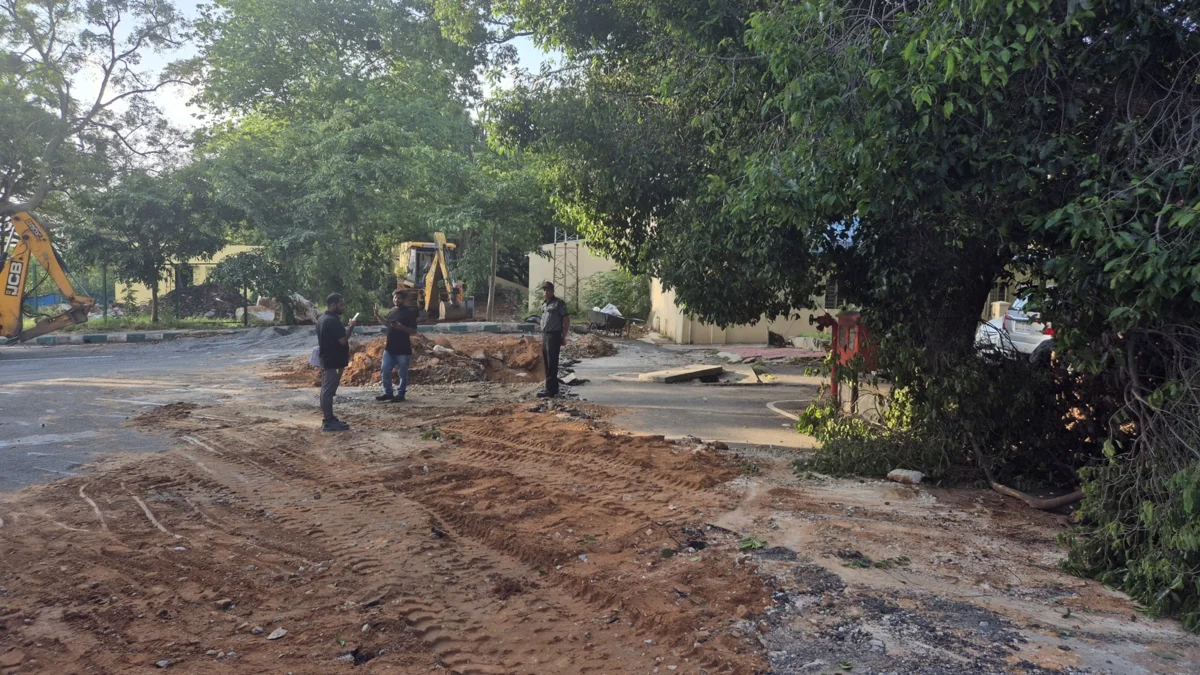
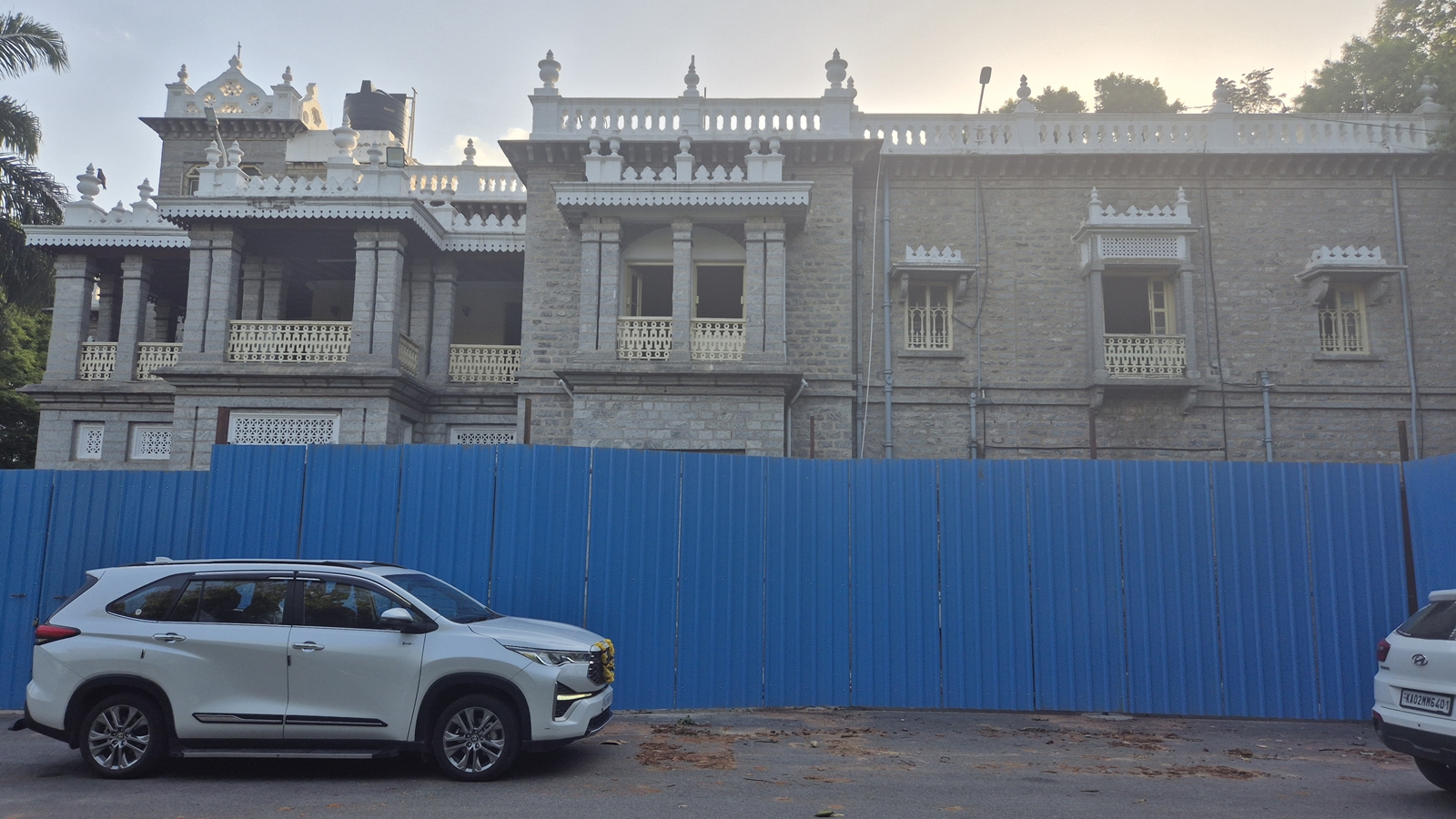
The two-storeyed Kumara Krupa guest house, located in the heart of Bengaluru, is currently undergoing a transformative renovation, mandated directly by the Chief Minister. Earth movers have been deployed within the complex, meticulously digging a trench designed to physically separate the older sections of the building from its newer additions. Inside, construction workers, supported by an intricate network of scaffolding, have commenced chipping away at various parts of the structure, signalling a significant internal remodelling.
This ambitious renovation project is not merely an aesthetic upgrade but a strategic re-engineering guided by Vaastu principles. Chief Minister Shivakumar, who currently resides at his private home in Sadashivnagar, intends to make the revamped Kumara Krupa his official residence, deliberately avoiding ‘Anugraha,’ which has long been perceived by many politicians, across party lines, as ‘jinxed.’
"The CM has deep faith in Vaastu and astrology. Changes to the building (Kumara Krupa guest house) are being undertaken in consultation with Vaastu experts," a Public Works Department (PWD) official overseeing the project confirmed, highlighting the esoteric underpinnings of the decision.
Once completed, the renovated Kumara Krupa will feature a dedicated approach road, enhancing both accessibility and security, and will be enveloped by a six-foot boundary wall, creating a private and fortified enclave for the state’s highest executive. Workers estimate the extensive renovation could span up to three months, with officials anticipating the Chief Minister’s relocation around the auspicious Dussehra period in October. The Public Works Department officially greenlit the renovation after issuing a note following Shivakumar’s explicit directive for the complex to be prepared for occupancy.
The Vaastu Factor: A Chief Minister’s Choice
Chief Minister D.K. Shivakumar’s decision to invest significant resources in transforming Kumara Krupa into his official abode, rather than occupying the pre-designated ‘Anugraha,’ underscores the enduring, often unspoken, influence of traditional Indian architectural and astrological beliefs in contemporary politics. Vaastu Shastra, an ancient Indian science of architecture and dwelling, dictates principles of design, layout, measurements, ground preparation, space arrangement, and spatial geometry to ensure harmony and prosperity. For many, including a significant number of public figures, adherence to these principles is seen as crucial for success, stability, and well-being.
This adherence to Vaastu is a characteristic Shivakumar shares with other prominent political figures, notably former Chief Minister B.S. Yediyurappa, who was also known for his deep belief in such principles and his meticulous choices of residences based on their perceived auspiciousness. The current Chief Minister’s conviction is so strong that it has led to a comprehensive structural and spatial realignment of a government property, all in the pursuit of an environment deemed conducive to effective governance and personal fortune.
Steering Clear of the ‘Jinxed’ Anugraha
The narrative surrounding ‘Anugraha,’ the officially designated Chief Minister’s residence, is a fascinating blend of political history and popular superstition. For decades, the house has carried the ominous reputation of being ‘jinxed,’ a belief reinforced by a succession of Chief Ministers who, after occupying it, either failed to complete their terms or faced significant political setbacks. This deeply entrenched perception has led many leaders, irrespective of their party affiliations, to actively avoid it.
The most recent incumbent to briefly brave the residence was the BJP’s D.V. Sadananda Gowda during his short tenure as Chief Minister in 2011. His incomplete term, which lasted just over 11 months, only served to solidify the widely held belief that ‘Anugraha’ is a harbinger of political instability and that those who reside there are destined not to return to lead the state. This historical pattern has created a powerful psychological deterrent for prospective occupants.
A Building Steeped in History: Kumara Krupa’s Transformation
The chosen site, Kumara Krupa guest house, is not merely another government building; it possesses a rich historical legacy that predates its current transformation. This heritage aspect has become a focal point of the burgeoning controversy surrounding its renovation.
Kumara Krupa has hosted numerous dignitaries over the decades and holds significant historical value for Karnataka. Notably, the father of the nation, Mahatma Gandhi, is known to have stayed at the guest house, imbuing it with a profound sense of national heritage. Furthermore, the building is associated with the illustrious K. Seshadri Iyer, a distinguished Diwan of Mysore State, whose contributions to the region’s development are widely celebrated. These historical connections elevate Kumara Krupa beyond a mere state guesthouse, positioning it as a cultural landmark.
Preserving Heritage Amidst Modernization
The extensive nature of the renovation work, involving earth movers, trench digging, and internal structural alterations, has inevitably raised concerns about the preservation of Kumara Krupa’s historical character. Opposition parties, particularly the JD(S), have voiced strong objections, accusing Chief Minister Shivakumar of "betrayal of history" by altering a heritage building for personal convenience.
However, officials from the Public Works Department are quick to counter these criticisms, asserting that the building’s essential heritage character will be preserved. They emphasize that the guest house has undergone periodic renovations and additions throughout its history, with significant changes occurring as early as the 1960s when new rooms were added. "Rooms were added to the guest house in the 1960s, and renovation work has been carried out periodically ever since," an official clarified, implying that the current work is part of an ongoing evolutionary process rather than a destructive overhaul. The challenge, therefore, lies in harmonizing the Chief Minister’s Vaastu requirements with the imperative to maintain the structural and historical integrity of a building that holds such significance.
Chronology of CM Residences and Superstitions
The saga of Chief Ministers and their residential choices in Karnataka is a testament to the powerful grip of superstition and personal belief within the state’s political landscape. The ‘jinx’ associated with ‘Anugraha’ has shaped the decisions of numerous leaders, creating a fascinating chronology of avoidance, brief occupancy, and alternative selections.
A Troubled Legacy: Former Occupants and Their Fates
The list of former Chief Ministers who made ‘Anugraha’ their official residence, and the subsequent political trajectories they experienced, forms the bedrock of its ‘jinxed’ reputation:
- H.D. Deve Gowda (JD, 1994–96): Occupied ‘Anugraha’ during his tenure. While he rose to become Prime Minister, his stint as CM was not without its political machinations and eventual move to the national stage.
- S.M. Krishna (Congress, 1999–2004): Krishna is a notable exception as he completed his full five-year term while residing at ‘Anugraha.’ However, even his story adds a nuanced layer to the ‘jinx.’ Despite completing his term, he famously called for early elections in 2004, only for the Congress party to fail to secure a majority, leading to his replacement. This outcome, for some, merely reaffirmed the residence’s capacity to disrupt even a seemingly stable tenure.
- Dharam Singh (Congress, 2005): His time in office after Krishna was relatively brief and marked by political instability, further contributing to the ‘Anugraha’ narrative.
- H.D. Kumaraswamy (JDS, 2006–07): During his first stint as Chief Minister, Kumaraswamy did reside at ‘Anugraha.’ In a telling move reflecting the pervasive superstition, he reportedly brought in astrologers who advised him that caring for two cows within the premises would break the residence’s ‘jinx.’ Despite these efforts, his tenure was characterized by political challenges and eventual premature end, cementing the house’s ill repute.
- D.V. Sadananda Gowda (BJP, 2011): His brief, incomplete tenure as CM further reinforced the belief that ‘Anugraha’ brought political misfortune, becoming the last Chief Minister to formally occupy it for a significant period.
The Pragmatists and the Devout: Other CMs’ Choices
Beyond ‘Anugraha,’ other Chief Ministers have consciously made alternative residential choices, often influenced by their personal beliefs or strategic considerations:
- B.S. Yediyurappa (BJP): A staunch believer in Vaastu, similar to Shivakumar, Yediyurappa consistently avoided ‘Anugraha’ throughout his multiple stints as Chief Minister. Instead, he chose to reside at ‘Race View Cottage’ on Race Course Road, which he openly considered his "lucky" residence. His successful (though sometimes turbulent) tenures arguably lent credence to his belief in the power of an auspicious dwelling.
- H.D. Kumaraswamy (JDS, 2018–2019): In his second tenure as Chief Minister, having experienced setbacks while residing at ‘Anugraha’ previously, Kumaraswamy adopted an even more unconventional approach, opting to operate largely from the Taj West End hotel. This decision underscored the extreme measures some leaders would take to circumvent perceived negative energies associated with official residences.
- Basavaraj Bommai (BJP, 2021): Succeeding Yediyurappa mid-term, Bommai initially stayed at ‘Anugraha’ for a brief period. However, he soon followed the precedent set by his predecessor and shifted to another government residence, ‘1, Race View Cottage,’ a move that tacitly acknowledged the prevailing superstitions.
- Siddaramaiah (Congress, 2013–2018 and 2023–2026): Throughout both his terms as Chief Minister, Siddaramaiah consistently chose ‘Cauvery’ as his official residence, steering clear of ‘Anugraha.’ His preference for ‘Cauvery’ was so strong that he has continued to retain it even after demitting office last month, highlighting a long-standing personal attachment and perhaps a practical avoidance of the ‘jinxed’ property.
Supporting Data and Context
The ongoing renovation of Kumara Krupa and the Chief Minister’s explicit reliance on Vaastu principles are not isolated incidents but reflect deeper currents within Indian society and politics. The intersection of ancient traditions, personal faith, and public office often leads to decisions that spark debate and reveal the complexities of governance in a culturally rich nation.
The Enduring Influence of Vaastu in Indian Politics
Vaastu Shastra, along with astrology and other traditional belief systems, holds significant sway in the personal and professional lives of many Indians, including those in positions of power. From the auspicious timing of oath-taking ceremonies to the orientation of government buildings and personal residences, these practices are frequently consulted. The belief is that aligning oneself and one’s environment with cosmic energies can bring good fortune, ward off evil, and ensure success and stability.
In the political arena, where careers are often volatile and success is fleeting, leaders frequently turn to these beliefs for an perceived edge. The ‘jinx’ of ‘Anugraha’ is a prime example of how such cultural narratives can gain a life of their own, influencing practical decisions and even state policy, as seen in the directive for PWD to renovate Kumara Krupa based on Vaastu expert consultations. This phenomenon highlights a unique aspect of Indian democracy where traditional beliefs, far from being confined to the private sphere, openly intersect with public governance.
Public Funds and Private Beliefs: The Cost of Renovation
While the PWD has confirmed the renovation work, specific details regarding the budget allocated for the Kumara Krupa transformation have not been publicly disclosed in the initial reports. However, the deployment of earth movers, extensive structural alterations, the construction of a new approach road, and a six-foot boundary wall suggest a substantial financial outlay. This raises pertinent questions about the use of public funds for renovations driven by a Chief Minister’s personal beliefs and adherence to Vaastu.
Critics argue that such expenditures, especially on a heritage building, should be strictly justified by public necessity and utility, rather than individual preferences, however deeply held. In a state grappling with various developmental challenges, the allocation of significant sums for a residence based on perceived auspiciousness could be viewed as an insensitive use of taxpayer money. The debate around the Kumara Krupa renovation therefore extends beyond architectural changes to encompass fiscal responsibility and ethical governance.
Official Responses and Political Fallout
The Chief Minister’s decision and the ongoing renovation have not gone unnoticed, quickly becoming a point of contention in Karnataka’s political discourse. The opposition has seized upon the issue, turning it into a critique of the government’s priorities and respect for heritage.
Opposition Raises Alarm Over Heritage Alteration
The Janata Dal (Secular) (JD(S)) has been particularly vocal in its criticism, launching a direct attack on Chief Minister Shivakumar via social media. "Converting the heritage building Kumara Krupa, where the father of the nation Mahatma Gandhi stayed and which also holds memories of (Mysore state) Diwan K Sheshadri Iyer, into a home office merely for personal convenience is a great betrayal of history," the JD(S) declared in a social media post shortly after renovation work commenced.
This line of attack frames the renovation not just as a matter of personal choice but as an act of disrespect towards historical memory and public patrimony. By invoking figures like Mahatma Gandhi and Diwan K. Seshadri Iyer, the JD(S) aims to tap into a broader public sentiment regarding the preservation of heritage and the sanctity of historical sites, portraying the government’s actions as a frivolous indulgence at the expense of cultural values.
Government’s Stance: Balancing Tradition and Modernity
In response to the mounting criticism, government officials, particularly from the PWD, have attempted to assuage concerns and defend the project. Their primary argument centers on the assertion that the building’s heritage character will be maintained despite the renovations. They point to the history of modifications the guest house has undergone, including room additions in the 1960s and subsequent periodic renovations, suggesting that adaptation is part of the building’s legacy.
This official stance attempts to strike a balance between acknowledging the building’s historical significance and justifying the necessary modifications for its new role as the Chief Minister’s official residence. By emphasizing the consultative process with Vaastu experts, the government implicitly defends the Chief Minister’s personal beliefs as a legitimate factor in decision-making, while simultaneously trying to project an image of responsible stewardship of public property.
Implications and Future Outlook
The Kumara Krupa renovation and the associated discourse extend beyond a single building or a Chief Minister’s personal preference. They carry broader implications for governance, public perception, and the evolving relationship between tradition and modernity in Indian politics.
Setting a Precedent or a Personal Preference?
Chief Minister Shivakumar’s decision to specifically avoid ‘Anugraha’ and extensively modify Kumara Krupa based on Vaastu principles could set a significant precedent. While previous Chief Ministers have chosen alternative residences, few have undertaken such a publicly declared and extensive renovation of a government heritage building specifically for Vaastu compliance. This move might normalize the practice of leaders making substantial modifications to public properties based on personal beliefs, potentially influencing future Chief Ministers to similarly tailor their official residences. It could also reinforce the notion that personal astrological or Vaastu-related considerations are acceptable drivers for public expenditure and policy decisions.
The Debate: Rationality vs. Tradition in Public Office
At its core, the controversy surrounding Kumara Krupa highlights the perennial tension between rationality and tradition in public office. In a modern democratic state, decisions are expected to be guided by evidence, public interest, and transparent processes. However, when deeply held personal beliefs, rooted in ancient traditions, influence such decisions, it sparks a critical debate.
Critics argue that reliance on Vaastu for official residences diverts attention and resources from more pressing governance issues, while simultaneously undermining the image of a progressive and rational administration. Proponents, however, might argue that these beliefs are an integral part of cultural identity and that personal comfort and peace of mind, derived from such practices, can contribute to effective leadership. The Kumara Krupa saga thus becomes a microcosm of a larger societal debate about the role of faith and tradition in contemporary public life.
Conclusion
As the renovation work progresses at Kumara Krupa, transforming it into a Vaastu-compliant haven for Chief Minister D.K. Shivakumar, the discussions surrounding the project are unlikely to subside. The move reflects a confluence of political pragmatism, deep personal faith, and the complex interplay between heritage preservation and modern governance. While PWD officials work diligently to meet the Chief Minister’s specifications, balancing structural changes with historical integrity, the opposition’s criticisms underscore the sensitive nature of such decisions.
Whether the revamped Kumara Krupa proves to be a "lucky" charm for Chief Minister Shivakumar remains to be seen. What is clear, however, is that his choice has opened a new chapter in the intriguing history of Chief Ministers’ residences in Karnataka, reigniting a crucial conversation about superstition, heritage, and public accountability in the corridors of power. The Dussehra period in October will not only mark the Chief Minister’s potential move but also serve as a symbolic moment in this ongoing narrative, where ancient beliefs continue to shape the very foundations of modern leadership.
