

Introduction: A Grand Vision Meets a Quiet Reality
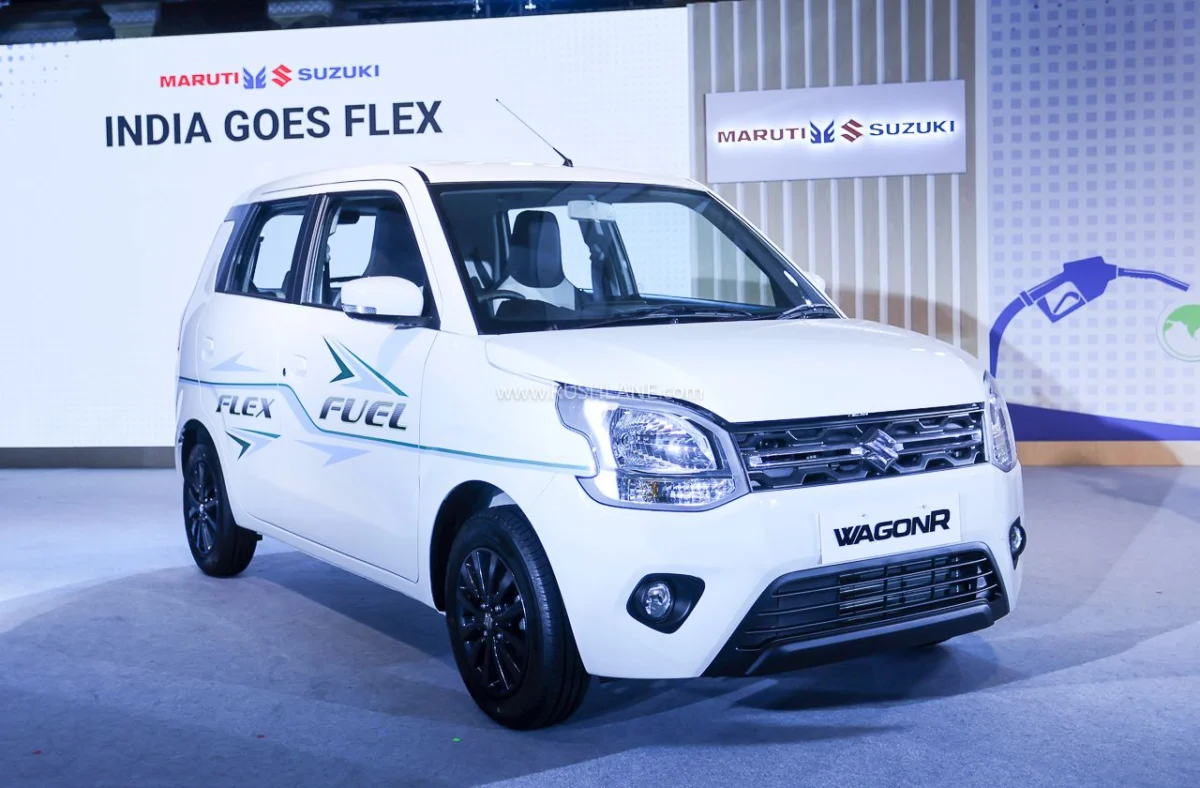
India’s journey toward energy independence and environmental sustainability reached a symbolic milestone in June 2026 with the commercial launch of the Maruti Suzuki WagonR BioFlex. As the nation’s first mass-market passenger vehicle capable of running on high-ethanol blends, it was poised to be the torchbearer of the government’s ambitious "Ethanol Blending Program." However, the initial market reception has been sobering.
Just weeks after its high-profile debut, official Vahan registration data revealed a startling figure: only three units of the WagonR BioFlex had been registered across the country. While such low numbers might suggest a lack of consumer interest, a deeper analysis reveals a complex "chicken-and-egg" dilemma. The slow start is not a reflection of the technology’s failure but rather a glaring indictment of an underdeveloped infrastructure that is struggling to keep pace with automotive innovation.
1. Main Facts: The WagonR BioFlex and the E85 Equation
The Maruti WagonR BioFlex was officially launched on June 4, 2026, with customer deliveries commencing on June 17. On paper, the vehicle is a technological marvel designed to address India’s specific fuel needs. It is engineered to operate on petrol-ethanol blends ranging from E20 (20% ethanol) to E100 (100% ethanol), though it is currently homologated specifically for E85 (85% ethanol).
The Pricing Barrier
The BioFlex variant is priced at Rs 7.24 lakh (ex-showroom), which places it at a significant premium—approximately Rs 74,000 higher—than its equivalent top-spec petrol-only counterpart. For a budget-conscious segment like the one the WagonR occupies, this "green premium" is a substantial hurdle.
The Fuel Incentive
The primary lure for consumers is the price of E85 fuel. In markets like Mumbai, E85 is priced at approximately Rs 91 per litre, making it roughly Rs 20 cheaper than standard E20 petrol. In theory, this price delta should allow high-mileage users to recoup the initial purchase premium over time. However, the lack of data regarding real-world fuel efficiency (mileage) on E85 remains a major point of contention for prospective buyers.
2. Chronology: The Evolution of Flex-Fuel in India
The road to the WagonR BioFlex has been paved with several experimental and niche launches, none of which have yet achieved mainstream success.
- July 2019: TVS Motor Company launched the Apache RTR 200 Fi E100. It was India’s first ethanol-only motorcycle. However, it failed to gain traction as E100 fuel stations were virtually non-existent at the time.
- October 2024: Honda Motorcycle & Scooter India (HMSI) entered the fray with the CB300F Flex-Fuel. Despite being a more modern iteration, it saw fewer than 30 registrations in the first half of 2026.
- Early 2025: Suzuki Motorcycle India launched the Gixxer SF 250 FFV. To date, Vahan data shows zero registrations for this model, highlighting a complete disconnect between product availability and consumer utility.
- June 2026: Maruti Suzuki, the market leader, launches the WagonR BioFlex, marking the first serious attempt to bring flex-fuel technology to the mass-market four-wheeler segment.
This timeline illustrates a recurring pattern: manufacturers are ready with the technology, but the market remains stagnant due to the absence of a reliable fuel supply chain.
3. Supporting Data: The Infrastructure Gap and Economic Realities
The primary reason for the abysmal registration numbers of the WagonR BioFlex is the sheer lack of E85 dispensing stations.
Geographic Concentration
As of late June 2026, India possesses only 48 retail outlets capable of dispensing E85 fuel. These are almost exclusively concentrated in the Delhi-NCR and Mumbai metropolitan regions. For a consumer in Bangalore, Hyderabad, or Chennai, buying a WagonR BioFlex is practically impossible, as they would have no way to utilize the vehicle’s primary cost-saving feature.
The Energy Density Deficit
A critical data point often overlooked in the ethanol debate is energy density. Ethanol contains approximately 30% less energy per gallon than pure gasoline. This means that a car running on E85 will inevitably deliver lower fuel efficiency (km/l) than one running on E20 or E10.
- Petrol (E10/E20): High energy density, higher mileage.
- Ethanol (E85): Lower energy density, lower mileage.
While E85 is Rs 20 cheaper per litre, the vehicle may require 25-30% more fuel to cover the same distance. Without official ARAI-certified mileage figures for the WagonR BioFlex on E85, consumers are unable to calculate the actual "cost per kilometer," leading to a "wait-and-watch" approach.

4. Official Responses: A Long-Term Strategic Outlook
In the wake of the low registration data, Maruti Suzuki and various government stakeholders have emphasized that these early numbers do not tell the whole story.
Maruti Suzuki’s Stance
Responding to inquiries regarding the slow start, Maruti Suzuki stated that the BioFlex project should be viewed through the lens of national priority rather than immediate sales volume. The company emphasized that the vehicle is a "transformational technology" aimed at:
- Enhancing India’s energy security by reducing crude oil imports.
- Supporting the agricultural sector by creating a steady demand for ethanol derived from sugarcane and food grains.
- Reducing the carbon footprint of the transport sector.
Maruti argued that judging a paradigm-shifting technology based on the first 25 days of sales is premature. They maintain that as stakeholders—including oil marketing companies (OMCs)—expand the E85 network, sales will naturally follow.
Government Policy Framework
The Ministry of Road Transport and Highways (MoRTH) and the Ministry of Petroleum and Natural Gas (MoPNG) have been vocal proponents of the E20-to-E100 roadmap. The government’s goal is to achieve 20% ethanol blending nationwide by 2025-26, a target that is largely on track. However, the jump to E85 and E100 requires a different level of commitment from OMCs, who must invest in separate underground tanks and dispensing units for high-blend ethanol.
5. Implications: The "Chicken-and-Egg" Dilemma
The current state of flex-fuel adoption in India mirrors the early days of Compressed Natural Gas (CNG) and Electric Vehicles (EVs). It is a classic systemic deadlock.
The Retailer’s Hesitation
Oil marketing companies are hesitant to invest millions in upgrading thousands of fuel stations to dispense E85 when there are only a handful of compatible vehicles on the road. The return on investment (ROI) for an E85 pump is currently non-existent.
The Consumer’s Skepticism
Conversely, the Indian car buyer is famously pragmatic. A buyer will not pay a Rs 74,000 premium for a car if they have to drive 50 kilometers just to find a compatible fuel station. Furthermore, the resale value of a flex-fuel vehicle remains an unknown variable in the used-car market.
The Manufacturer’s "Wait-and-Watch"
While Maruti has taken the first step, other giants like Tata Motors, Hyundai, and Mahindra have showcased flex-fuel prototypes but have delayed commercial launches. They are monitoring Maruti’s experience closely. If the WagonR BioFlex fails to gain momentum, other OEMs may pivot their R&D budgets toward EVs or Strong Hybrids instead of ethanol-based internal combustion engines.
6. The Road Ahead: What Is Needed for Success?
For the WagonR BioFlex and future flex-fuel vehicles to succeed, a multi-pronged approach is required:
- Tax Incentives: Currently, flex-fuel vehicles are taxed similarly to standard petrol cars. A reduction in GST (Goods and Services Tax) for flex-fuel vehicles—similar to the 5% rate enjoyed by EVs—could instantly offset the "green premium" and spur demand.
- Mandated Pump Rollout: The government may need to mandate that a certain percentage of fuel stations in Tier-1 and Tier-2 cities must offer E85 by 2027.
- Transparency in Economics: Manufacturers must release transparent data on fuel efficiency. If the consumer knows exactly how much they save per kilometer, the psychological barrier to purchase will lower.
- Global Learning: India can look to Brazil, the world leader in flex-fuel technology, where over 80% of new car sales are flex-fuel. Brazil succeeded through a combination of consistent tax policy, a robust sugarcane industry, and a fuel station network where ethanol is available at every corner.
Conclusion
The registration of only three Maruti WagonR BioFlex units is not a eulogy for ethanol technology in India; it is a wake-up call. It highlights that the transition to sustainable mobility cannot be achieved by the automotive industry in isolation. It requires a synchronized effort where fuel availability, pricing transparency, and government incentives move in lockstep with vehicle manufacturing.
The WagonR BioFlex has proven that the technology is ready for the Indian mass market. Now, the question remains: is the Indian infrastructure ready for the WagonR? Until the 48 E85 pumps grow into 4,800, the "BioFlex" badge will remain a rare sight on Indian roads, a symbol of a future that is technically possible but logistically out of reach.
