

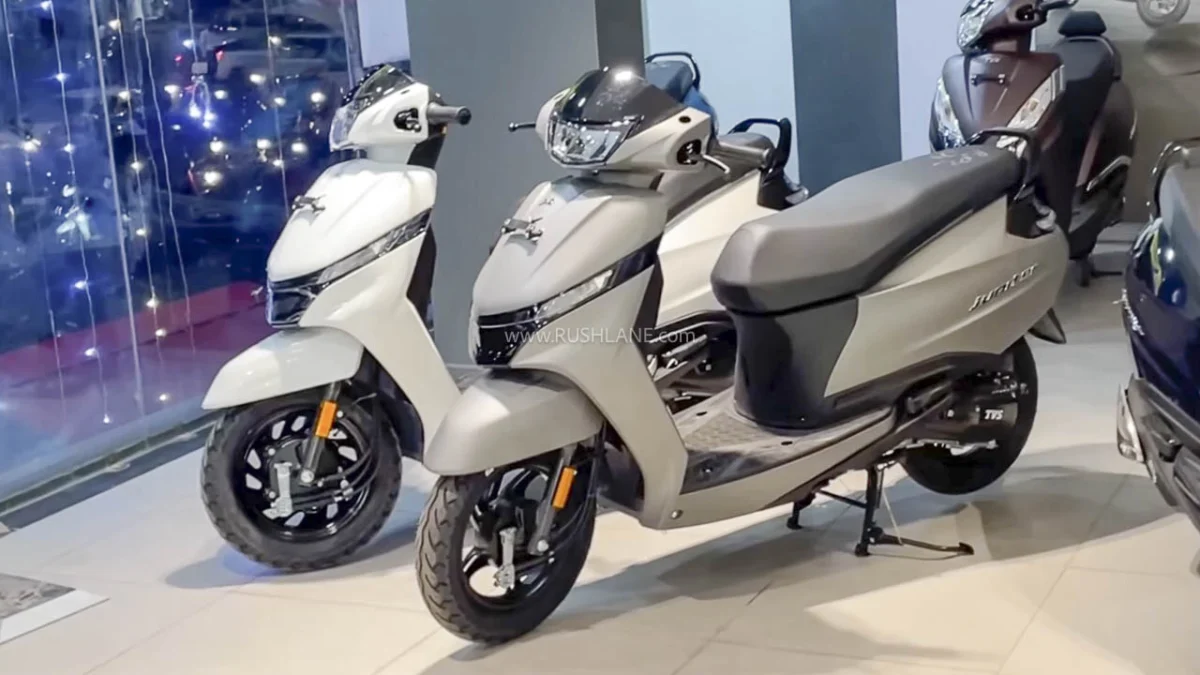
The Indian two-wheeler landscape is currently undergoing one of its most significant transformations since the liberalization of the economy. In July 2026, the scooter segment emerged as a primary battleground, reflecting a complex interplay between established Internal Combustion Engine (ICE) dominance and a relentless surge in electric mobility. While the Honda Activa continues to hold its crown as the market leader, the underlying data reveals a shifting tide where legacy manufacturers are being forced to recalibrate their strategies in the face of triple-digit growth from the electric vehicle (EV) sector.
Main Facts: A Resilient Market Amidst Structural Change
July 2026 proved to be a milestone month for the Indian scooter industry. Total sales—encompassing both domestic dispatches and international exports—reached a staggering 8,71,355 units. This represents a robust year-on-year (YoY) growth of 23.75% compared to the 7,04,108 units recorded in July 2025.
The growth was balanced across both internal and external markets. Domestic sales grew in tandem with the overall market, rising 23.75% to 7,98,190 units. Simultaneously, Indian-made scooters found increasing favor abroad, with exports rising by 23.83% to reach 73,165 units. However, the most compelling statistic from the July report is the penetration of electric scooters. EVs accounted for 11.24% of all two-wheeler retail sales, a significant leap from the 7.65% share held in July 2025 and a steady climb from the 10.59% recorded in June 2026.
The Top 10 Performance Summary
Despite the overarching growth, the performance was not uniform across all brands. The "Top 10" list for July 2026 shows a market in flux:
- Honda Activa: 2,06,170 units (Down 13.16%)
- TVS Jupiter: 1,48,595 units (Up 18.99%)
- Suzuki Access: 82,505 units (Up 21.02%)
- TVS iQube (EV): 59,386 units (Up 157.87%)
- Bajaj Chetak (EV): 47,184 units (Up 307.32%)
- TVS Ntorq: 38,336 units (Up 46%)
- Suzuki Burgman: 30,607 units (Up 29.03%)
- Honda Dio: 25,903 units (Down 7.33%)
- Ather Rizta (EV): 24,833 units (Up 118.89%)
- Yamaha RayZR: 23,760 units (Up 44.69%)
Chronology: From Legacy Dominance to the EV Inflection Point
To understand the July 2026 figures, one must look at the trajectory of the last 24 months. In 2024 and early 2025, the market was largely defined by the recovery of rural demand and the stabilization of supply chains post-pandemic. However, by mid-2025, a clear trend began to emerge: the "Family Scooter" segment was no longer the exclusive domain of 110cc petrol engines.
By July 2025, the TVS iQube and Bajaj Chetak had begun to move from "niche alternatives" to "mainstream contenders." The introduction of the Ather Rizta in early 2026 further disrupted the market, specifically targeting the traditional Honda Activa buyer—the family-oriented commuter.
As we reached July 2026, the chronology of the market reached an inflection point. For the first time, multiple electric models have secured permanent spots in the Top 10 overall rankings, no longer relegated to a separate "EV-only" category. This transition marks the end of the "early adopter" phase and the beginning of mass-market EV integration in urban and semi-urban India.
Supporting Data: A Deep Dive into the Top Performers
The ICE Titans: Activa and Jupiter
The Honda Activa remains the undisputed king of the Indian scooter market, commanding a 30% share of the Top 10 segment. However, its 13.16% decline (from 2,37,413 units in 2025 to 2,06,170 in 2026) suggests that the "Activa-only" era is facing its toughest challenge yet. Analysts attribute this to a "cannibalization effect," where potential Activa buyers are either migrating to Honda’s own premium offerings or, more likely, switching to electric alternatives.

In contrast, the TVS Jupiter has shown remarkable resilience. With a nearly 19% growth, the Jupiter has solidified its position as the primary petrol-powered alternative to the Activa. Its success is often credited to its frequent updates and its ability to bridge the gap between utility and modern features.
The Electric Surge: iQube, Chetak, and Rizta
The most explosive data comes from the electric quartet. The Bajaj Chetak recorded a staggering 307.32% growth. This meteoric rise is the result of Bajaj Auto’s aggressive expansion of its "Chetak Experience Centres" and the introduction of more affordable variants that compete directly with mid-range ICE scooters.
The TVS iQube remains the electric leader in terms of volume, with 59,386 units. Its 157.87% growth indicates that TVS’s dual-strategy of pushing both the Jupiter (ICE) and iQube (EV) is paying dividends, allowing the company to capture growth regardless of the powertrain preference.
Ather Energy, with its Rizta model, has successfully cracked the "practicality" code. Traditionally known for the sporty 450 series, Ather’s pivot to the larger, family-focused Rizta resulted in 24,833 units sold in July 2026—a 118.89% YoY increase.
Suzuki and Yamaha: The Premium and Sporty Niche
Suzuki continues to perform strongly with the Access 125 and the Burgman Street. The Access, with 82,505 units, remains the preferred choice for those seeking a balance of performance and classic styling. Meanwhile, Yamaha’s RayZR (up 44.69%) highlights a growing demand among younger demographics for aggressive styling and hybrid-assist technology.
Official Responses and Industry Sentiment
While official statements from individual manufacturers remain focused on optimistic year-end targets, industry analysts and spokespeople from the Society of Indian Automobile Manufacturers (SIAM) have noted several key factors driving these numbers.
Manufacturer Perspectives:
Sources within TVS Motor Company suggest that their diversified portfolio is their greatest strength. "We are seeing a hybrid demand environment," a senior executive noted (anonymously). "While the Jupiter remains a staple for the Indian household, the iQube is increasingly becoming the first choice for urban upgrades."
Bajaj Auto has attributed the Chetak’s success to its "re-engineered supply chain," which has allowed for more competitive pricing following the tapering of government subsidies. Meanwhile, Honda Motorcycle and Scooter India (HMSI) has remained focused on its "Power of Choice" strategy, though the decline in Activa sales has prompted rumors of a significant "Activa EV" launch in the coming quarters.

Market Analyst Views:
"The 11.24% EV penetration is a psychological barrier that has been broken," says Arpit Mathur, a senior automotive consultant. "In July 2025, people were asking if they should buy an EV. In July 2026, the data shows they are asking which EV they should buy."
Implications: What the July 2026 Data Portends for the Future
The implications of the July 2026 sales figures are far-reaching for the Indian automotive ecosystem.
1. The Decline of the 110cc Petrol Dominance
The decline in sales for the Honda Activa and Honda Dio suggests that the entry-level 110cc ICE segment is under siege. As the Total Cost of Ownership (TCO) for electric scooters continues to drop and charging infrastructure expands, the traditional "commuter" petrol scooter may eventually become a rural-only product.
2. The Infrastructure Race
The 23.75% growth in total scooter sales is putting immense pressure on urban infrastructure. However, the rise in EVs specifically necessitates a rapid expansion of fast-charging networks. The July data suggests that private players (Ather, Ola, and TVS) will need to accelerate their "charging grid" deployments to sustain this momentum.
3. Export Potentials
The 23.83% rise in exports indicates that India is successfully positioning itself as a global hub for scooter manufacturing. As European and Southeast Asian markets look for affordable electric and Euro-5 compliant petrol scooters, Indian manufacturers like TVS and Bajaj are well-positioned to capture international market share.
4. Competitive Pricing and "Feature Wars"
With the Top 10 list now featuring a mix of ICE and EV, the competition is no longer just about fuel efficiency. It is about digital clusters, Bluetooth connectivity, under-seat storage, and "smart" features. The success of the TVS Ntorq (up 46%) and the Ather Rizta proves that the modern Indian consumer is willing to pay a premium for technology.
Conclusion
July 2026 has served as a definitive snapshot of an industry in transition. The Indian scooter market is growing, but its DNA is changing. While Honda’s Activa still sits at the top, the shadows cast by the TVS iQube and Bajaj Chetak are growing longer. For legacy players, the message is clear: innovation is no longer optional. For the consumer, the result is a market richer in choice, technology, and sustainability than ever before. As we move toward the festive season of late 2026, all eyes will be on whether the EV surge can push past the 15% penetration mark, forever altering the sound of Indian streets.
