

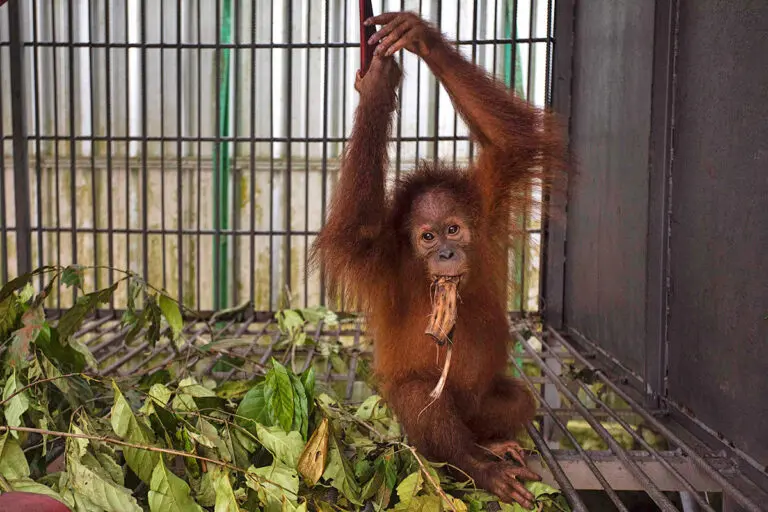
In the upscale living rooms of Mumbai, Delhi, and Bengaluru, a new status symbol is taking flight—and crawling, and slithering. The traditional preference for pedigreed dogs and cats is rapidly being supplanted by a hunger for the "exotic." From the vibrant plumage of South American macaws to the translucent skin of African sugar gliders and the silent stare of ball pythons, India has emerged as a primary destination in the global wildlife trade.
The investigative series "From the Wild, For Trade" provides a harrowing look into this shadow economy. It reveals a sophisticated pipeline that begins in the world’s most biodiverse rainforests and ends in the cramped confines of urban Indian apartments. This report enriches those findings, examining the mechanisms of trafficking, the legislative gaps being exploited, and the ticking ecological time bomb that the exotic pet trade represents for the Indian subcontinent.
I. Main Facts: The Commodification of the Unusual
The exotic pet trade in India is no longer a fringe activity confined to clandestine back alleys; it is a booming, multi-million-dollar industry facilitated by social media and a lack of historical regulation. The core of the issue lies in the distinction between "native" and "non-native" wildlife. For decades, India’s Wild Life (Protection) Act (WPA), 1972, provided stringent protection for indigenous species like the Bengal tiger or the Indian star tortoise, but remained largely silent on species originating outside its borders.
The Digital Marketplace
The trade has migrated from physical "wet markets" to the encrypted corridors of the internet. Platforms like Instagram, Facebook, and Telegram serve as digital showrooms where dealers post high-definition videos of marmosets, iguanas, and exotic birds. Transactions are often conducted via UPI or cryptocurrency, and the animals are shipped through "pet taxi" services or concealed in passenger luggage on interstate buses and trains.
The Supply Chain
The investigation identifies a clear, three-tier supply chain:
- The Poachers and Breeders: Animals are either wild-caught in the Amazon, Sub-Saharan Africa, or Southeast Asia, or produced in industrial-scale "breeding mills" in Thailand and Indonesia.
- The Transmitters: International syndicates move the "cargo" across borders, often mislabeling crates or bribing officials at transit points.
- The Domestic Network: Once inside India, a network of wholesalers distributes the animals to local pet shops and individual collectors.
II. Chronology: From Legal Gray Zone to Regulatory Awakening
The trajectory of India’s exotic pet trade can be divided into three distinct phases: the "Wild West" era, the Pandemic Pivot, and the Era of Compliance.
1. The Pre-2020 "Wild West" Era
Prior to 2020, owning a kangaroo or a toucan in India occupied a legal gray area. Since these species were not listed in the schedules of the WPA 1972, forest departments often lacked the jurisdiction to seize them unless they could prove the animals were smuggled in violation of the Customs Act. This led to an explosion in "hobbyist" collections that rivaled small zoos.
2. The 2020 Voluntary Disclosure Scheme
In June 2020, amid the global COVID-19 pandemic, the Ministry of Environment, Forest and Climate Change (MoEFCC) issued an advisory. It offered a one-time "amnesty" period, allowing citizens to voluntarily disclose their possession of exotic live species. The move was intended to map the scale of exotic pet ownership in India and mitigate zoonotic risks. However, critics argued it provided a "backdoor" to legitimize illegally smuggled animals.
3. The 2022 Amendment and CITES Integration
The most significant shift occurred with the Wild Life (Protection) Amendment Act, 2022, which came into effect in April 2023. This amendment introduced a new chapter specifically to implement CITES (the Convention on International Trade in Endangered Species of Wild Fauna and Flora). For the first time, India had a legal mechanism to regulate the trade of thousands of foreign species, requiring owners to register their pets through the government’s PARIVESH portal.
III. Supporting Data: The Scale of the Shadow Economy
The numbers associated with India’s exotic pet trade are staggering and point toward a systemic crisis.
- The Amnesty Revelations: Following the 2020 MoEFCC advisory, over 32,459 individuals across India came forward to disclose their "exotic" possessions. These disclosures included everything from lemurs and capuchin monkeys to rare venomous snakes.
- Seizure Statistics: The Directorate of Revenue Intelligence (DRI) and the Wildlife Crime Control Bureau (WCCB) have reported a sharp uptick in seizures at the Indo-Myanmar border. In a single operation in Mizoram in 2022, officials rescued 468 animals, including exotic monkeys, tortoises, and lizards, marking one of the largest hauls in recent history.
- The Northeast Corridor: Approximately 70-80% of smuggled wildlife enters India through the "porous" borders of Mizoram and Manipur. The town of Champhai in Mizoram has emerged as a critical transit hub for animals arriving from Myanmar’s unregulated markets.
- Economic Valuation: While exact figures are elusive due to the illicit nature of the trade, Interpol estimates the global illegal wildlife trade to be worth between $7 billion and $23 billion annually, with India positioned as one of the fastest-growing consumer markets.
IV. Official Responses and Enforcement Challenges
The Indian government has significantly bolstered its legal arsenal, but enforcement remains a cat-and-mouse game.
The Role of the PARIVESH Portal
Under the new regulations, any person in possession of a species listed in the CITES Appendices must register it within a specified timeframe. The government’s goal is to create a "birth-to-death" tracking system for every exotic animal in the country. This digital trail is intended to prevent the "laundering" of wild-caught animals as "captive-bred."
Enforcement Hurdles
Despite the new laws, enforcement agencies face several bottlenecks:
- Identification Crisis: Customs and police officers often lack the specialized taxonomic training required to distinguish between a common lizard and a highly protected, endangered CITES Appendix I species.
- The "Captive-Bred" Loophole: Traffickers frequently claim that wild-caught animals were bred in domestic facilities. Proving otherwise requires expensive DNA testing and forensic facilities that are currently in short supply.
- Logistical Nightmares: When a shipment of 200 exotic birds is seized, the state faces the immediate problem of where to house them. Most state zoos are already at capacity, and specialized rescue centers for non-native species are virtually non-existent.
V. Implications: The Hidden Costs of Exotic Ownership
The "From the Wild, For Trade" investigation highlights that the cost of an exotic pet far exceeds its price tag. The implications span public health, ecology, and ethics.
1. The Zoonotic Time Bomb
The COVID-19 pandemic served as a global warning about the risks of close contact between humans and stressed wildlife. Exotic pets are potential vectors for a variety of diseases, including Salmonellosis, Herpes B virus, and various avian flus. When animals are moved through clandestine routes, they bypass all veterinary and quarantine protocols, creating "blind spots" in India’s biosecurity.
2. The Invasive Species Threat
What happens when a pet iguana grows too large or a red-eared slider turtle becomes too aggressive? They are often "released" into local ponds or forests. The Red-eared slider, a native of the US and Mexico, is now an invasive menace in Indian water bodies, outcompeting local turtle species for food and nesting space. The introduction of non-native pathogens via these pets could also decimate India’s indigenous biodiversity.
3. Animal Welfare and the "Disposable" Pet
The mortality rate in the wildlife trade is estimated to be as high as 70-90% during transit. For every macaw that reaches a Mumbai pet shop, several others likely died of dehydration, suffocation, or stress in a suitcase. Furthermore, many owners are ill-equipped to meet the complex dietary and environmental needs of these animals, leading to a life of metabolic bone disease, self-mutilation, and psychological distress for the "pet."
4. Ethical Commodification
The transition of a wild animal into a domestic commodity strips it of its ecological role. The series asks a fundamental question: Should an animal’s right to exist in its natural habitat be sacrificed for human vanity? As "influencer culture" continues to glamorize the ownership of exotic cats and primates, the demand only intensifies, driving species closer to extinction in their home ranges.
Conclusion: A Call for Conscious Conservation
India stands at a crossroads. The legislative framework provided by the 2022 WPA Amendment is a landmark step, but it is only the beginning. Curbing the exotic pet trade requires a multi-pronged approach: stricter border surveillance in the Northeast, specialized training for enforcement officers, and, most importantly, a shift in public consciousness.
The investigation "From the Wild, For Trade" serves as a stark reminder that when we bring the wild into our homes, we don’t just risk the life of a single animal—we gamble with the health of our ecosystems and our public safety. As long as there is a "demand" for the exotic, the "supply" will continue to bleed the world’s forests dry. The true cost of an exotic pet is not paid in rupees, but in the irreversible loss of global biodiversity.
