

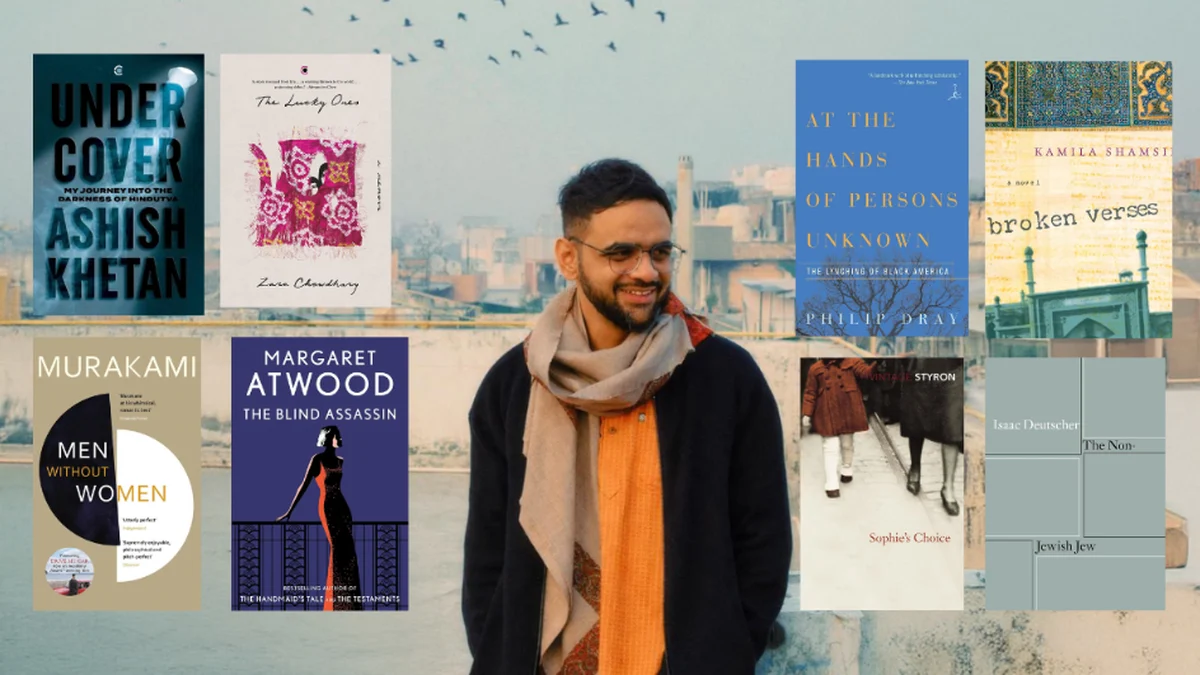
On July 4, 2024, a Delhi court once again dismissed the bail applications of Umar Khalid and Sharjeel Imam, two of the most prominent figures accused in the "larger conspiracy" case related to the 2020 North East Delhi riots. This judicial decision marked a somber milestone: both men have now spent nearly six years in incarceration without the commencement of a trial. While the legal proceedings remain mired in the complexities of the Unlawful Activities (Prevention) Act (UAPA), a different kind of narrative has emerged from behind the bars of Tihar Jail—one of intellectual endurance and the salvific power of books.
The intersection of Khalid’s continued detention and the publication of his prison reading list by The Hindu has sparked a national conversation. It highlights a historical tradition where the prison cell, intended to stifle the voice of the dissenter, instead becomes a crucible for rigorous study, reflection, and the preservation of the self.
Main Facts: The Intersection of Law and Letters
The denial of bail to Umar Khalid and Sharjeel Imam by the Karkardooma Court underscores the restrictive nature of the UAPA, a law where the burden of proof for bail is notoriously high, often leading to prolonged pre-trial detention. Khalid, a former JNU student and activist, was arrested in September 2020. Despite multiple attempts at seeking liberty, the courts have consistently sided with the prosecution’s claim of a "premeditated conspiracy" to incite violence.
Amidst this legal deadlock, Khalid’s academic work has found its way to the public. His doctoral dissertation, titled Fractured Communities: A History of Santhal Parganas, was recently published as a book by Juggernaut. This publication served as the catalyst for the release of his prison reading list—a curated selection of titles that have sustained him over the last half-decade. The list went viral almost immediately, appearing at a moment when the public consciousness was grappling with the ethics of "punishment before trial."

The list is not merely a collection of titles; it is a map of a mind attempting to navigate the claustrophobia of a high-security cell. It ranges from dense historical texts to contemporary fiction, reflecting a desperate need to remain connected to a world from which he has been physically severed.
Chronology: Six Years of Confinement
To understand the weight of Khalid’s reading list, one must look at the timeline of his incarceration and the broader legal context:
- February 2020: Violent clashes erupt in North East Delhi following protests against the Citizenship Amendment Act (CAA).
- September 2020: Umar Khalid is arrested under the UAPA, accused of being a key conspirator in the riots.
- 2021–2023: Multiple bail applications are filed and rejected across various levels of the judiciary. During this period, Khalid completes his doctoral requirements and continues a rigorous reading schedule.
- June 2024: Juggernaut Books announces the publication of Fractured Communities, Khalid’s scholarly work on the Santhal community.
- July 4, 2024: A Delhi court dismisses the latest bail pleas of Khalid and Sharjeel Imam.
- July 5, 2024: The Hindu publishes Khalid’s prison reading list, drawing parallels between his experience and that of historical political prisoners.
Supporting Data: The Tradition of Prison Literature
Khalid’s reliance on books is far from an isolated phenomenon. Throughout history, some of the most influential works of literature and political philosophy have been conceived or consumed within prison walls.
The Great Precedents
As noted by historians and literary critics, prison often magnifies the necessity of the mind’s engagement. Nelson Mandela, who spent 27 years in prison, famously remarked that the lack of "quiet reflection" was one of the few things he missed about jail after his release. His reading list included Eldridge Cleaver’s Soul on Ice and Nadine Gordimer’s Burger’s Daughter—texts that dealt with the very themes of oppression and identity he was fighting against.

In the Indian context, the independence movement was essentially fueled by prison literature. Jawaharlal Nehru’s The Discovery of India and Glimpses of World History were both products of his long incarcerations. During his 1922 jail term, Nehru read voraciously, covering history, politics, and literature, even teaching himself the Urdu script to expand his linguistic horizons. Similarly, Mahatma Gandhi found solace in diverse texts ranging from Frederic Farrar’s The Seekers After God to Rudyard Kipling’s The Jungle Book.
The Psychological Shield
For a prisoner, a book is more than information; it is an "anodyne," as Oscar Wilde described in The Ballad of Reading Gaol. When the physical body is confined to a few square feet, the book provides the only available "open window." For Khalid, whose trial has not even begun, these books serve as a psychological shield against the "stifling" nature of indefinite confinement.
Official Responses and Legal Implications
The official stance of the prosecution remains that the severity of the charges—conspiracy to commit terrorist acts and promote communal enmity—justifies the continued detention of the accused. The Delhi Police have argued that the "larger conspiracy" case involves thousands of pages of evidence and hundreds of witnesses, making a speedy trial difficult.
However, human rights organizations and legal experts have raised alarms regarding the "process becoming the punishment." The UAPA’s Section 43D(5) makes it nearly impossible for a court to grant bail if the police diary or the charge sheet provides "reasonable grounds" to believe the accusations are "prima facie true." Critics argue that this effectively allows the state to incarcerate individuals for years without having to prove their guilt in a court of law.

The publication of Khalid’s academic work and his reading list brings a human face to these legal abstractions. It poses a difficult question to the judiciary: if a man can produce a scholarly dissertation and engage with complex global literature while in a cell, does he represent the kind of "flight risk" or "threat to society" that justifies the suspension of his fundamental right to liberty?
Beyond the Cell: Contemporary Literary Spotlights
While Khalid’s story dominates the intersection of politics and books, the broader literary world continues to produce works that mirror these themes of resistance, identity, and the struggle against erasure.
Meena Kandasamy and the Digital Manosphere
In an era where the "prison" can also be digital, author Meena Kandasamy’s latest novel, Fieldwork as a Sex Object, explores the confinement of women within the "Indian manosphere." Through her protagonist, Amy Chaturvedi, Kandasamy examines the trauma of deepfake videos and online shaming. Her work serves as a reminder that the fracturing of communities and the silencing of voices now take place on servers as often as they do in physical cells.
Bearing Witness to Gaza
The power of the written word as a final testament is nowhere more evident than in the recent writings coming out of Gaza. The poet Hibu Nada, who was killed by an Israeli strike at the age of 32, left behind verses that have become a rallying cry for resilience. Her work, alongside new anthologies like Gaza: The Story of a Genocide (edited by Fatima Bhutto and Sonia Faleiro) and Letters from Gaza, documents the scale of destruction while insisting on the humanity of those caught in the crossfire.

These books, much like Khalid’s reading list, serve as "steadfast companions" in times of absolute darkness. They are acts of "bearing witness" in a world that often prefers to look away.
Implications: The Preservation of Inner Freedom
The viral nature of Umar Khalid’s reading list suggests a deep-seated public interest in the resilience of the human spirit. When a society sees a prisoner reading and writing, it is forced to acknowledge that while the body can be shackled, the intellect remains a sovereign territory.
The Role of the Reader
For the general public, Khalid’s list offers a glimpse into how a mind endures prolonged isolation. It challenges the reader to consider the value of their own freedom and the importance of intellectual engagement. In a world of "fast news" and "short-form content," the image of a man spending six years with deep-dive texts is a radical counter-narrative.
Judicial and Social Reflections
The implications for the Indian justice system are profound. The case of Umar Khalid and Sharjeel Imam will likely become a landmark in the debate over pre-trial detention. As the years pass, the "conspiracy" charges must eventually face the scrutiny of a trial. Until then, the books Khalid reads—and the book he has written—stand as the only evidence of his state of mind.

In the final analysis, literature in prison is not just a hobby; it is a form of survival. As Oscar Wilde, Mandela, and Nehru proved, and as Khalid’s list reminds us, books are the only means of preserving inner freedom and sanity when the walls close in. Whether it is a Palestinian poet writing her final lines in Gaza or an Indian academic reading in Tihar, the message remains the same: the word is mightier than the wall.
