

Executive Summary: The Growing Chasm Between Demand and Supply
As the global climate enters a volatile phase marked by the strengthening of El Niño conditions, India’s energy sector is facing a critical juncture. In June, a confluence of record-breaking heatwaves and a significant dip in hydropower generation forced the world’s third-largest energy consumer to lean heavily on its coal reserves. While India has made ambitious strides in solar and wind capacity, the inherent intermittency of these sources—coupled with the failure of hydroelectric "peaking" power—has exposed a structural vulnerability in the national grid.
An analysis by S&P Global reveals that India’s average hydropower generation in June plummeted by 6.3 average gigawatts (aGW) compared to the previous year. Simultaneously, electricity demand surged by a staggering 24.3 aGW as temperatures soared across the subcontinent. To prevent a total grid collapse, the gap was bridged primarily by coal-fired generation, which saw an increase of 20.7 aGW. This shift highlights a sobering reality: even as India pursues a green energy transition, extreme weather events driven by El Niño are creating a "feedback loop" where climate-induced power shortages are being met with the very fossil fuels that exacerbate global warming.
Chronology of a Crisis: From Heatwaves to Hydropower Deficits
The current energy strain did not emerge in a vacuum; it is the result of a seasonal progression that began in early spring and culminated in a high-pressure June.
March – May: The Early Warning Signs
The pre-monsoon period in India was characterized by prolonged heatwaves, particularly in Northern and Central India. Cities experienced temperatures consistently exceeding 45°C (113°F). This early onset of summer depleted reservoir levels prematurely as evaporation rates climbed and the demand for cooling began its steady ascent.
June: The Breaking Point
By June, the India Meteorological Department (IMD) confirmed that the onset of the southwest monsoon was sluggish. This delay, attributed to the developing El Niño in the Pacific, meant that the expected rainfall failed to replenish the hydroelectric dams that provide India’s most flexible power. On July 3, S&P Global published its intelligence report, confirming that the hydro-deficit was not merely a local fluctuation but a regional trend.
July 6: High-Level Intervention
The severity of the situation reached the highest levels of government. On July 6, the Prime Minister’s Office (PMO) chaired a high-level meeting with officials from the IMD and the Ministry of Power. During this briefing, it was confirmed that weak to moderate El Niño conditions would persist through July and August. This forecast signaled to grid operators that they could not rely on a late-summer hydro recovery to stabilize the system.
Supporting Data: The Numbers Behind the Energy Shift
The scale of India’s current energy challenge is best understood through the stark data provided by market intelligence firms and research organizations.
The Hydro-Coal Seesaw
According to S&P Global, the 6.3 aGW decline in hydropower was the primary driver of the grid’s instability. While solar and wind generation did grow by a combined 9.4 aGW in June, this was insufficient to cover even half of the 24.3 aGW increase in total demand.
The heavy lifting was done by coal. Coal-fired generation rose by 20.7 aGW, illustrating that for all of India’s renewable progress, coal remains the "lender of last resort" for the Indian power sector.
Regional Context
India was not alone in this struggle. The S&P Global analysis noted that the decline in hydropower was a pan-Asian phenomenon:
- India and Vietnam: These two nations accounted for nearly 80% of the total regional decline in hydropower.
- Other Impacted Nations: Japan, South Korea, Bangladesh, the Philippines, and Malaysia also reported lower-than-average hydro output.
- Vietnam’s Crisis: In Vietnam, the decline was so severe that it led to rolling blackouts in manufacturing hubs, affecting global supply chains for electronics.
The Carbon Cost
The Centre for Research on Energy and Clean Air (CREA) provided a grim estimate of the environmental toll of this shift. CREA projects that India could face a total generation gap of nearly 18 terawatt-hours (TWh) due to the combined effect of reduced renewable output and spiked demand.

- Emissions Impact: To fill this 18 TWh gap with coal, India will likely emit an additional 17 million tonnes of carbon dioxide (CO2).
- The "Double Challenge": CREA emphasizes that El Niño creates a pincer movement—it increases the need for power (for air conditioning and irrigation pumps) while simultaneously decreasing the means to produce it cleanly (low water for hydro and lower wind speeds).
Official Responses and Strategic Adjustments
In response to the data, the Indian government and meteorological agencies have shifted into a defensive posture to manage the grid through the remainder of the monsoon season.
The IMD Forecast
The India Meteorological Department has remained cautious. While they have not forecasted a total drought, the "weak to moderate" El Niño conditions mentioned in the PMO meeting suggest that rainfall will be "erratic." This unpredictability is a nightmare for grid managers who need to balance the load in real-time.
Infrastructure Management
The Ministry of Power has issued directives to maximize coal production and ensure that all thermal power plants are operational at full capacity. This includes a controversial mandate to use imported coal to blend with domestic supplies to ensure higher caloric efficiency, despite the higher cost to the exchequer.
Focus on Grid Stability
Government officials have highlighted the "flexibility" loss. Hydropower is unique because it can be turned on or off in minutes. During the PMO meeting, the discussion pivoted toward the urgent need for "Pumped Storage Projects" (PSPs) and Battery Energy Storage Systems (BESS) to replace the flexibility lost when dams run dry. However, these technologies are still in the early stages of large-scale deployment in India.
Implications: A Setback for Net-Zero and Grid Resilience
The reliance on coal during the June heatwave has far-reaching implications for India’s domestic policy and its international climate commitments.
1. The Threat to Decarbonization Goals
India has committed to reaching Net-Zero emissions by 2070 and ensuring that 50% of its installed capacity comes from non-fossil sources by 2030. However, the June data suggests that "installed capacity" does not always equal "actual generation." If climate change makes hydropower—a cornerstone of India’s green energy mix—unreliable, the path to Net-Zero becomes significantly more expensive and technically difficult.
2. The Vulnerability of the "Duck Curve"
As solar power floods the grid during the day, India faces a "duck curve" problem: a massive drop in net load during the day followed by a sharp spike in the evening when the sun goes down. Normally, hydropower is used to manage this evening spike. Without it, the grid must ramp up coal plants rapidly, which is inefficient, costly, and causes more wear and tear on aging thermal infrastructure.
3. Socio-Economic Impact on Agriculture
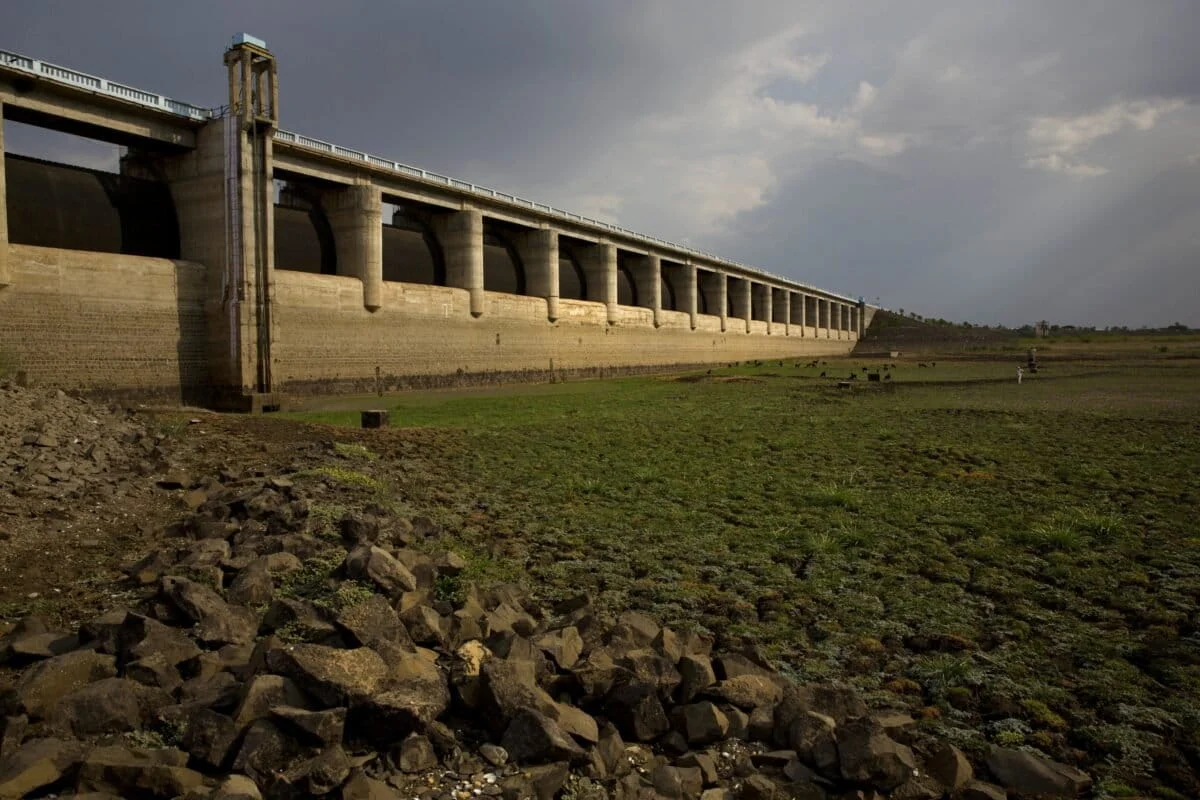
The decline in hydropower is a symptom of low reservoir levels, which has a direct impact on agriculture. In regions like Marathwada, Maharashtra, dams like the Manjara have historically run dry during El Niño years. When water is scarce, farmers increase their use of electric pumps to draw from deep groundwater, further driving up electricity demand in a vicious cycle of resource depletion.
4. Re-evaluating the Energy Mix
The current crisis may force a re-evaluation of India’s energy strategy. While solar and wind are essential, the S&P Global report proves they cannot yet provide the "firm" power required during a climate-induced crisis. This may lead to renewed interest in nuclear energy or a massive acceleration in green hydrogen and long-duration battery storage to provide the stability that hydropower once guaranteed.
Conclusion: Navigating an Unpredictable Future
The events of June serve as a "stress test" for the Indian energy system. The data from S&P Global and CREA makes it clear: the transition to renewable energy is not a linear path. It is a complex struggle against a changing climate that actively undermines green infrastructure.
As El Niño conditions persist, India’s immediate priority remains keeping the lights on and the cooling systems running for its 1.4 billion citizens. For now, that means a reluctant return to coal. However, the long-term lesson is undeniable—to build a truly resilient grid, India must look beyond just "adding renewables" and focus on building a system that can withstand the very climate volatility it is trying to prevent. The 17 million tonnes of additional CO2 projected for this year is a stark reminder that in the era of El Niño, the cost of an unstable grid is paid in both currency and carbon.
